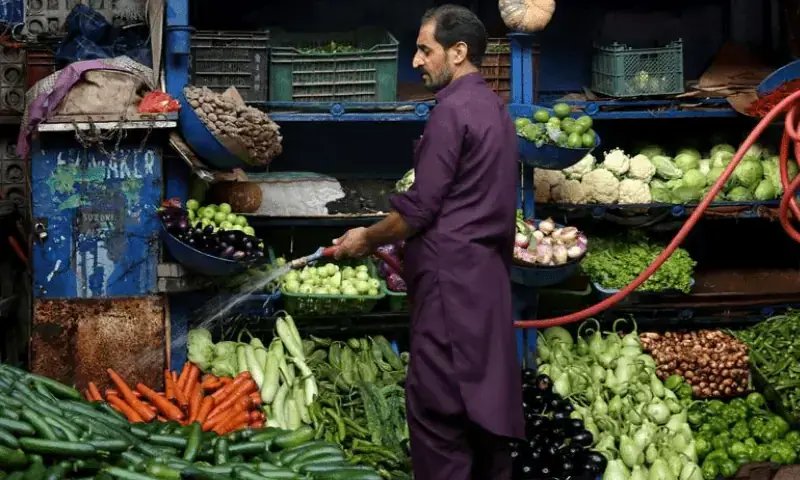
Traders blame flood damage, supply crunch for the surge
25 July 2026, 00:00 AM
Sukanta Halder
Mohammad Suman
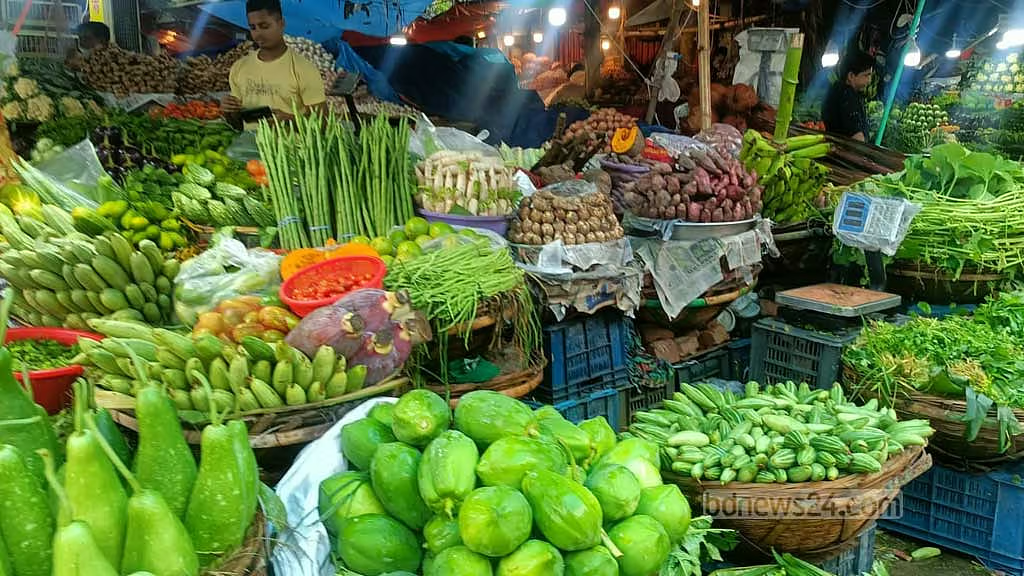
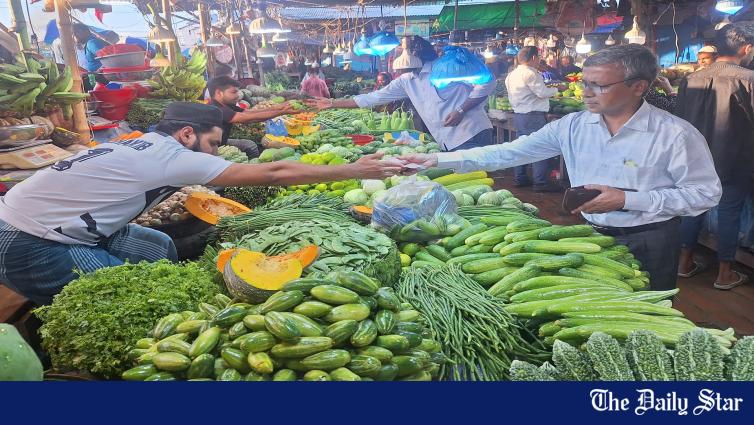
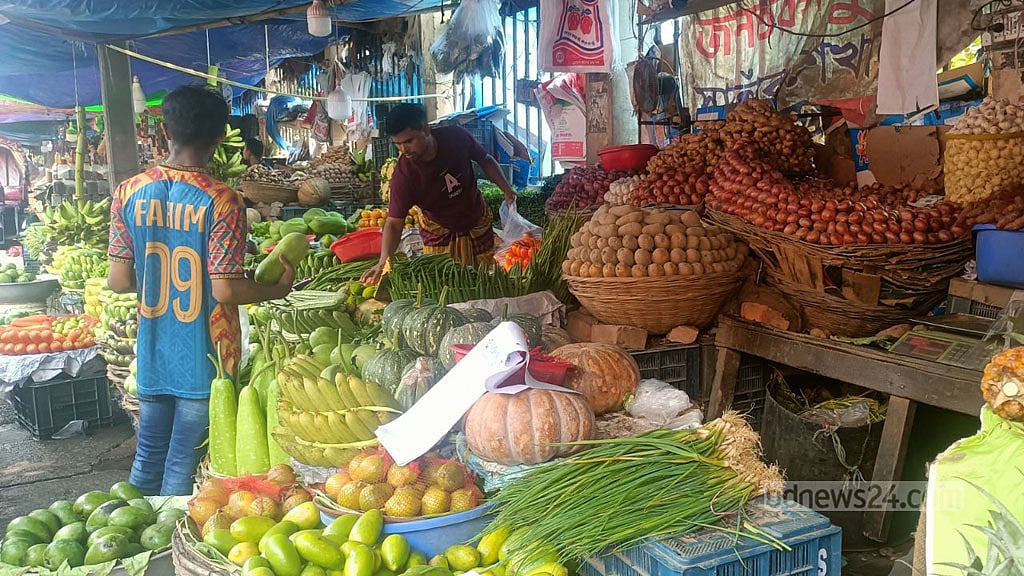
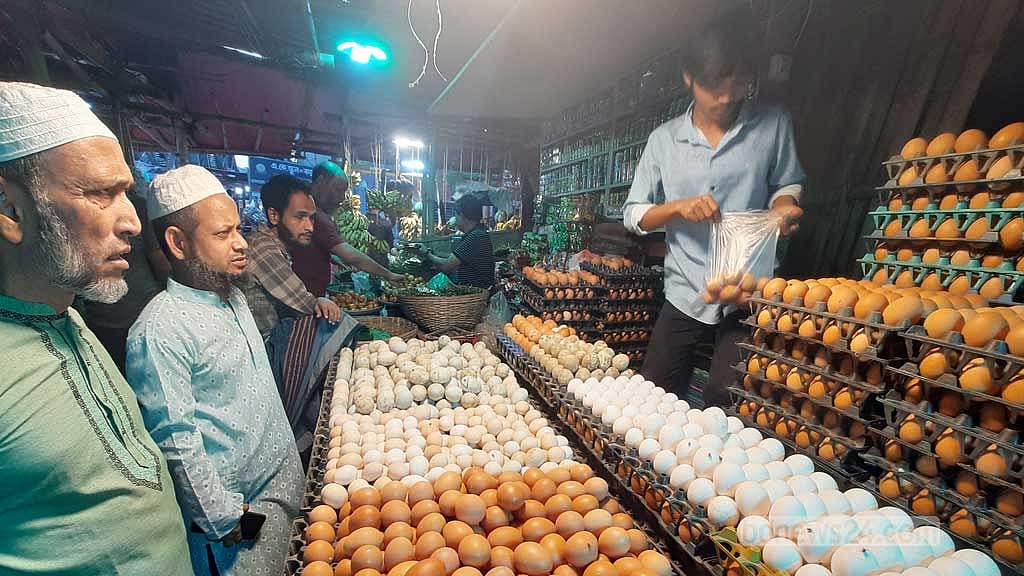
Under a gloomy afternoon sky at Karwan Bazar, Abdul Barek stood in front of a vegetable shop, quietly asking the price of one item after another. The 50-year-old finally settled on half a kilogram of okra.“A week ago, I was buying okra for Tk 20 to 25 a kilogram. Now it costs Tk 100,” he told The Daily Star, still holding the small polythene bag. “I can’t go without eating, so I’m buying half a kilogram.”“Had the price stayed the same, I would have bought a full kilogram,” he added. “Now, if I buy a kilogram of just okra, I won’t have money left for any other vegetable.”Prices of rice, vegetables, eggs and flour have climbed over the past week, piling further financial pressure on low- and fixed-income families already struggling to manage tight household budgets.Traders said recent floods had damaged crops, vegetables and poultry farms in more than 40 districts, creating a gap between demand and supply that pushed prices higher.At kitchen markets in Shewrapara, Mirpur-1, New Market, Karwan Bazar, Hatirpool and Chattogram yesterday, shoppers said almost every essential item cost more than it did a week ago.In Dhaka’s retail markets, green beans sold for Tk 100 per kilo, up from Tk 40-50 a week ago, while green chilli prices jumped to Tk 250-300 from Tk 80-120.Cucumber prices rose to Tk 100-120 per kilo from Tk 50, while bitter gourd doubled to Tk 100 from Tk 50-60.Pointed gourd sold for Tk 60, up from Tk 40, while snake gourd rose to Tk 80 per kilogram from Tk 40-50 a week earlier.According to data from the state-run Trading Corporation of Bangladesh, retail prices increased by 2.61 percent for flour, 25 percent for onion and 11.76 percent for eggs.Jabbar Hossain, a vegetable seller in the capital’s Sheorapara area, said floods and heavy rain had damaged many vegetable fields, leading to a supply shortage that pushed prices up.He said he needed 50 to 60 kilograms of vegetables daily but was receiving only 20 to 30 kilograms.Mohammad Mamun Biswas, a wholesale vegetable seller at Karwan Bazar, said floods had caused significant damage to crops and vegetables across the country, resulting in a supply shortage that drove prices up.As an example, he said a piece of pumpkin that cost Tk 40 seven days ago was now selling for Tk 60 to 80. Chilli, which cost Tk 70 per kilogram, was now selling for Tk 200.Mohammed Saheen, a wholesaler and retailer at the Mohammadpur Town Hall kitchen market in the capital, said the wholesale price of a 50kg sack of fine rice had increased by Tk 25 over the past week, from Tk 3,325 to Tk 3,350.“Millers are citing higher paddy prices as the reason behind the increase. But there is no shortage of rice in the market yet, and supply and demand remain balanced,” he said.Amanat Ullah, a wholesale egg trader in Tejgaon, one of the largest hubs in the capital, said eggs were sold at the wholesale level for Tk 10 apiece yesterday, up from Tk 9.50 a week earlier.The increase in vegetable prices had driven up demand for eggs, leading to the latest price hike, he said.Meanwhile, recent heavy rain and floods have affected agricultural production in 43 districts, including Chattogram, Noakhali, Cumilla, Barishal, Khulna and Sylhet, according to the Department of Agricultural Extension.More than five lakh farmers have suffered losses, while over 87,000 hectares of farmland -- about 7 percent of the country’s 13 lakh hectares of cultivated land -- have been damaged.The affected crops include Aus paddy, Aman seedbeds, summer vegetables, ginger, turmeric and papaya. Of the damaged land, 52,767 hectares were under Aus paddy, 10,504 hectares under Aman seedbeds and 17,834 hectares under summer vegetables.The impact of the floods has also been felt in the meat market in Chattogram. Mutton was selling for around Tk 1,250 per kilogram on Thursday, compared with Tk 1,150-1,180 two weeks earlier.The price of Sonali chicken increased to Tk 340-350 per kilogram, about Tk 20-30 higher than two weeks ago. Broiler chicken rose to Tk 190-195 per kilogram from Tk 175.SM Nazer Hossain, vice-president of the Consumers Association of Bangladesh, said floods had not occurred everywhere, yet prices had gone up across the board.“Traders look for any excuse -- rain, floods or heat -- to raise prices,” he said.“Regular raids and supervision used to keep things in check. Without that oversight now, businessmen are free to set prices however they like,” he said.Hossain also pointed to a deeper imbalance in the supply chain, where farmers fail to receive fair prices for their produce while middlemen pocket most of the profit.“Consumers end up bearing the brunt of high prices, while the actual producers remain marginalised,” he said.