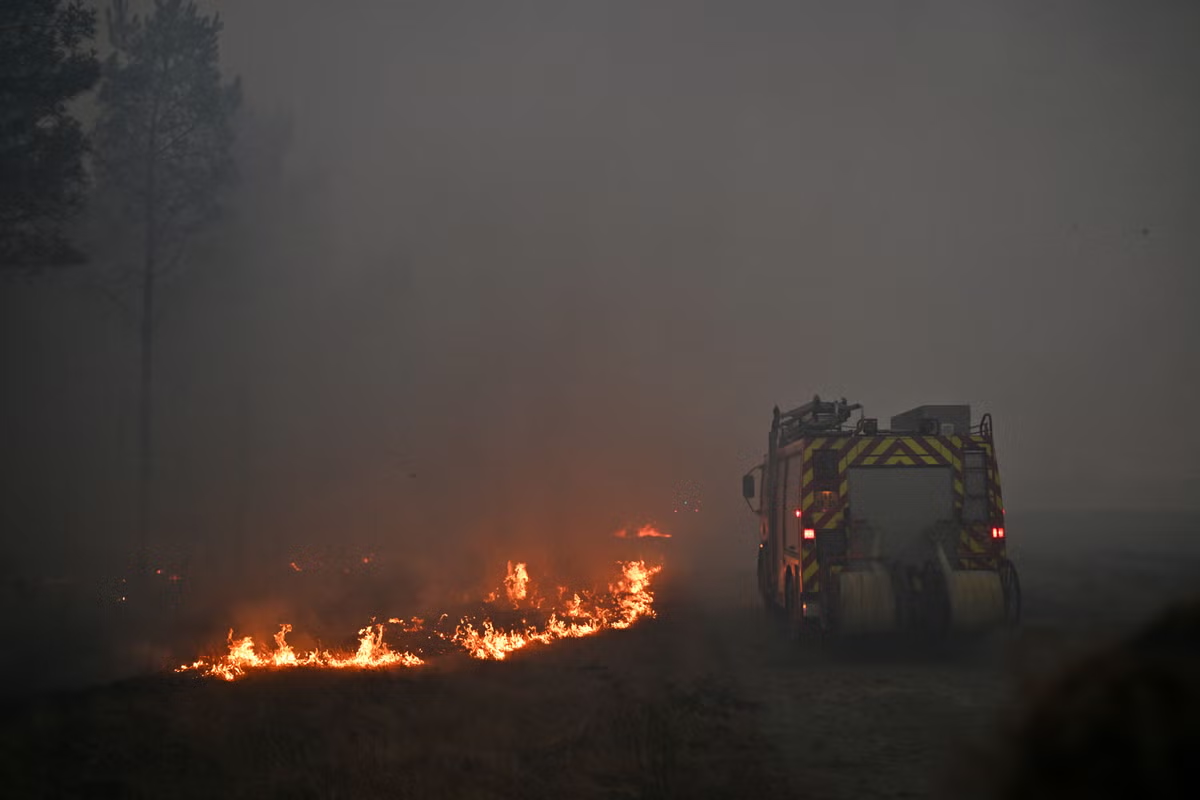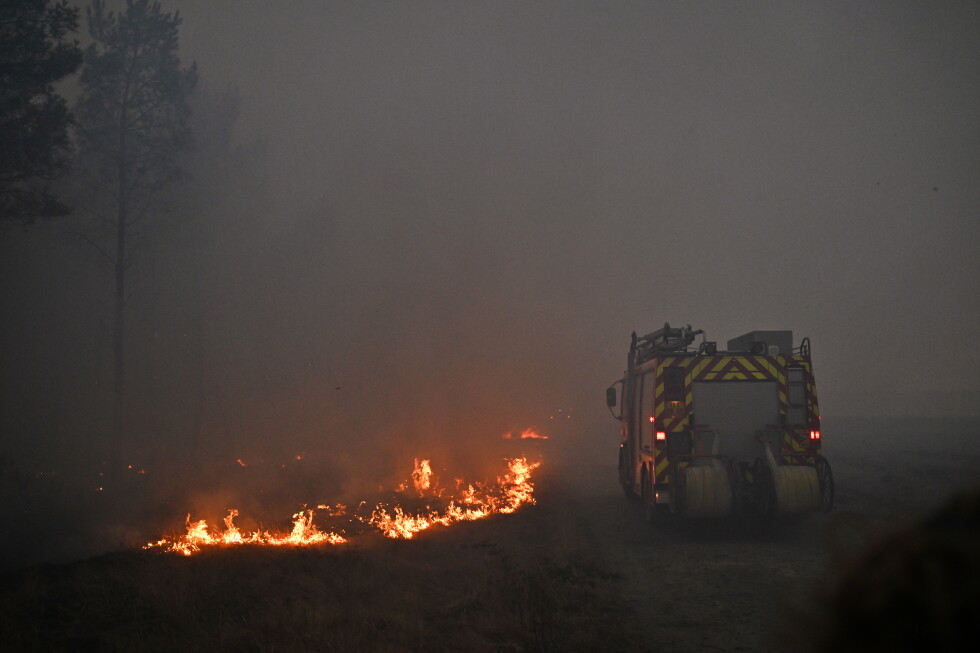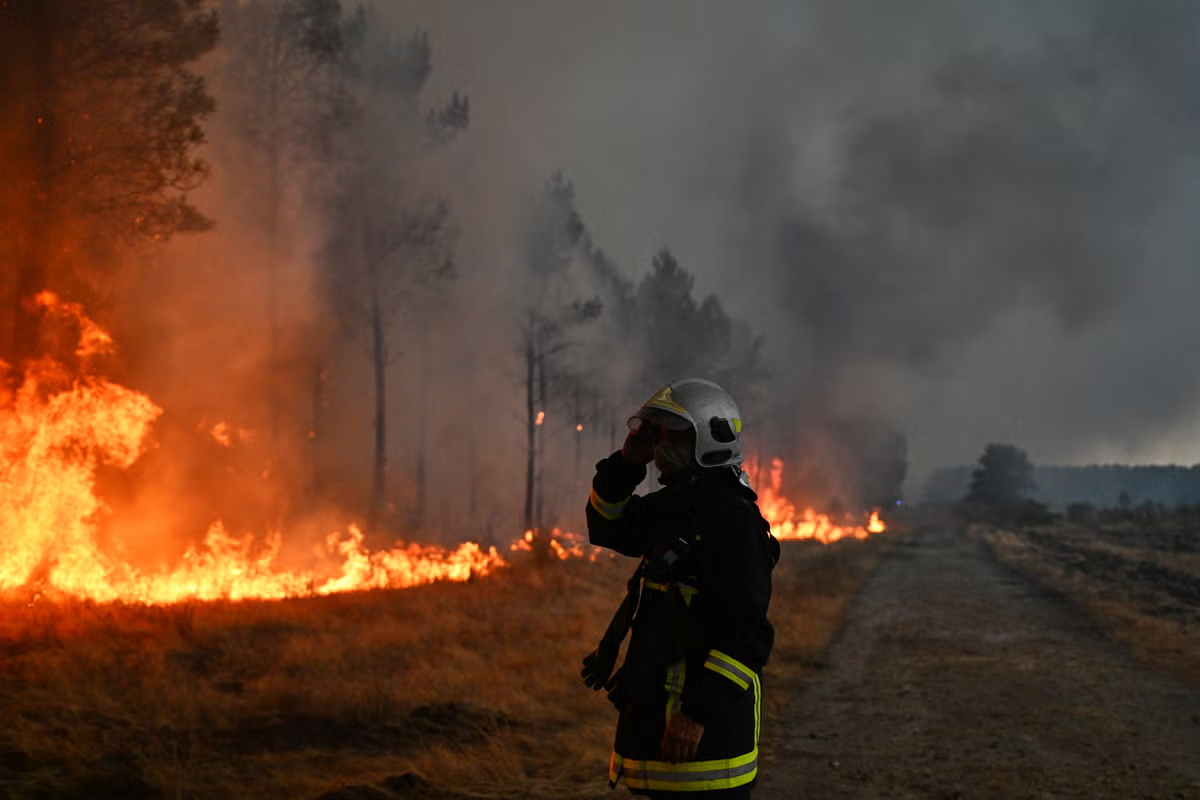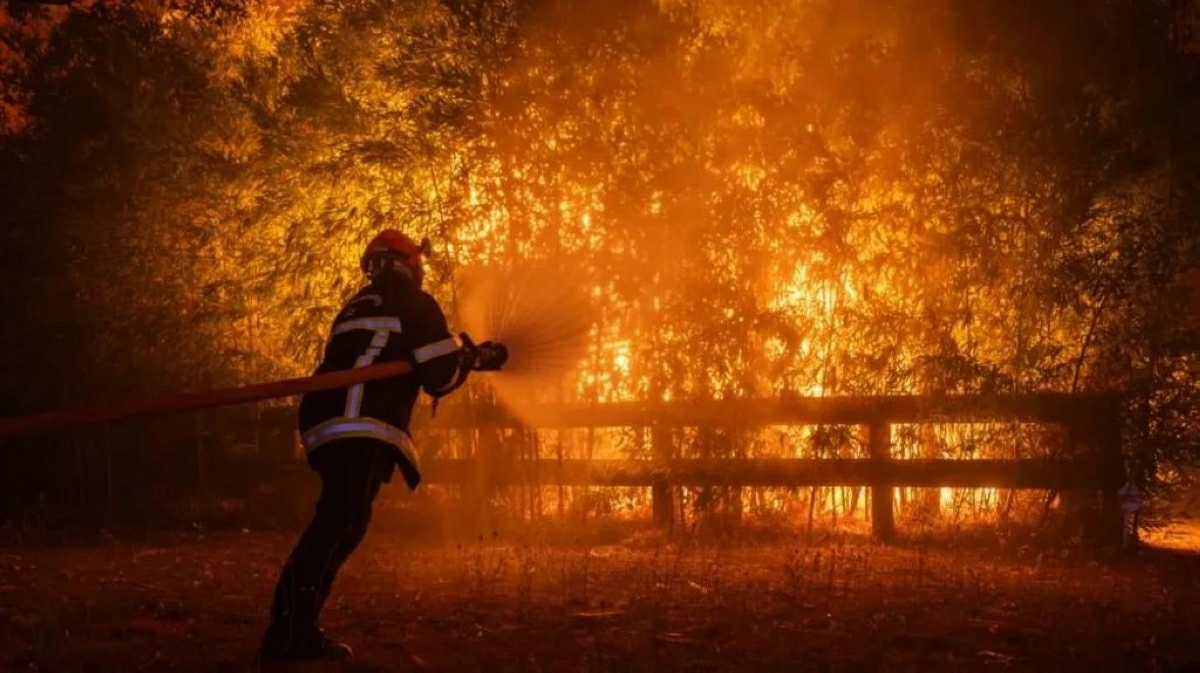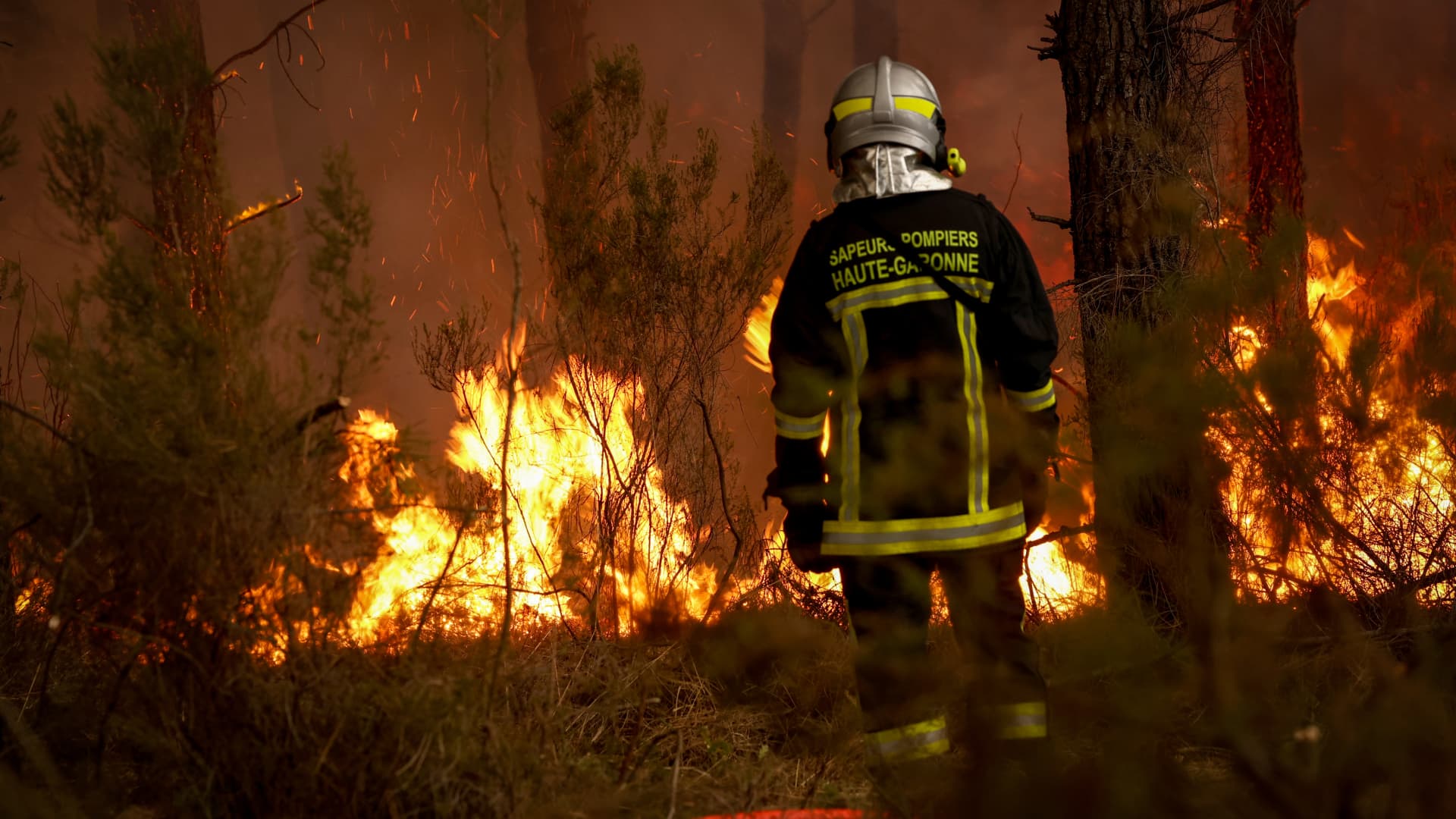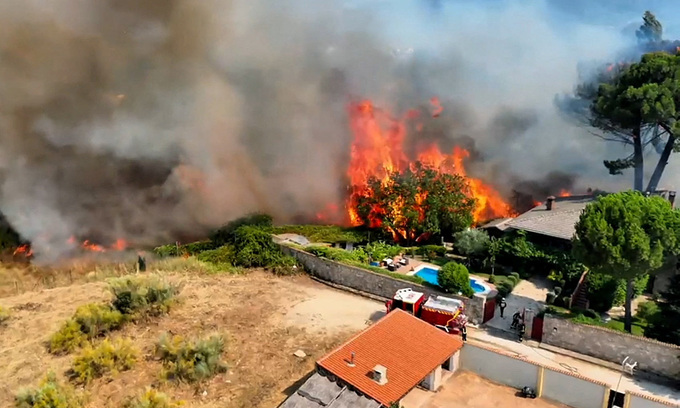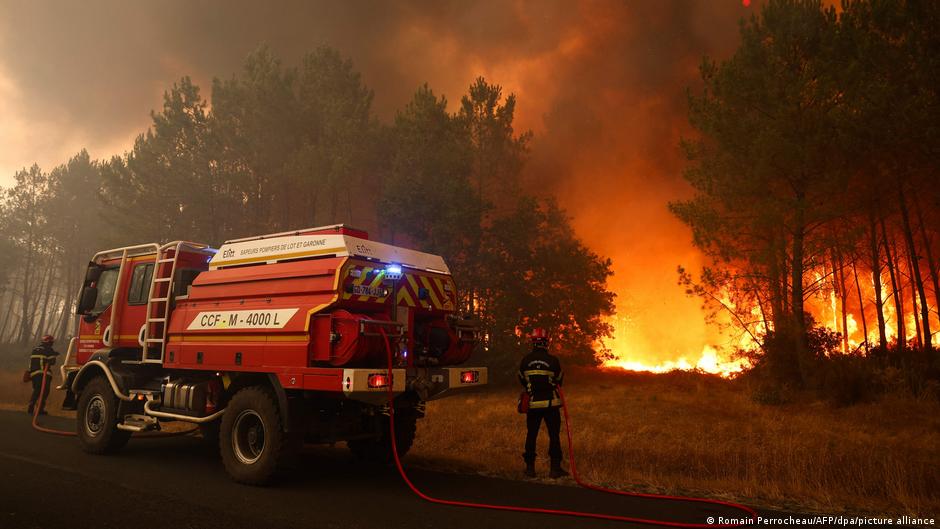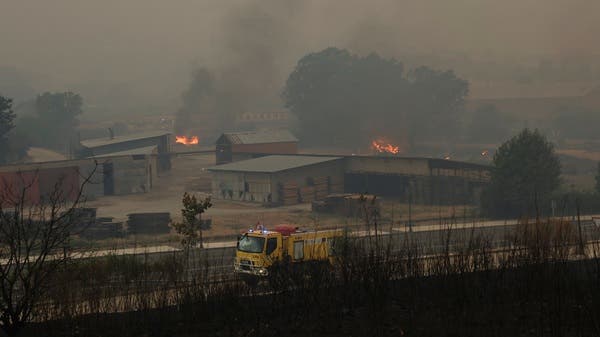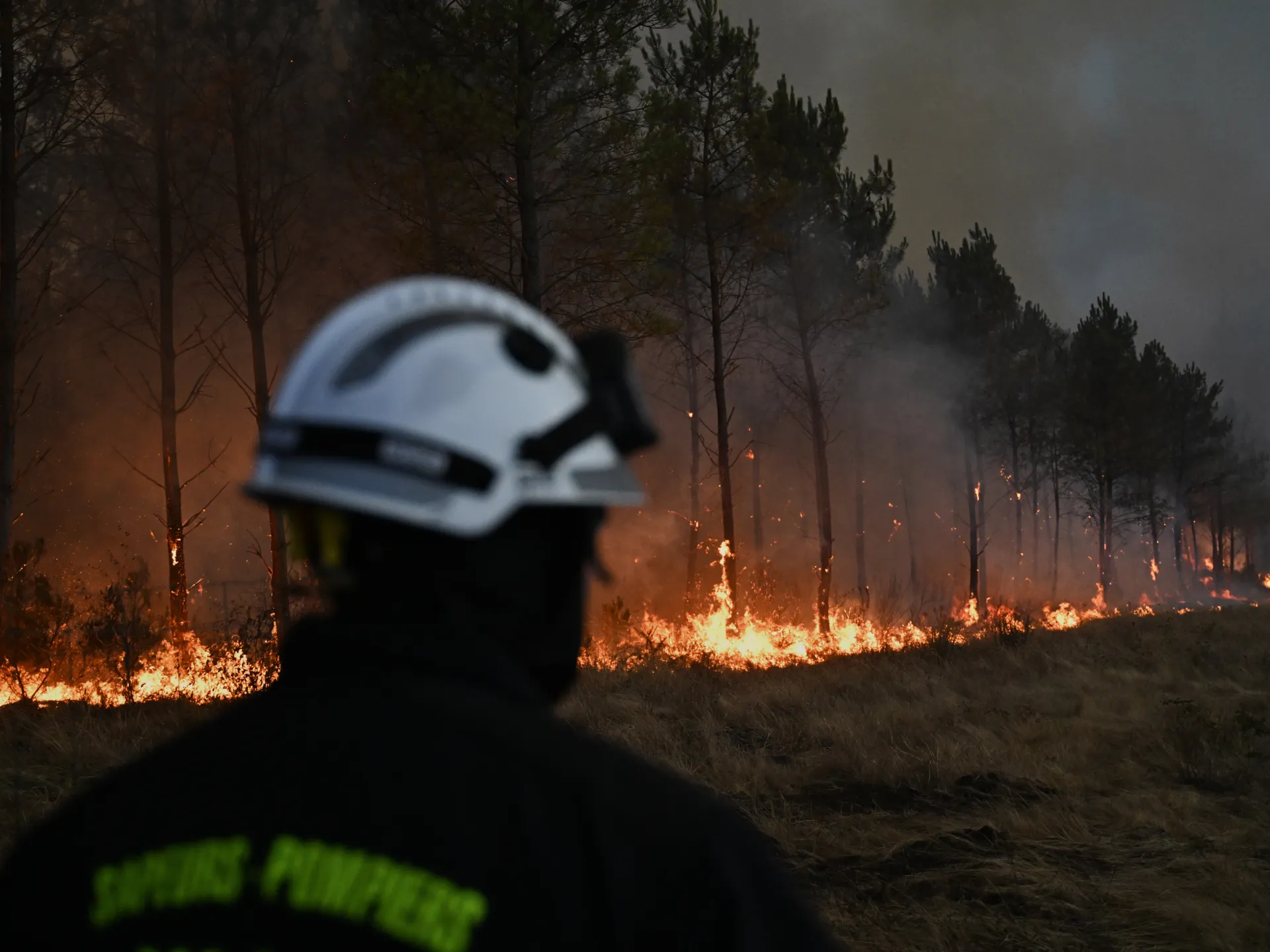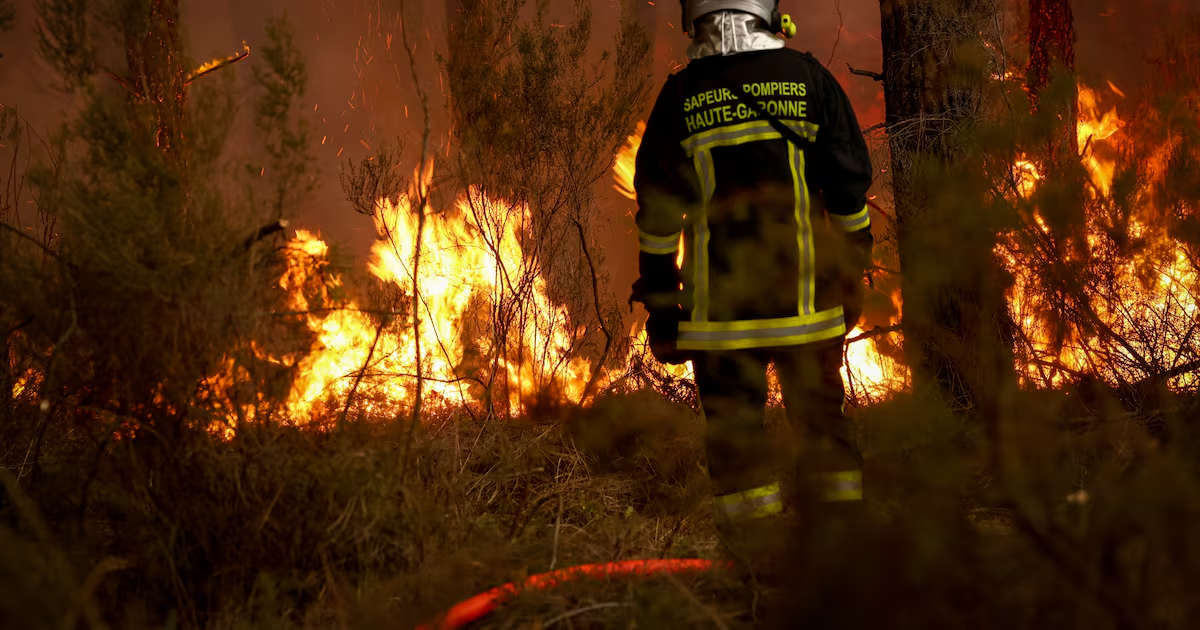
French president Emmanuel Macron has called a crisis meeting focusing on uncontrolled wildfires that have forced more than 300,000 people to flee their homes.The move comes amid a first glimmer of hope that the spread of the largest blaze may have slowed.In the Gironde region of south-west France, where flames have burned an area four times the size of Paris, the prefecture said the situation overnight had remained “globally stable” – a change from successive days where the giant blaze raging since last week had edged closer to the wine region city of Bordeaux.No new evacuations were announced. But with France about to enter its peak August tourist season, Gironde authorities took more steps to keep holidaymakers away, banning camps for children and for people with disabilities.Firefighters battle a wildfire near Bordeaux. Photograph: AP An An Airbus Helicopter drops water over a burning area during a wildfire in front of Barjols, southeastern France. Photograph: Thibaud Moritz/AFP/Getty Images On the ground and in the air, with water- and retardant-dropping aircraft, the massive firefighting effort was engaged in a race against time, battling to make progress before a forecast surge in temperatures from Tuesday that could make fighting flames more difficult.A French official said uncontrolled fires were still headed toward Bordeaux, an urban centre of 265,000 people.“This is a fire that is completely erratic, that has no consistency, it comes and goes” and feeds on itself, interior minister Laurent Nunez told broadcaster France 2 on Sunday evening, declining to rule out that the blaze will reach Bordeaux. “We must look at things calmly of course, but also with realism.”The area burned by the fire in southwestern France was “largely stable” overnight, helped by the weather, David Annotel, who represents the national firefighers association, said on Franceinfo radio early Monday. He added that the situation remained “fragile.”The government crisis meeting was scheduled for Monday morning, with Macron presiding. In a post on X, he pledged long-term support for fire-hit communities, saying: “We will rebuild, we will repair and we will be present for as long as necessary.”A firefighter battles a forest fire in Saint-Jean-d'Illac, 30km from Bordeaux. Photograph: Romain Perrocheau/AFP/Getty Images Massive swathes of southern France have been affected. Photograph: AP In Spain, wildfires have burned out of control around Madrid. Fire evacuations were also carried out Sunday in the Valencia region.A total of 76,000 people have been evacuated in Spain while 30,000 others have been confined to their homes, the government said.Evacuees fear what they will find when they are allowed to return.“It looked like the apocalypse. You couldn’t see anything. Everything was covered in ash,” said Rocío Domínguez, who evacuated with her dog, Simba, from Chapinería, west of Madrid.“We don’t know when we get to the town, if we’ll have half the house burned down or we’ll have it intact or we won’t have a house,” she said.“All the clothes, all the memories, everything.”Spain’s interior minister Fernando Grande-Marlsaska said late Sunday that the “the evolution of the fires is positive but slow,” Temperatures are expected to rise on Monday in central Spain and from Tuesday in France. Officials in both nations have said the fires are so strong that they are creating their own microclimates.In central Spain, the largest blazes have spread across 77,000 hectares located between 50 and 100 kilometers south and west of Madrid. Another major Spanish fire is burning some 50 kilometers north of the coastal city of Valencia.People at an evacuation centre in Villamanta, Spain, a town southwest of Madrid. Photograph: Joseph Fox/The New York Times One of the fires outside Madrid, in the province of Ávila, accounts for 50,000 hectares of the total, making it the largest wildfire in recorded Spanish history, according to environmental minister Sara Aagesen. This burned land was mostly forested hills, while the affected areas south of Madrid are mostly scrubland and farmland.As many as 41 Spanish highways were cut, with some 60,000 people evacuated from their homes in recent days and some 30,000 ordered to shelter in place, in part to keep roads clear for firefighters and soldiers. A special military unit that specializes in natural disasters has deployed 1,500 soldiers.Spain’s fires were fueled by a combination of weather, mainly because the country suffered three heat waves between June and mid-July, depleting soil moisture, along with denser-than-usual vegetation following an unseasonably rainy winter. Similar reasons are being cited in France.Weather experts say heat waves are starting earlier in the year and lasting longer than they did historically because of climate change. Last year was the worst ever for European wildfires, with more than 1 million hectares burned.Prevention and woodland management would have to be considerably ramped up in Spain to avoid future fires of similar scale, said Victor de Resco de Dios, a professor at the University of Lleida. He estimated the work would cost about €3 billion a year.In villages of the Madrid region and Ávila, the scale of the destruction is emerging. At a campsite beside the Pelayos reservoir, only the metal frames of tents remain, standing amid rows of charred tree trunks stripped of their leaves by the fire. Fire smoke degraded air quality in many neighborhoods of the capital over the weekend. - Bloomberg/AP
Macron calls crisis meeting as wildfire threatens Bordeaux
More than 300,000 leave homes in France and Spain in advance of peak tourist season
867 words~4 min read