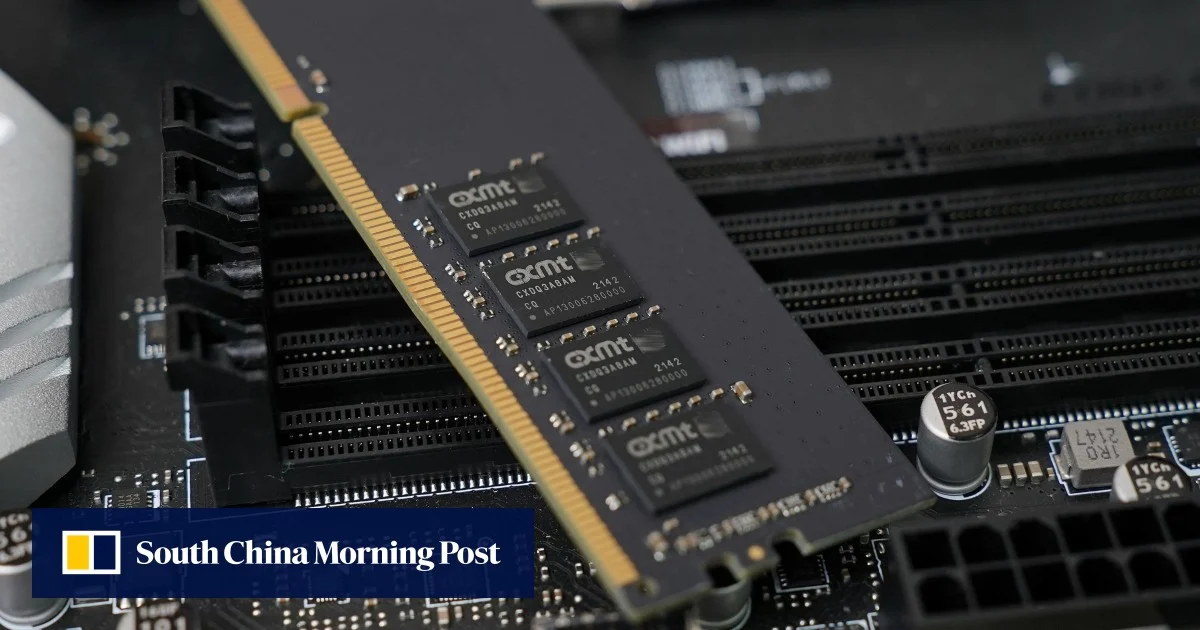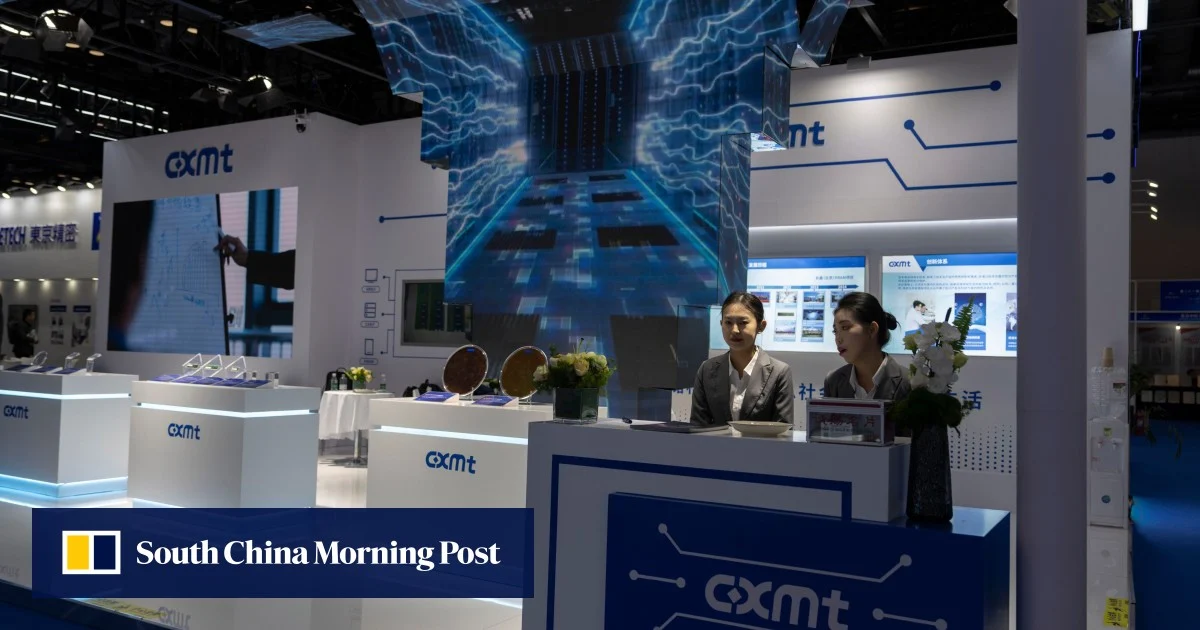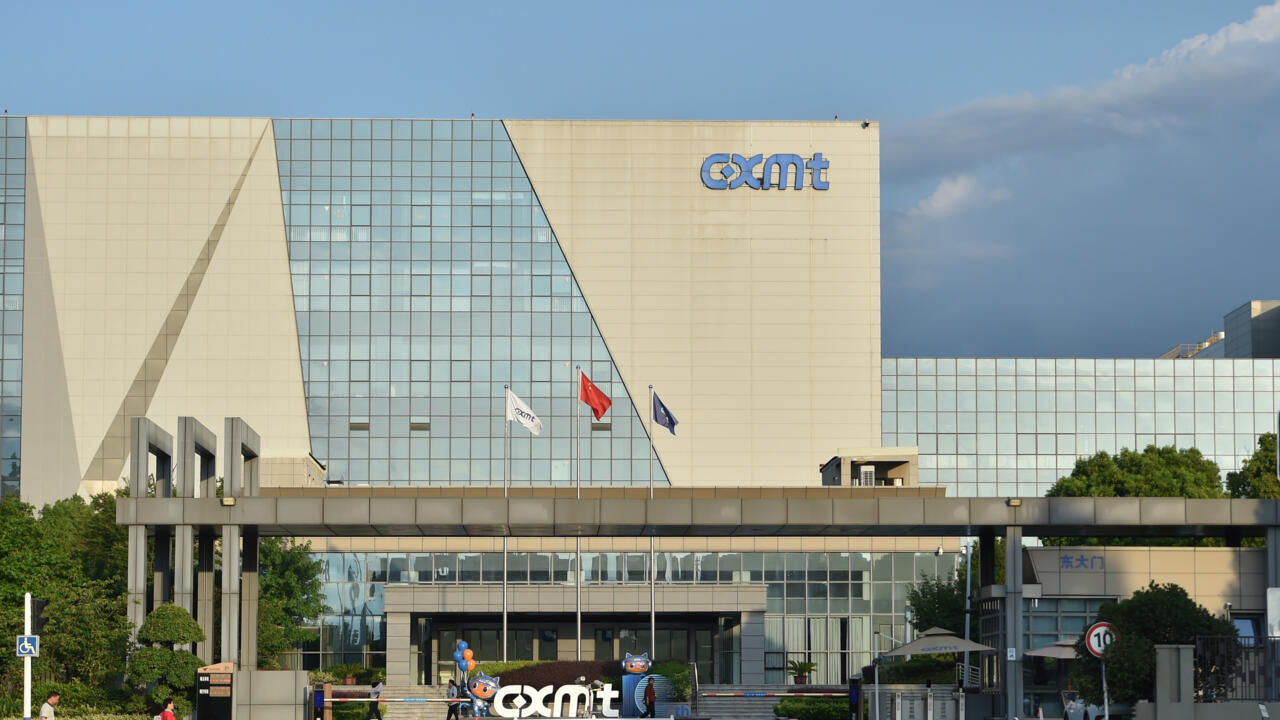
Chinese chipmaker directs $4.4 billion toward conventional memory as Korean rivals prioritize HBM CXMT's booth at the 22nd China International Semiconductor Expo in Beijing on Nov. 23, 2025, where the company showed its DDR5 and LPDDR5X lines (CXMT) ChangXin Memory Technologies surged 472 percent at the opening of its Shanghai debut on Monday, briefly becoming China’s most valuable domestically listed company with a market capitalization of about 3.3 trillion yuan ($487 billion).But the line that matters most to Korea’s memory industry has been hiding in plain sight for months.In its listing prospectus, CXMT said it would deploy 29.5 billion yuan. Nearly 70 percent, or 20.5 billion yuan, goes to wafer lines and upgrading DRAM processes it already runs. The rest funds what it calls forward-looking DRAM research.Nothing is specifically earmarked for high-bandwidth memory. SemiAnalysis — the US chip research firm whose memory capacity and cost estimates are widely cited in the industry — said that the prospectus "discloses no dedicated HBM project and does not mention HBM" and that the listing "primarily strengthens CXMT's core DRAM manufacturing and technology base, with no disclosed funding commitment to a near-term HBM expansion."CXMT raised 57.9 billion yuan in its base offering, nearly twice the amount assigned to its three named projects. It said the rest would also support working capital, but did not specify the allocation, Reuters reported on Thursday.The filing can be read as an acknowledgement that CXMT is not ready to scale HBM profitably. It can also be read as a bet on the conventional DRAM capacity that Samsung Electronics and SK hynix have increasingly redirected toward premium products.The opening Korea leftThe three memory leaders have spent two years moving wafers toward HBM and high-capacity server DRAM, which pay far better. It has been the correct trade so far, but it has a cost."The industry-wide supply-demand imbalance should persist through 2027 and likely into 2028," Ray Wang, the Seoul-based analyst who leads memory coverage at SemiAnalysis, told The Korea Herald. "This reflects the continued shift of wafer capacity toward HBM, which constrains overall DRAM bit growth." DRAM wafers and memory chips on display at a CXMT exhibition stand in Hefei, China (AFP) Part of the constraint is physical. A gigabyte of HBM eats about three times the wafer area ordinary DRAM does, so every line the leaders convert subtracts more bits than it adds. New construction does not close it: SemiAnalysis expects Samsung to add just 15,000 wafers a month this year, SK hynix 60,000 and Micron 30,000 — against 85,000 at CXMT. It models the market as short by a high-single-digit percentage of the bits it needs this year, and low-to-mid teens in 2027.The shortage is felt first in the cheapest sockets. DRAM contract prices rose nearly 95 percent quarter-on-quarter in early 2026, according to UBS, and PC makers went looking for anyone else who would sell to them.CXMT's output is booked through the end of 2027, DigiTimes reported, citing supply chain sources, with Dell, HP, Lenovo and Apple first in line and smaller brands left waiting. What they are getting is not a discount: Its DDR5 sells at parity with the three leaders, and was recently above Samsung's price for comparable server modules, Reuters reported Friday."As of today, CXMT's technology still lags that of the leading memory suppliers," Wang said. "However, in an extremely supply-constrained environment, CXMT's output has become increasingly valuable as customers seek to secure as much DRAM allocation as possible." A CXMT DDR5 memory chip and package on display at the China International Semiconductor Expo in Beijing on Nov. 23, 2025 (CXMT) "With commodity memory like DDR4 or DDR5, unlike HBM, ordinary consumers can't really feel the difference between generations," a local semiconductor industry official said. "What matters most to PC makers right now is volume, and on those terms CXMT is a perfectly viable option."A second pocket of the same vacancy sits inside China, and Kim Yang-paeng of the state-run Korea Institute for Industrial Economics and Trade traces it to US export controls. Denied the newest American accelerators, Chinese firms are building servers a tier below what hyperscalers run."In those servers, what grows is not HBM demand but demand for general-purpose server DDR5," Kim told The Korea Herald. "Servers carry more memory per unit than mobile devices, and the contracts are larger."CXMT signed a five-year, $7 billion-plus server DRAM deal with ByteDance this month, and a similar $3 billion one with Tencent in June, Reuters reported. Its server share of revenue rose from 8.4 percent in 2024 to 26.5 percent last year.tFilling a gap is not winning a marketBut none of this means CXMT has really caught anyone.Its cost per bit on DDR5 still runs more than 30 percent above the three leaders, according to SemiAnalysis. Wang said the profit surge belongs to the cycle rather than the company, as first-quarter bit shipments rose 11 percent, and average selling prices were up 57 percent.In other words, staying in commodity DRAM is arithmetic, not modesty. It earns CXMT more than its own HBM does, and yields more than three times the bits per wafer, according to SemiAnalysis, which models its HBM3 8-high yield at around 25 percent overall. In HBM, sources told Reuters, CXMT remains two generations behind.Korean analysts mostly treat CXMT as a problem for later. Lee Min-hee of BNK Investment & Securities said it is "moving in earnest into vendor qualification at global PC and smartphone makers," and could become "a considerable burden on Korean memory makers in a future downcycle."Linda Sui, founder and principal analyst at Smart Analytics Global, was asked to rank which CXMT developments should worry Samsung and SK hynix most. She put commercializing HBM first and recognition from Western buyers as a credible second source next. Scaling low-end volume, which is what CXMT is doing now, came last."Expanding in premium smartphones and increasing volumes in entry-level devices and servers are necessary steps, but they are ultimately a means to a larger objective," she told The Korea Herald. "If CXMT can achieve both technological competitiveness in HBM and gain recognition from global customers as a viable alternative supplier, it will begin to play a much more influential role in the global memory supply chain in two to three years."
Where CXMT’s IPO money is going: The DRAM gap Korea left
ChangXin Memory Technologies surged 472 percent at the opening of its Shanghai debut on Monday, briefly becoming China’s most valuable domestically listed compa
TL;DRAI
CXMT's $4.4B IPO allocates 70% to conventional DRAM instead of HBM, while Korean rivals shift capacity to premium memory. DRAM shortage extends through 2027–2028; CXMT's sold-out commodity allocations at parity pricing reshape supplier strategy for PC makers and hyperscalers.
1,039 words~5 min read