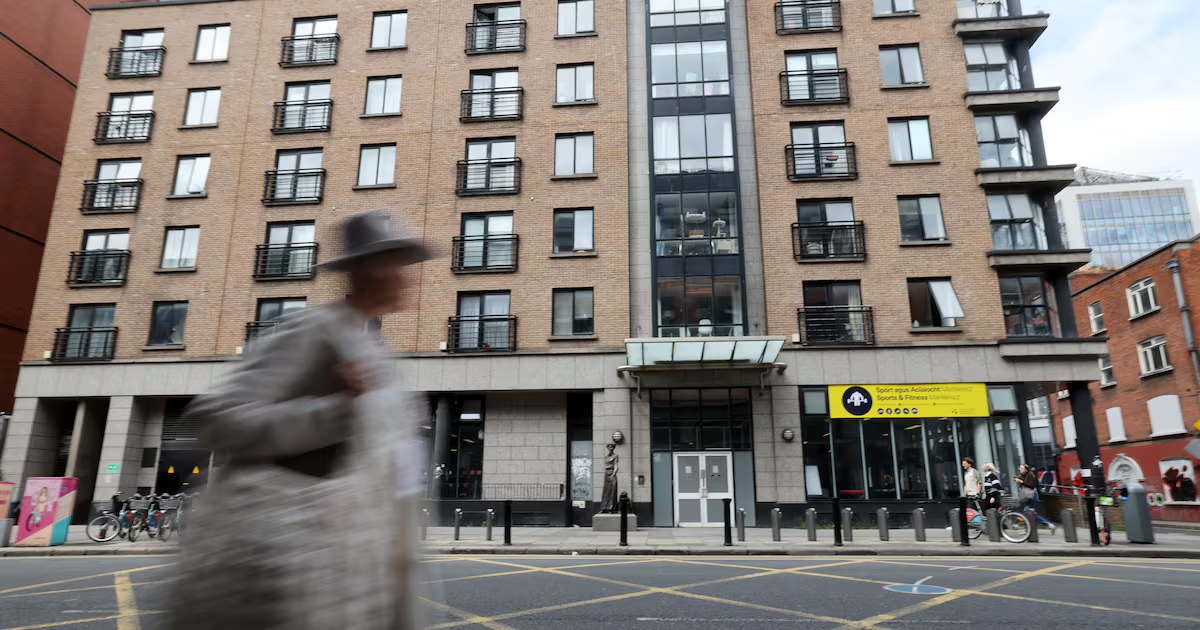
The planned Dublin MetroLink project could cost up to €19 billion, several senior Coalition figures believe. A detailed review of the business case for MetroLink is being finalised between the National Transport Authority (NTA) and the Department of Transport in advance of the Government being asked for approval to put out to tender construction of the 19km line from Swords in north Dublin to Charlemont on the south side. The Cabinet is expected to be given a cost range for the project. A number of sources in the transport sector have indicated that this could be in the region of €15 billion to more than €18 billion.But three sources close to Government with knowledge of existing discussions said there were concerns that the cost could reach €19 billion. There are worries, some sources speaking on condition of anonymity to discuss sensitive matters maintained, about the implications for other capital developments if so much funding was earmarked for metro.The last MetroLink estimates, which were drawn up four years ago, calculated €9.5 billion as the midpoint of a “credible” cost range of between €7.16 billion and €12.25 billion.And although it was widely acknowledged that these figures were now out of date, some sources close to Government maintained there were concerns about the bill escalating to some €19 billion.It is unclear whether such a €19 billion potential cost includes money already spent.Minister for Public Expenditure Jack Chambers said on Friday the Cabinet would decide in the autumn on tendering for the project, known technically as approval gate two. A final Government decision on whether to authorise the metro project is not expected until tenders have been received. New MetroLink cost estimates were completed by Transport Infrastructure Ireland (TII) early this year as part of the updated business case and were submitted to the NTA in March.The NTA said this week that it had been undertaking a detailed review and assurance process in relation to this business case in association with the Department of Transport. “That overall process is nearing completion and it is expected that the Department of Transport will be bringing the outcome of that process to Government for consideration shortly,” it said.If the Government approves the new costs, TII will be allowed to seek construction tenders for MetroLink.However, in advance, TII has advertised for expressions of interest in relation to several contracts for the project, which give an indication of the sums that could be involved.Last February it published contract notices for the tunnelling and excavation with a combined value of up to €7.9 billion.In May it sought expressions of interest for a single consortium to supply, operate, and maintain the metro, valued at up to €7.3 billion.A series of enabling works contracts, including relocating some underground utilities as well as construction works to prepare the path for tunnelling and stations, have been advertised with a combined value of €1.88 billion.A “programme delivery partner” to provide various consultancy services and contract management has been advertised with a value of €550 million.These figures combined would push costs above €17.5 billion. However, TII stresses they are maximum contract values, and it expects the competitive tender process to result in lower contract bids. However, these contracts do not include money already spent on the project which is expected to have exceeded €725 million by the end of the year. In addition, other “supplier opportunities” are expected to be advertised as the project progresses.Subject to Government approving the new business case, TII will sign contracts for enabling works by Christmas, which would result in extensive on-street developments to move utilities starting next year.Tunnelling contracts would be awarded by the end of next year, which would allow construction to start by 2028. Construction timelines will depend on the bids selected, but work could be completed within eight years.Chambers said he expected the proposal for approval gate two to go to Cabinet in the autumn.“But the Government has been clear that metro is a hugely important project in the National Development Plan,” he said.
MetroLink could cost up to €19bn, senior Government figures believe
Cabinet set to consider plans in autumn to put out to tender the proposed 19km rail link from Swords to Charlemont
667 words~3 min read