Ookla Study in Manila: Carrier VoLTE Networks Prove to Outperform OTT Apps in Voice Quality and Reliability
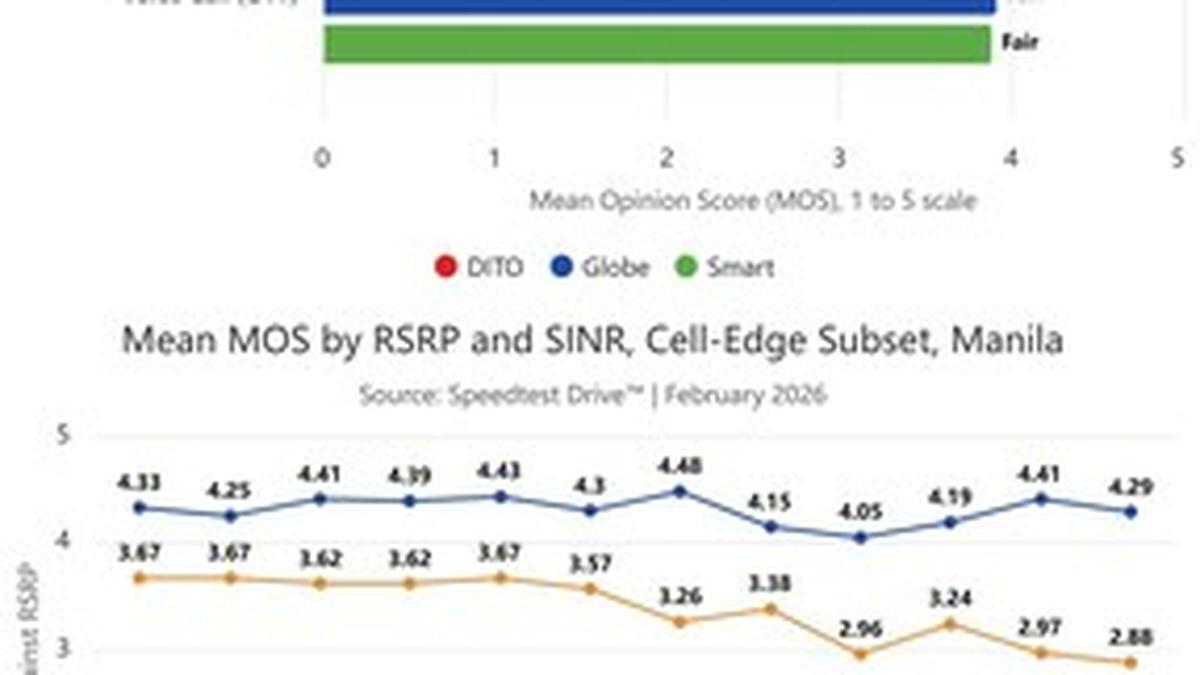
MANILA, Philippines , July 27, 2026 /PRNewswire/ -- Ookla's comprehensive controlled network test reveals that traditional mobile operator networks deliver a measurably superior voice experience compared to Over-the-Top (OTT) applications like WhatsApp, particularly in critical areas such as audio fidelity, weak signal resilience, and call reliability.The study, which evaluated the networks of the Philippines' three major mobile operators— Smart Communications, Globe Telecom, and DITO Telecommunity , demonstrates that carrier-managed VoLTE infrastructure remains the gold standard for consistent, high-quality communication, outperforming OTT voice services.Operator Voice Deliver Consistent HD Audio, OTT Apps Only Offer Fair QualityThe research found a distinct quality gap in audio performance. While operator voice calls consistently delivered HD-grade audio quality—rated " Good"(scoring > 4.0) to " Excellent" (scoring > 4.3) across all three networks, OTT voice calls were rated only as "Fair" (scoring < 4.0). Smart and DITO achieved higher MOS scores than Globe by deploying the advanced EVS codec, which offers superior audio fidelity over Globe's AMR-WB.Conversely, this gap exists because OTT apps treat voice as generic data packets, vulnerable to the internet's "best-effort" delivery. Even with operator network optimizations, OTT voice lacks the stringent Quality of Connection (QoC) guarantees. Under network stress—such as congestion, weak coverage, high packet loss, or significant jitter—OTT audio degrades noticeably. In contrast, VoLTE leverages exclusive high-priority cellular bearers to safeguard voice quality.Operator Voice Sustains HD Quality in Weak Coverage While OTT Calls DegradeThe performance gap widens significantly at the cell edge, where signal strength is low. Under moderate-to-low RF coverage conditions (RSRP ≤ -100 dBm), operator-managed VoLTE calls maintained HD-grade clarity.Conversely, OTT calls degraded further , slipping from "Fair" into the " Poor " (scoring < 3.6) and " Bad " (scoring < 3) ranges. This is a critical finding for consumers in areas with obstructed signals or far from cell sites, proving that dedicated voice bearers protect call quality where best-effort data (used by OTT) cannot.VoLTE Delivers More Reliable Call Connections Than OTTReliability is another key differentiator. The study shows that VoLTE has significantly lower block rates (call setup failure rates) than OTT services. For instance, Globe recorded the lowest VoLTE block rate at 0.47%, versus its OTT rate of 1.64%. This trend was consistent across operators, highlighting that the dedicated signaling protocols of VoLTE (like optimized SIP and SRVCC) provide a more robust connection experience than OTT's best-effort data model.The Path Forward: Building a Solid VoLTE Foundation for AI-Driven VoiceAs Philippine NTC mandates the 3G sunset by December 2026, the industry must prioritize comprehensive VoLTE coverage and user migration. Looking ahead, the convergence of voice and AI stands as the industry's definitive future trend. However, a high- performance VoLTE network is the vital prerequisite for this shift. Operators should continuously refine their VoLTE infrastructure, laying a solid foundation to seamlessly integrate voice with AI and unlock the next generation of intelligent calling experiences.