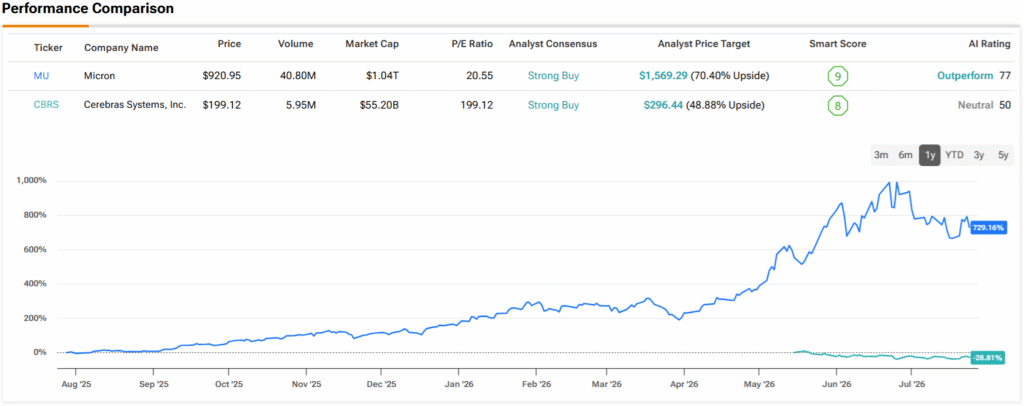
That, however, is where the similarities between the established memory leader and the emerging AI chip designer largely end.
Micron has delivered a stellar run over the past year, with its shares climbing 728% despite a 24% pullback from their June peak. The company is one of only three manufacturers capable of producing high-bandwidth memory (HBM), a critical component for advanced AI workloads.
Alongside broader concerns about AI spending, investors have also been watching developments that could improve computing efficiency. Earlier this month, China-based Moonshot AI unveiled its Kimi K3 model, which is designed to reduce the number of tokens required for inference tasks. The announcement prompted questions about whether more efficient AI models could eventually temper demand growth for the memory hardware that has been a key driver of Micron’s momentum.
Despite those concerns, one investor, known by the pseudonym Summit Research, believes Micron’s long-term outlook remains intact.
“Greater token usage and broader AI adoption compound the inherently higher memory requirements of larger frontier models, accelerating bit-demand growth that could be additive to Micron’s fundamental outlook,” states the 5-star investor.