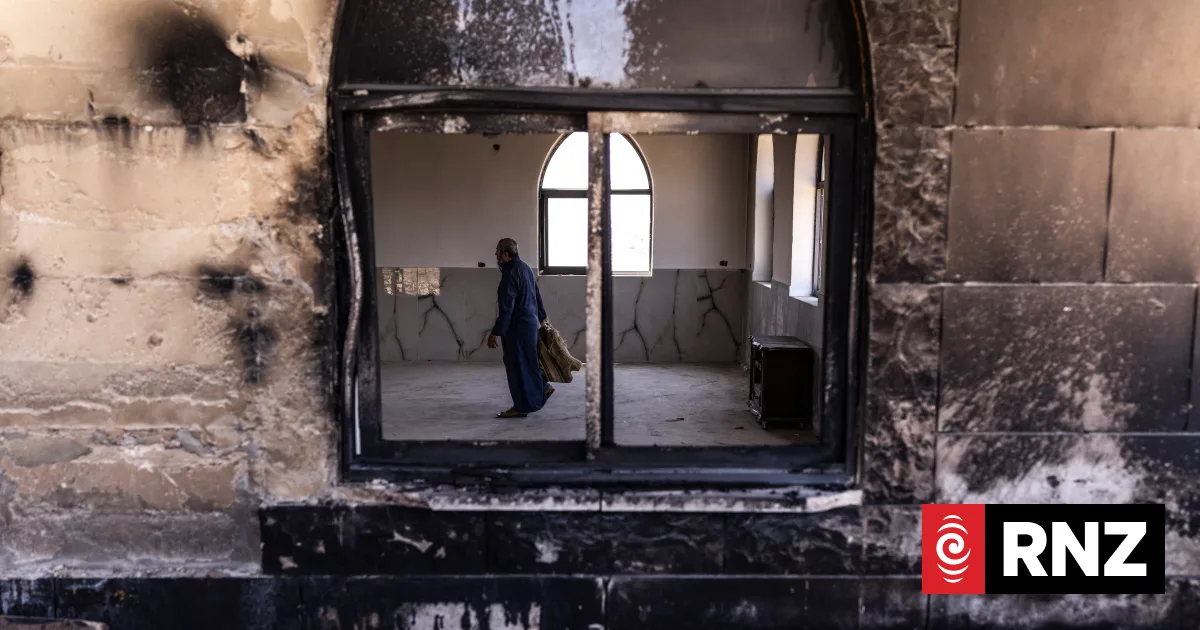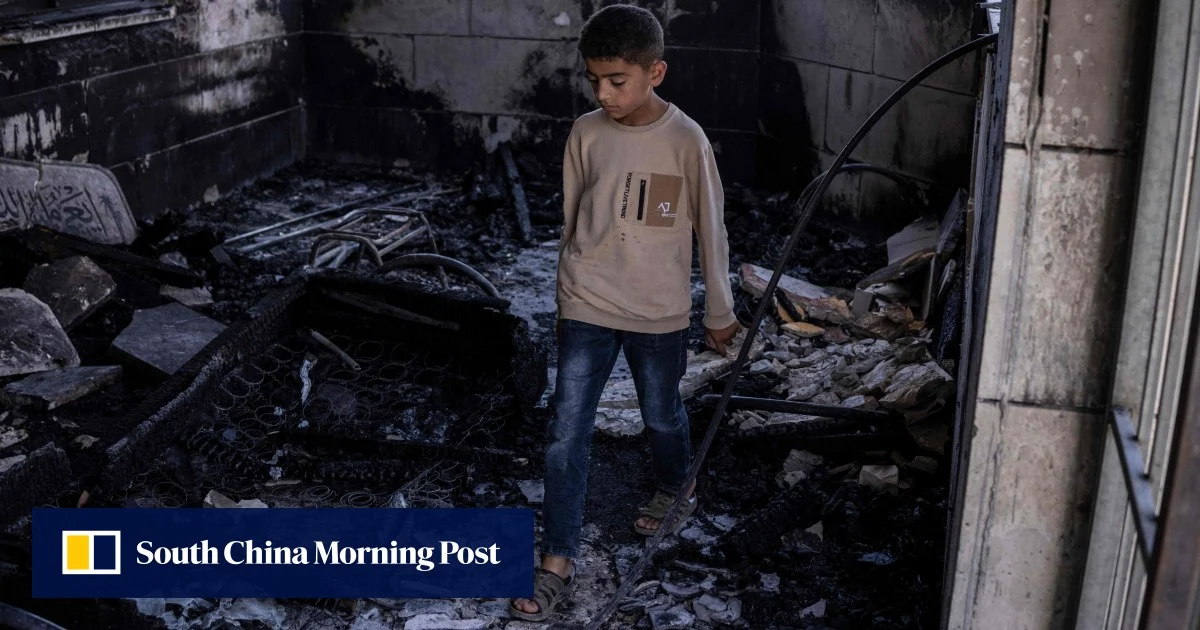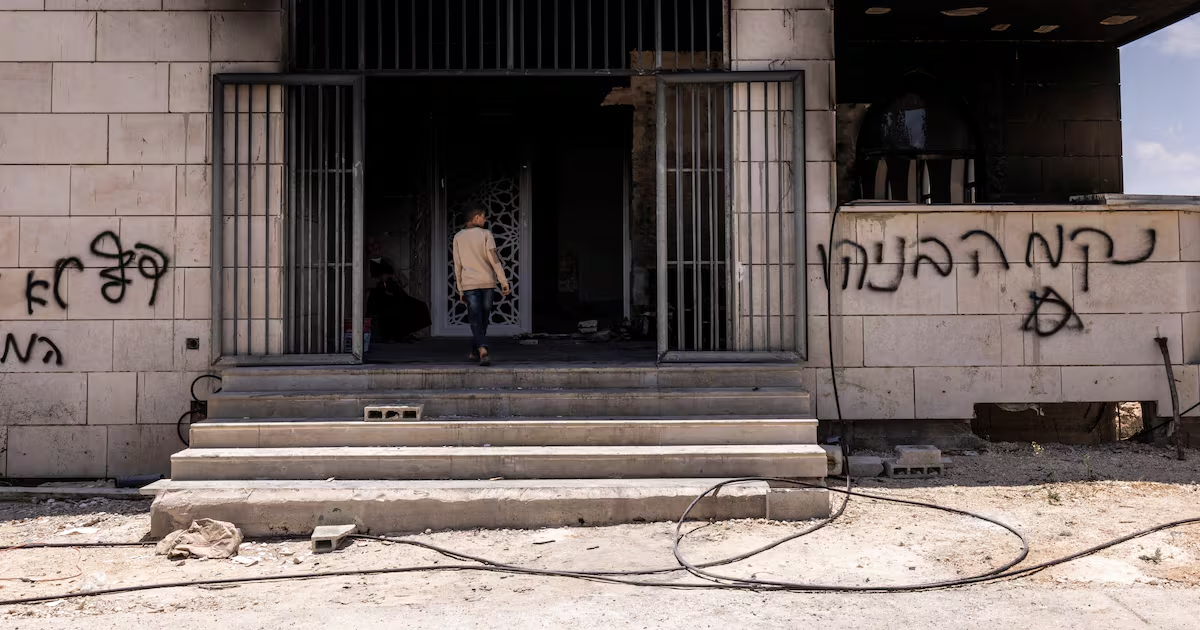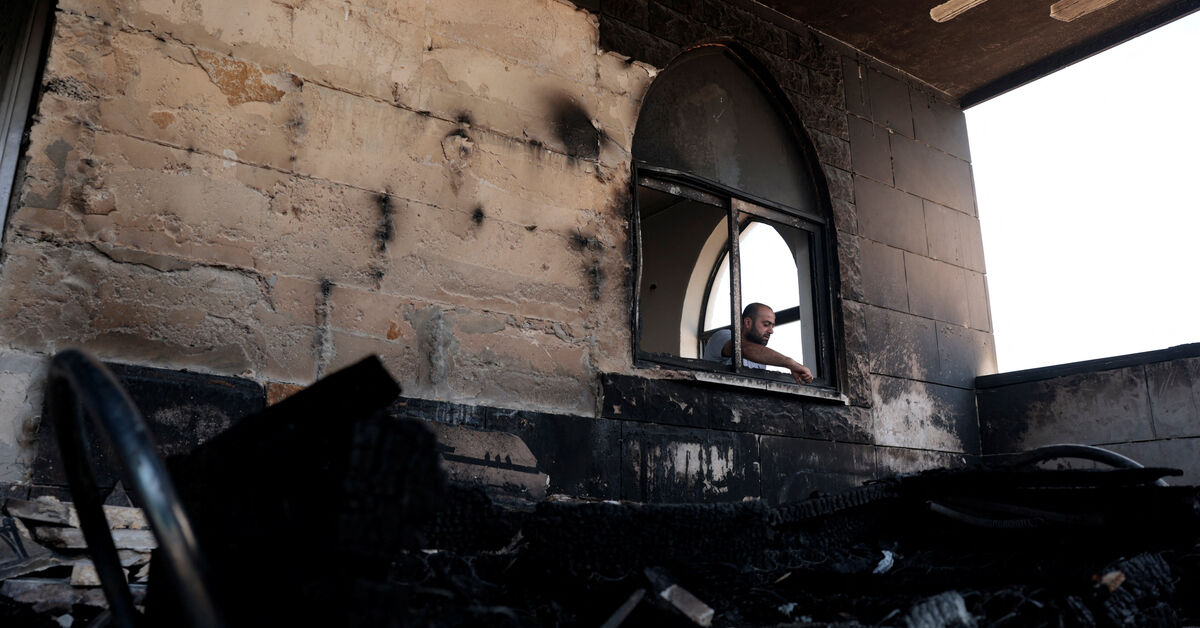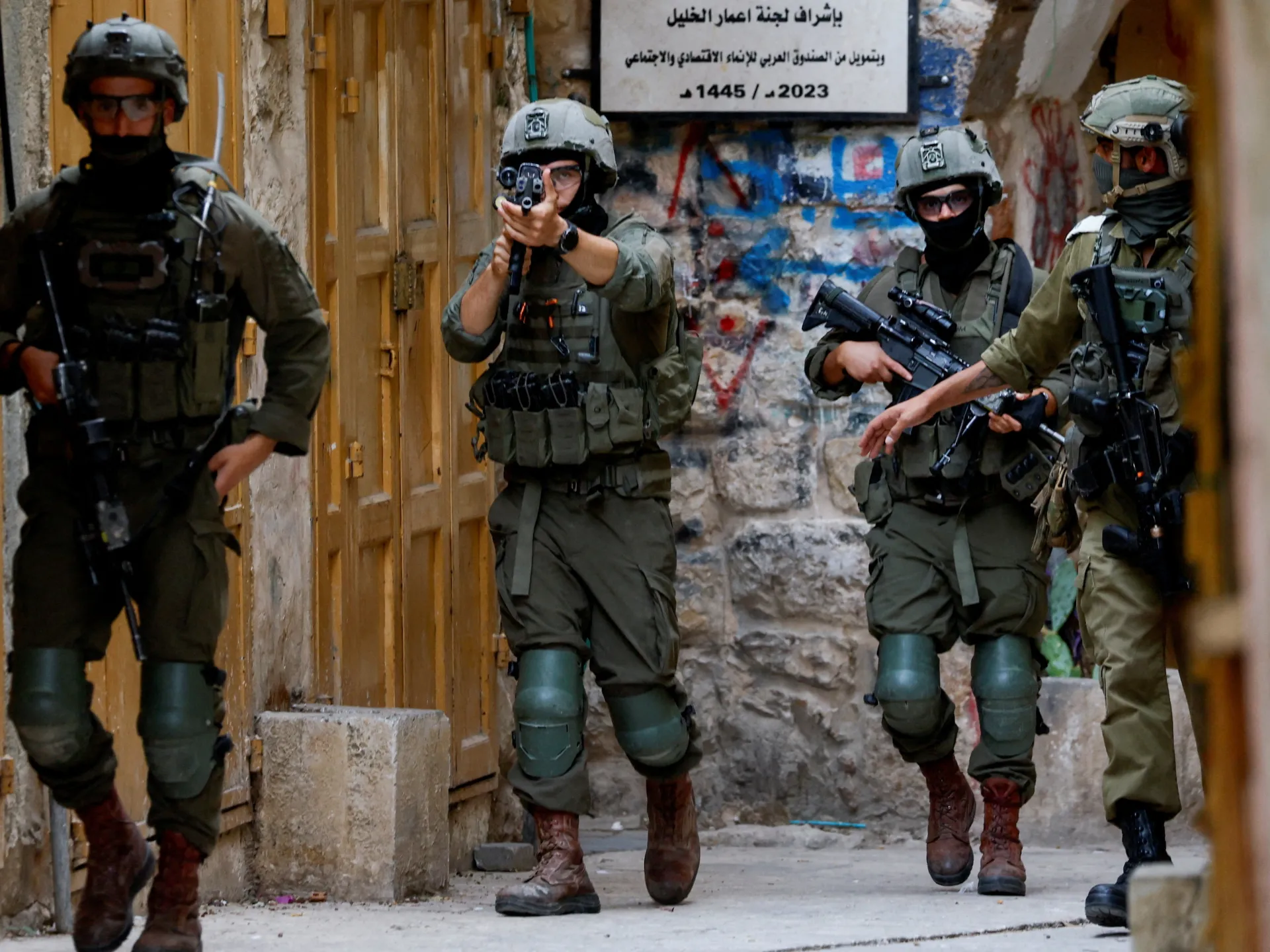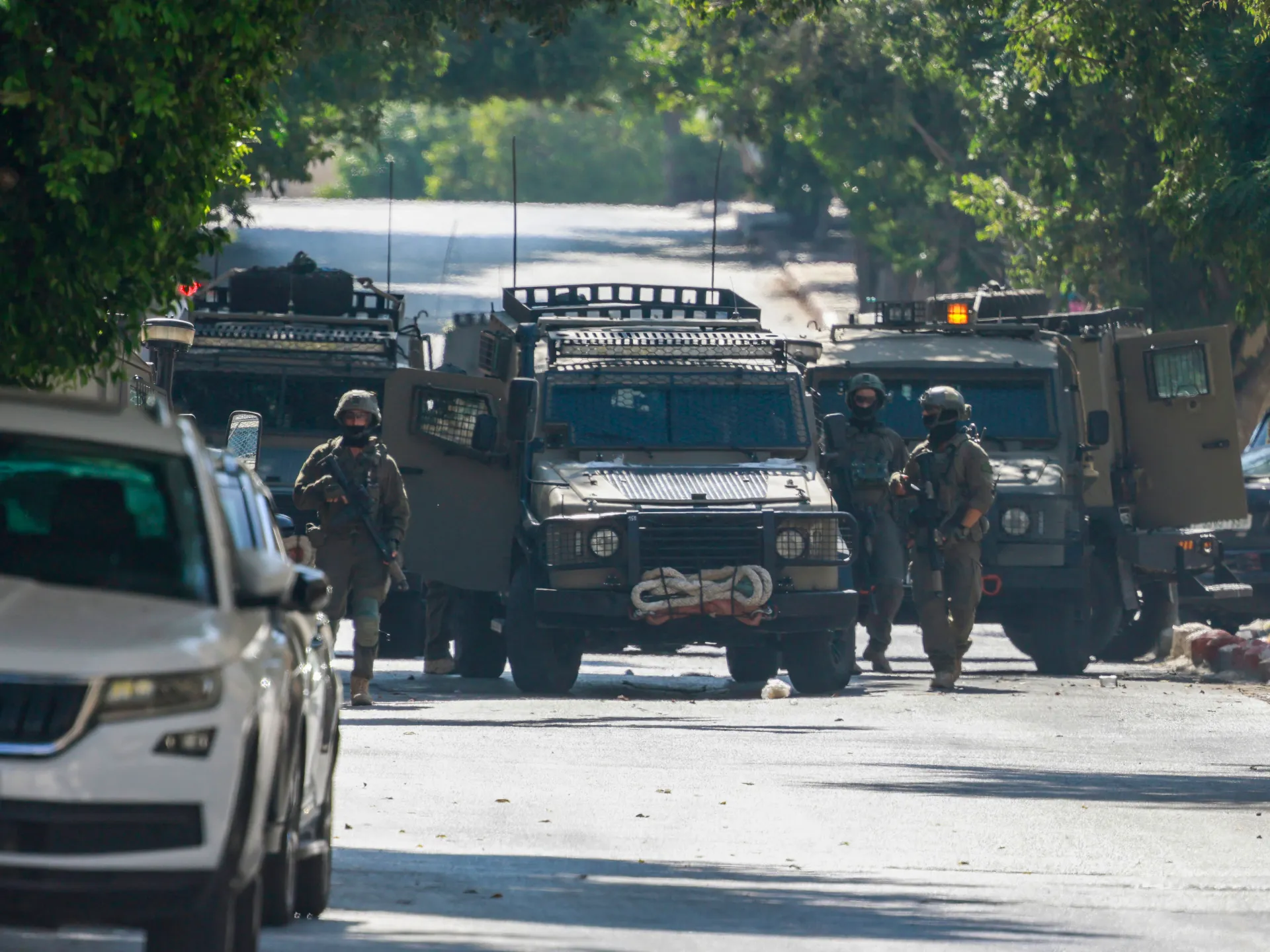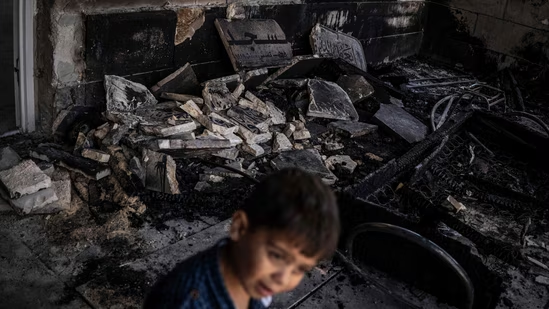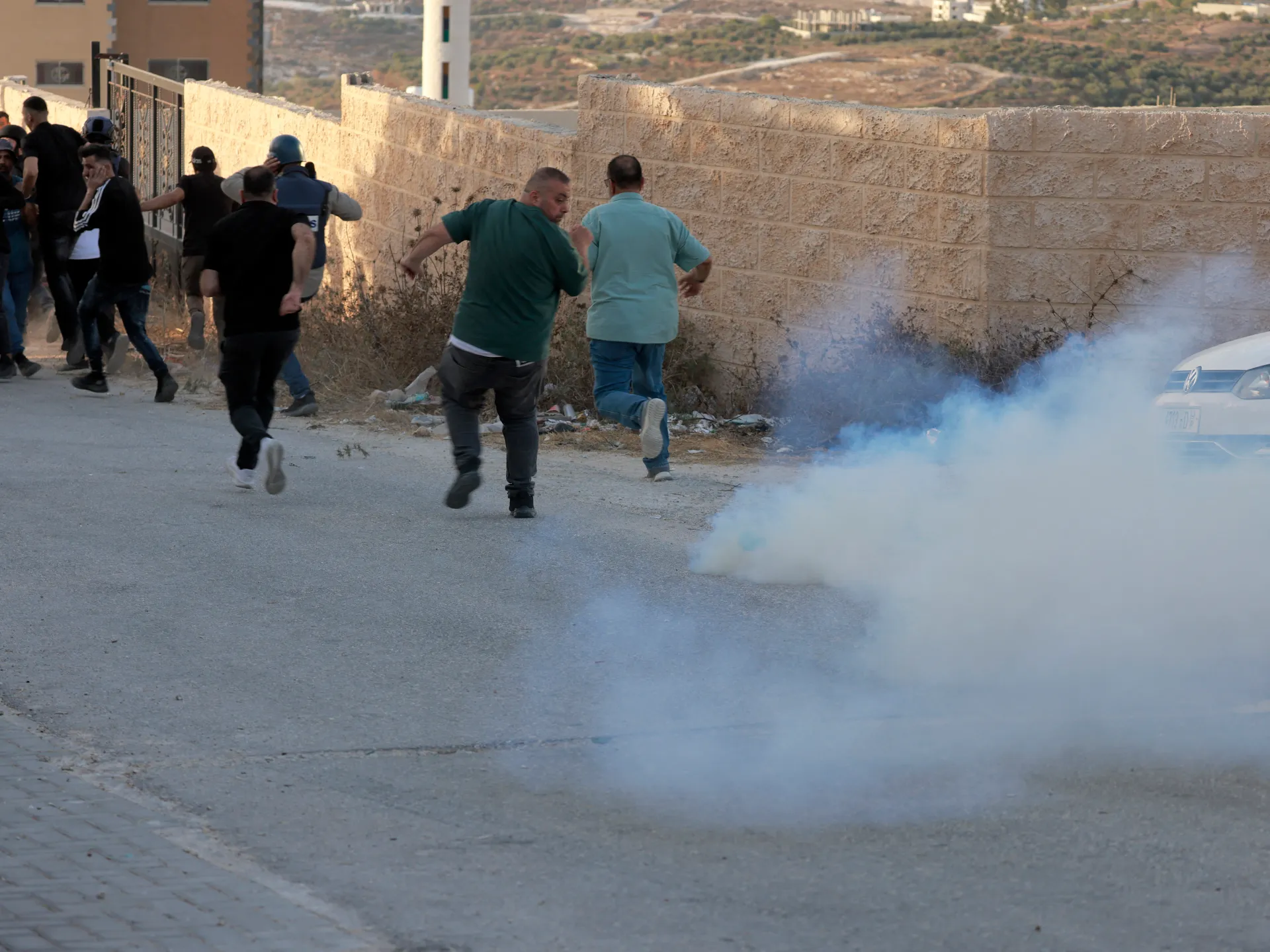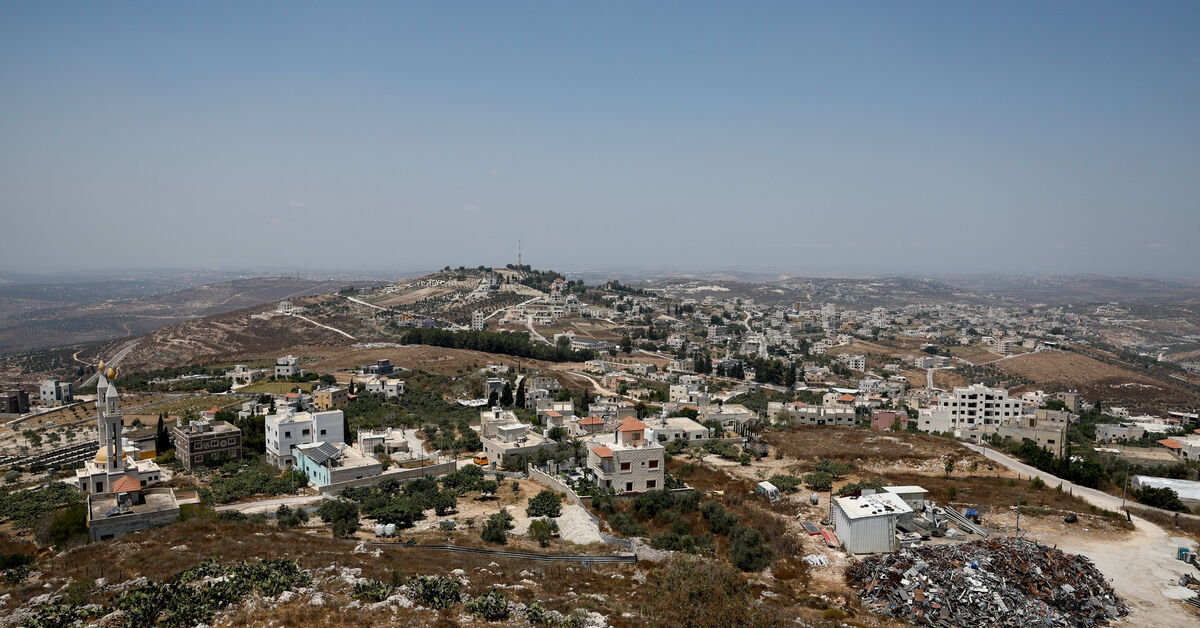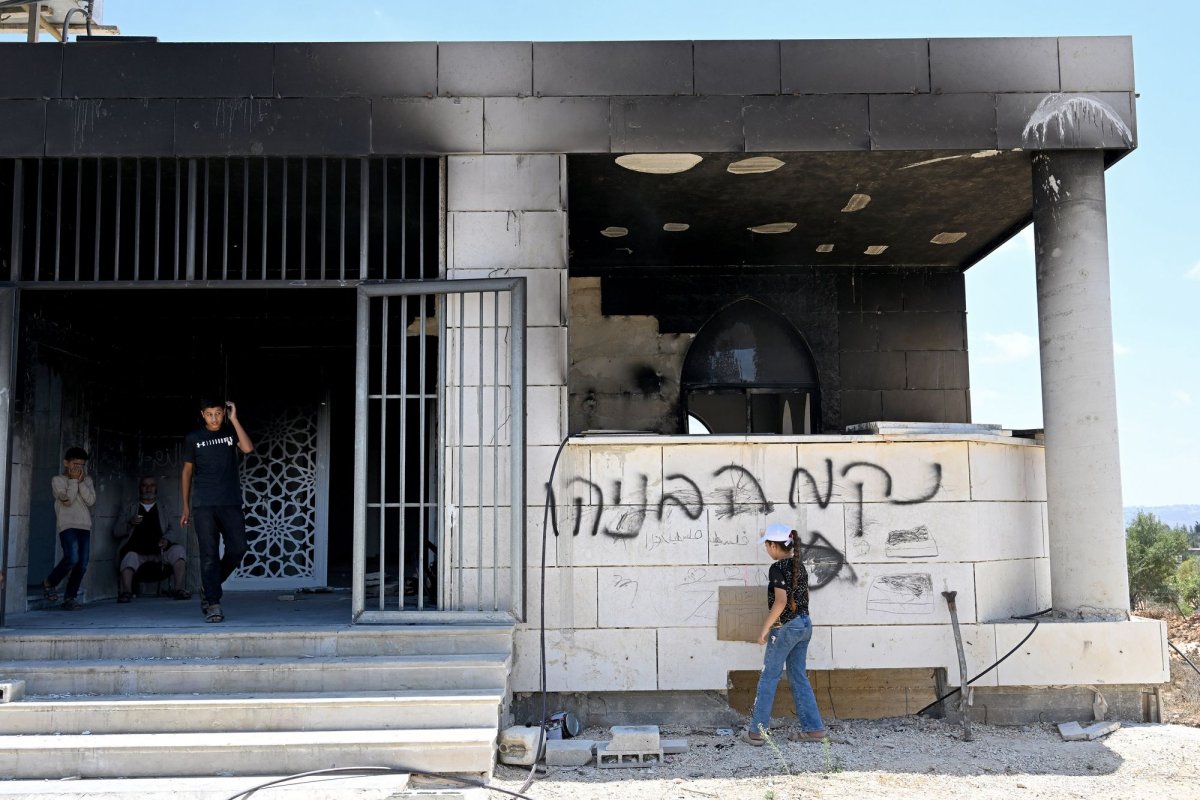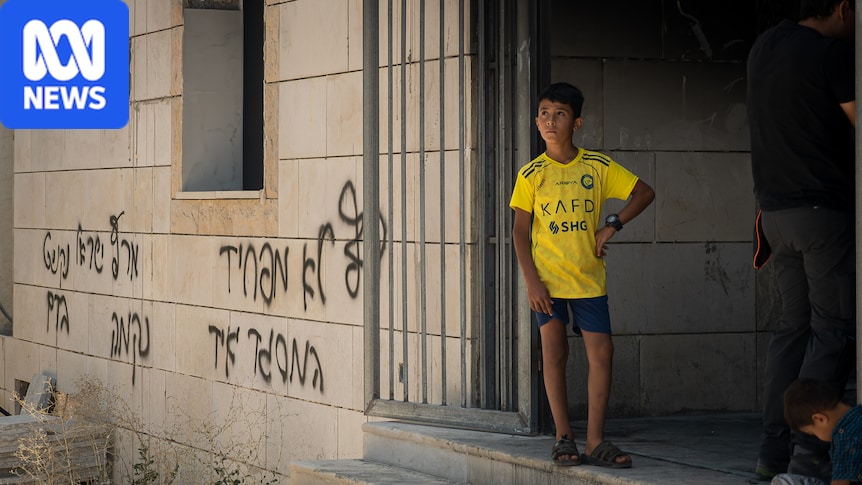
More than 130 Palestinians have been detained in weekend raids across the West Bank, according to the Israeli military, following a deadly clash between settlers and Palestinians on Friday.The shooting incident, which killed two Israelis and four Palestinians, was the deadliest single attack in the West Bank all year and fuelled a wave of retaliatory attacks by Israeli settlers on Palestinian towns and villages.Settlers remain camped out at the site of the shooting on the edge of the Palestinian village Tell, south of the city Nablus.One of the group of about six settlers, believed to be from the nearby community of Havat Gilad, told the ABC to "leave the area quickly before we shoot you" on Sunday.Settler retaliatory attacks continued after the shooting, including in the neighbouring village of Sarra. Settlers used bulldozers to destroy olive trees, and cars and houses in the area were set on fire.Ahmad Rawhi Abdallah Turabi's home was one of those seriously damaged."We are not armed," he said."We don't have weapons, only stones [and] sticks."They attacked us, they stole the land. We are on our land. He is a settler and wants to own land that doesn't belong to him."A partially constructed mosque in Qusra, south-east of Nablus, was also among the sites targeted over the weekend. People pray at a damaged mosque in the occupied West Bank.(ABC News: Hamish Harty) A fire-damaged building in the occupied West Bank.(ABC News: Hamish Harty) Palestinian reports say that two villages in the occupied West Bank have come under attack from settlers.(ABC News: Hamish Harty)It was firebombed and spray painted with words such as "revenge" on the side of the building."The second [piece of graffiti] is that, 'Mosques don't threaten us,'" Qusra Mayor Abdel Azim Wadi told the ABC."The third is, 'Israel will be established with blood.'"The settlers' violence never stopped, but now it has become more aggressive because of the IDF [Israel Defense Forces] support and the Israeli government." Israeli settlers spray painted graffiti on walls in the occupied West Bank, Palestinians say.(ABC News: Hamish Harty) A young Palestinian boy stands near a wall marred by graffiti.(ABC News: Hamish Harty) A wall with black graffiti in the occupied West Bank.(ABC News: Matthew Doran)The community in Tell continued to mourn the four Palestinians, all members of the Ramadan family, killed in the attack on Friday.Ahmad Ali Ibrahim Ramadan's son, Imran, was among them."All [the settlers] want is to kick us out from our country," he told the ABC."It's an honour for us to die here and be buried here. We will not leave this land."My message is we are not terrorists. They send their terror to us."Israelis say they were attacked on FridayIn the aftermath of Friday's shooting there were different accounts of how exactly the incident unfolded.A group of Israelis from the Havat Gilad settlement said they were hiking along the edge of Tell on Friday when they were attacked. Israeli settlers camped out at the site of the shooting near Tell.(ABC News: Matthew Doran) The site of a deadly shooting near the village of Tell in the occupied West Bank.(ABC News: Hamish Harty) The village of Tell, south of Nablus, is reeling from tensions in the territory flaring after the deadly shooting incident.(ABC News: Hamish Harty)The local Palestinian residents argued they were provoked by armed and aggressive settlers, supported by the military, and were trying to protect their community.Video shared on social media showed one of the Palestinians who was shot wrestling with one of the armed Israelis, taking his rifle and shooting.Another video, from a different angle, showed Israeli soldiers opening fire as a result of the altercation.Two Israelis and four Palestinians were killed in the shooting, local authorities said, with more Palestinians taken to hospital in nearby Nablus.In the hours after the shooting, the IDF stormed the hospital and detained those alleged to be accomplices.The Netanyahu government also ordered large-scale "counterterrorism" raids across the area and the demolition of the homes owned by the Palestinians involved in the shooting.Leave for Israeli reservists was cancelled, and extra soldiers were redeployed from Lebanon and Gaza to the West Bank to bolster the military's response to the shooting."The instructions we gave were to enter the villages, search them, seize weapons, and make arrests," Prime Minister Benjamin Netanyahu said on Sunday."These actions have been carried out and are being carried out at this very moment."There has also been an operation at the hospital in [Nablus], where two accomplices were hiding. They were taken into custody."The terrorist's house was sealed ahead of its demolition. The homes of the other accomplices were also mapped in preparation for action against them, and we are prepared to act more broadly against terrorist strongholds."Palestinians fear violence may escalateMuch of the area around Nablus remained in a state of lockdown on Sunday, with armed soldiers running checkpoints on main roads, and gates restricting access to villages across the region. Palestinians say "settler violence never stopped" in the occupied West Bank.(ABC News: Hamish Harty)"The [Israeli] occupation army and the settlers are two sides of same coin," Nablus Governor Ghassan Daghlas told the ABC."The settlers came to this village. The village didn't go to Tel Aviv."He feared the violence would only escalate in the coming weeks, ahead of the Israeli election, with politicians not wanting to appear weak on the issue of settlements in the West Bank.Far-right members of the Netanyahu coalition cabinet, particularly Finance Minister Bezalel Smotrich and National Security Minister Itamar Ben-Gvir, have demanded more settlements be built and more Palestinian communities be forced from their land.Settlements in the West Bank are considered illegal under international law."The price is Palestinian blood," Mr Daghlas said.
Settler firebombing and 'revenge' graffiti follow clash in West Bank
More than 130 Palestinians have been detained in weekend raids across the occupied West Bank, according to Israel's military, following a deadly clash between settlers and Palestinians last week.
940 words~4 min read