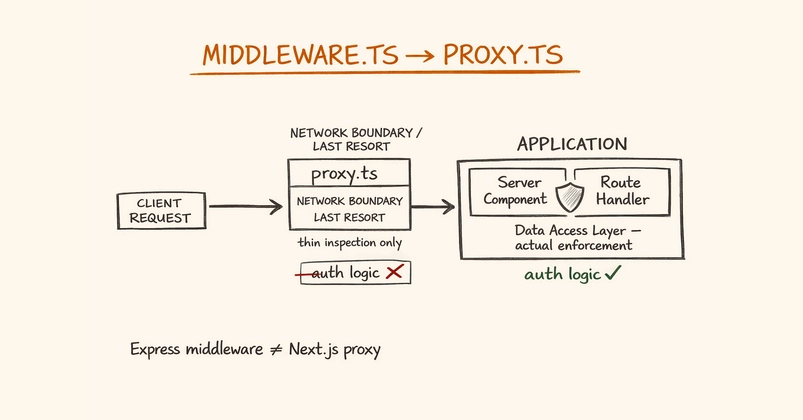
Headline: Next.js Middleware (middleware.ts at the project root) runs before every matched request — before cache, before rendering, before the route. That position makes it right for auth redirects, A/B cookie bucketing, and locale detection. Wrong for database queries and heavy imports. In 2026, Middleware on Vercel runs on Fluid Compute (standard Node.js), so the constraint is latency budget, not API availability.
Key takeaways
Middleware runs before every matched request — before cache, rendering, or route handler — the right layer for auth, locale, and A/B bucketing.
Middleware can read requests, set cookies, redirect, rewrite, or return early — without the route running. DB queries and large packages add latency to every request.
On Vercel in 2026, Middleware runs on Fluid Compute (standard Node.js). The constraint is latency: every added millisecond is paid on every matched request.