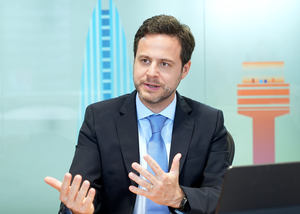
Gunnar Riediger calls for broader adult vaccination while highlighting Korea’s growing role in global clinical research Gunnar Riediger, country president of GSK Korea, speaks in an interview with The Korea Herald and Herald Business in Seoul on Tuesday. (GSK Korea) As South Korea grapples with the realities of becoming a super-aged society, healthcare systems should evolve beyond treating illnesses and place greater emphasis on preventing them before they occur, says Gunnar Riediger, country president of GSK Korea.“I think the good thing is that people are living longer. This is great news,” Riediger said in an interview with The Korea Herald in Seoul last week."Now what is probably the most relevant element in that respect? It's not only about living more years, but also about how you live with a better quality of life."Riediger noted that the country's demographic shift presents both a challenge and an opportunity to rethink healthcare policy, particularly through broader adult immunization.Under the United Nations’ standards, South Korea officially entered the ranks of super-aged societies in 2024, with more than 20 percent of its population aged 65 or older.While increased longevity reflects advances in medicine and healthcare, it also raises long-term concerns over healthcare spending and age-related diseases. Against that backdrop, Riediger said he believes prevention should play a much larger role in public health policy."The industry and GSK, as one of the leading forces around this, has already been investing for a few years in prevention options for diseases that impact what we call older adults," he said.The GSK Korea chief said that vaccination strategies should no longer focus primarily on children and adolescents but expand to older populations, helping people remain healthier for longer while easing pressure on healthcare systems."We quite often refer to healthcare systems, but usually healthcare systems are much more connected to treating diseases rather than preventing diseases. So they are actually more sick-care systems than healthcare systems," he said."In that respect, vaccination can play a fundamental role in making sure that we move more and more toward healthcare systems rather than sick-care systems."The philosophy mirrors Riediger's own career at GSK, where he has spent more than 22 years after joining through the company's Future Leaders program. Before coming to Seoul from Colombia last year, he worked extensively in vaccines, including leading GSK's response to the H1N1 influenza pandemic in Brazil."A vaccine is just a product. Vaccination is when we are really protecting people," he said.The focus on prevention comes as GSK Korea celebrates its 40th anniversary this year. Since entering the Korean market in 1986, the company has expanded beyond its traditional strengths in respiratory medicine and vaccines into HIV, oncology, hematology and precision medicine to address evolving healthcare needs while supporting Korea's public health agenda.He described Korea as one of GSK's strategically important research markets. According to Riediger, Korea ranks among the company's top 10 markets globally for research and development investment, supported by advanced medical infrastructure, internationally recognized hospitals and highly trained physicians participating in multinational clinical trials.“That is reflected in clinical trial projects for innovative products we are developing that are happening here in Korea, connected with Korean experts and Korean patients, not only for the purpose of landing innovation in Korea, but across the world,” he said.Beyond research and innovation, he said the firm continues discussions with Korean authorities on policy initiatives ranging from expanding adult immunization to regulatory cooperation, including mutual recognition agreements that allow regulators to rely on overseas inspections to accelerate patient access to medicines.Looking ahead, Riediger emphasized that GSK Korea's priorities will remain centered on bringing innovative treatments and preventive solutions to Korean patients while strengthening the company's organizational culture."Our mission and the way we see this is making sure that we are able to be ambitious for patients, that every employee feels their own individual accountability for the impact we generate, and that we always do the right things, not only for the company but primarily for the patients we serve," he said. GSK Korea officials, including Country President Gunnar Riediger (center), pose for a photo during an event marking the firm's 40th anniversary on July 8. (GSK Korea)
Aging Korea must put prevention first: GSK Korea chief
As South Korea grapples with the realities of becoming a super-aged society, healthcare systems should evolve beyond treating illnesses and place greater emphas
688 words~3 min read