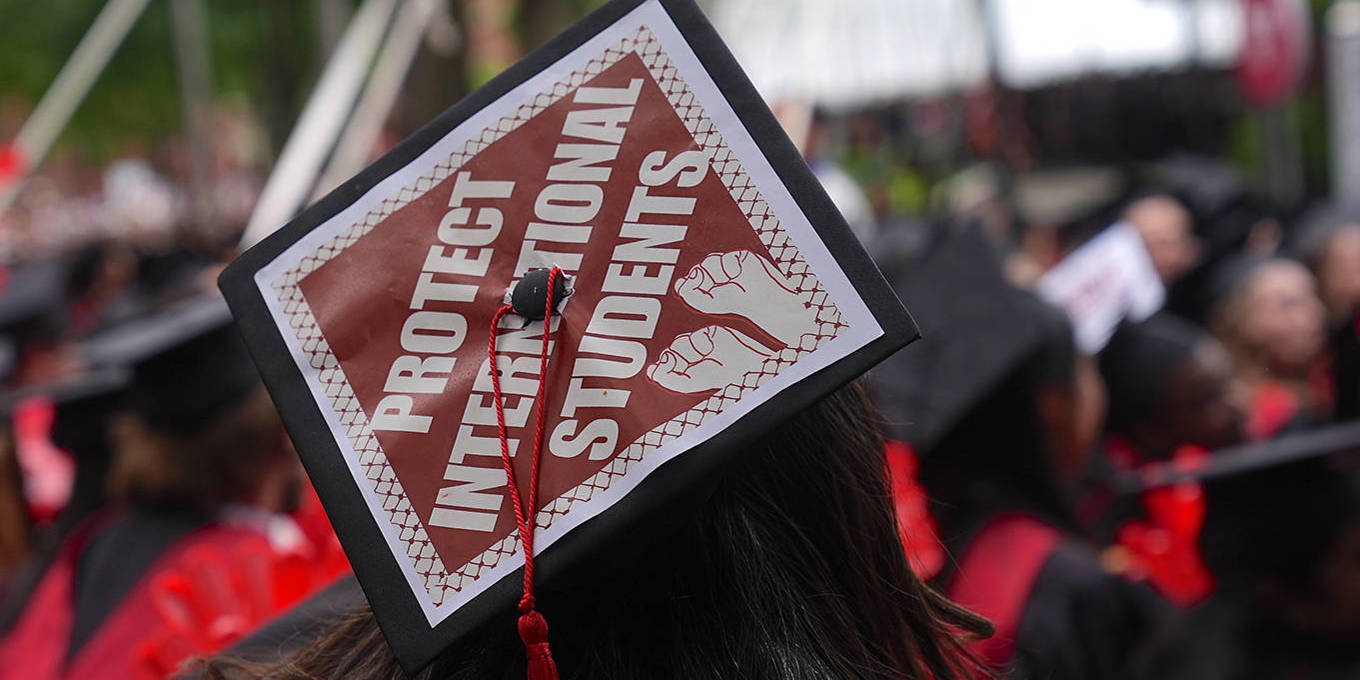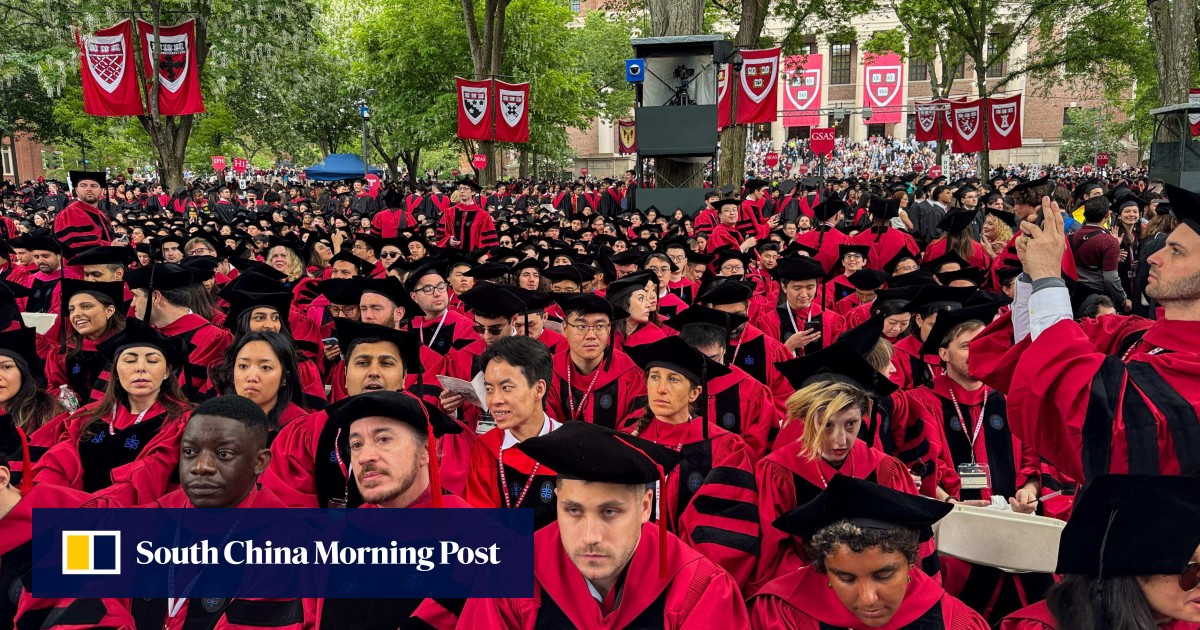
Pinelopi Koujianou Goldberg For generations, the United States distinguished itself not simply by its wealth or military power, but by offering ambitious people born in other countries the chance to overcome the birthplace lottery. Unfortunately, the Donald Trump administration’s new visa policy for international students signals a gradual retreat from this defining ideal.By replacing the long-standing "duration-of-status" framework with fixed admission periods and stricter rules governing extensions and continued enrollment, it makes the path to studying in America, and ultimately building a productive life there, more uncertain.But the most talented students will still find ways to come to the US, leading universities will continue to recruit them and employers will continue to sponsor them. The policy raises costs and creates uncertainty, but it does not shut the door completely.The signal the change sends is more far-reaching. For the average student abroad — not the exceptional candidate with multiple offers from elite institutions, but the ambitious young person hoping that education might provide a path to a better future — the calculation changes. Every additional administrative hurdle, every increase in uncertainty and every signal that foreigners are less welcome discourages applications.To some extent, this shift may reflect changing economic realities. For decades, international students filled critical roles as research assistants, teaching assistants and laboratory researchers before moving to technology companies and other industries hungry for highly skilled workers. As artificial intelligence begins to automate some of these tasks, and as employers anticipate a future requiring fewer entry-level knowledge workers, the economic incentives for importing talent may weaken.Whether this transition proves as extensive as many expect remains to be seen. It would not be surprising if changing labor-market conditions made governments more willing to restrict high-skilled immigration. But even if that interpretation is correct, it misses what has historically made the US exceptional as the land of opportunity.Debates about inequality in advanced economies typically focus on disparities within countries: Progressives emphasize income and wealth inequality, whereas conservatives point to the geographic inequalities caused by deindustrialization and globalization. But while both concerns are important, they pale in comparison to the inequalities created simply by the accident of being born in one country rather than another.A child born in Somalia faces opportunities fundamentally different from those available to a child born in the US. A girl born today in Afghanistan confronts barriers that a girl with identical talents born in Sweden is unlikely ever to encounter. These disparities dwarf many of the inequalities that dominate political debate in rich countries.For much of its history, the US welcomed people willing to work hard, build businesses, study, innovate and contribute to economic growth. The result benefited both immigrants and the US itself.This is not to romanticize the American Dream. Research by the Harvard economist Raj Chetty has demonstrated the extent to which a child’s prospects depend on where he or she grows up within the US. In their influential book "Streets of Gold," economists Ran Abramitzky and Leah Boustan have shown that the classic "rags-to-riches" immigrant story often unfolded across generations rather than within a single lifetime. Many immigrants remained poor; it was their children and grandchildren who climbed the economic ladder.But these findings reinforce the broader point. The first generation may not always have prospered, but immigrant parents gave their descendants opportunities that would have been unimaginable had they remained in their countries of origin. The American Dream was never a guarantee of success. It was a guarantee that success was possible.Of course, that possibility is unevenly distributed: Family background, neighborhood, schools and social networks all influence whether individuals even perceive the opportunities available to them. But it is a better proposition than the situation faced by millions around the world whose opportunities are constrained not only by circumstance, but also by the borders they cannot cross.This possibility has also distinguished the US from many wealthy societies that pride themselves on equality and social justice but maintain far more restrictive immigration regimes. America’s openness was never perfect, nor was it motivated solely by generosity. It was an exercise in enlightened self-interest that also happened to reduce one of the world’s deepest forms of inequality.Viewed in isolation, the effects of the new visa policy may seem modest. But as part of a broader retreat from openness, it signals that the country once known for offering ambitious outsiders a chance to transform their lives is less willing to do so. That marks not simply a change in immigration policy, but a renunciation of a key source of America’s strength.- - -Pinelopi Koujianou GoldbergPinelopi Koujianou Goldberg, a former World Bank Group chief economist and editor-in-chief of the American Economic Review, is a professor of economics at Yale University. The views expressed here are the writer's own. — Ed.(Project Syndicate)
[Pinelopi Koujianou Goldberg] Closing door on opportunity
For generations, the United States distinguished itself not simply by its wealth or military power, but by offering ambitious people born in other countries the
792 words~4 min read