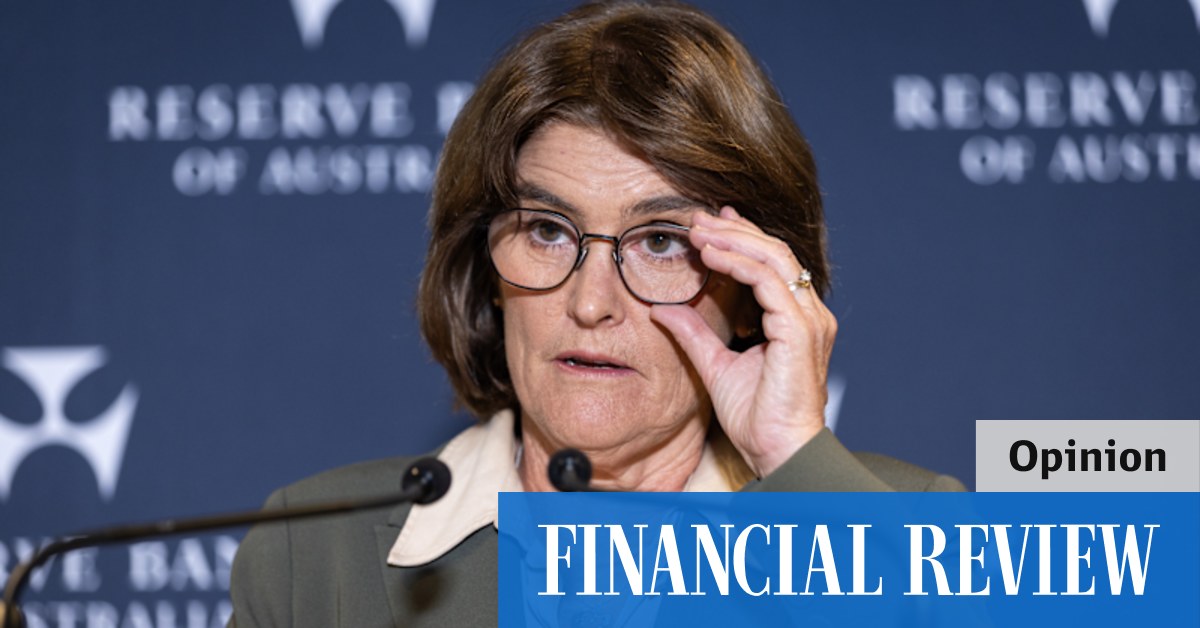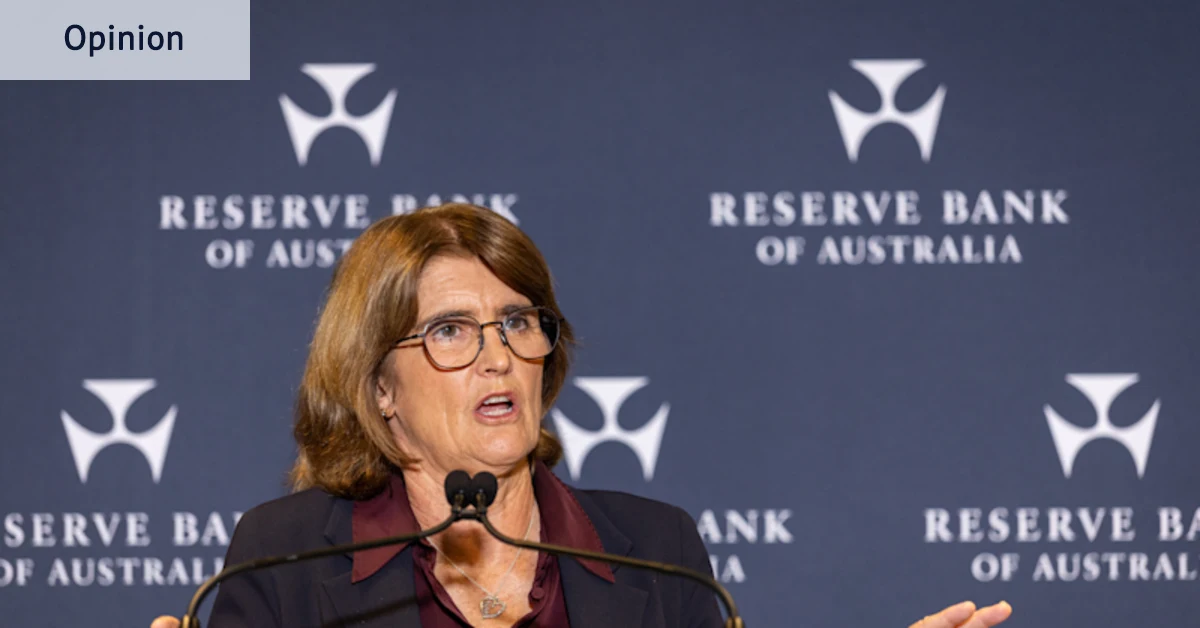
OpinionJuly 27, 2026 — 5:00amPeople with hefty mortgages could be in for some unwelcome news later this year, if the signals coming from an arcane corner of the financial world are to be believed.Markets that tell us where traders think Australian interest rates are heading have recently started to price in a further hike in the cash rate this year as a virtual certainty. While a move next month is seen as a roughly a one-in-three chance, a move by December has been seen as a done deal.The dilemma facing RBA governor Michele Bullock is becoming more acute.Louie DouvisIf these markets are right – admittedly a big “if” – homeowners will be staring down interest rates of 4.6 per cent by the end of 2026, which would be their highest level since 2011. The housing market slump would also be deeper if the RBA raises rates again.However, do you ever feel the interest rate prediction game seems to change by the month? You’d be right. It’s a fickle business, and we in the media are just as guilty of indulging in rampant interest speculation as anyone.It was only last month that some of the nation’s top economists were revising their predictions to say interest rates had peaked, and the next move would most likely be a cut in rates some time in 2027, not a hike. Indeed, this remains the view of the three big banks, except for Westpac.Fast forward to today, and the narrative in markets has shifted. Now traders are worrying more about the risks of inflation after the Iran peace deal has imploded, while last week Australia had stronger employment growth than expected. In the topsy-turvy world of interest rate forecasting that good news for people who have found jobs is bad news for people with home loans.Our economy is being dogged by both high inflation and weak growth – a combination that makes the RBA’s balancing act even tougher than usual.But what happens if we try to step back from the week-to-week financial noise? Has anything really changed in the economy lately that should make the Reserve Bank more inclined to jack up interest rates again?I’d argue that despite market bets that another rate rise this year is coming, the case for further tightening in rates hasn’t been made yet. Holding rates at 4.35 per cent would make much more sense.Anyone hoping for interest rate certainty, however, is likely to be disappointed. That’s because the markets are right to think that the decision facing Reserve Bank governor Michele Bullock and the rest of the board is getting harder.Why? Because our economy is being dogged by both high inflation and weak growth – a combination that makes the RBA’s balancing act even tougher than usual.Bullock’s job is full of trade-offs. The RBA’s job is to use the “blunt instrument” of interest rates to keep inflation between 2 and 3 per cent – using rate rises to slow the whole economy, and rate cuts to boost it.At the same time the RBA is tasked with pursuing “full employment,” but sometimes there’s a tension between these two goals.Currently, for example, our inflation is far too high, but it’s also not clear that jacking up interest rates will solve the problem, though we do know such a move would have other nasty side effects.There’s no denying our inflation problem. The consumer price index was well outside the target band, at 4 per cent for the year to May, and the RBA’s latest Statement on Monetary Policy forecasts it will still be at 3.1 per cent (on a trimmed mean basis) in June next year. Markets will be closely watching this week’s June quarter CPI data for more information on this front.Higher petrol prices driven by the recent jump in oil prices are bad news for inflation.Oscar ColmanYet while inflation is bad, the RBA has already acted decisively in an attempt to bring it down – remember it hiked in three meetings earlier this year – and growth is weakening. We won’t know the full impact of these hikes for months, but they will sting, that’s the whole point.The dilemma facing the RBA is whether to hike rates even further, knowing that it will inflict more pain, as part of its quest to get inflation back towards its target band.Last month it was easier to make the argument the RBA should sit on its hands. But this has been complicated by the price of oil moving back up to US$100 ($143) a barrel, thanks to the Iran war flaring up again.Higher petrol prices are clearly bad news for inflation – and there’s also a danger that higher fuel costs also cause businesses to raise their prices further.However, it’s not clear that raising interest rates to slow the economy further is the best way to respond to a spike in petrol costs. For one, higher fuel costs already slow the economy by forcing many people to spend less than they otherwise would.Higher rates also don’t do anything to make petrol cheaper, they just force households to rein in spending a bit more in the hope this eventually causes businesses to raise prices by less than they would have.What’s more, the economic backdrop has changed from earlier this year, when a surge in oil prices added to inflationary pressures which prompted several consecutive RBA hikes.The housing market is now in clear decline in some of our biggest cities, and data from the Commonwealth Bank’s millions of customers has shown a softening in their spending this year compared to 2025.As the bank’s economists note, this weaker spending by households makes it harder for businesses to jack up their prices because more cautiously-minded consumers are less likely to accept price hikes.So, despite the recent jump in oil prices, the economy is in a weaker position than it was earlier this year when the RBA launched its hat-trick of rate rises. Given that softening that is under way, it makes more sense for the RBA to sit on its hands for a while, despite what the markets are pricing in.The Business Briefing newsletter delivers major stories, exclusive coverage and expert opinion. Sign up to get it every weekday morning.Clancy Yeates is deputy business editor. He has covered banking and financial services, and was previously national business correspondent in the Canberra bureau.Connect via X or email.From our partners
The RBA faces a dilemma, but more rate hikes aren’t the solution
Markets think another rate rise this year is close to a sure thing. But given the economy’s already slowing, the RBA should sit on its hands for a while.
1,061 words~5 min read