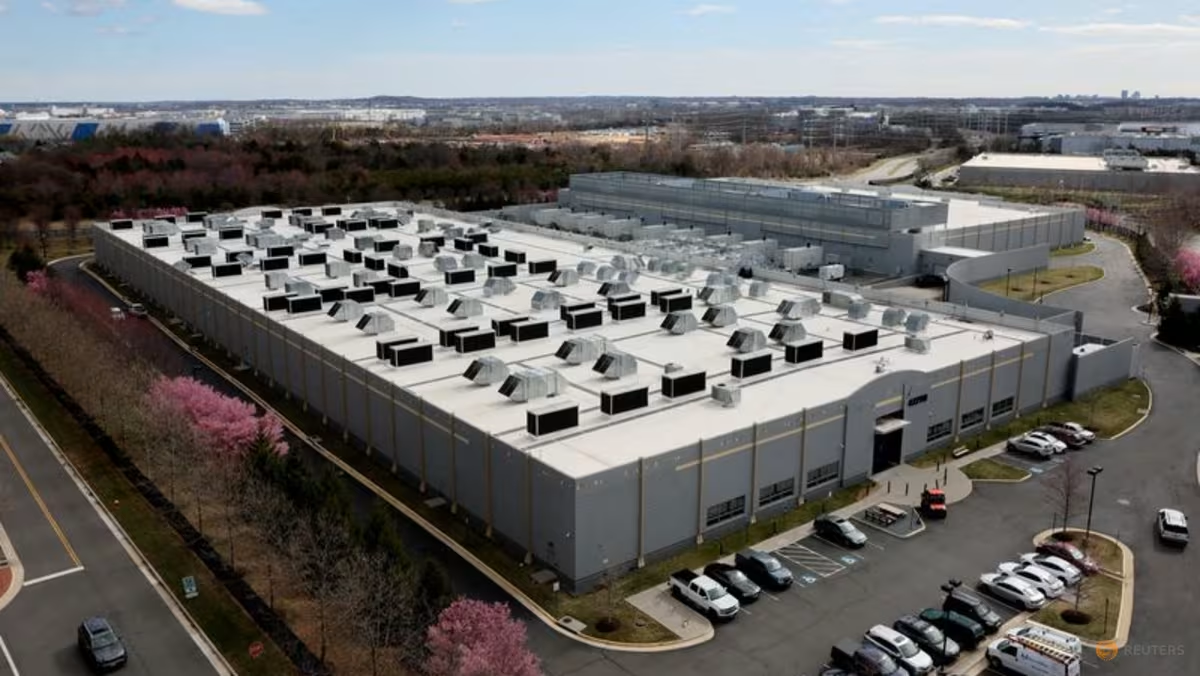
AI chips come with high power demands, as do the server racks that house them, and those power requirements call for additional generation capacity, transmission infrastructure, and extensive cooling systems. All of that, in turn, requires extensive physical build-out, bringing capital expenditure costs, lengthy construction timelines, and dependence on key materials. In short, power availability has become the bottleneck that will define the AI industry going forward.
The solution for the industry will lie in securing power and the necessary infrastructure on the shortest schedule at the lowest cost. And the answer may lie among the bitcoin miners.
Bitcoin mining already requires a massive data center infrastructure, and piggybacking AI onto bitcoin mining has two built-in advantages for both industries: first, that bitcoin mining predates the AI expansion; and second, that AI data center use can generate significantly more revenue per kilowatt-hour of power consumption than can bitcoin mining.
As a result, several bitcoin miners have been aggressively pursuing AI data center contracts. The strategy reflects the reality that existing mining sites, power infrastructure, and data centers can generate substantially higher returns serving AI workloads than bitcoin mining alone. By leasing that infrastructure to AI customers, miners can diversify their revenue streams while positioning AI data center operations to become a larger contributor than bitcoin mining over time.