By Suvankar Chakraborty | Principal Engineer — IAM, Modern Workplace Management & IT Operations
The Collaboration Platform That Became a Governance Nightmare
Microsoft Teams was deployed at extraordinary speed across the enterprise world. In most organisations I know, the deployment timeline went something like this: March 2020, global pandemic, remote work mandate, Teams switched on, everyone told to use it, governance deferred because there was no time.
Five years later, the governance that was deferred in 2020 has still not been implemented in most of those environments.
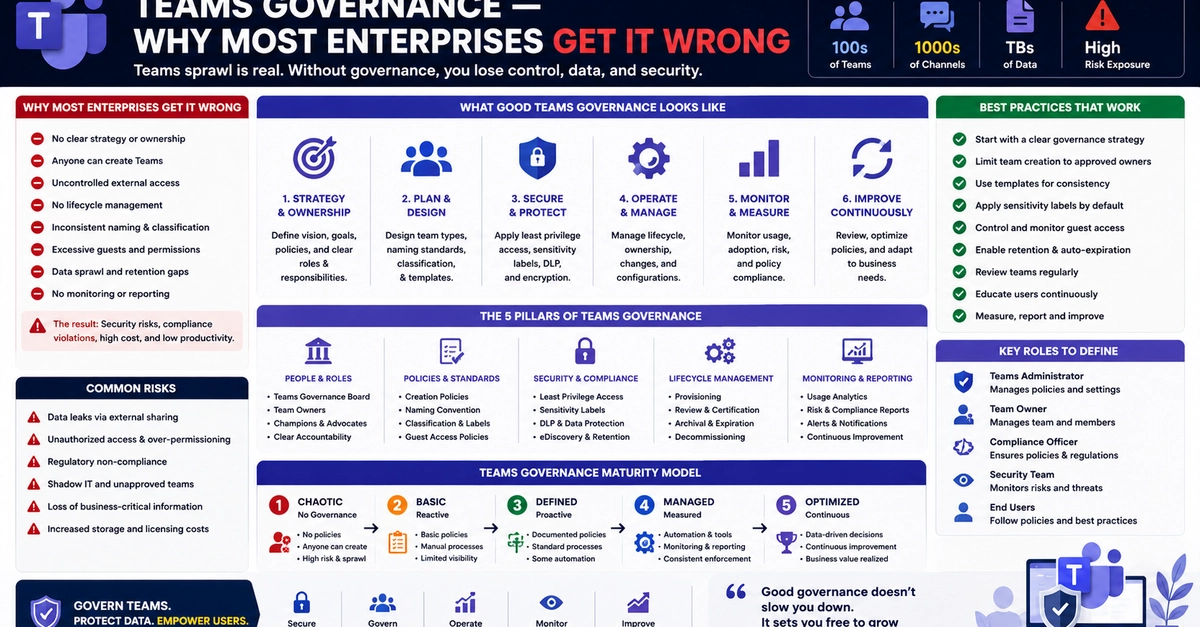
The result is predictable and consistent across industries: Teams sprawl at industrial scale. Hundreds of Teams that nobody owns. Channels for projects that ended three years ago. Guest users from partnerships that dissolved. Sensitive conversations in channels that include contractors who should not have visibility. Files shared in Teams chat — bypassing SharePoint governance entirely — on devices with no management policy. Meeting recordings stored in OneDrive folders that anyone with a link can access. Bot integrations that have permissions to read your Teams messages and access your calendar, approved by a user who clicked through an OAuth consent screen without reading it.