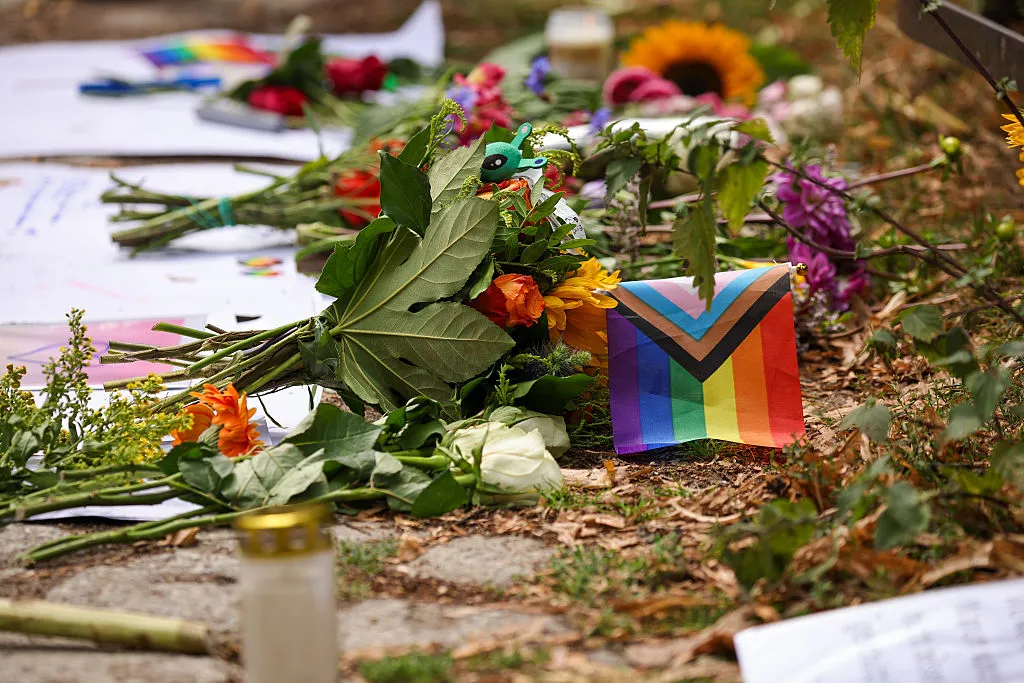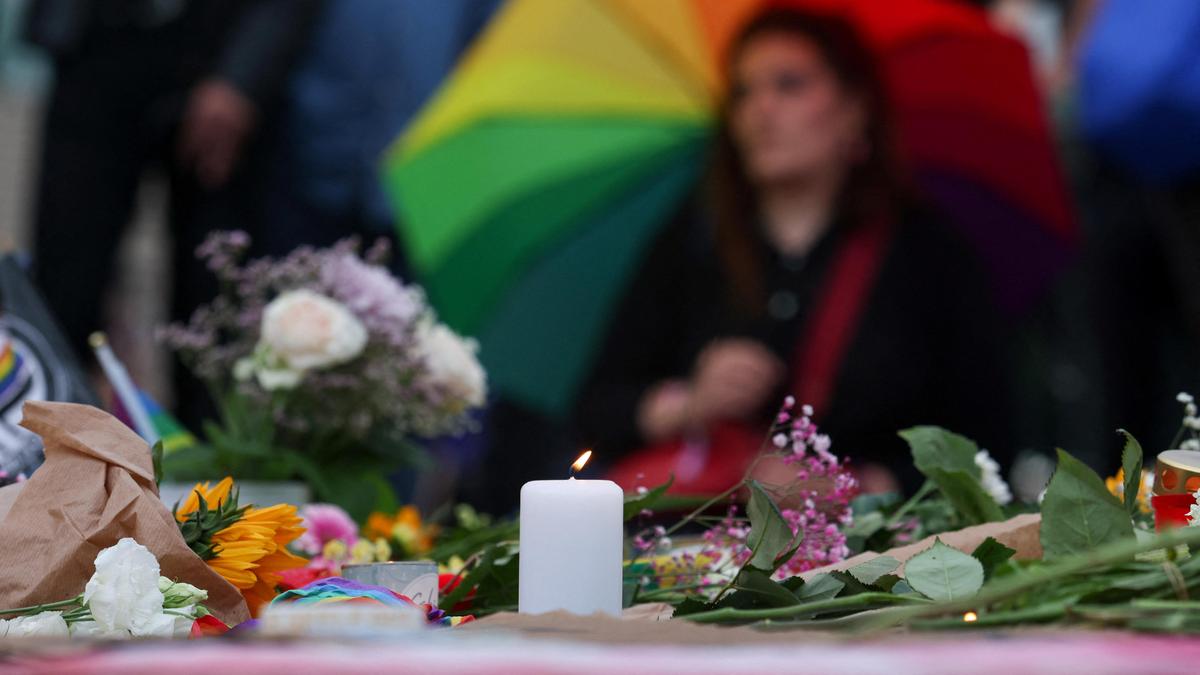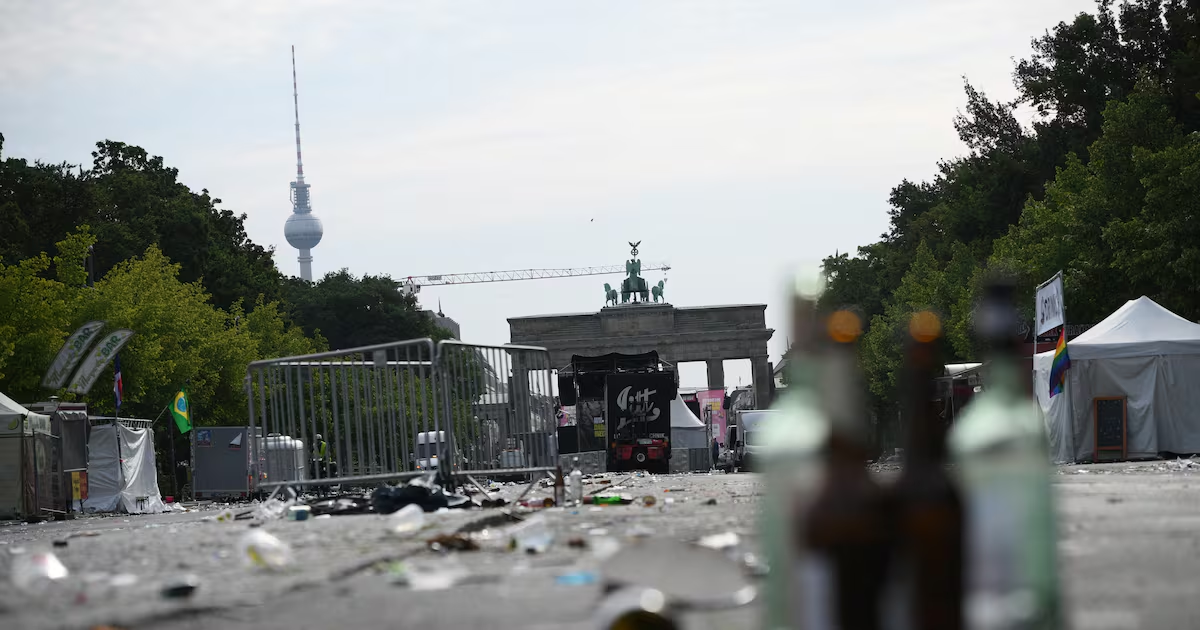
Late on Saturday night, Berlin’s Tiergarten park should have been heaving with Pride parade revellers looking for love, drugs and everything in between.Instead, by 11.30pm, it was a lonely place, the darkness between the trees broken only by light beams from police torches. A woman officer stood watch with an alert Alsatian sniffer dog. Overhead a helicopter swept the empty expanse with a spotlight.Just 90 minutes earlier, a white van crashed into a crowd of revellers, injuring at least 25. Minutes later, rescue teams were on the scene but were unable to save one of the injured, a young woman. The driver of the vehicle escaped on foot, possibly into the park.As midnight approached in the park, dozens of injured were whisked away to nearby hospitals. A hulking armoured vehicle stood in a lonely copse with a huge spotlight illuminating the darkness while dozens of blue police lights in a row pinpointed the crash scene.The edgy interplay of light, shadow and uncertainty carried real-life echoes of the 1931 Fritz Lang film classic M: A City Seeks a Murderer.Police and emergency responders work near where the attack took place. Photograph: Clemens Bilan/EPA Emergency services on the sidelines of the Christopher Street Day (CSD) parade in Berlin. Photograph: EPA Nearing the southeast corner of the park, between the Berlin Philharmonic concert hall and a traffic tunnel entrance, dozens of blue-lighted police and rescue vehicles parked everywhere they could find a space. On the tunnel ramp, long white tents were already set up. Police and emergency workers hurried about, young women in T-shirts and hot pants stood around and hugged before being led away.Just 90 minutes earlier, they were heading home after a long day of partying when a white minivan swerved in their direction at speed. The vehicle struck at least 16 people and collided with a tree, triggering its front airbags. The driver – and possibly a second person – fled on foot, most likely into the darkness.The first emergency calls were logged at 9.58pm, first responders arrived four minutes later and ordered an immediate end to the concert, a 10-minute walk away at the Brandenburg Gate. What had been a balmy evening took on an extra chill as shocked partygoers streamed north to Berlin’s central station. For many pulling out their phones, scraps of news about a car attack triggered memories of December 2016, when a failed asylum seeker with ties to the Islamic State terrorist group drove a hijacked truck into a Christmas market, killing 13.[ A banned song in Germany has become a rallying cry against a far-right surgeOpens in new window ]Germany has seen four such attacks in the last two years alone: in Magdeburg, Munich, Mannheim and Leipzig. But the latest Berlin crash carried an extra jolt, confirming for many marchers the growing threat to the LGBTQ+ community that Christopher Street Day (CSD) organisers had flagged just hours before.This, too, was clearly on the mind of Berlin’s outgoing governing mayor Kai Wegner. Earlier that day he attended the parade and now, just after midnight, he pushed his way past journalists into the spotlight to mourn its violent end due to “this terrible deed”.“But Berlin, as a city of freedom and diversity, will only get stronger,” he said gravely. “We will not allow anyone to take from us our way of living together.”For 10 sunny hours on Saturday, Berlin enjoyed its 48th annual CSD/Pride spectacle – though many revellers noticed an edge in the air.Participants march near the Brandenburg Gate during the Christopher Street Day/Pride parade in Berlin on Saturday. Photograph: Ralf Hirschberger/AFP via Getty Images People march with a rainbow flag earlier in the day during the Christopher Street Day parade. Photograph: Fabian Sommer/dpa via AP After a decade of carefree commercialism, organisers made a conscious effort this year to return the parade to its roots as a political protest. They chose this year’s motto – Haltung ist hot (taking a stand is hot) – to remind revellers of growing threats to their rights – and lives – by extremist religious and political groups.Several floats carried the same warning: “Petal, being unpolitical is so over.”“Previous years were more about drinking, dancing and ogling men,” said Georg, a 44 year-old Berlin social worker, in the afternoon, “but people are starting to realise that those threats out there affect all of us.”For two years the main source of conflict at CSD gatherings had been aftershocks from the October 7th Hamas-led attacks on Israel, and its military response in Gaza.That Middle East debate has divided the LGBTQ+ community, with leftist-activist groups holding separate demonstrations with pro-Palestinian leanings. The traditional Dyke March on the eve of the main CSD march attracted headlines last year when organisers banned rainbow Star of David flags but allowed Palestinian flags and Hamas symbols. This year as last, all national flags were banned except for Palestinian and Kurdish colours.“Flags which stand for liberation struggles against imperialist and fascist regimes may be present,” organisers said.At the main CSD demonstration, meanwhile, no Palestinian or Kurdish flags were visible. Instead dozens of marchers carried rainbow Star of David flags while others carried handmade signs reading “Homos against Hamas” and “Love Butches, hate anti-Semites”.[ Human rights defender or dangerous criminal? A German court will decide Dubliner’s fateOpens in new window ]As the CSD crowd drifted from the main event to various clubs and bars, news of the more immediate tragedy spread quickly. As people pulled out their smartphones, many said the news came as a shock but not a surprise.“I noticed myself checking the crash barriers all day, and was impressed at how solid and well-organised it all looked,” said Stefan, a 32-year-old emergency worker at a cellar bar in Schöneberg.Three kilometres away, back at the crash scene, police and emergency services not involved in the manhunt or assisting victims began an immediate examination of the event’s perimeter.Emergency services spokesman Dominik Pretz said it was likely the attack was unavoidable as it happened beyond the official party area, just outside a car-free cordon sealed all day with special barriers and police vehicles.People wrapped in security blankets stand near the scene where several people were injured on the sidelines of the Christopher Street Day/Pride parade in Berlin. Photograph: EPA “The Tiergarten park around here was still a party area with quite a number of people out and about,” he added.On Sunday morning, Berliners woke to news about the late-night attack – and warnings from police that the chief suspect was still at large, presumed armed and dangerous.Police released a picture of the man, Abdul Ballout, a 21-year-old German citizen born in 2005 to a family with Lebanese roots. Police said the suspect is 190cm tall with black hair and of slim build and was wearing a black hoodie and white trousers. He is reportedly known to police and was released from juvenile detention in May.Investigators reportedly retrieved his mobile phone from the van and believe it is likely he was not alone at the time of the attack.Like the 2016 Christmas market attack perpetrator, Ballout is believed to have links to the Islamic State terrorist organisation. A late-night sweep of an apartment where the suspect reportedly lived with his mother yielded no clues. Special forces conducted a similarly fruitless swoop of a nearby suburban train tunnel.As Berlin police widened their search radius, federal police announced they had stepped up controls on all border crossings and alerted neighbouring police forces. The search continues.
Berlin Pride attack shatters a day of celebration and defiance
For one summer day Berlin celebrated its diversity. By midnight, the city was confronting violence, fear and an unsettling sense of vulnerability
1,242 words~6 min read