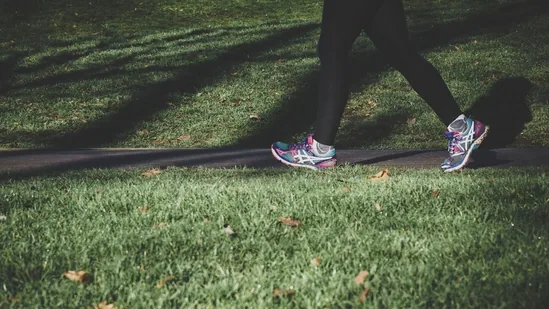
Daily walks aren't always enough, here's what you need to know, (Unsplash) Walking daily but not feeling strong? A fitness coach explains why walking every day doesn't always lead to better health.The majority of people simply start walking to get moving. A short stroll down the road improves circulation, balances body weight, relaxes brain function, and reduces the risk of chronic infections. However, achieving better health often requires more than a stroll around the block each day. You may have to do more than just walk around if you're dialling up energy levels. Sumit Dubey, fitness expert and the founder of Sumit Dubey Fitness (SDF), explains why your daily walk may not be improving fitness.Also read | Skipping rest, overtraining, and more: Fitness coach reveals mistakes that slow your progressIntensity mattersIntensity is an important factor. You're unlikely to work your heart and lungs hard enough at a comfortable pace. Although this type of slow walking is good exercise, it hardly contributes at all to cardiovascular fitness. Sumit highlighted that at a faster pace, fast enough to talk but not sing, did more than an easy stroll for burning calories and increasing oxygen consumption.Follow identical paths, pace, and timing daily, progress slows down after a while. (Unsplash)Variation is importantWalking the exact same way each day trips up plenty of people. When movement repeats too often, the body settles into it. Follow identical paths, pace, and timing daily, progress slows down after a while. “Try varying your pace, length, or incline, or mix in periods of fast and slow walking. Your heart will benefit from the change,” said Sumit.Strength trainingMany do not appreciate how walking alone is insufficient without additional resistance work. But fitness isn’t a one-size-fits-all–the secret to success is the connection of heart health, strength, stability, flexibility, and range of motion. Past thirty, the muscle disappears slowly unless you work against weight. That steady stroll? It won’t stop that shift. Lifting two or three times a week mixes in what walking alone misses: improved caloric expenditure, improved strategic function, and refined body control.Lifting two or three times a week mixes in what walking alone misses. (Unsplash)Each steps countStaring down at your screen while shuffling forward? That slows things down. Sumit recommends lifting your gaze, tightening your stomach gently, and letting your arms move freely - suddenly, everything works harder. A steady pace with intention pushes more effort through the body. Each step counts when it’s done with awareness.Start slow if you must, yet keep pushing forward little by little. Moving daily does good, though real change comes when effort shifts now and then. Hit about two and a half hours of steady motion per week, maybe pick up speed sometimes, or switch rhythms mid-stride. Toss in some resistance work alongside those steps. Each time your foot hits the ground, let it do more than carry you - make it build something sturdier along the way.Note to readers: This article is for informational purposes only and not a substitute for professional medical advice. Always seek the advice of your doctor with any questions about a medical condition.Anukriti Srivastava thrives at the intersection of words and voice, where journalism meets storytelling. A digital editor and journalist with over 5 years of experience, she has written across lifestyle, women issues, relationships, entertainment, fashion, and travel. She did her Masters in Broadcast Journalism and has published more than 500+ lifestyle content pieces across platforms.
Your daily walk may not be improving your fitness. Here's what a fitness coach wants you to know
Walking daily but not feeling strong? A fitness coach explains why walking every day doesn't always lead to better health. | Health
766 words~3 min read