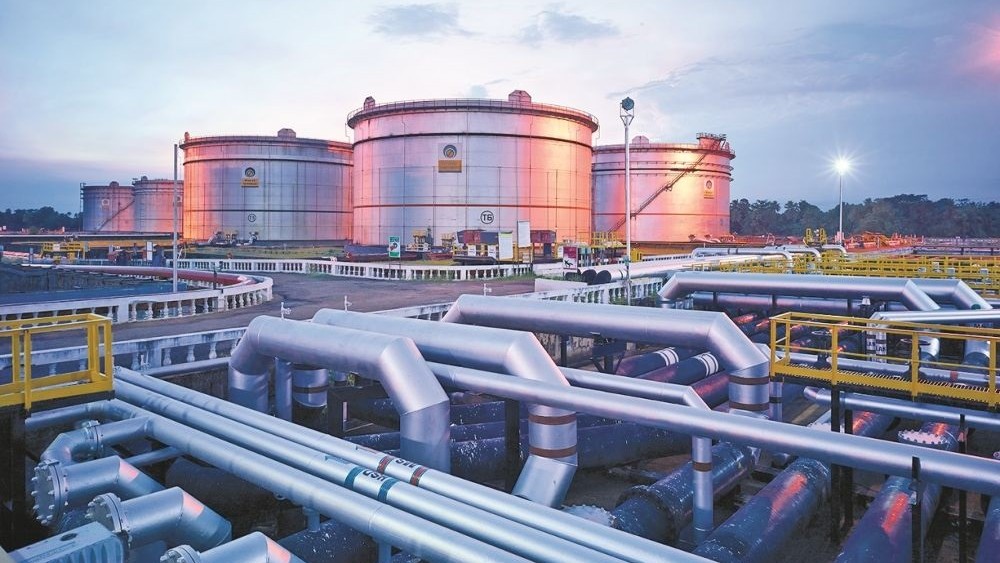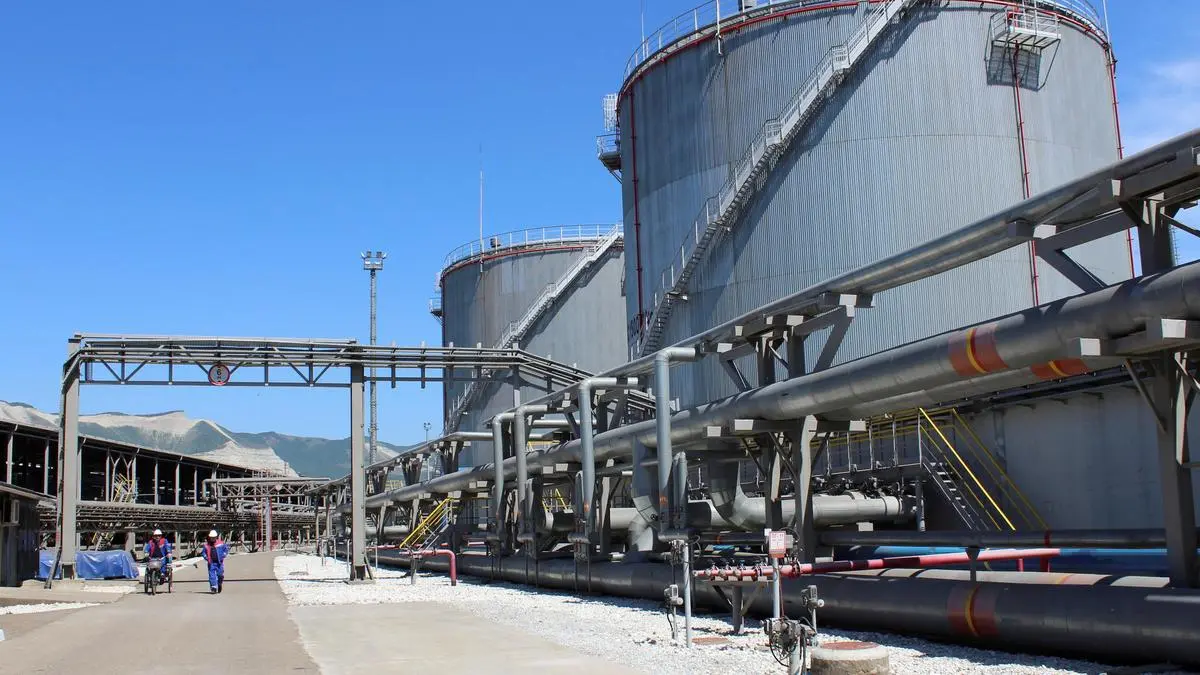
A file photo of the Novorossiysk Fuel Oil Terminal (NMT) in the Black Sea port of Novorossiisk, Russia
| Photo Credit:
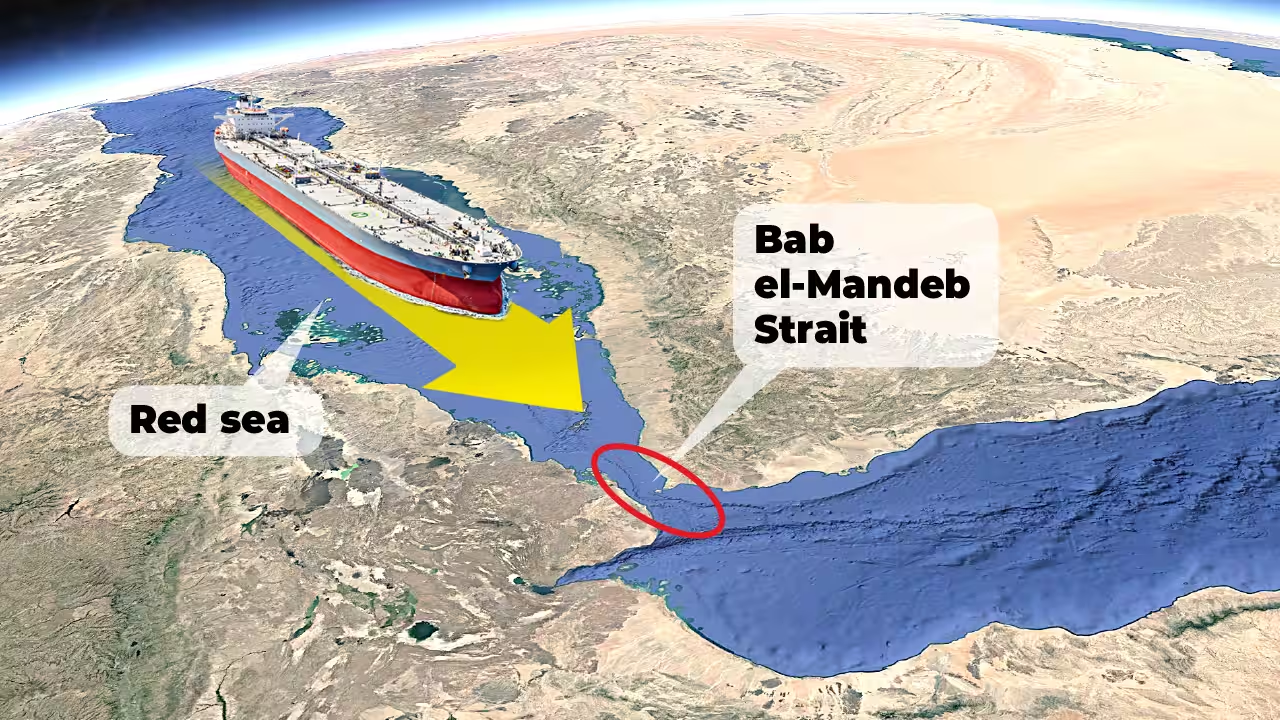
India’s crude oil imports in August face a fresh risk from Russia, with uncertainty mounting over crude loadings from the Black Sea port of Novorossiysk following Ukrainian attacks on key export infrastructure. The volume of imports during the month will also depend on the safe passage of Saudi Arabian barrels through the Bab el-Mandeb (BeM) strait.While refiners and traders do not expect an outright supply disruption, they warn that slower deliveries, higher freight costs and shrinking discounts on Russian crude could inflate India’s oil import bill, particularly at a time when the rupee remains weak against the US dollar.Russia has emerged as India’s largest crude supplier over the past three years, accounting for as much as 50 per cent of the country’s imports as refiners increasingly relied on discounted Urals crude after Western sanctions. Any disruption to these supplies therefore carries outsized implications for Indian refiners, many of whom have reconfigured their sourcing around Russian barrels.“As we speak, there are two developing scenarios important to track. First, crude oil (Urals grade) loadings from Novorossiysk port considering attacks by Ukraine on the Sheskharis terminal. Besides, traders are not offering discounts for September loadings. So, barrels will be there, but there will be a price,” said a trade source.According to Kpler, the key uncertainty is whether Russia can sustain export volumes amid continued Ukrainian attacks on its upstream and downstream infrastructure. Russia’s crude exports in July have already declined by around 400,000 barrels per day month-on-month. Sheskharis, Russia’s largest crude export terminal, accounts for nearly 20 per cent of the country’s seaborne crude shipments.The main concernThe concern for India is less about physical availability than pricing. If Russian exporters trim discounts or shipments, Indian refiners will either have to pay more for Russian crude or replace some of those barrels with costlier cargoes from other suppliers, pushing up procurement costs and the country’s import bill.The second variable is the continuing threat by Houthi rebels to Saudi Arabian crude exports transiting the Bab el-Mandeb strait.“The threat has already impacted supply from there. Although the Saudis are using Egypt’s Sidi Kerir terminal on the Mediterranean coast, it also increases costs,” the same source said.Alternative routesAccording to Equirus Securities, tankers can avoid the Bab el-Mandeb by taking alternative routes through the Suez Canal and the Mediterranean, but doing so could add nearly a month to voyage times. Longer journeys keep vessels tied up for extended periods, reduce tanker availability and significantly raise freight and insurance costs. Freight and insurance charges, which averaged $4-5 per barrel before the conflict, have now climbed to $13-15 per barrel.An official with a domestic refiner said the expectation is that both Russian and Saudi barrels will continue to be available, but logistics are becoming increasingly “tricky”.“Saudi Arabia usually supplies crude through VLCCs, but bypassing the traditional Red Sea route and exporting via Sidi Kerir adds to both voyage time and transportation costs,” the official said.The geopolitical tensions have already begun influencing global oil prices. According to S&P Global Commodity Insights, mounting concerns over disruptions to Red Sea shipping helped push Brent crude futures above $100 per barrel on July 23.August cargoesKpler said that if Red Sea transit remains uninterrupted, Indian refiners will continue to have an important supply buffer through Saudi Arabia’s East-West pipeline to Yanbu, which has recently supplied around 300,000-500,000 barrels per day of crude.“However, if the security situation deteriorates and Red Sea imports become unavailable during August, refiners will need to replace those barrels from alternative sources,” it said.According to Sumit Ritolia, Lead Research Analyst for Refining & Modeling at Kpler, the most likely replacement would again be Russian crude.“Over the past few months, India’s Russian crude imports have increased sharply from around one million barrels per day to roughly 2.6 million barrels per day, with July imports also tracking near record highs,” he said.“Overall, the situation would become tighter if Red Sea flows are disrupted, but it is unlikely to become critical. Russian crude remains India’s strongest supply hedge, and imports could potentially rise towards or even above 3 million barrels per day if market conditions and Russian export availability permit,” Ritolia added.Published on July 26, 2026