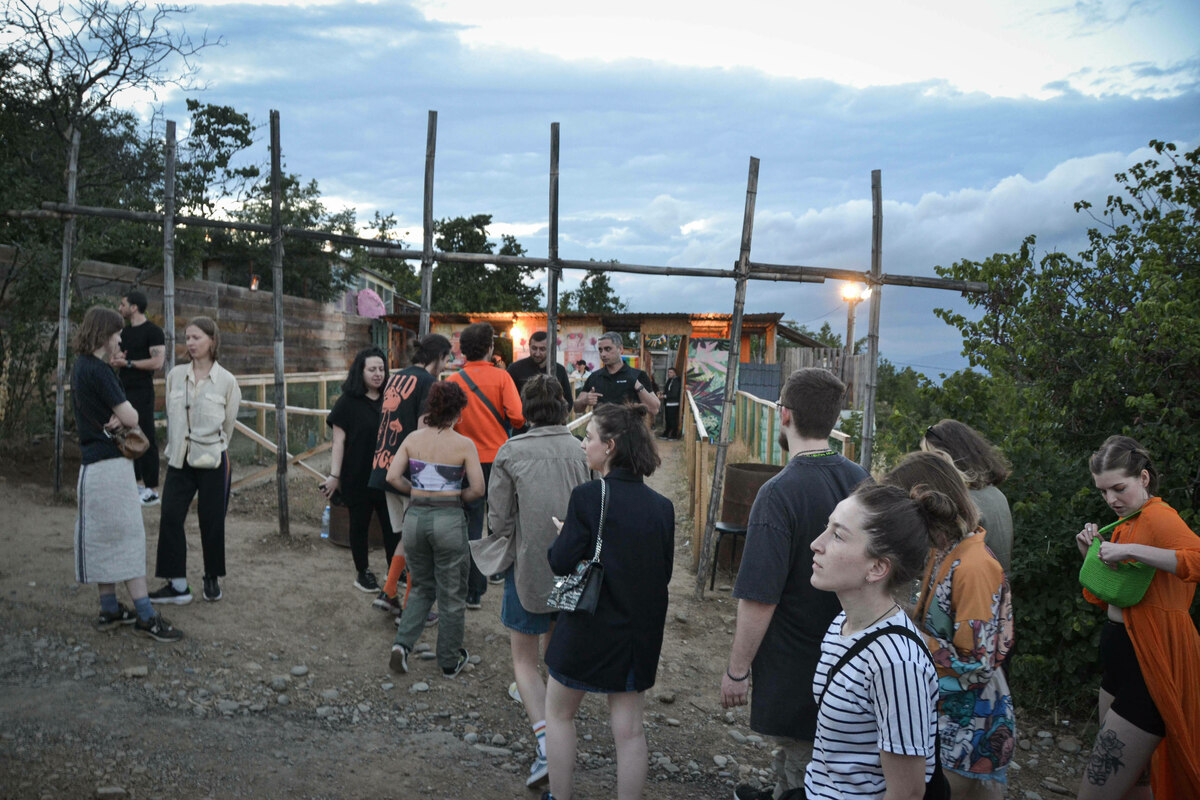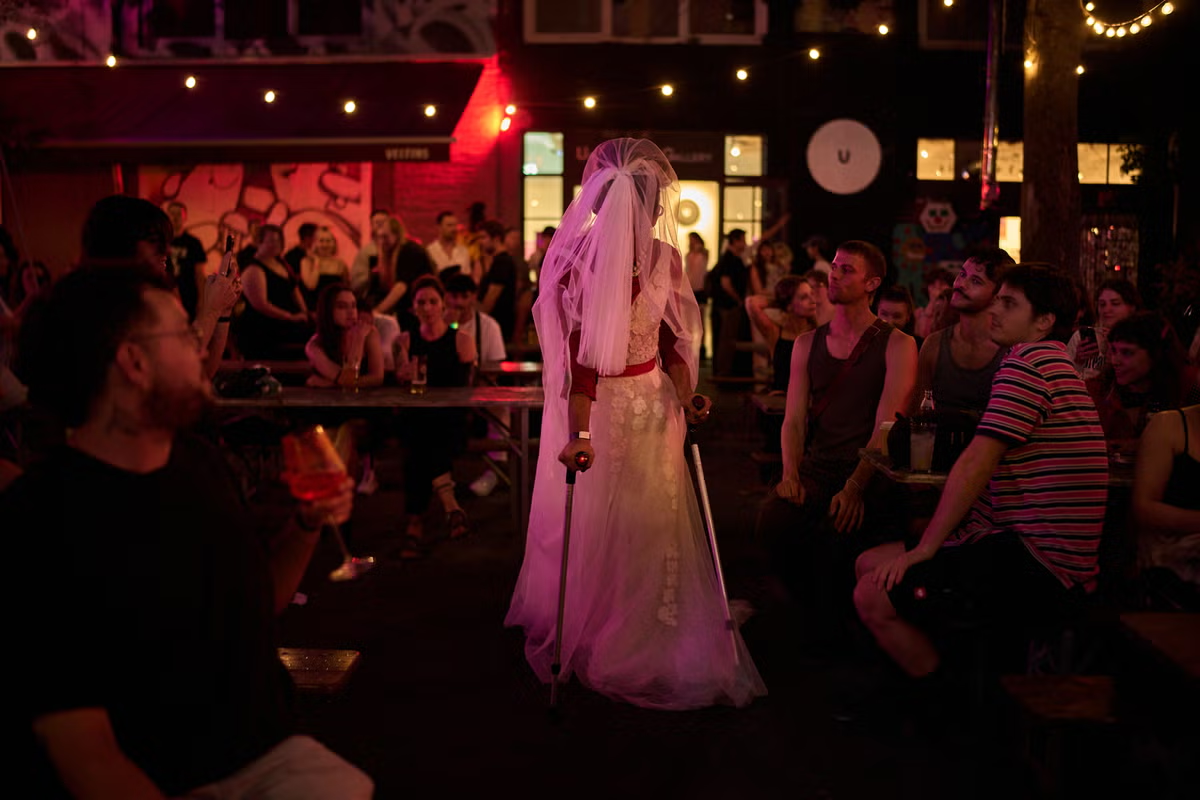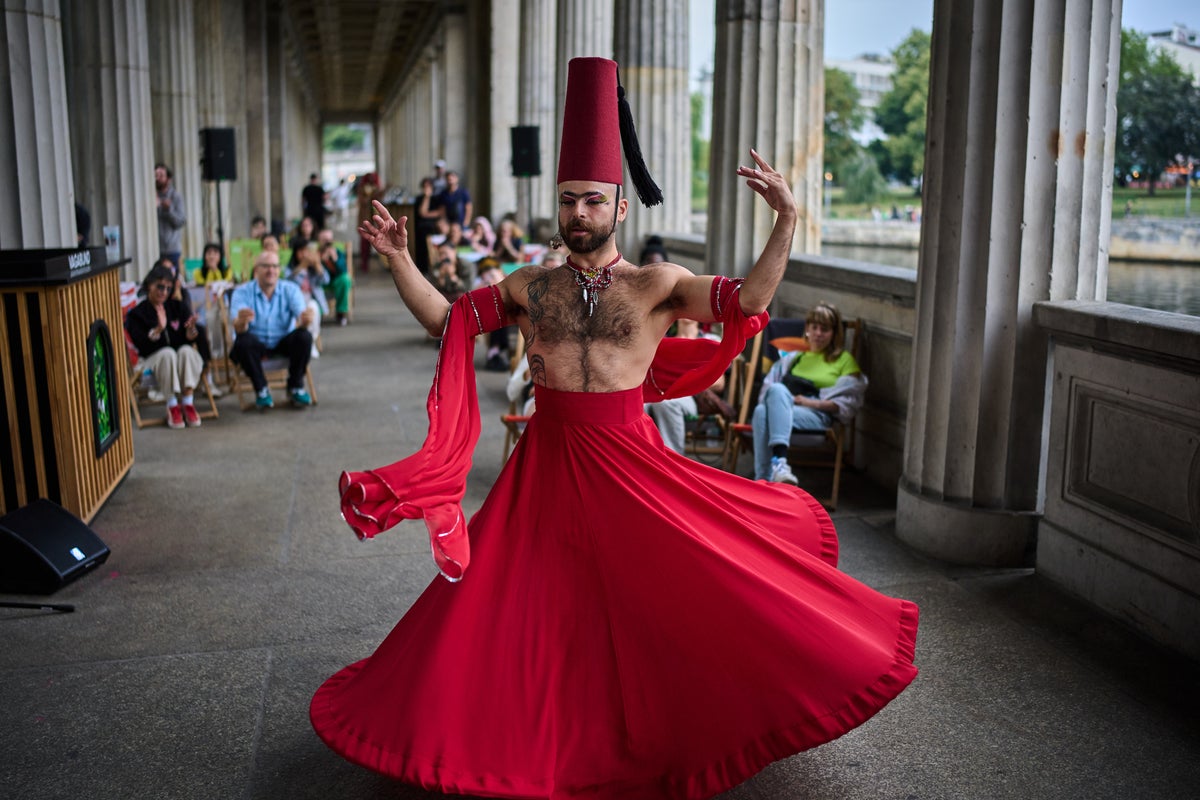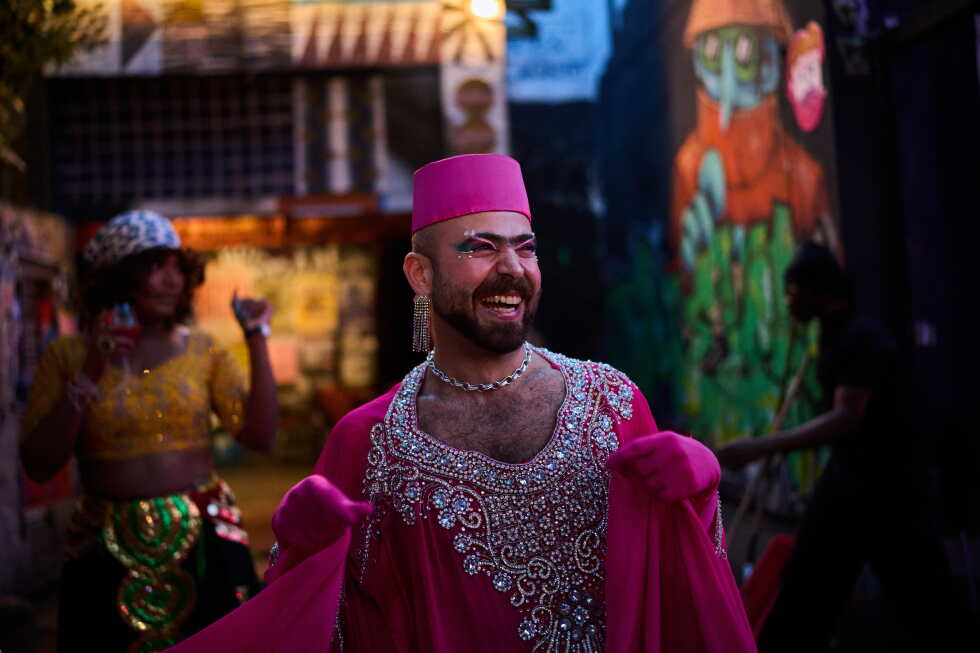
This story was supported by the Pulitzer Center. Hundreds of people gathered at a club in the heart of the Armenian capital Yerevan for an underground drag show in mid-June. Due to security concerns, details about the Pride Month event spread through word of mouth or private Instagram stories. Previous bars have closed their doors because of repeated police raids, and a queer club was firebombed in 2012. “Drag is more political in Armenia because, honestly, we have to be,” said Leo, one of the main organisers of the event. “It's all about survival, and it's all just about living – surviving, but also thriving.” Despite fears of violence, this underground scene has been growing in recent years – fuelled, in part, by Moscow’s 2022 full-scale invasion of Ukraine.
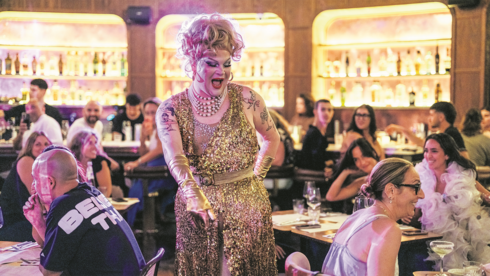
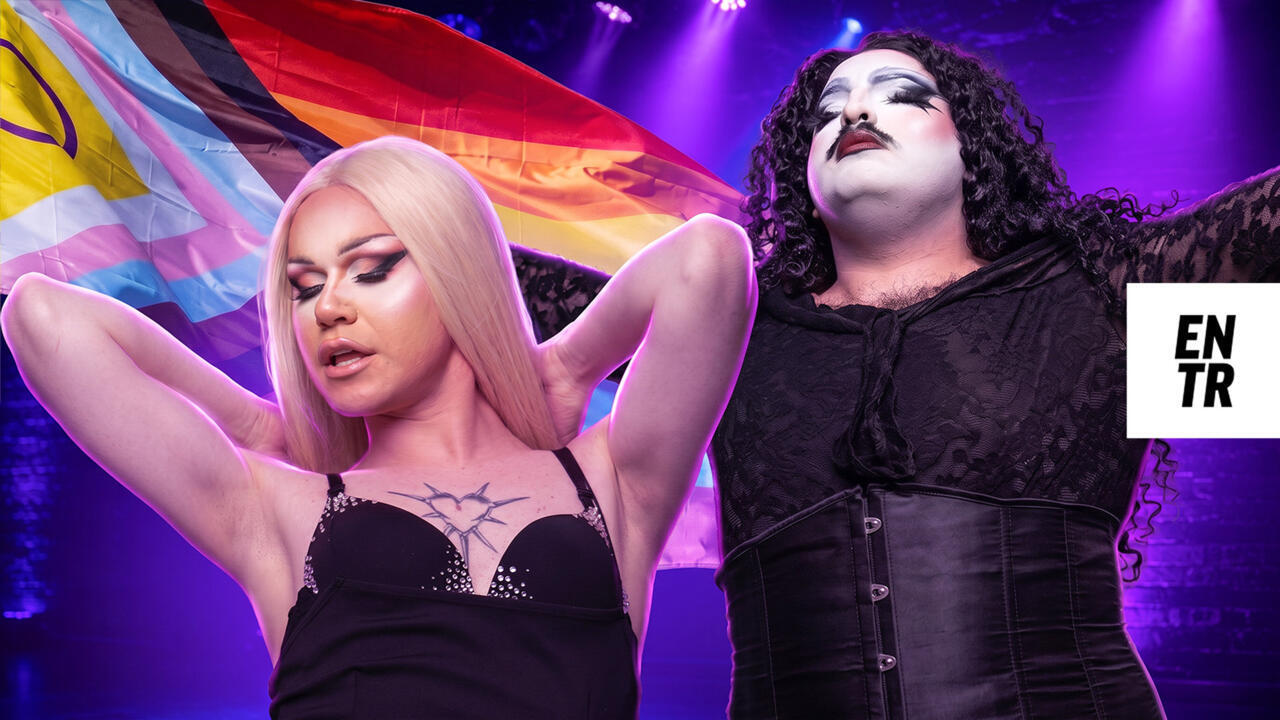
Armenian drag queen Lava Dicks at a performance in Yerevan. © ENTR
‘It scared me back into the closet’ Armenia often ranks poorly when it comes to its treatment of the LGBTQ community, and targeted acts of violence have been common. The former Soviet country is listed near the bottom of ILGA-Europe’s rainbow map, which ranks European countries annually based on their legal protections for queer communities. ILGA-Europe ranked Armenia 45th this year on its list of 49 countries – just four spots above Russia in last place. Nevertheless, there has been steady improvement since the Ukraine war began in 2022, when Armenia tied with Russia in 47th place. In 2023, Adriana, a 28-year-old trans woman, was brutally murdered at her home, and her Yerevan apartment was set on fire. In 2018, a mob of more than 30 people attacked nine members of the LGBTQ community in the village of Shurnukh in southeastern Armenia. Some of the people attacked were activists and employees of Pink Armenia, the country's largest LGBTQ organisation. The DIY club, a queer venue, was firebombed in 2012 after its owner Armine Oganezova was interviewed at a Pride parade in Turkey. She fled the country after being harassed and threatened, eventually moving to Sweden. News of the attack spread far and wide. “It scared me back into the closet … real fucking bad,” said Leo, one of the main forces behind the country’s drag scene. “'Cause when you hear about … a queer place being bombed, attacked, then you're like, 'Oh my God, I'm never coming out.' 'Cause then they will kill me.” Read moreFake Pride, masked men and a surge in misinformation ahead of Armenia’s election Despite this fear, the drag scene is thriving in Yerevan. The 28-year-old was first introduced to drag 10 years ago, when a friend working at Pink Armenia told him the organisation was putting on an event. After that first show, “something switched in me”, he said. “I felt like, well, this is what I'm supposed to do," saying all the abuse he had witnessed since his youth, including members of the community "being bullied, beaten up, killed … was for this”. ‘I left Russia against my will’ Attitudes in Armenia have shifted since then – in part due to the arrival of tens of thousands of Russians. The number of Russians who have left their country since the start of the war in Ukraine is difficult to gauge. A 2024 Stanford University publication estimated it at between 500,000 and 1 million, calling it Russia’s “largest wave of emigration since 1917”, during World War I. Many were fleeing Moscow’s partial military mobilisation and Western economic sanctions, while others were political or queer refugees who left the country after Russia introduced more draconian anti-LGBTQ laws. Tens of thousands of them eventually moved to Armenia, according to Aleksandr Gevorkyan, a professor of economics at St John's University in the United States. But he added that the exact number is hard to verify. While Yerevan’s figures put the number at around 100,000, Gevorkyan said many Russians subsequently left for other countries while between 35,000 and 55,000 stayed in Armenia. Yerevan is part of the Eurasian Economic Union, and Russians can move to Armenia without visas – making it an easy landing for underprivileged people trying to flee the country. Molly was one of them. The 26-year-old was a drag queen in Russia before the war in Ukraine. She left the country after Russia banned the non-existent "international LGBT movement" as an "extremist" organisation, resulting in the bar where she performed being raided by police. “We knew in about a week that something would happen, because raids had also begun in all other cities,” she said. “We hired additional security, installed walkie-talkies in our dressing room, our guards put on bulletproof vests.”