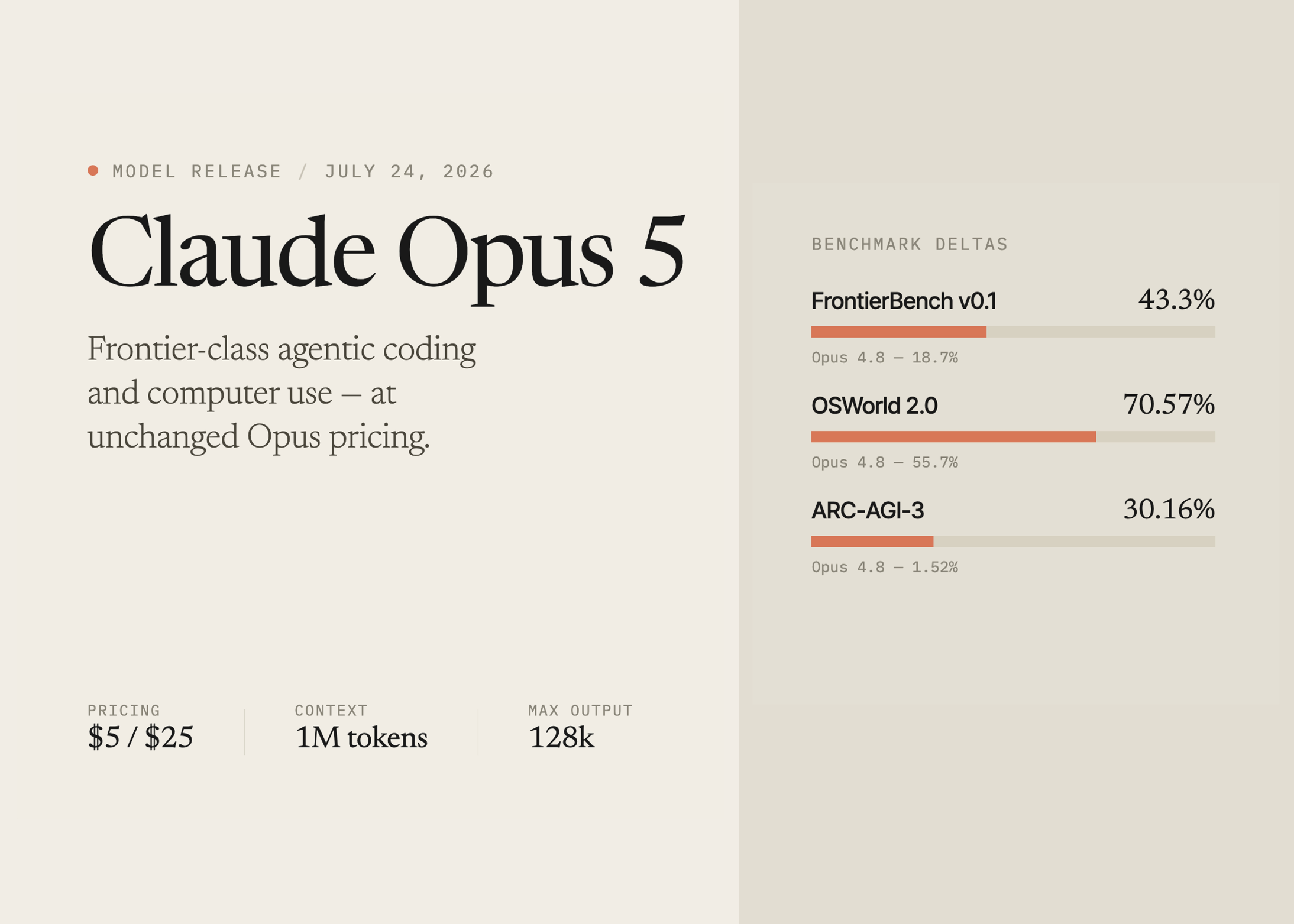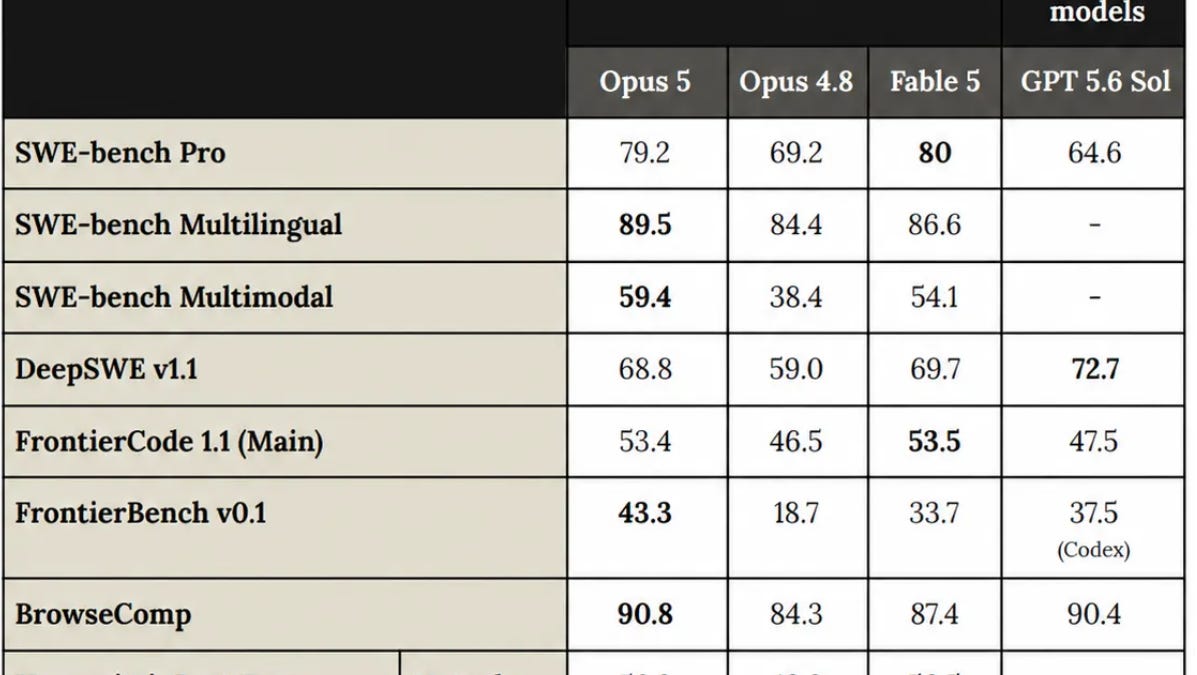
Claude Opus 5 shipped on the 24th of July, 2026, as claude-opus-5. It's priced at $5 per million input tokens and $25 per million output tokens — the same as Opus 4.8, and half of what Fable 5 costs.
The context window is 1M tokens long, the max output is 128K. And there's one breaking change: the model thinks by default now. In other words, on the older Opus you had to ask for thinking explicitly, and it's now set up so it thinks on its own automatically.
What actually changed from the previous Opus?
Now it's allocating thinking depth per turn itself depending on the set effort level; the higher the effort, the more it thinks, but you can still set it explicitly in the request, and the parameter itself hasn't changed — thinking: {"type": "adaptive"} is still valid and still means the default. This means that when migrating a project that didn't do any thinking just by renaming it to this new Opus, you need to make sure you have enough room for both the thinking and the visible part of its response, so raise max_tokens.
Also, if you disable thinking — which you can now do only at high effort or below, because pairing it with xhigh or max returns a 400 — it may output a call to a tool as plain text instead of emitting a proper tool_use block, or leak some of its internal tags into the output. So they recommend keeping it enabled and controlling the cost via the effort level instead.