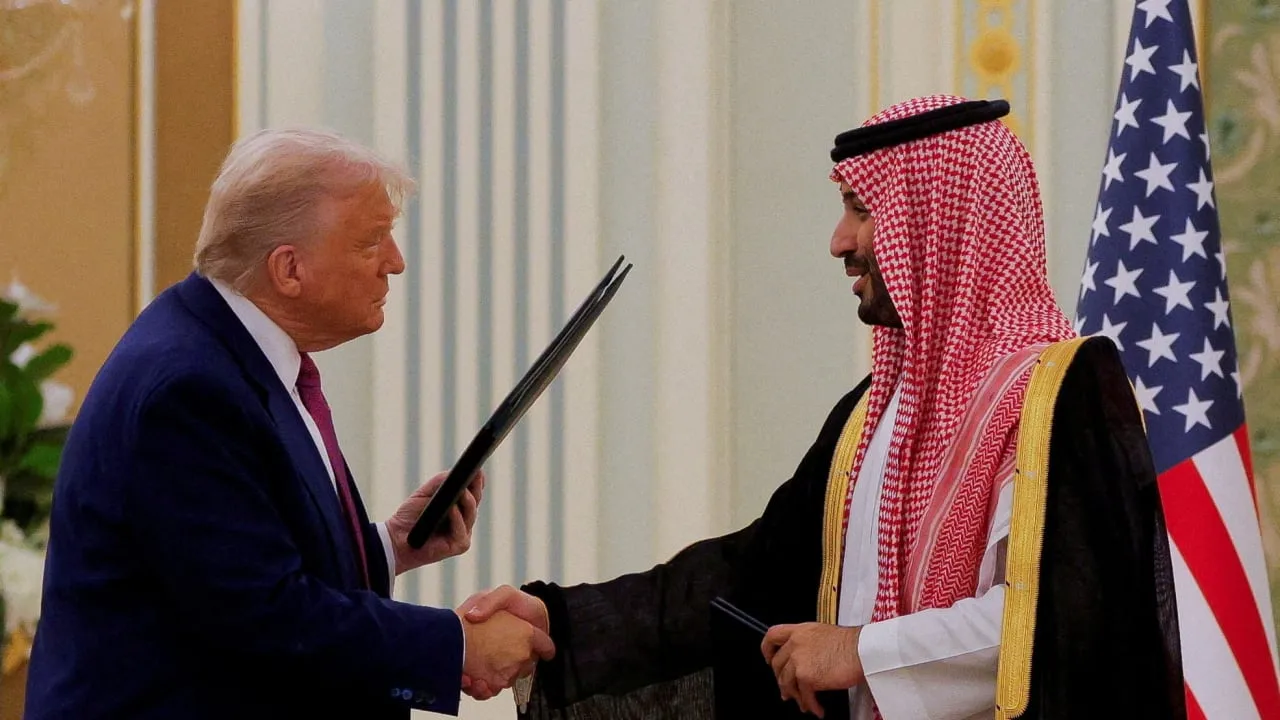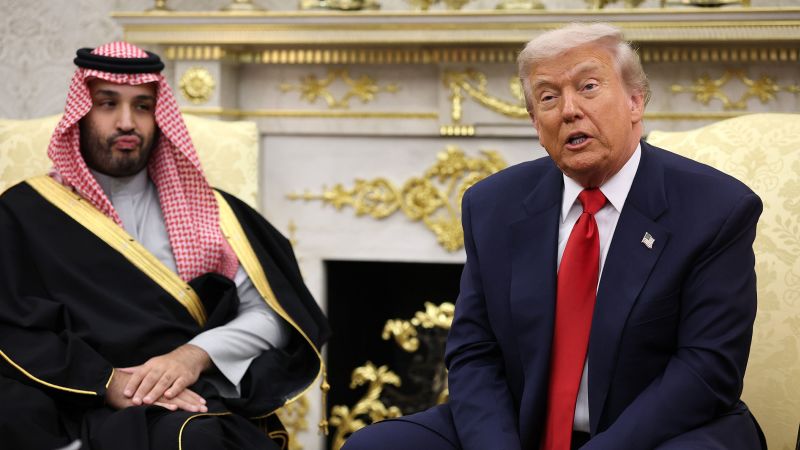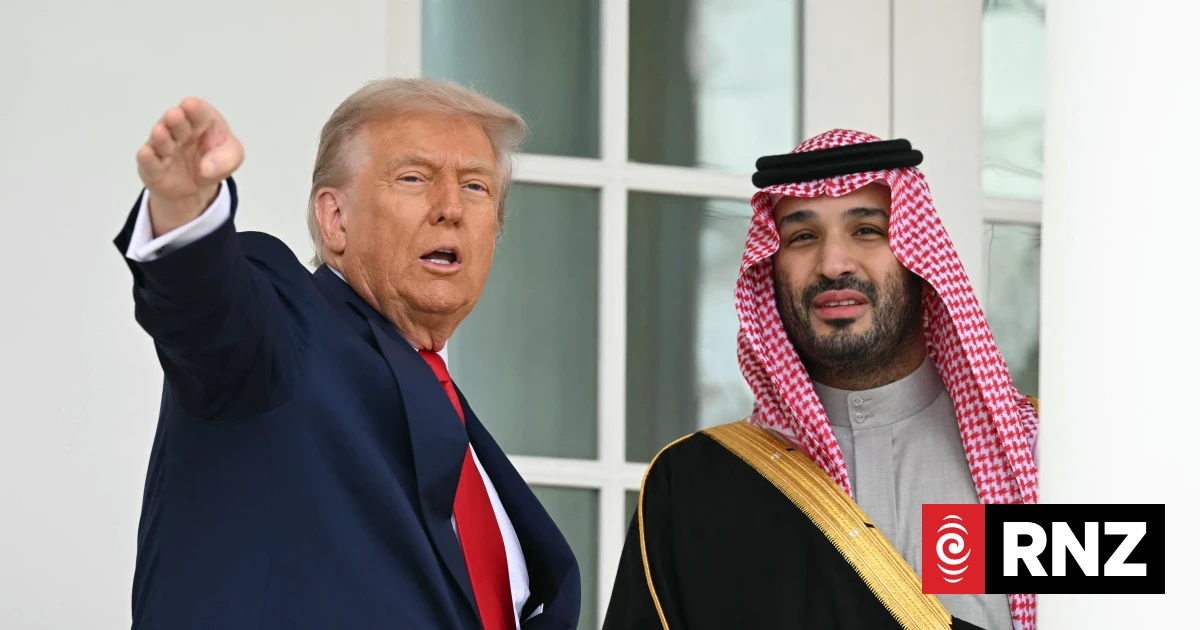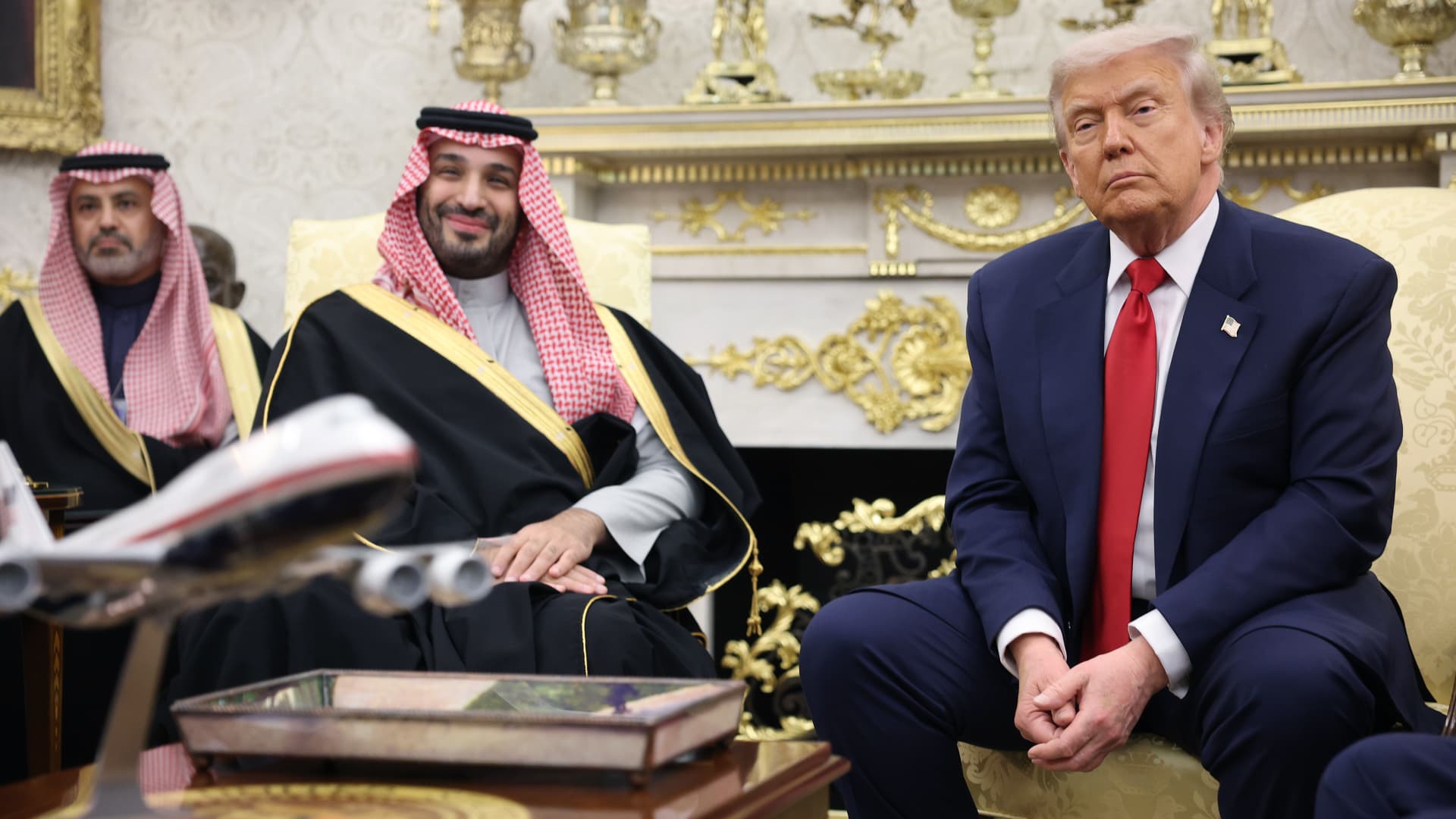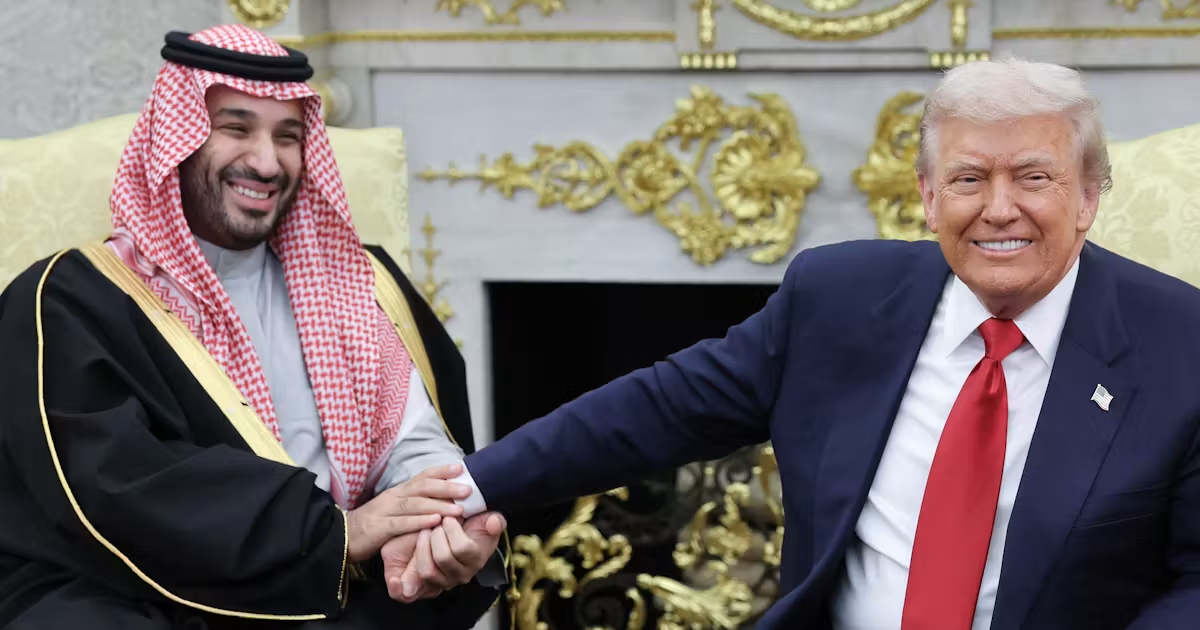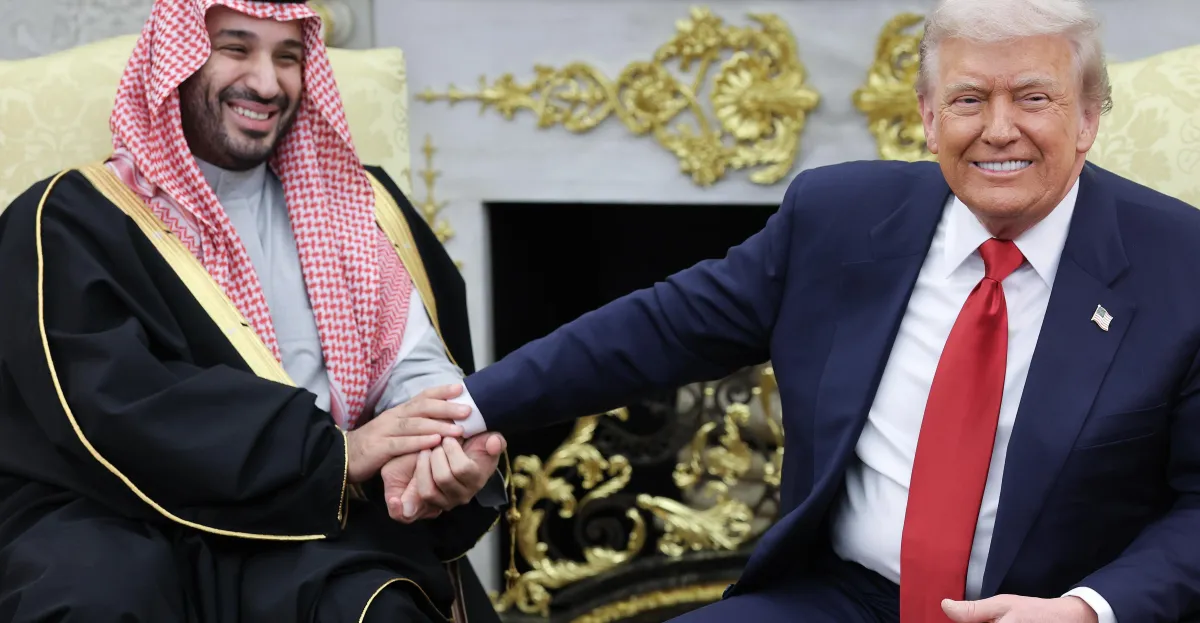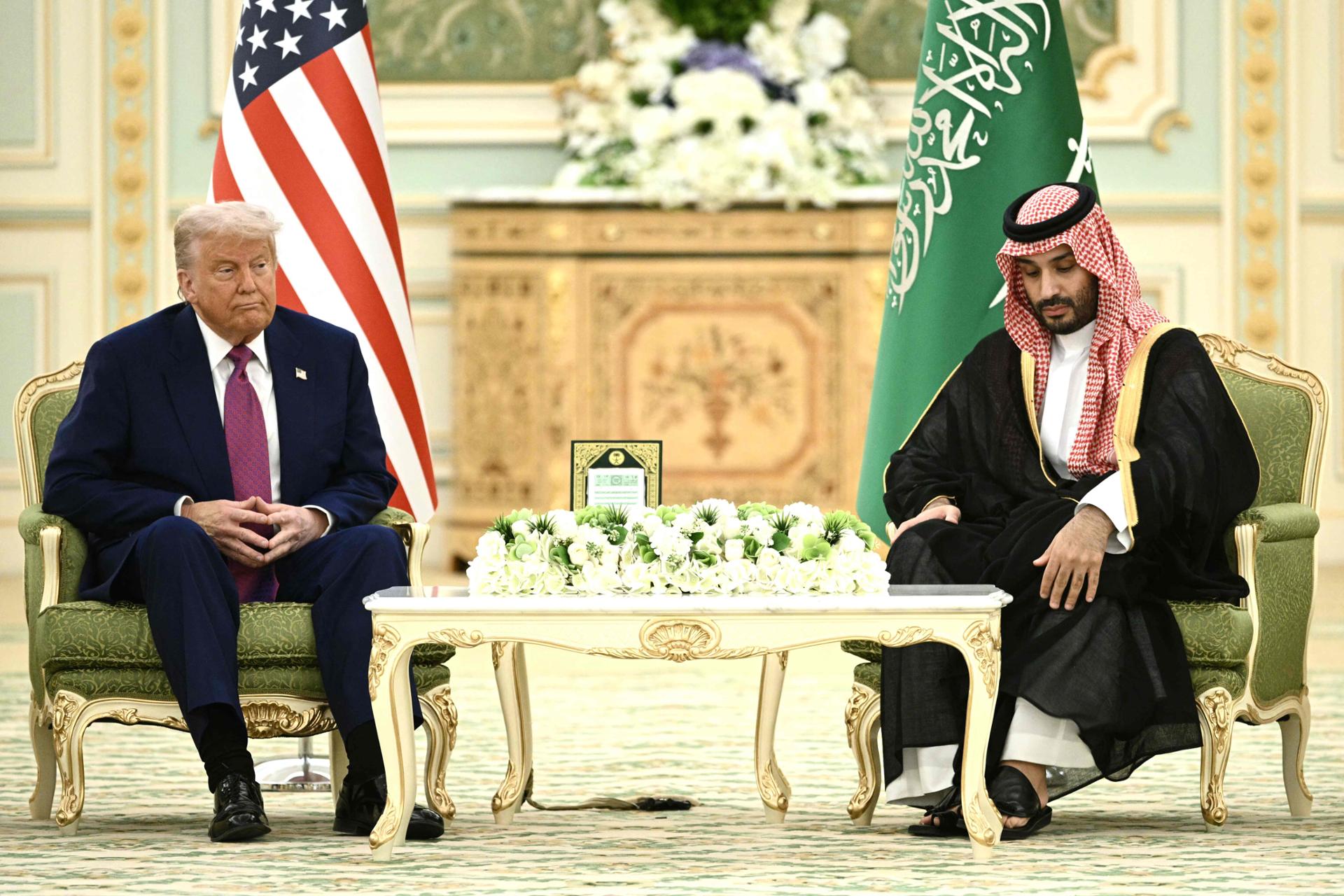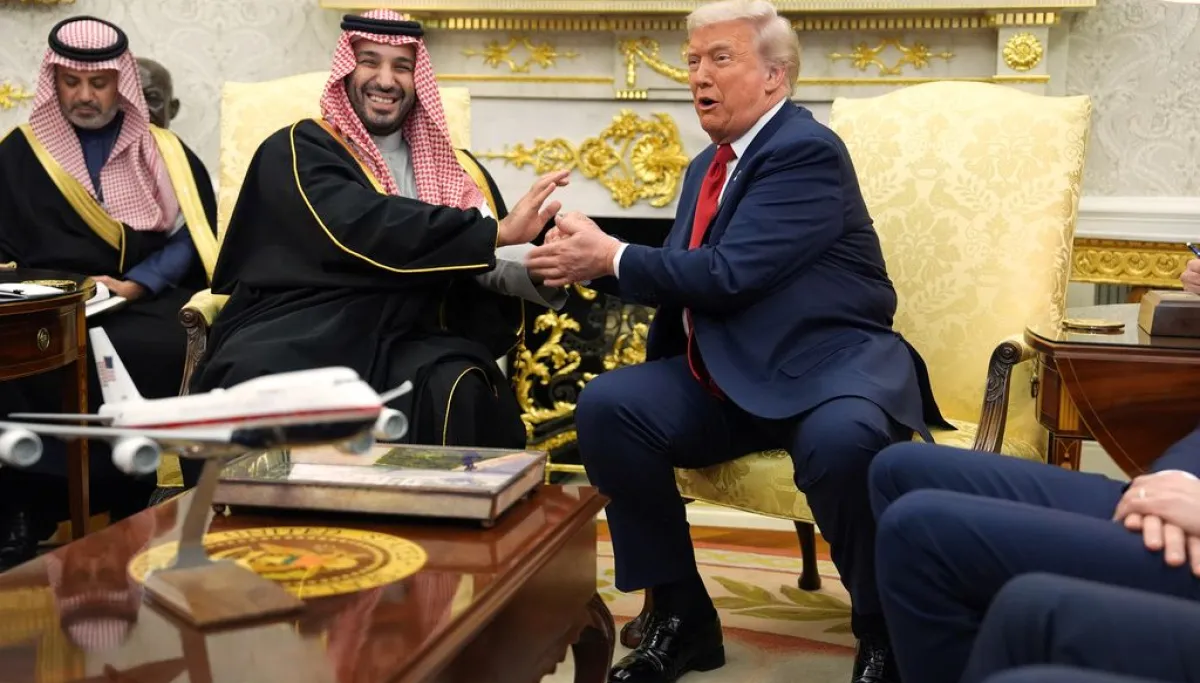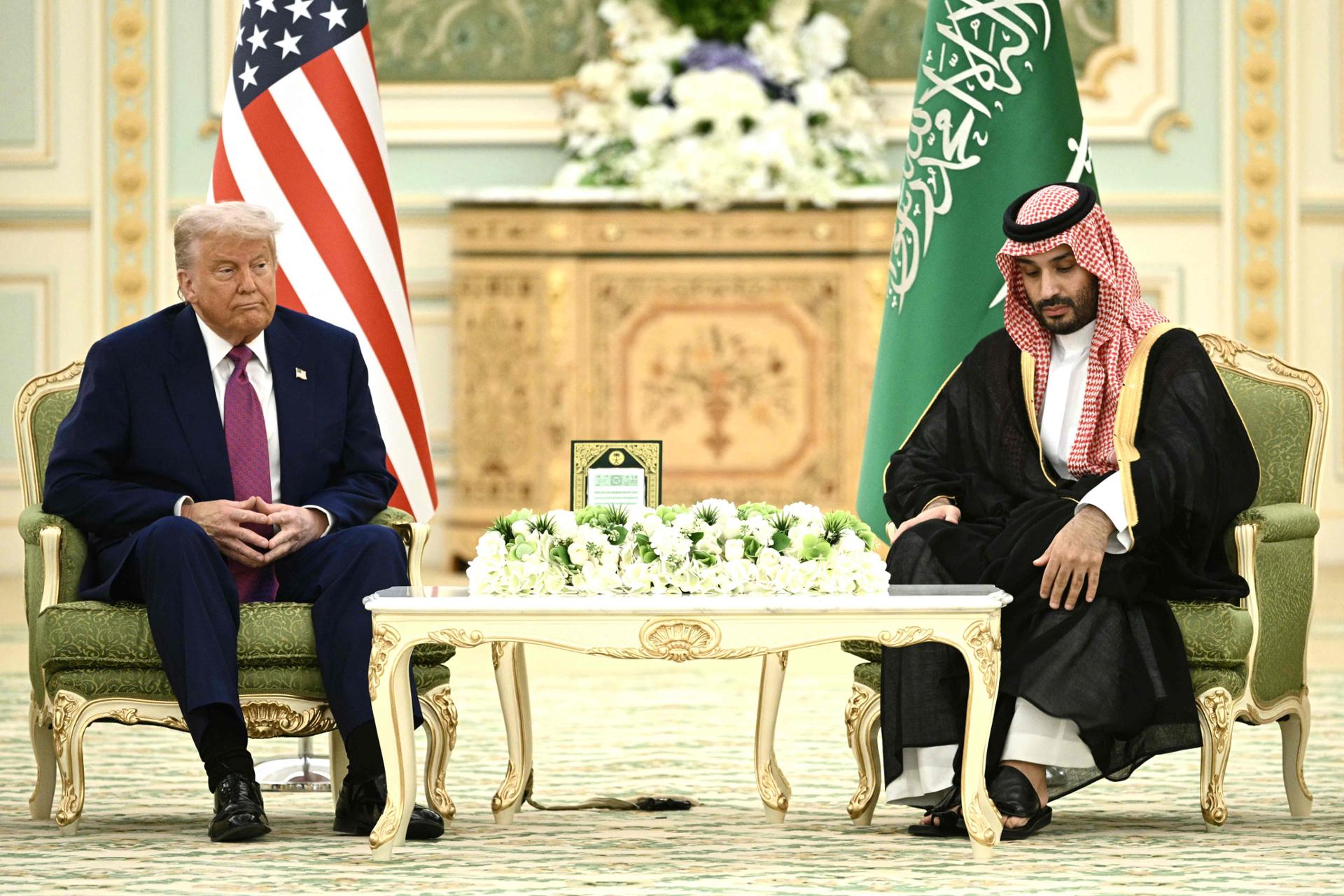
U.S. President Donald Trump and Saudi Crown Prince Mohammed bin Salman look on during a bilateral meeting in Riyadh, May 13, 2025. Trump on Thursday said the fate of the U.S. nuclear deal with Saudi Arabia will depend on the kingdom recognizing Israel, throwing the agreement into turmoil just one day after it was signed. Riyadh has long resisted joining the so-called Abraham Accords with Israel, insisting especially after the outbreak of the Gaza conflict. Yonhap
The United States' willingness to permit Saudi Arabia to pursue domestic uranium enrichment for civilian nuclear power has exposed an inconsistency in Washington's nonproliferation policy that is becoming increasingly difficult to justify.
Although the arrangement was thrown into doubt just a day after it was announced, after U.S. President Donald Trump on Thursday said that any nuclear agreement with Saudi Arabia would ultimately depend on Riyadh recognizing Israel, the administration has already crossed an important policy threshold. It has demonstrated that Washington is prepared, under certain circumstances, to reconsider its long-standing opposition to uranium enrichment by additional partner countries.
If Saudi Arabia — with its comparatively weaker nonproliferation credentials — can even be considered for such a right, there is no credible reason why Korea, one of America's closest allies and among the world's most responsible nuclear states, should continue to face restrictions imposed more than half a century ago.