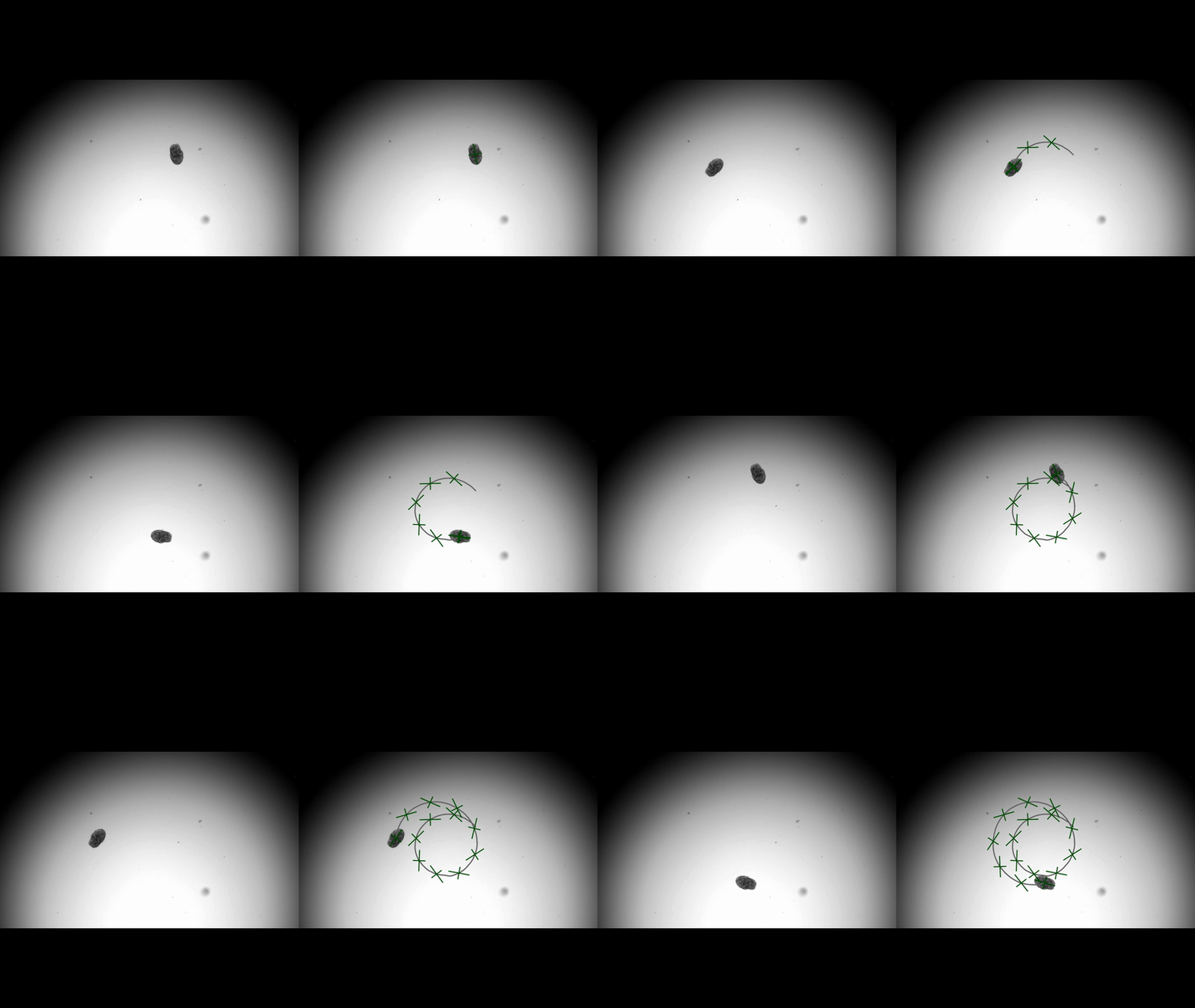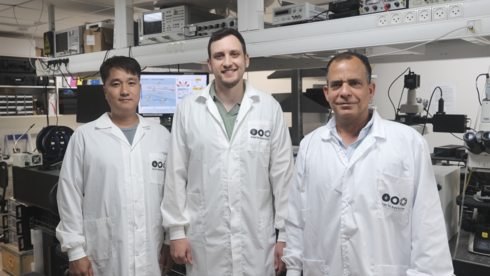
Tel Aviv University researchers develop micro-robots that use magnetic and electric fields to cross obstacles, move between surfaces and transport delicate biological cargoynet|Researchers at Tel Aviv University have developed a new approach that allows microscopic robots to move between multiple surfaces in three-dimensional space, overcoming a longstanding limitation in micro-robotics that has confined many such devices to traveling along a single surface.The study, led by doctoral student Ido Rachbuch, researcher Dr. Sinwook Park and Prof. Gilad Yossifon of Tel Aviv University's School of Mechanical Engineering and School of Biomedical Engineering, was published in the journal Nature Communications.Micro-robots developed by Tel Aviv University researchers cross obstacles, move between surfaces and transport live E. coli bacteria using magnetic and electric fields (Video: Tel Aviv University )Micro-robots, typically measuring about 10 to 30 microns — roughly the size of a biological cell — cannot be equipped with motors, batteries or onboard control systems like conventional robots because of their small size. Instead, they rely on external fields for propulsion and control, making them "off-board" robots.To overcome existing mobility constraints, the researchers developed a hybrid propulsion system that combines magnetic and electric fields to control microscopic "Janus particles" — tiny spherical particles whose two halves have different properties. One hemisphere is coated with electrically conductive material, while another contains a magnetic layer.The two fields perform complementary functions. The magnetic field controls the particles' orientation, rolling motion and lifting, while the electric field provides propulsion, enables the robots to adhere to surfaces and allows them to capture and release microscopic cargo in a controlled, reversible manner.The combined system allows the micro-robots to move from the floor to the ceiling of a microfluidic chamber, as well as to intermediate surfaces, expanding their operating environment beyond a single continuous plane.GalleryDiagram showing how Tel Aviv University’s micro-robots combine magnetic and electric fields to move between surfaces, cross obstacles and capture, transport and release microscopic cargo
Israeli researchers teach micro-robots to scale obstacles and carry living bacteria
Tel Aviv University researchers develop micro-robots that use magnetic and electric fields to cross obstacles, move between surfaces and transport delicate biological cargo
663 words~3 min read