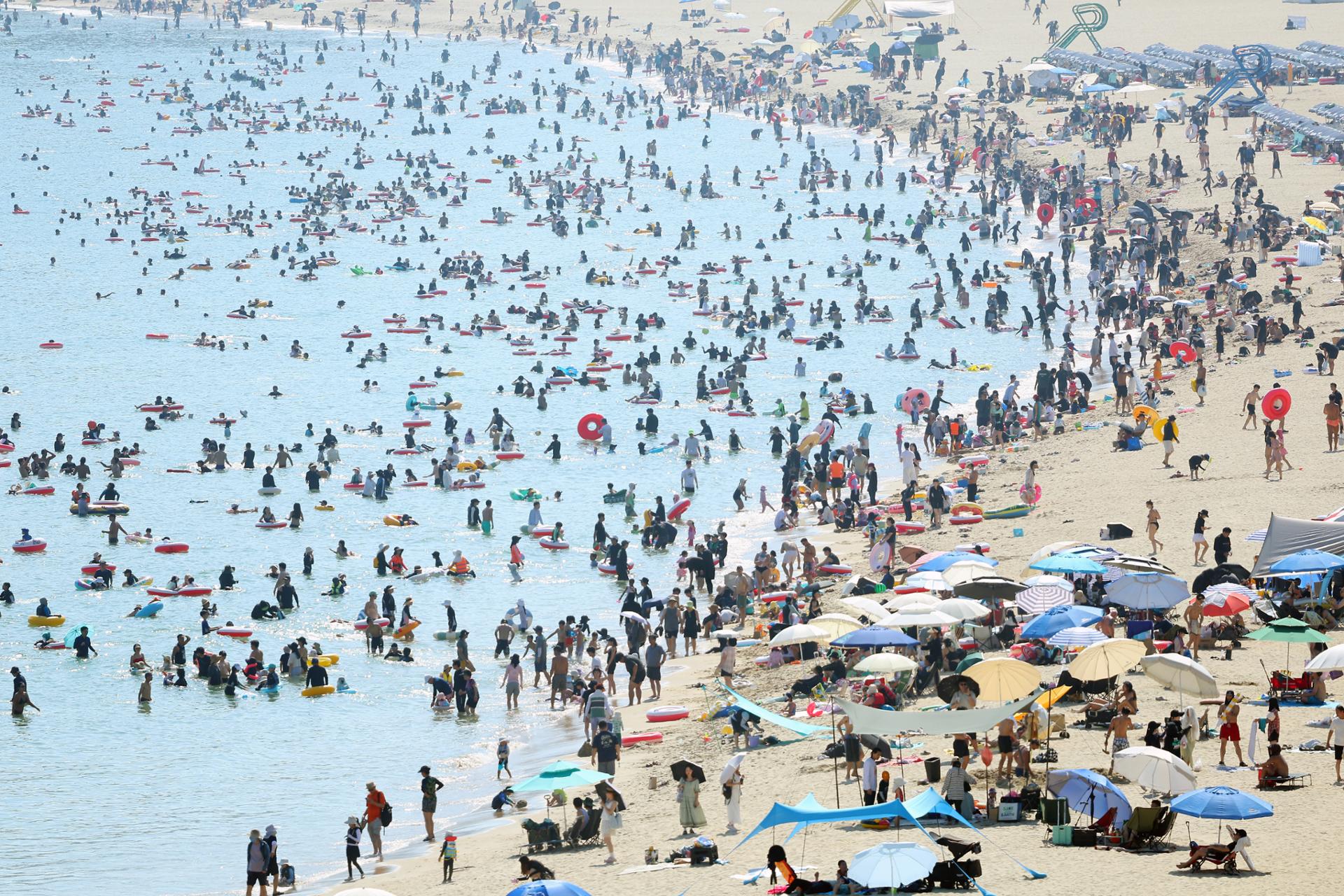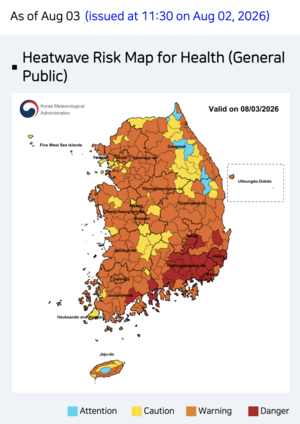
Heat haze shimmers in Jung-gu, Daegu, as the city endures another day of scorching temperatures on Sunday. (Newsis) Daegu, traditionally known as South Korea's hottest city and nicknamed "Daefrica," is no longer the sole area affected by extreme summer heat. Scorching temperatures are now impacting North Gyeongsang Province, leading weather authorities to expand severe heat wave warnings on Sunday."High temperatures are becoming increasingly widespread, not only in Daegu but also across inland and eastern coastal areas of North Gyeongsang Province," a Korea Meteorological Administration official said.At 11 a.m. Sunday, the KMA issued additional severe heat wave warnings for Gyeongsan, Cheongdo and parts of Daegu.A severe heat wave warning is issued when the maximum apparent temperature reaches 38 degrees Celsius or higher, or when the daytime high is 39 C or above, following at least two consecutive days with apparent temperatures at or above 35 C.Most other areas of Daegu and North Gyeongsang remained under standard heat wave warnings or advisories as of Sunday.By 10 a.m. Sunday, temperatures had reached 32.4 C in Daegu. In North Gyeongsang Province, Gyeongju recorded 33.7 C, Gumi 32.6 C, Andong 30.7 C, and Pohang 33.2 C.Meteorologists report that these figures indicate a broader shift in the region's heat patterns.The trend is also evident in historical temperature records.KMA data show that the highest officially recorded temperature in the Daegu–North Gyeongsang region was 40.4 C in Uiseong. Several other areas have also come close to the 40-degree mark, including Yeongdeok at 39.9 C, Gyeongju at 39.8 C, and Pohang at 39.4 C.Readings from the Automatic Weather Station network have been even higher, reaching 41 C in Sinnyeong, Yeongcheon, and 40.6 C in Hayang, Gyeongsan.
Korea's extreme heat spreads beyond Daegu
Daegu, traditionally known as South Korea's hottest city and nicknamed "Daefrica," is no longer the sole area affected by extreme summer heat. Scorching tempera
278 words~1 min read