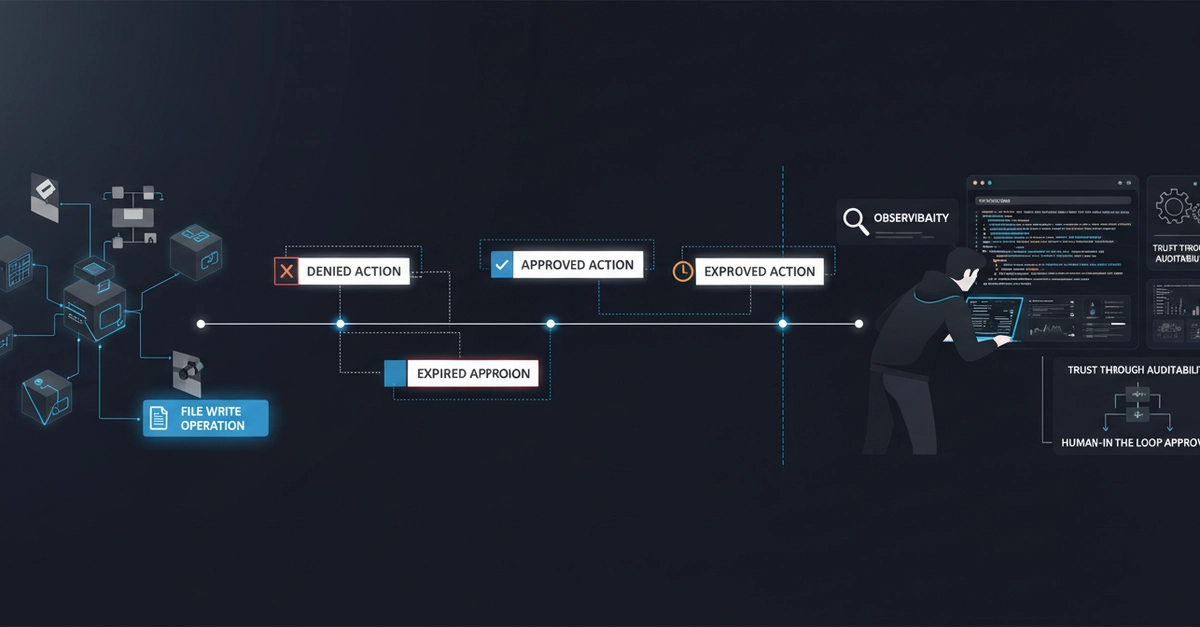
I built an AI agent that's allowed to run database migrations and clean up staging tables on its own. Then I built a second system whose only job is to take that permission away the moment things start going wrong. That second system is LEASH, and this is the story of building it in about a day for the Agents of SigNoz hackathon.
The problem I actually cared about
Everyone talks about AI agents "acting autonomously" like it's a settled, safe thing. It isn't. If you give an agent write access to a database and it hallucinates, or one of its tools starts failing silently, nothing stops it from doing that ten more times before a human even notices.
The usual fix people reach for is "human in the loop." Sounds responsible. In practice it doesn't scale. Nobody is reviewing every single tool call an agent makes at 3am. You either become a rubber stamp clicking approve without reading, or the whole pipeline grinds to a halt waiting on you.
So I asked a dumber, more mechanical question instead: what if the agent's permissions weren't fixed, and instead moved up and down based on whether its recent actions were actually working?