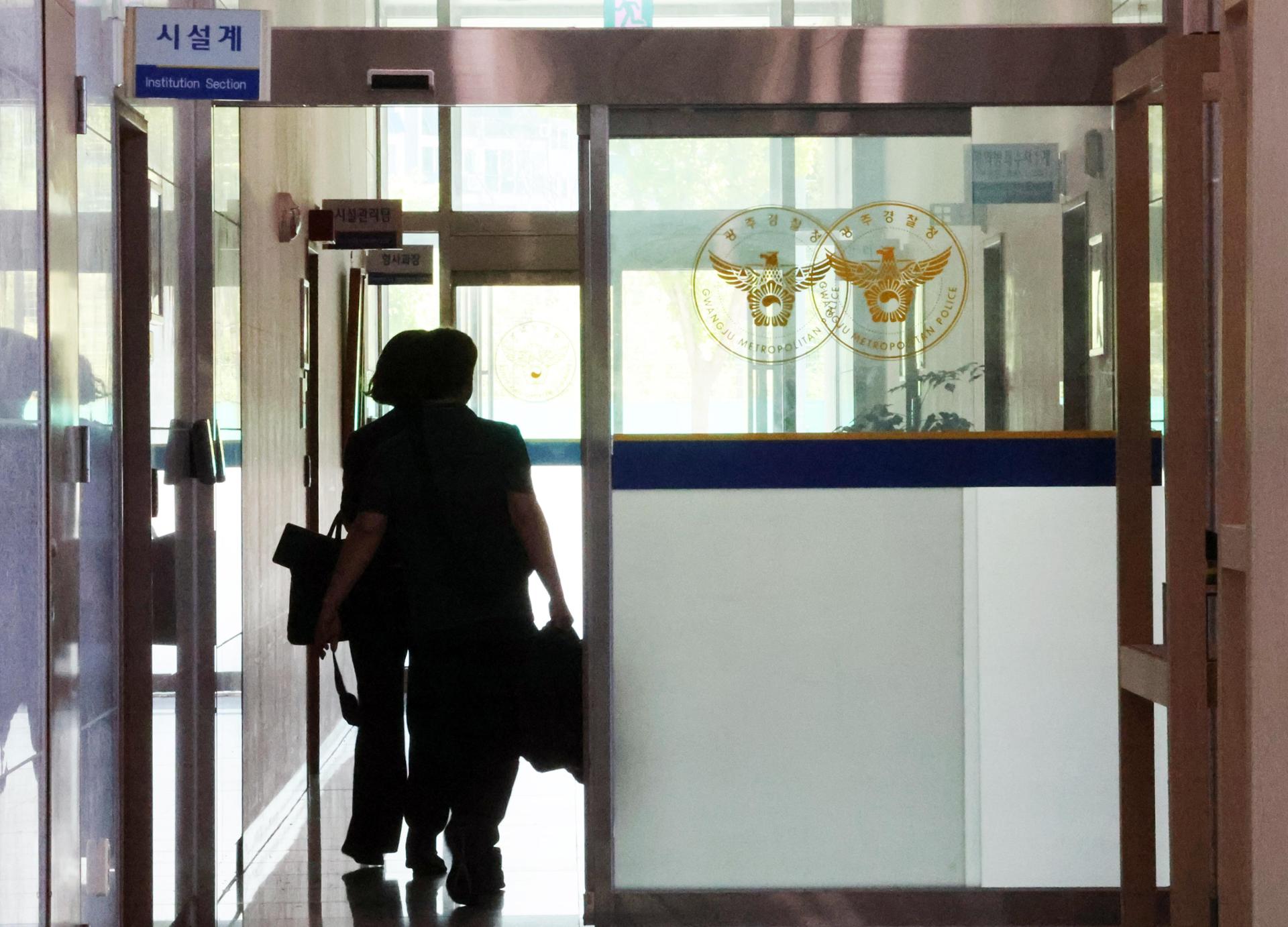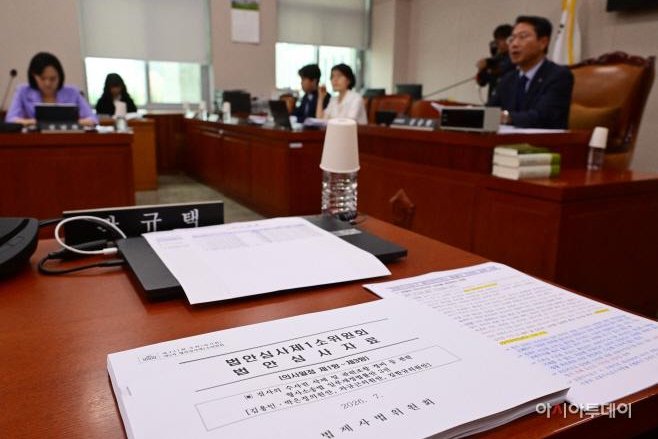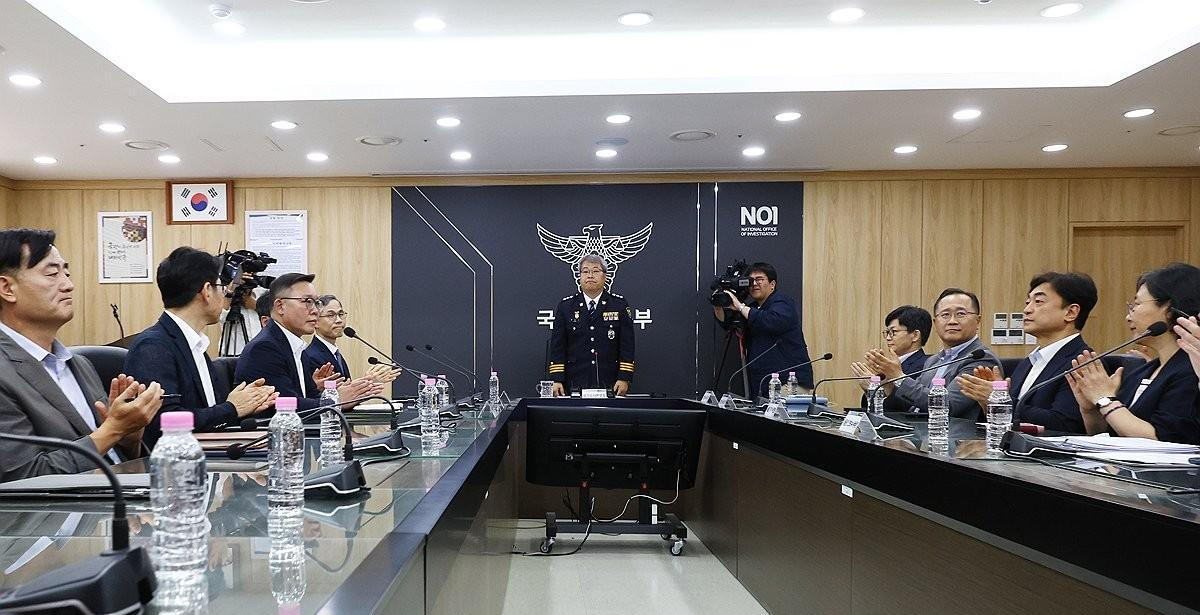
Lawmaker says distrust toward police indicates prosecution's investigative powers should not be taken away Officials from the National Police Agency walk out of the Gwangju Metropolitan Police Agency after a search and seizure operation on July 11 connected to a suspected cover-up of evidence. (Yonhap) An increasing number of South Koreans are filing objections to police decisions to close criminal cases, a National Police Agency report showed Sunday.The number of objections more than doubled from 27,262 in 2021 to 56,165 in 2025, according to data submitted to Rep. Kim Jae-sub of the main opposition People Power Party. The report also showed that 34,001 objections were filed from January to June of this year, possibly indicating that a new record could be set by the end of the year.People who file criminal complaints can object if the police decide not to transfer a case to prosecutors. If that happens, the police must immediately forward the case to prosecutors, who then review if the police decision is justified and decide whether or not to pursue the case."The fact that people are not convinced with the results of police investigations means that police investigations have been insufficient," Kim said.The lawmaker voiced his concern about the decision by the Lee Jae Myung administration and the ruling party to scrap the prosecution's investigative rights.Under the current system, prosecutors conduct supplementary investigations after being handed a case, but the Lee administration and the Democratic Party of Korea seek to end the prosecution's investigative role.The reform drive has sparked a fierce debate, with some members of the public and the main opposition party raising concerns.Earlier this month, the victim of an attempted rape and murder case in Busan said at a press conference that it was the prosecution's intervention that helped bring the truth to light. She and other victims of violent crimes have complained about the reforms being implemented without consulting them.A prosecutorial investigation was also crucial to exposing an alleged cover-up by local police in a Gwangju murder case, when the evidence pointing to the suspect's criminal intent was thought to have been hidden by police officials including his father.The NPA report showed that a growing number of criminal cases have been closed by police without being sent to the prosecution, with the number going from 389,179 in 2021 to 580,774 in 2025. Objections were filed in nearly 1 in 10 such cases last year, or 9.7 percent, up from 7 percent in 2021.This year, objections were filed in 11.3 percent of the cases closed by the police.Supplementary prosecutorial investigations led to the additional indictment of 1,130 cases in 2025, more than double the 528 in 2021."It's backwards thinking to strip (the prosecutors of) supplementary investigation rights, when distrust toward police is growing," Kim said.
Public objections to police decisions to close criminal cases have doubled: data
An increasing number of South Koreans are filing objections to police decisions to close criminal cases, a National Police Agency report showed Sunday. The numb
461 words~2 min read