Every LLM-powered app I'd built up to this point followed the same recipe (pun intended): call an API, write a good prompt, wrap it in a nice UI. That's a legitimate way to build things, but at some point I wanted to actually understand what was happening inside the model I was calling and not just how to prompt one.
So for my recipe app Rasaveda, I decided to skip the API entirely. Intially, I had one made, but then I felt like I was not making any clear progress in actual machine building. So I ditched the entire external API callings. No OpenAI, no HuggingFace inference endpoint, no pretrained weights. I wrote a decoder-only transformer from scratch in PyTorch, trained it on a single Colab T4, and shipped it as the actual language model powering the app in production.
This post is a lazy attempt at what that looked like. The architecture, the training runs, the mistakes, and what I'd tell someone about to try the same thing (do at your own risk).
What Rasaveda actually does
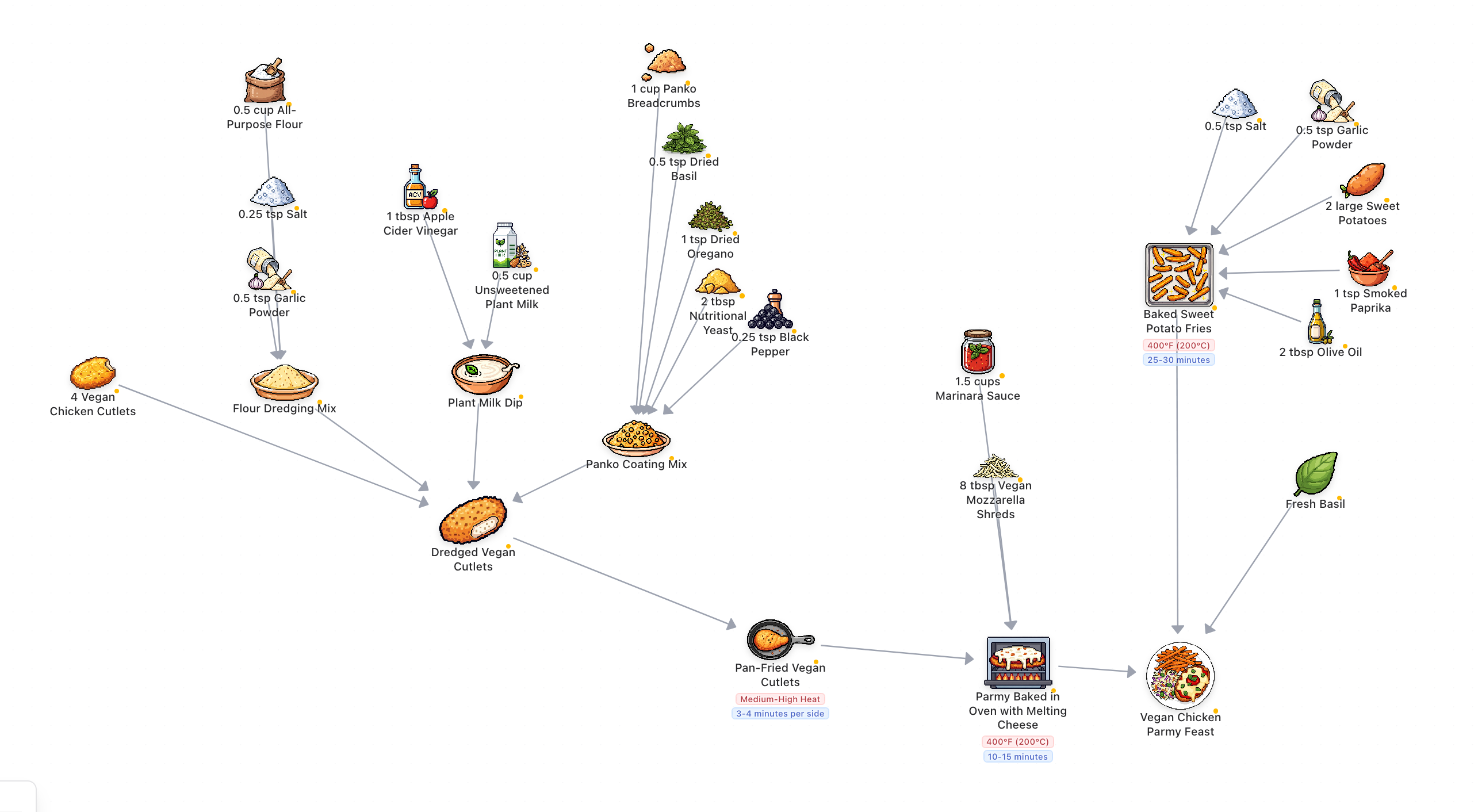
Rasaveda is a full-stack recipe intelligence app: you give it the ingredients sitting in your kitchen, it does a semantic vector search (ChromaDB + all-MiniLM-L6-v2) over 365 recipes to find the best matches, tells you exactly what you're missing, and can critique or explain any cooking step conversationally. It also has a somewhat unnecessary but delightful feature where you pick a theme by clicking one of 36 Indian states on a geographically accurate SVG map (original idea lol).