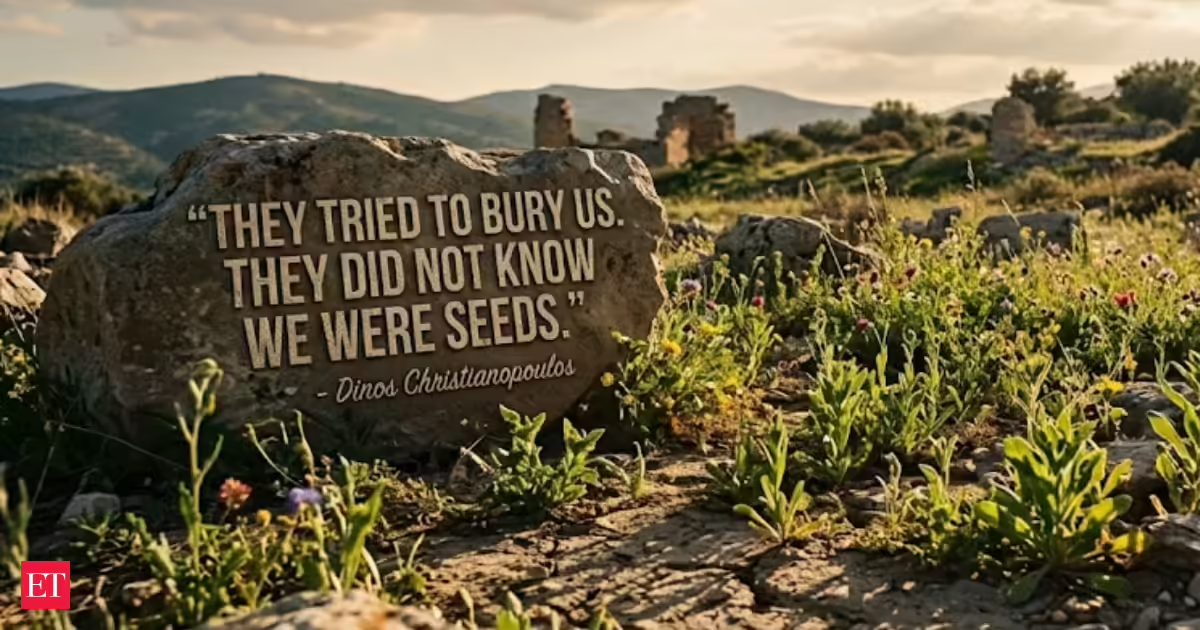
The widely shared quote, "They tried to bury us; they did not know we were seeds," is attributed to Greek poet Dinos Christianopoulos and has become a global symbol of resilience, survival and the ability to rise despite adversity. The line captures the idea that attempts to suppress, silence or defeat individuals can unintentionally create the conditions for growth and renewal. Dinos Christianopoulos and the origins of the quote Dinos Christianopoulos, born Konstantinos Dimitriadis in 1931 in Thessaloniki, Greece, was known for his poetry, short stories and literary criticism. He became one of Greece’s most distinctive modern poets, with his work often focusing on human struggles, identity, loneliness and social exclusion. The quote is commonly linked to Christianopoulos and is believed to reflect themes that appeared throughout his writing, particularly the strength found in hardship and marginalisation. A metaphor of struggle and rebirth The phrase uses the image of seeds being buried in the ground. While burial is normally associated with an ending, seeds buried beneath the soil begin a process of growth before emerging as new life. The metaphor suggests that difficult experiences, rejection or attempts to hold someone back can become the foundation for transformation and success. How the quote gained global popularity Over the years, the quote has been widely shared across social media, motivational platforms and public speeches because of its message of perseverance. It has been adopted by people facing personal challenges, social struggles and professional setbacks as a reminder that adversity does not necessarily mean defeat. Its simple but powerful message has allowed it to resonate across cultures and generations. Christianopoulos' literary legacy Christianopoulos was known for writing in a direct and personal style, often exploring themes that challenged social conventions. His poetry frequently addressed the experiences of people who felt excluded or misunderstood. Although he received recognition for his literary contributions, he remained known for his independent approach and often avoided mainstream literary circles. He died in 2020 at the age of 89, leaving behind a significant body of work in modern Greek literature. Why the quote continues to inspire The enduring appeal of the quote lies in its reversal of perspective. What appears to be an attempt to destroy can become a source of strength. The message continues to be used as a reminder that resilience can emerge from the very circumstances meant to hold people back.
Quote of the Day by Greek poet Dinos Christianopoulos: "They tried to bury us; they did not know we were seeds" meaning explained
Quote of the Day: Greek poet Dinos Christianopoulos authored a quote symbolizing resilience and growth. This powerful metaphor highlights how attempts to suppress can foster renewal and strength. His work often explored themes of struggle and marginalization, resonating globally. The quote gained popularity across platforms for its message of perseverance. Christianopoulos' literary legacy continues to inspire through his direct and personal style.
395 words~2 min read