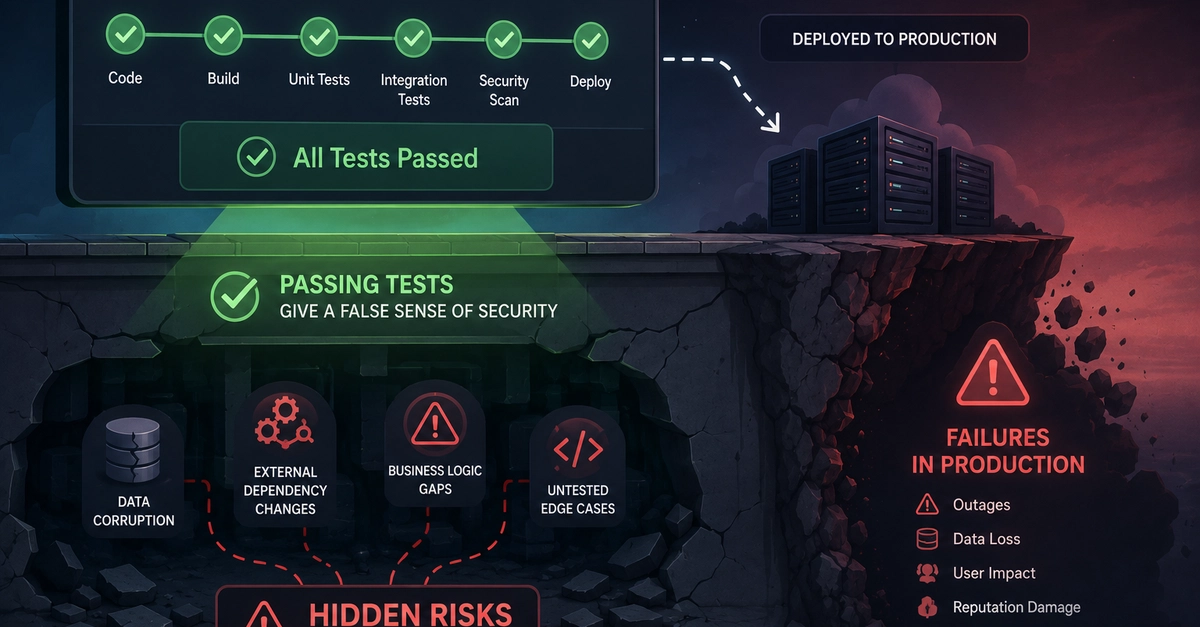
A test failure that takes 20 minutes to surface, buries the error in 3000 lines of log output, and gives no context about what changed is nearly useless. Good test reporting transforms raw pass/fail data into actionable signals. Failing fast — stopping the pipeline the moment you have enough information to make a decision — keeps feedback loops tight and respects developer time.
These two concerns are deeply connected: you can only fail fast confidently when your reporting is good enough that a fast failure still gives you everything you need to fix the problem.
What Good Test Reporting Looks Like
Before discussing implementation, it's worth being precise about what "good" means here:
Immediate visibility — failures are surfaced at the PR/commit level, not buried in logs