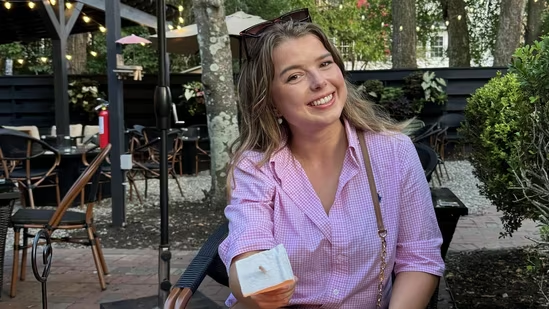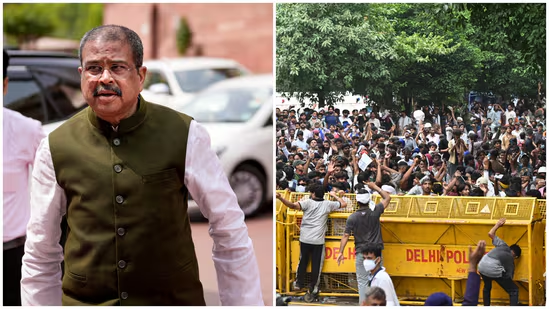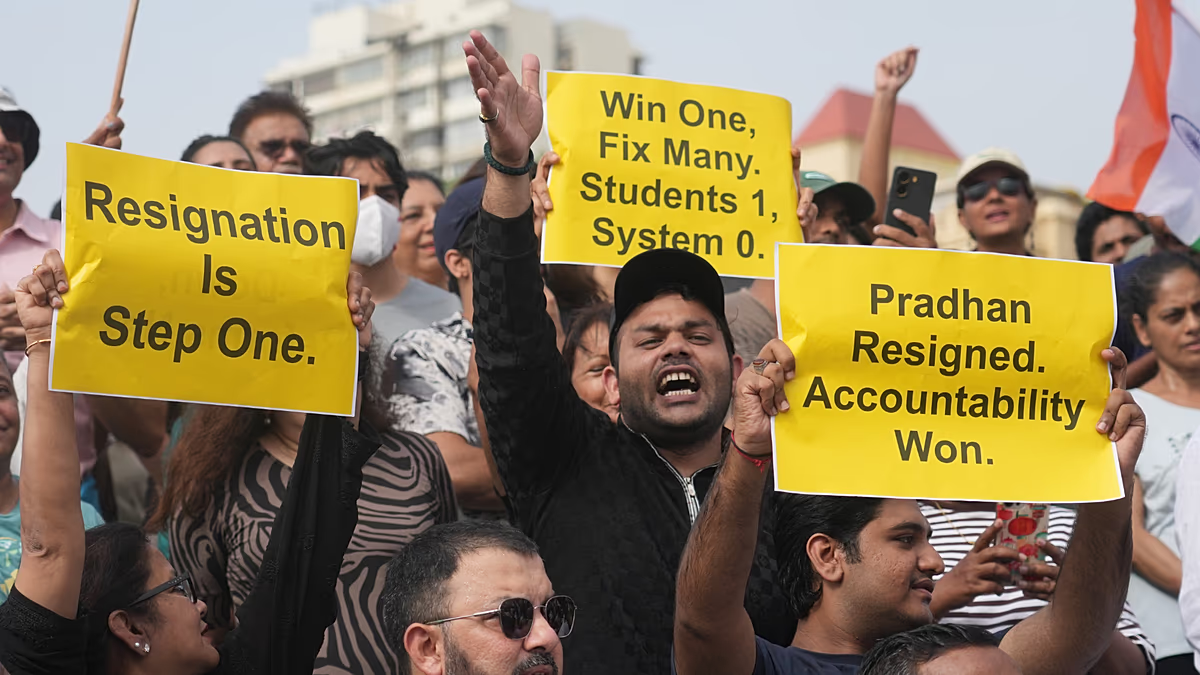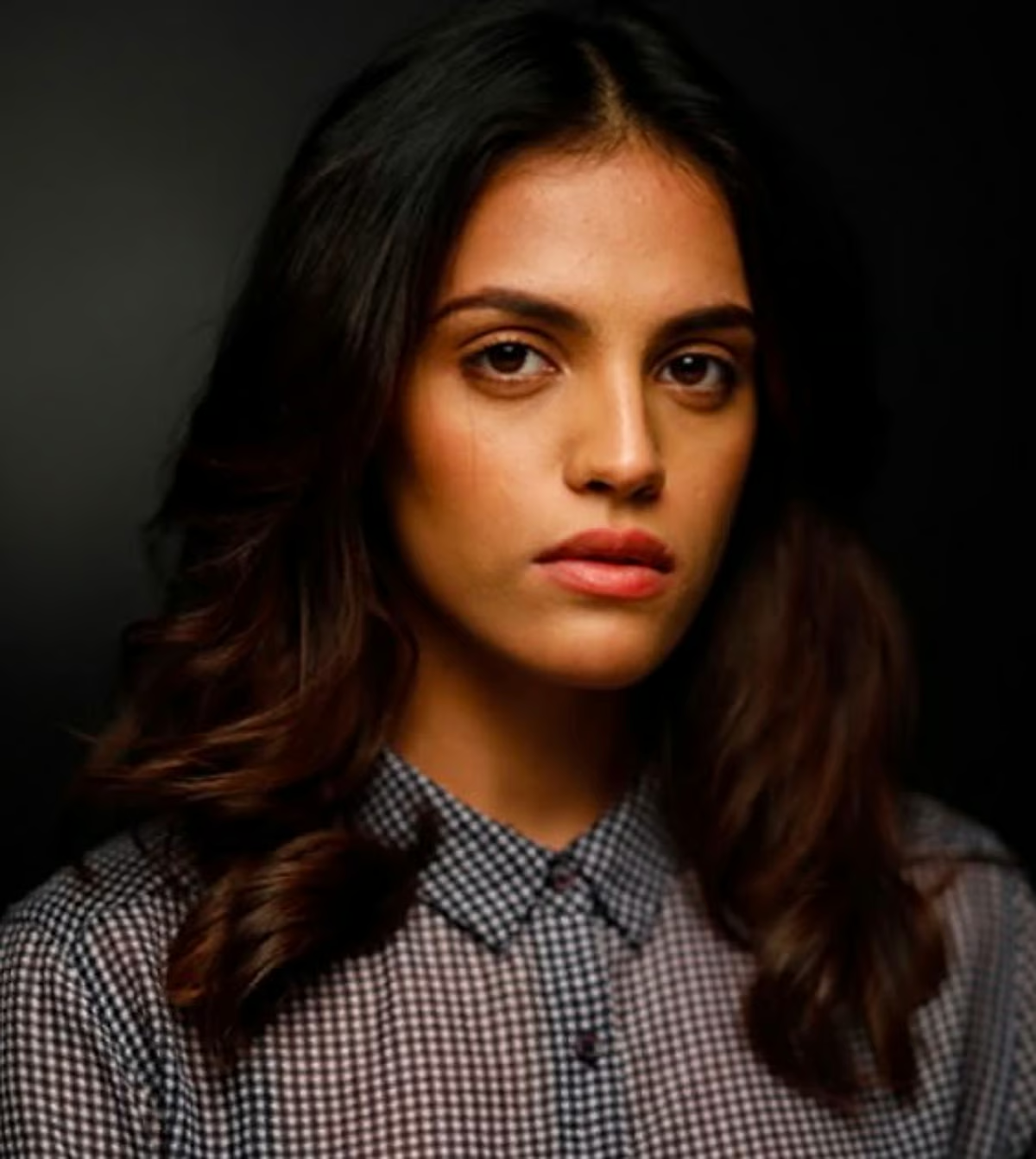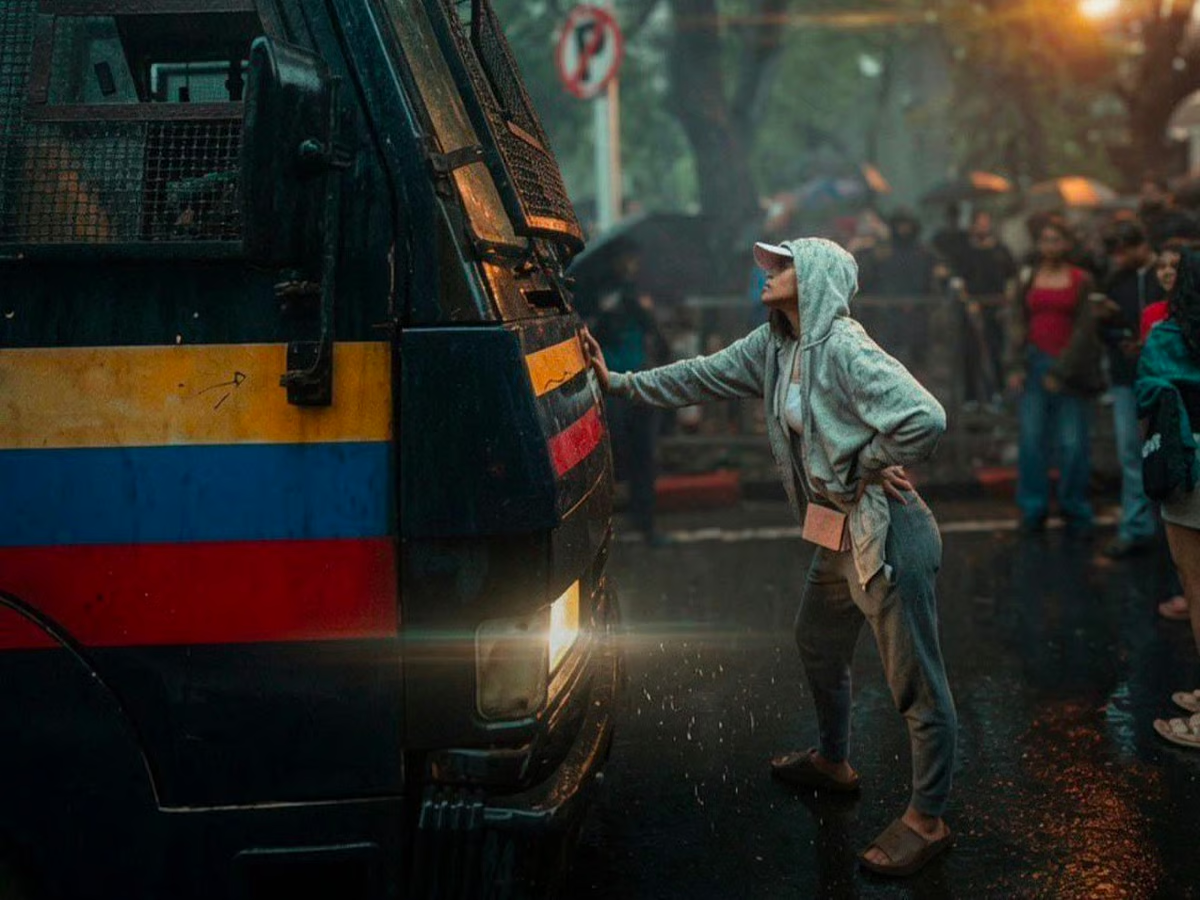
EXCLUSIVEFrom viral image to quiet resolve, she insists the movement belongs to studentsLast updated: July 25, 2026 | 17:274 MIN READ"This is like Diwali for us".Those were the first words Rhiya Ahir shared with Gulf News in an ecstatic video message moments after India's education minister Dharmendra Pradhan resigned in the wake of India's student protests. But even as she celebrated what many saw as a landmark victory, Rhiya, the woman whose rain-soaked stand before a police van became one of the defining images of India's student protests, refused to call it the finish line."I am beyond thrilled and this shows how Gen Z is not going to keep quiet. Enough is enough... let's go!" she declared in the video message that saw her speaking in Hindi and English. Then, almost immediately, she added. "This is just half the step. There's still the other half. Who is going to be the new minister? This is all about continuous progress. In 2024, something similar had happened and it is still the same. We really hope things change for the good."Her video message arrived just a day after Gulf News had spoken to Rhiya in an exclusive interview, before the resignation reshaped the political conversation. During the interview about her becoming the defining image of Indian youth-led protests, one thing becomes strikingly clear: despite becoming the woman emblematic of the movement, Rhiya has no desire to become their face."I'm simply just the girl in front of the van," she says. "I'm just a voice, a little helping hand who lent her voice in this beautiful, big movement." The now-iconic photograph of Rhiya, shot by photographer Indra Joshi, standing defiantly before a police vehicle in the rain filled with unarmed student protestors has travelled far beyond India's borders. To many, it symbolises youthful courage in the face of authority. To Rhiya, however, the image has always represented something much bigger than herself."The students who lost their lives are the face of the movement. We should not deflect from the students and the martyrs just because of me. They wanted to become doctors. They are the face of the movement."For Rhiya, standing before the police van wasn't an act of extraordinary bravery. It was simply the natural extension of the values she grew up with."I was there as a citizen of India who wants to stand up against something that is wrong," she explains. "That is what I've been raised as in my family. Our parents always tell us, if something is unjust, stand up for it. For me, it was nothing extraordinary. It was just me being me."Those values were reinforced at home. Before leaving for the protest, she recalls telling her father she thought it had been cancelled. His response still echoes in her mind."'What if it's cancelled? People are still going to show up. Go.'"Her father served in the Indo-Tibetan Border Police, while several members of her extended family continue to serve in the armed forces. She briefly considered joining the military herself before injuries derailed those plans. Today, she believes raising her voice is another way of serving her country.Ironically, the image that catapulted her into the global spotlight almost made her laugh."When my friends first sent me the picture, I was like, 'What is that pose?'" she says with a smile. Online critics questioned whether the photograph looked too polished or theatrical. Rhiya has a simple explanation. She had injured her knee during gymnastics the previous day and couldn't stand straight. "I think every girl stands like that," she laughs. A theatre performer since the age of four and a model for six years, Rhiya says years on stage helped her remain composed in a moment that would later become history. Yet fame has been the last thing on her mind."If I've been blessed with this beautiful platform, I want to make the most of it," she says. "We're not even demanding. We're just asking for our rights."The sudden attention has also brought criticism, with some accusing her of chasing social media fame.She dismisses those claims. "I don't want to come across as someone who did this for two minutes of fame," she says. Instead, she says she spent much of the protest documenting events, photographing number plates, recording videos and preserving evidence because "documentation is very important in today's time."Why has that single photograph resonated with millions? Rhiya believes the answer lies in a universal emotion."I think all of us have felt alone at some point in life," she reflects. "There I was, standing there alone. People recognised that they themselves also have a voice. They just have to muster up the courage."Would she do it all over again?She doesn't hesitate."It's muscle memory to stand up for what's right," she says, recalling how she once challenged a security guard for speaking disrespectfully to a rickshaw driver. "Everyone deserves respect." Her message to young people, especially women, is simple."Stand your ground. Your voice matters. Every voice matters."Even after becoming the face of a movement she insists she doesn't represent, Ahir returns to the same thought again and again."I will keep saying it," she says. "I am not the face of it. The students are. Justice for them should prevail and shall."Also In This PackageManjusha Radhakrishnan has been slaying entertainment news and celebrity interviews in Dubai for 18 years—and she’s just getting started. As Entertainment Editor, she covers Bollywood movie reviews, Hollywood scoops, Pakistani dramas, and world cinema.
Rhiya Ahir, the face of India's protests, reacts to Dharmendra Pradhan resignation: 'This is like Diwali for us'
Rhiya Ahir celebrates Dharmendra Pradhan’s resignation as a landmark win, but warns India’s Gen Z that the battle for student rights is only half won.
1,070 words~5 min read