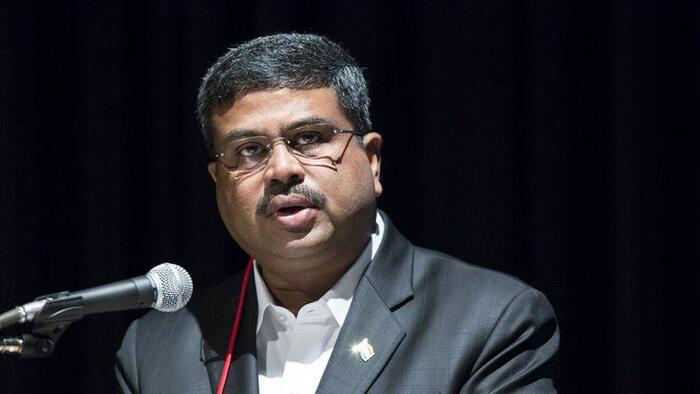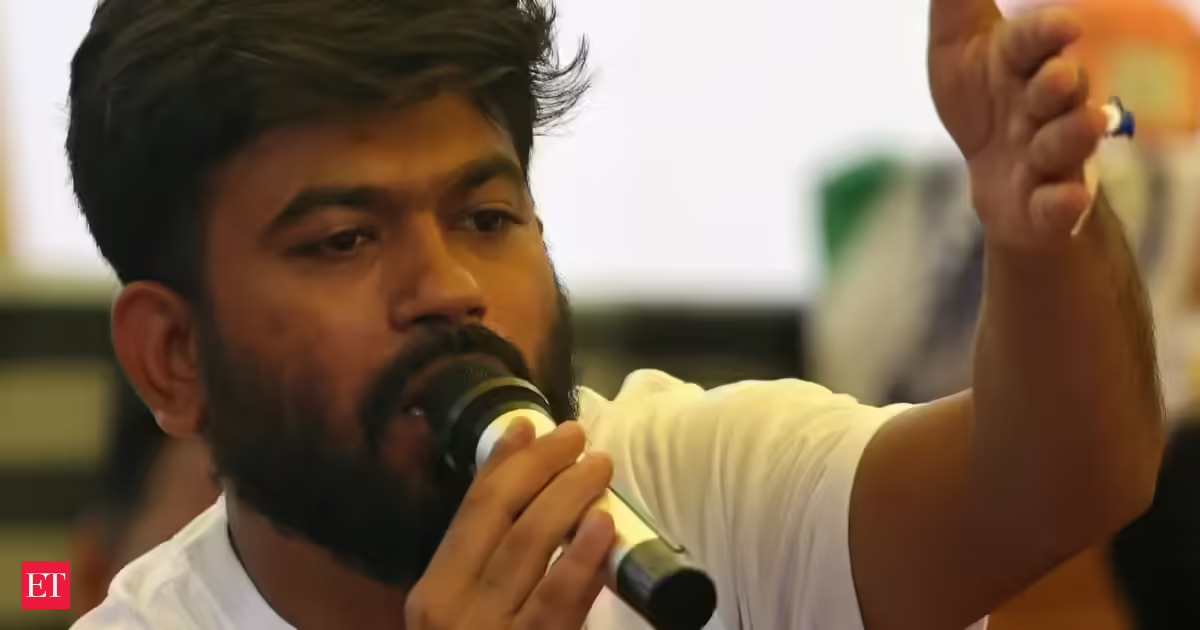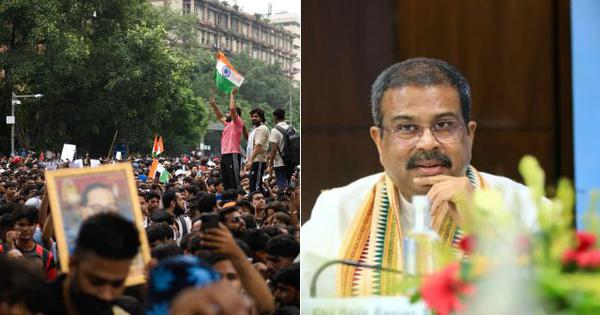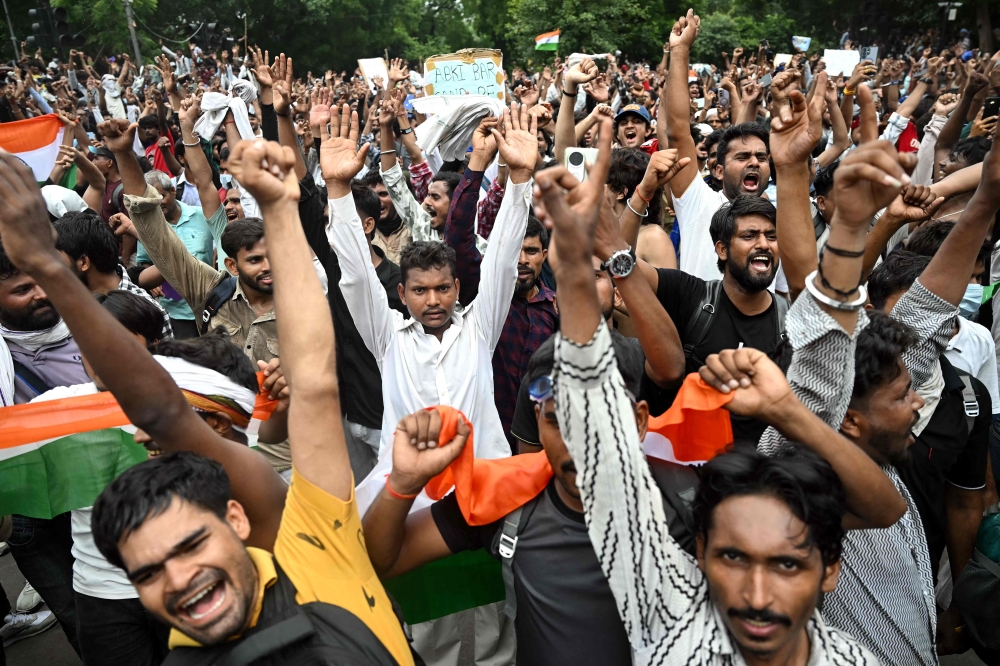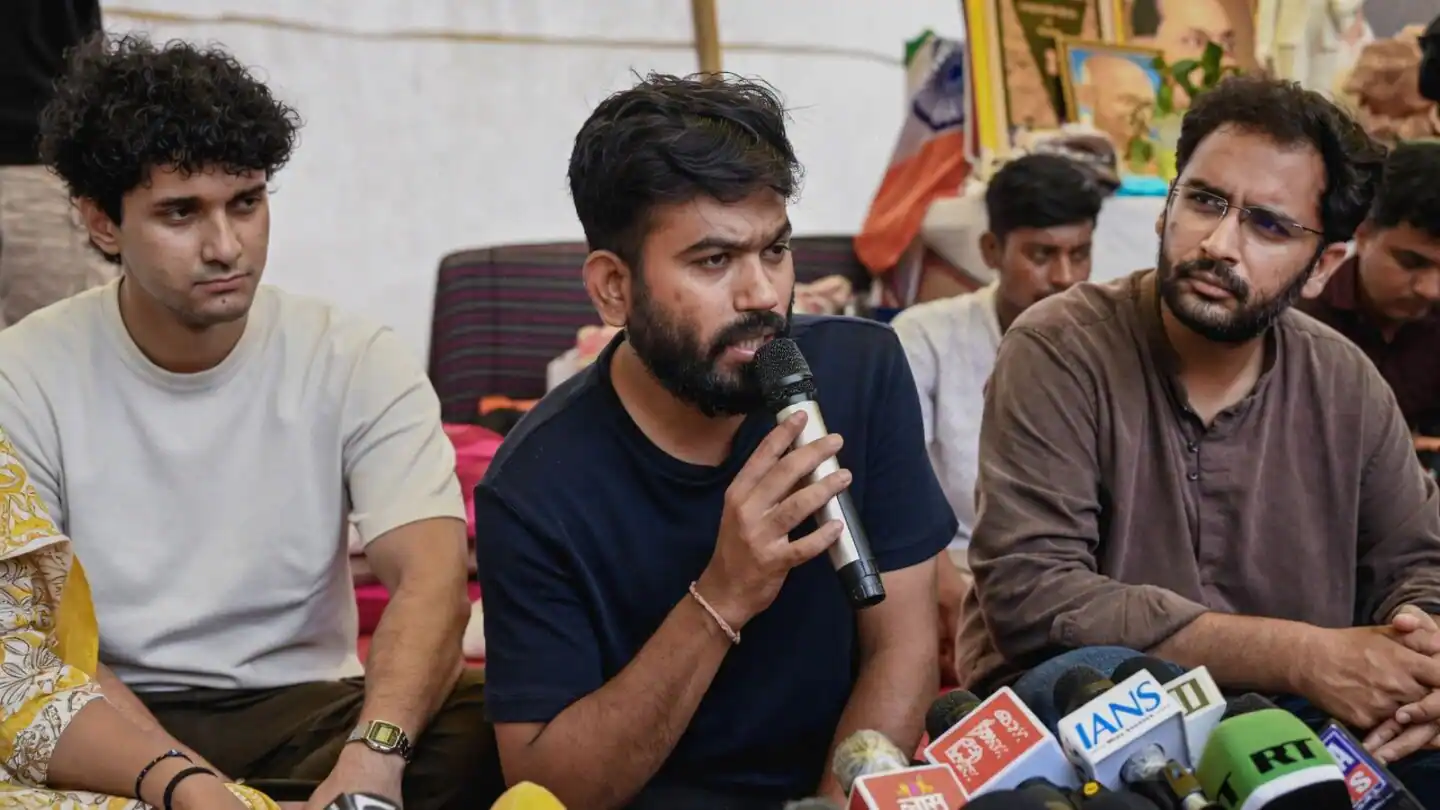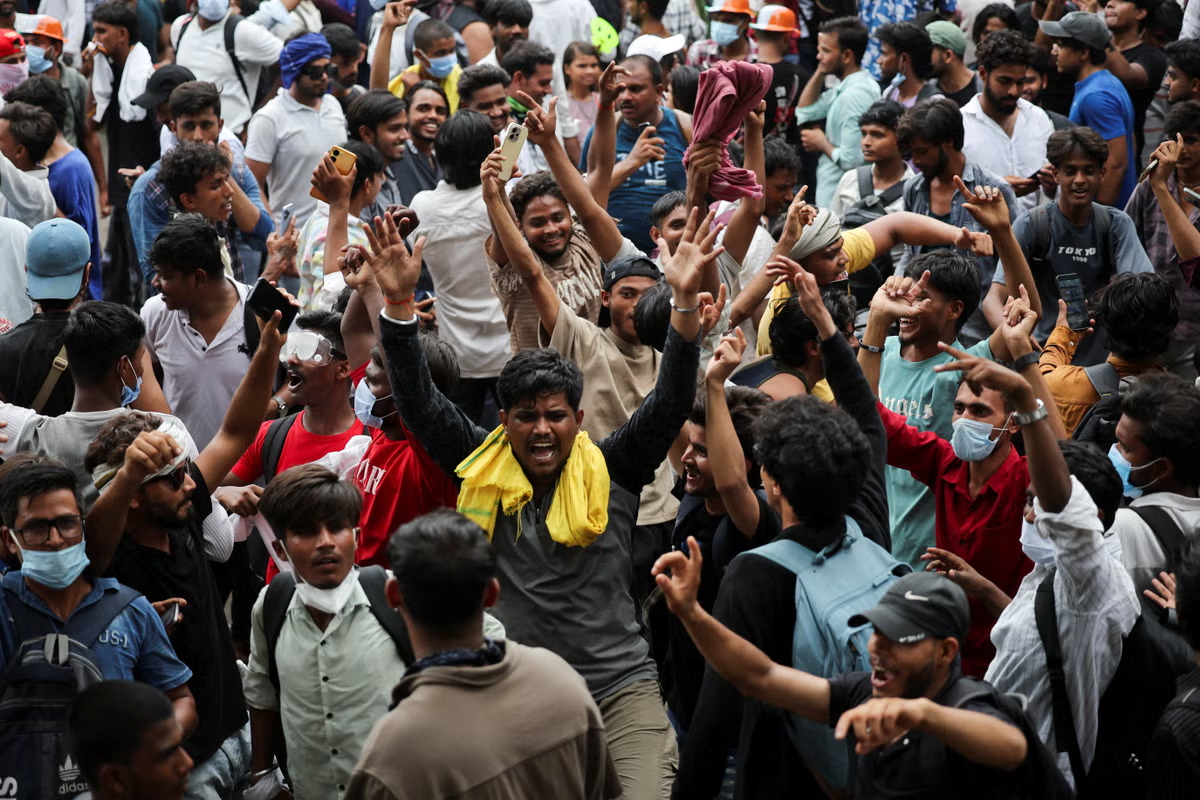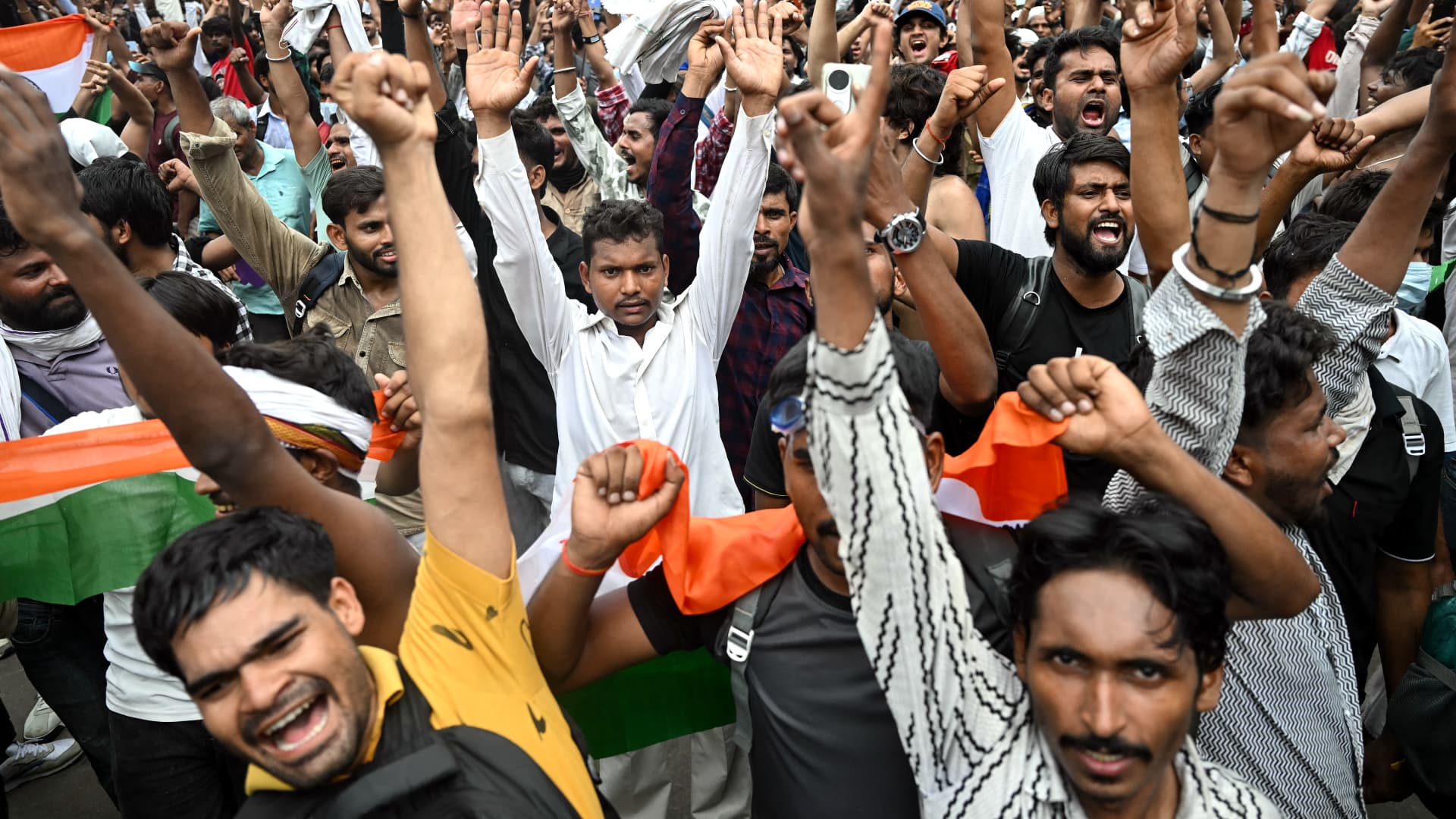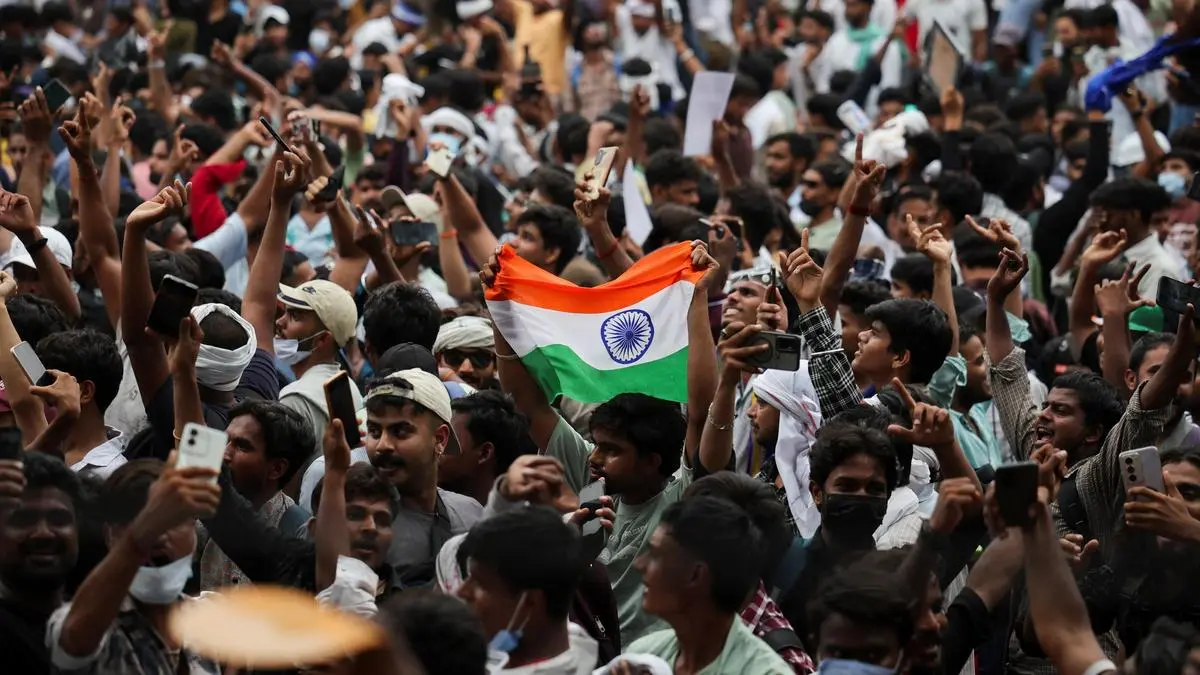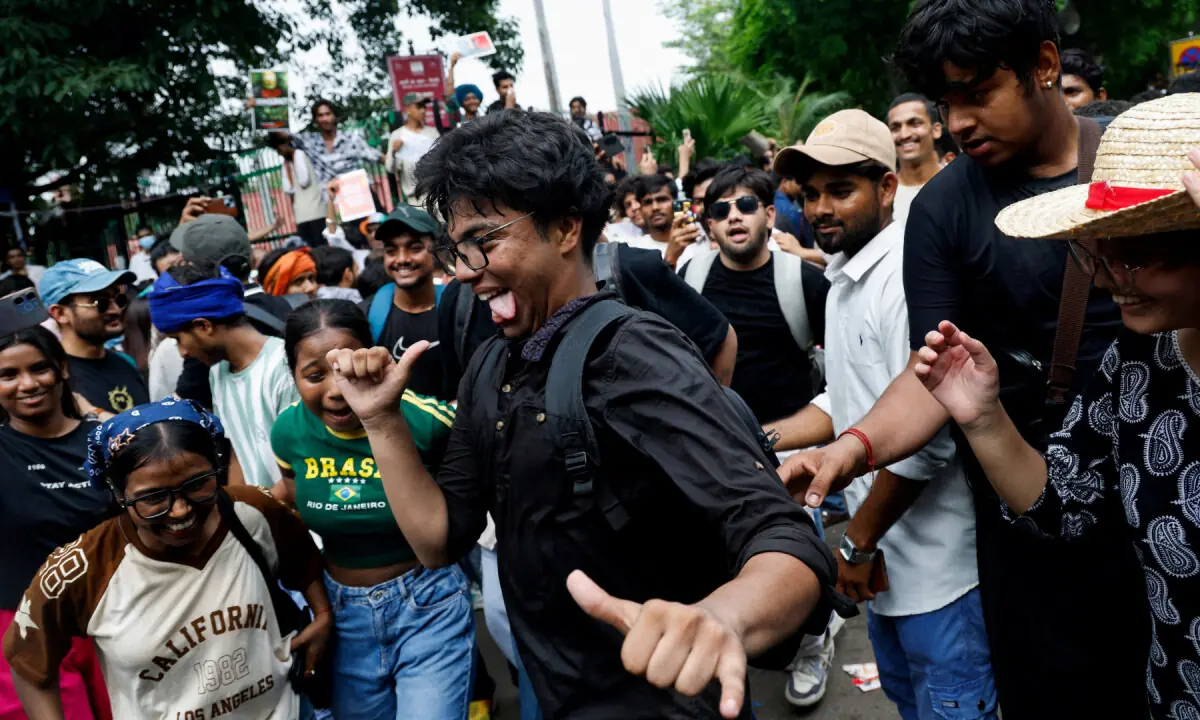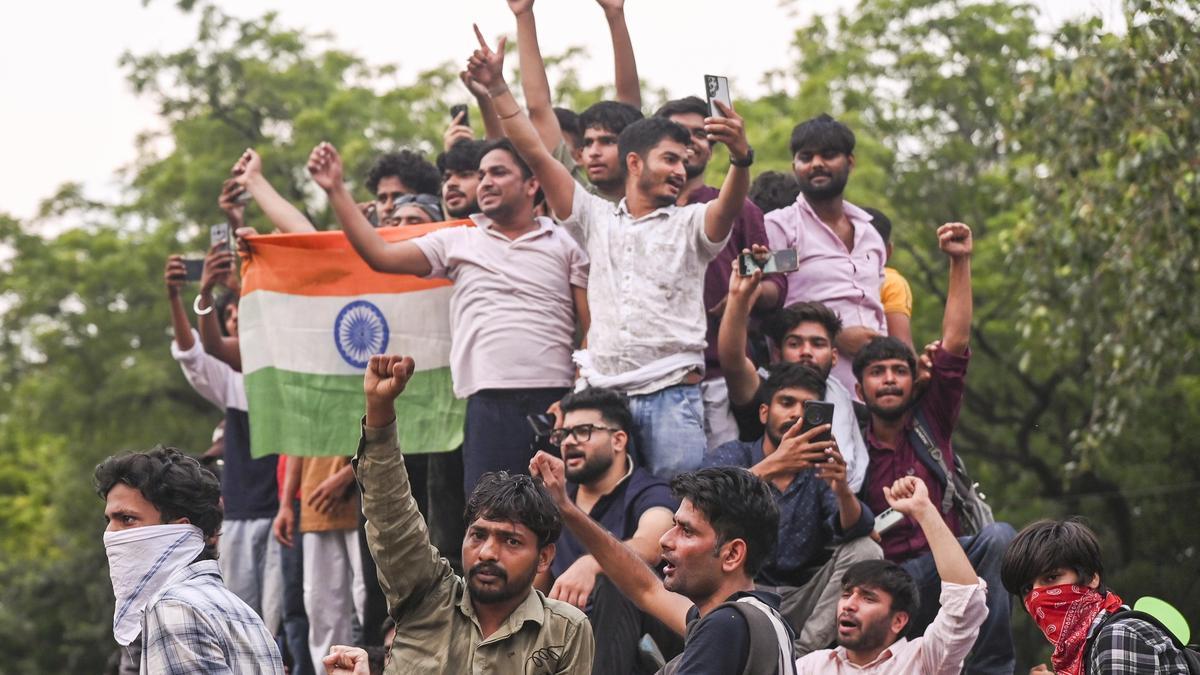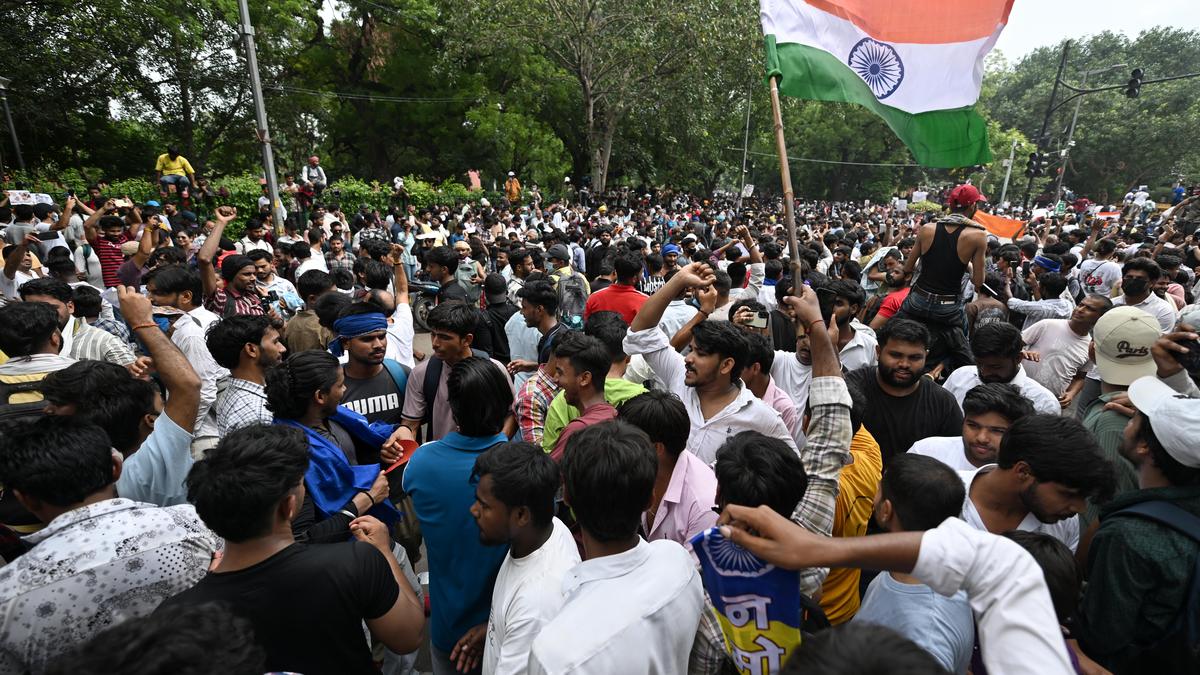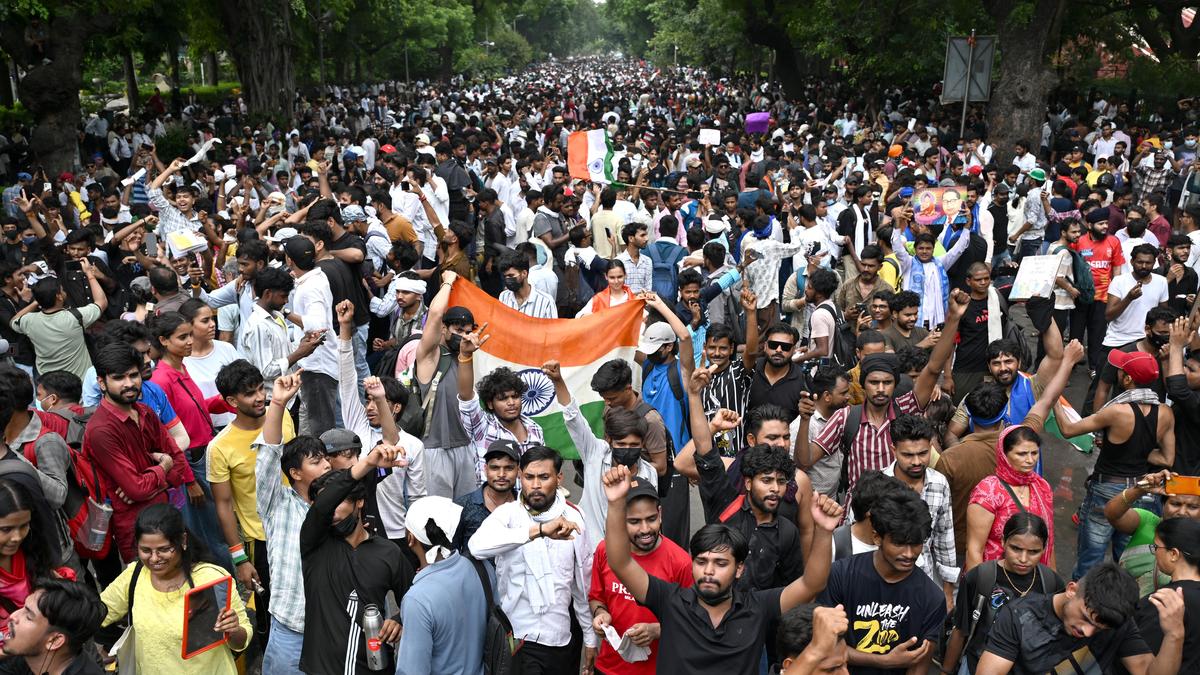
Cockroach Janta Party (CJP) supporters celebrate as Union Education Minister Dharmendra Pradhan resigns after a protest over alleged examination irregularities and a NEET paper leak, at Jantar Mantar in New Delhi on July 25, 2026.
| Photo Credit: Shashi Shekhar Kashyap
The resignation of Union Education Minister Dharmendra Pradhan, a demand sustained over long weeks by the Cockroach Janta Party (CJP) and young protesters, is not the first instance of a Minister resigning from the Narendra Modi government, nor is it the first time this government has blinked in the face of a strong protest movement.The Union government under Mr. Modi walked back on the the Right to Fair Compensation and Transparency in Land Acquisition, Rehabilitation and Resettlement (Amendment) Ordinance in 2015, after repromulgating it thrice. Former Minister of State for External Affairs M.J. Akbar resigned in 2018 after allegations were levelled against him in the #MeToo movement. The Farm Laws were withdrawn after months of protests by farmers at Delhi’s doorstep in 2021. Mr. Pradhan’s resignation may be seen as a part of this series of reversals. On the other hand, the government carried the day in other protests, including by the students of the Jawaharlal Nehru University here in 2016, and the widespread protests against the Citizenship Amendment Act in 2019-2020, in which the polarisation suited the BJP’s base.All of this is, of course, a product of political calculations, of whether the government feels it can remain strong on its point or whether it needs to concede now to live to fight another day.Follow the Jantar Mantar protest LIVEThe CJP-led protests have been a political challenge for the government, now in its 12th year. The protesters are young citizens, and they cut across lines of caste, community, and even class. Many could also have hailed from families that may have voted for Mr. Modi in successive Lok Sabha elections.The protests also bring to fore another reality. The Gen Z, as they are termed, now in their late teens and early 20s, were children when Mr. Modi assumed power. They do not recall the acts of omission and commission by previous governments, and instead want a response to the way things are run now, and have been in the past 12 years.Every government takes decisions based on its own political calculations. What should not be part of that calculation is obduracy over whether a Minister will stay or go, or whether or not genuine demands by embattled students should be met.In this, the 12th year and the third iteration of a BJP-led government, the Modi government has very limited legroom and manoeuvrability for taking political risks in events such as the CJP protests. Young protesters have shown the government that a new cohort of leaders and voters is nipping at its heels. To engage with them, the government may have to shake its 12-year-old playbook. Published - July 25, 2026 07:14 pm IST