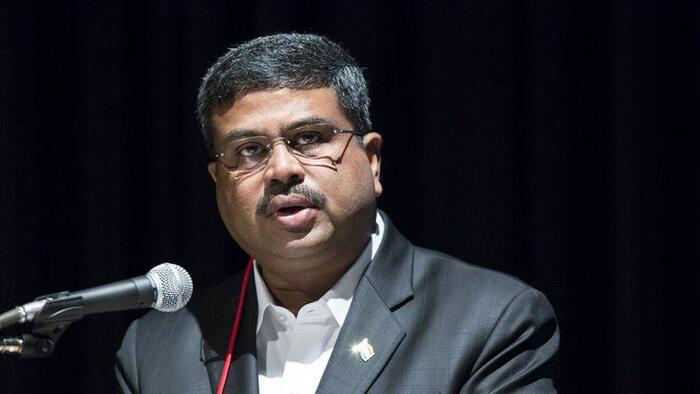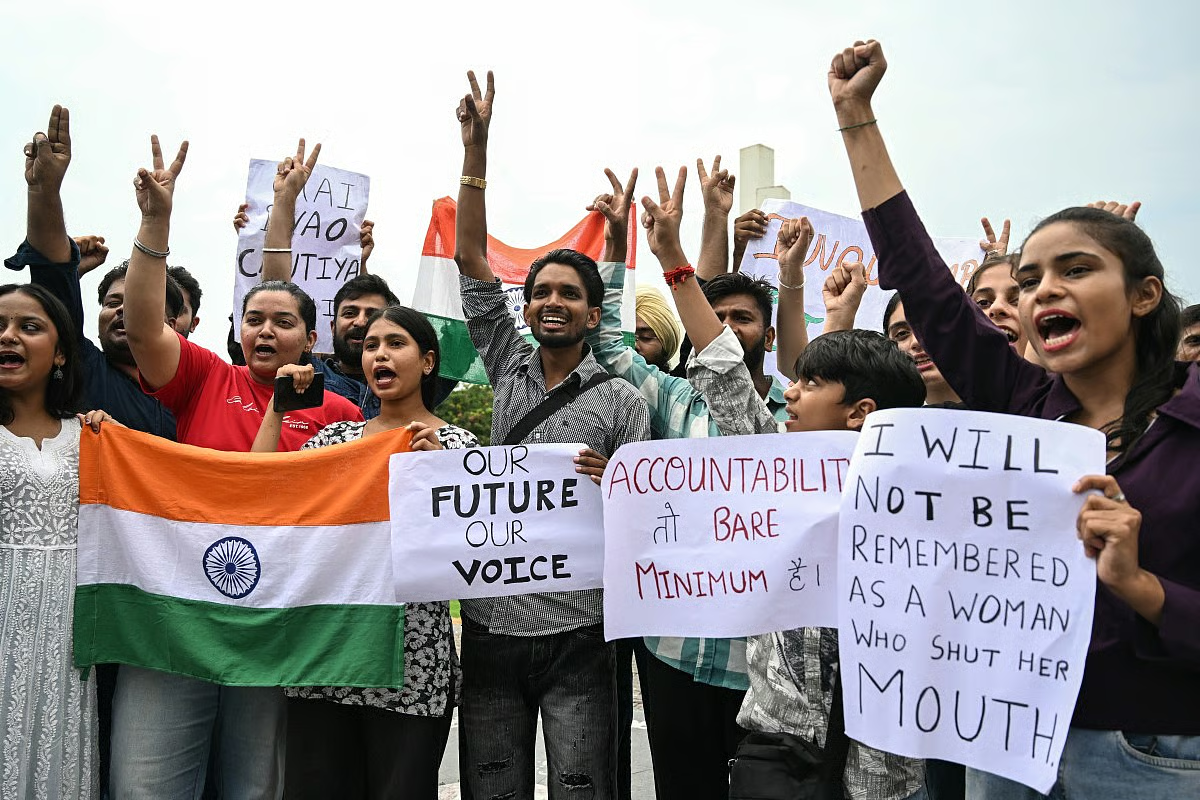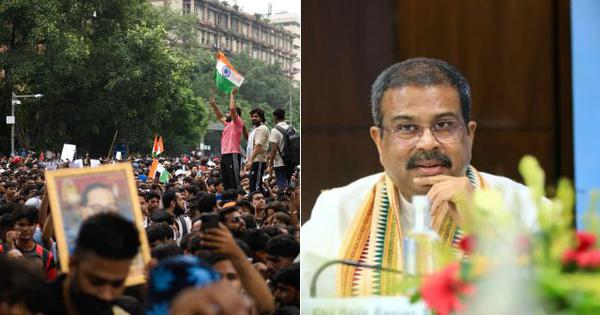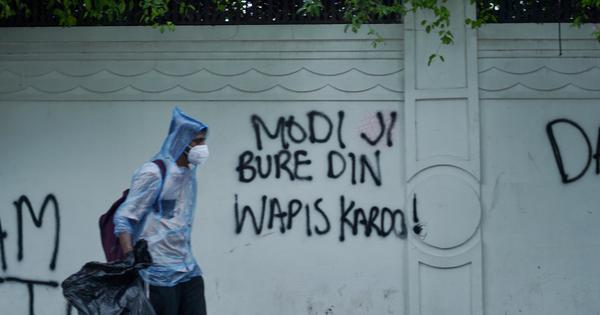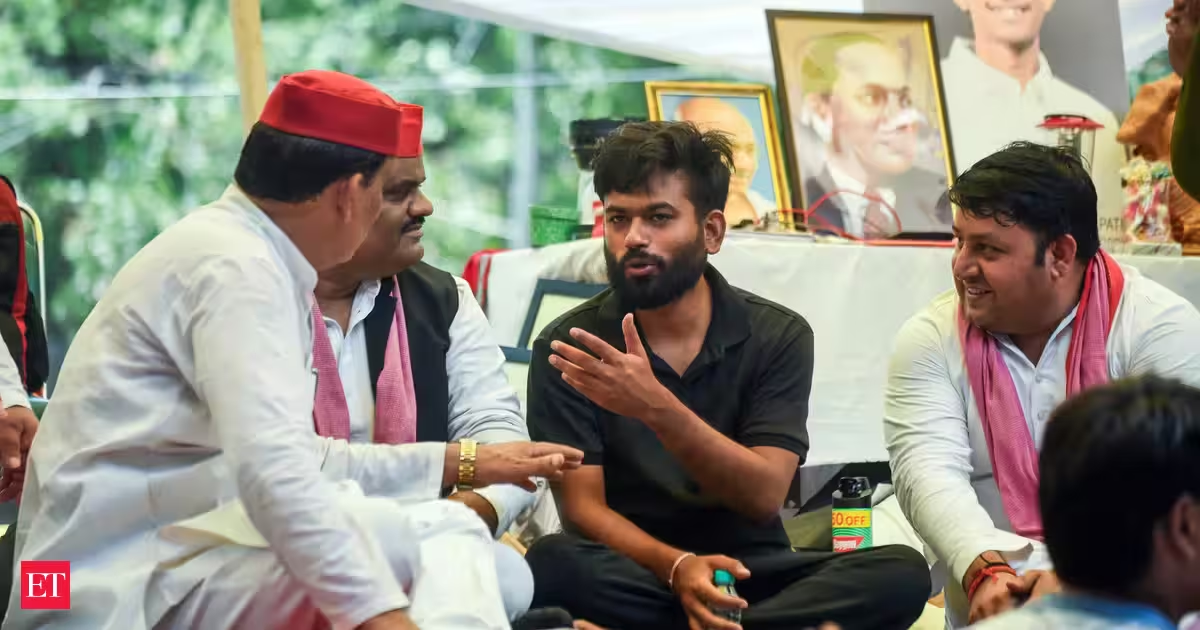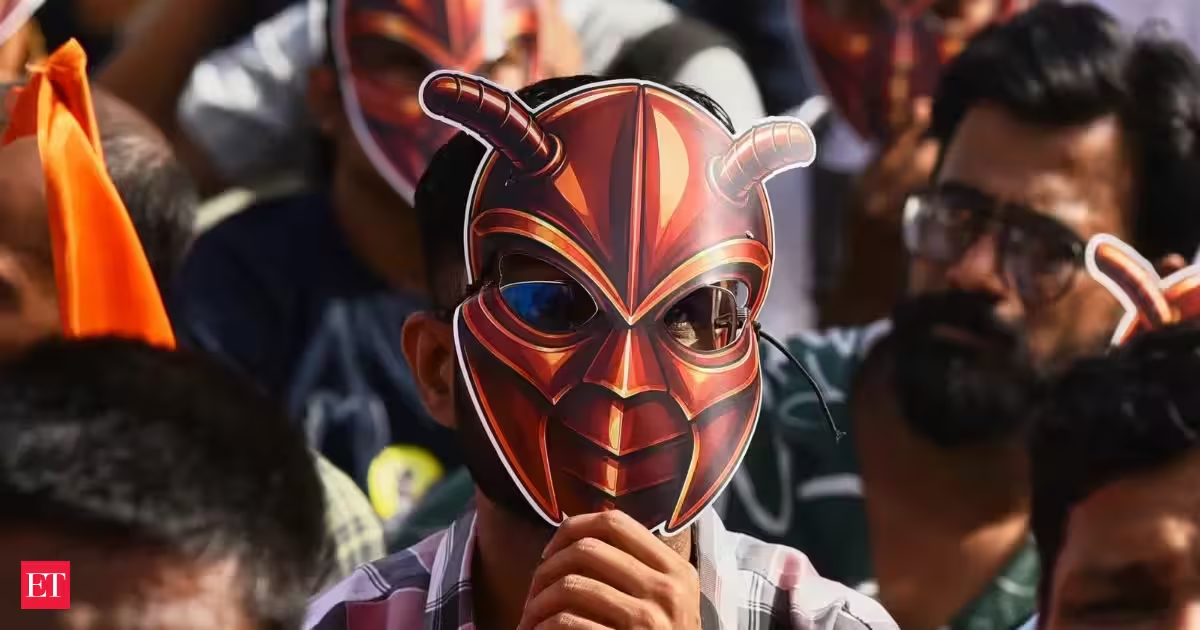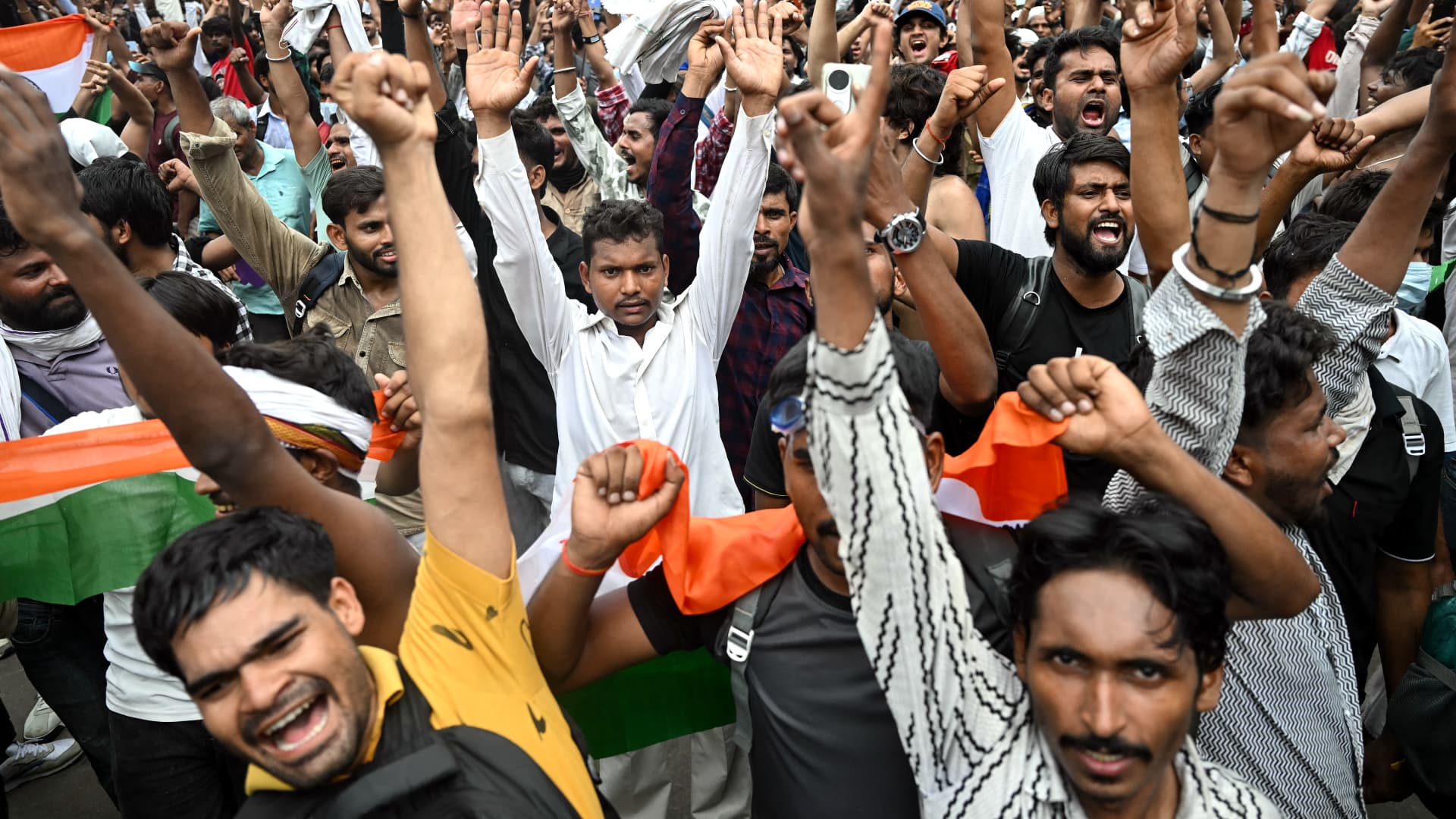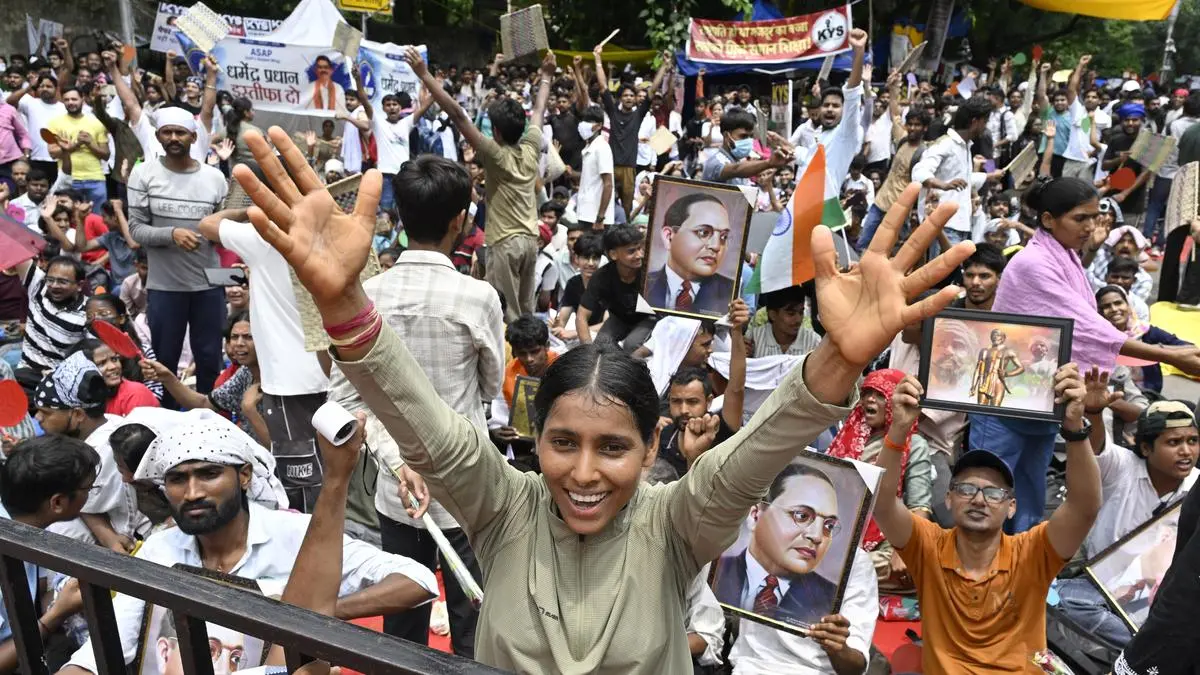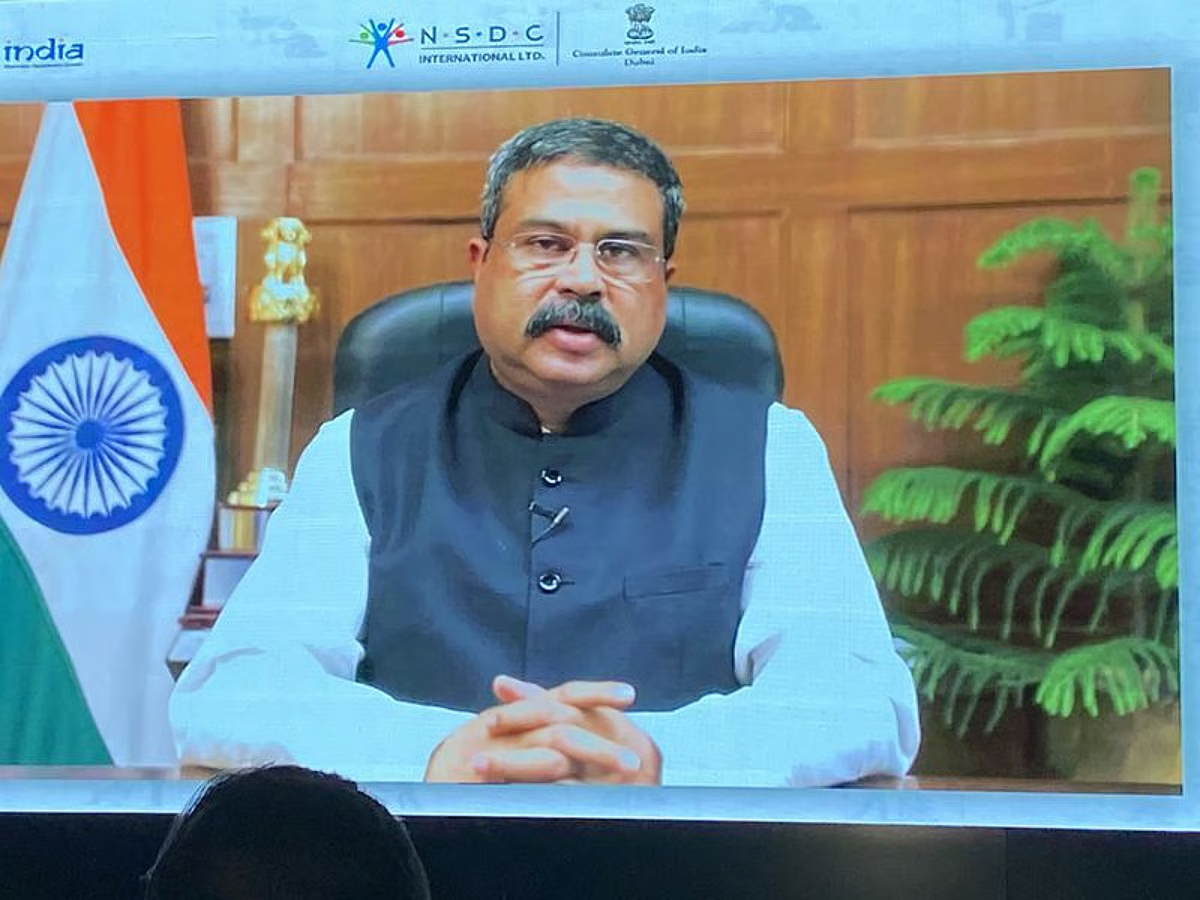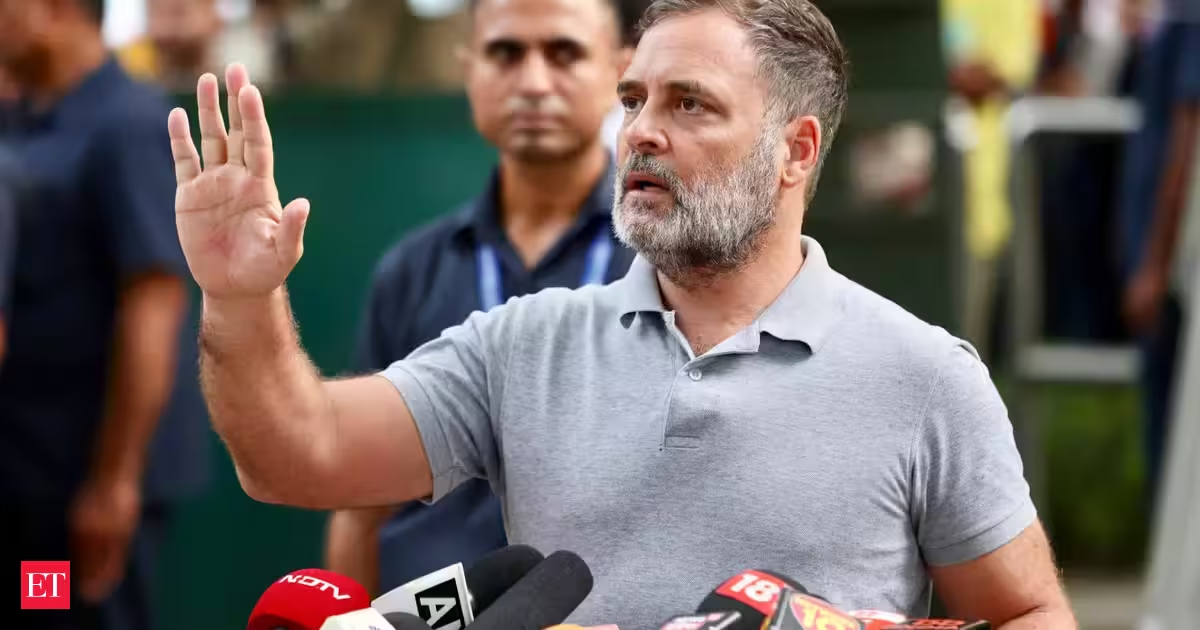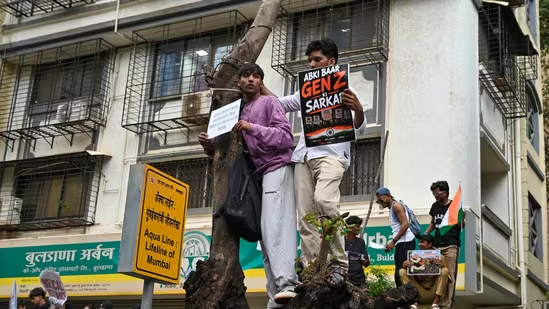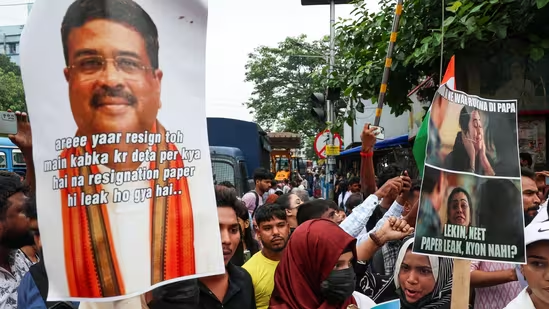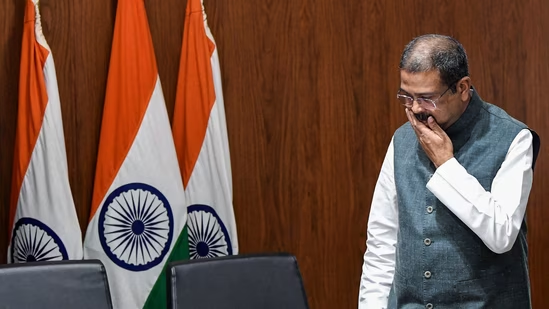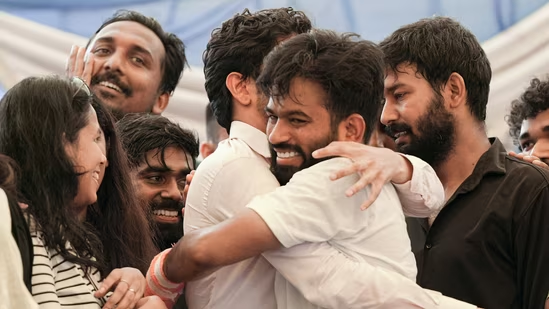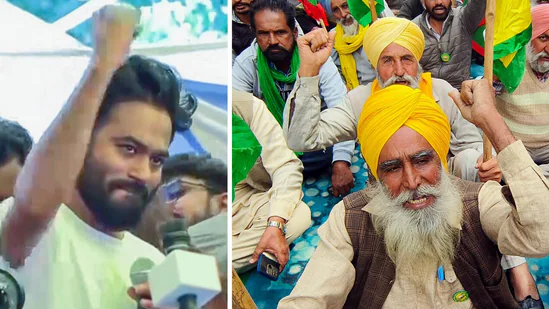
Dharmendra Pradhan's resignation goes further than earlier retreats; it breaks with a doctrine PM Modi's govt has held to for nearly all of its 12 yrs in power Five years after farmers camping on Delhi's borders forced Prime Minister Narendra Modi into the biggest policy retreat of his tenure, the resignation of education minister Dharmendra Pradhan on Saturday marks only the second time sustained street pressure — this time by Gen-Z and others galvanised by the Cockroach Janta Party phenomenon — has made the Modi regime visibly reverse course. And it's the first time it has cost a minister his post.Abhijeet Dipke, who founded and named the Cockroach Janta Party after some comments by the Chief Justice of India in May, elated after Dharmendra Pradhan announced his resignation; Dipke spoke of the farmers' protest (right) in some of his speeches. (Photos: ANI, File)The last such retreat came on November 19, 2021, when PM Modi announced the repeal of three contentious farm laws after farmers, mostly from Punjab, Haryana and western Uttar Pradesh, had camped at Delhi's border points for a year. The acts were off the books by early December, weeks ahead of assembly elections in Punjab and Uttar Pradesh. An earlier, smaller retreat came also on a farmers' issue in August 2015, when the government allowed a land acquisition ordinance to lapse after protest led by the Congress.Dharmendra Pradhan's resignation goes further than those retreats.A supporter of Cockroach Janta Party (CJP) celebrates after education minister Dharmendra Pradhan resigned following days of protests over paper leaks, in New Delhi on July 25, 2026. (Adnan Abidi/Reuters Photo)Coming after weeks of protest by the CJP and pressure also by the Congress-led Opposition, it breaks with a doctrine PM Modi's government has held to for nearly all of its 12 years in power. It is the first instance of a Union cabinet-rank minister resigning while explicitly taking responsibility for a governance controversy in the Modi era since 2014.The doctrine was articulated in Parliament as far back as 2015, during the controversy over then external affairs minister Sushma Swaraj's alleged role in helping Lalit Modi, an accused in IPL-related irregularities, obtain travel documents. Rejecting the Opposition's demands for her resignation, then home minister Rajnath Singh had said, “This is not UPA government, this is NDA government; and it does not believe in the politics of scapegoating." That position largely held through three terms. A resignation did come in 2018, from a Minister of State, when MJ Akbar quit amid the MeToo movement.Shiromani Akali Dal leader Harsimrat Kaur Badal's 2020 resignation from the cabinet came as protest itself over the later-repealed farm laws. That brings us back to the agitation of 2020-21 by farmers. Modi had then said he had failed to make them understand the benefits of the laws.Why some protests succeeded, some did notBefore and between the farmers' movement and the CJP protest, other movements failed to move the government.The Shaheen Bagh sit-in against the Citizenship (Amendment) Act ran 101 days from December 2019 to March 2020 before the Covid-19 lockdown ended it. Riots claimed over 50 lives thereafter, and the CAA itself was never withdrawn. The CAA's rules, however, were notified only after four years, in 2024. The 2022 protests against the Agnipath military recruitment scheme, which saw violence in several states, also failed to force a rollback.People during the protest against the Citizenship (Amendment) Act (CAA) at Shaheen Bagh in New Delhi in 2020. ( HT File Photo)What separates the successful retreats from the other protests is whose base is protesting, said political commentator and history professor Harjeshwar Pal Singh. “It becomes considerably more difficult to employ the same narrative when discontent arises from one's own social base,” Harjeshwar Pal told HT, describing CJP's protesters as “young, educated, largely North Indian Hindus” from same demographic that's the core of the BJP.“That's unlike Shaheen Bagh's largely Muslim protesters, whom the government could more easily frame as ‘jihadis’,” he said. He also recalled the words “Khalistani” and “anti-national” being used for farmers who were largely rural and/or Sikhs, but the retreat came as the movement entered a wider demographic that could impact the BJP's electoral fate in UP, or even Punjab.Deja vu momentEarlier this week, there were tense moments in Haryana and Punjab as farmers sought to march to Delhi for their own demands and in solidarity with the students. That was halted by authorities for the time being. But, on Saturday morning, the Bharatiya Kisan Union (Ekta-Ugrahan), one of the chief organisers of the 2020-21 protest from Punjab, announced it would go to Jantar Mantar. Farmer leaders from unions had already come to give support to the CJP in person but not in massive groups yet.Student activist Aameen Amitoj — who was on hunger strike at the CJP protest and was also part of the 2020-21 farmer protest — recalled a similarity in turning points.When the police were on July 18 taking away Sonam Wangchuk who was on hunger strike on the main stage of CJP, he and others from AISA were on a smaller stage near it.“I saw the cops bundle Sonam Wangchuk away and my mind went to that moment when (UP-based farmer leader) Rakesh Tikait got emotional on camera,” Amitoj told lawyer and Rajya Sabha MP Kapil Sibal on the latter's YouTube channel earlier this week. He was referring to the turn of events after the violence at a Republic Day tractor rally on January 26, 2021. Police had cut water and power to the Ghazipur border camp, farmers began drifting home, and the UP administration served an eviction ultimatum.Banners of All India Students' Association (AISA) activists Aameen, Neha and Manish, at the Jantar Mantar in New Delhi during the ongoing protest led by CJP. (PTI Photo)“It was Rakesh Tikait's breakdown — with tears in his eyes, saying on camera that he'd rather die than vacate the site — that reversed it all. Within hours, farmers were driving back to Ghazipur, and by the next morning thousands had returned, reviving the protest,” he said.The CJP movement had two such inflection points. Wangchuk was forcibly shifted from Jantar Mantar to Safdarjung Hospital on July 18; and two days later, on July 20, police used tear gas and baton charges on a CJP march towards Parliament. Crowds increased thereafter, and protests were held in Mumbai, Kolkata, Chandigarh and other places.At the CJP site at Jantar Mantar, many of the protesters identified as children of BJP-backing parents.“I am asking everyone to here to sign my notebook,” Amit Choker, 18, from Kota in Rajasthan, told an HT reporter at the site after the minister's resignation.Asked why, he said, “When I was leaving, my parents said that 'it's a fake protest' and that we won't get any support. I'll go home and show these autographs of people who stood here with me July 20 onwards.”What now?The CJP has said the resignation is not the end of its campaign. Dipke, addressing supporters after Pradhan's announcement, said two demands remained: no criminal cases against protesters, and compensation for the families of students who died by suicide following the NEET paper leak. By evening, the CJP announced that the government had accepted those demands, and that the protesters should now go home.PM Modi has, in videos on Instagram, already promised a tougher law against paper leaks would be enacted.Congress president Mallikarjun Kharge has called the minister's resignation “a victory for truth and a defeat for PM Modi's arrogance”.Leader of the Opposition Rahul Gandhi said in a statement, “Dharmendra Pradhan's resignation is a huge step towards reshaping our education system... Heartiest congratulations to every young person, every student who took to the streets and stood firm to protect democracy, the Constitution, and their future.”He added, “For other sections of society — farmers, labourers, the poor, every person whom this government has suppressed and crushed — true courage lies in standing firm in a constitutional manner for one's dignity. The time has come to remove this government.”Aarish Chhabra is an Associate Editor with the Hindustan Times online team, writing news reports and explanatory articles, besides overseeing coverage for the website. His career spans nearly two decades across India's most respected newsrooms in print, digital, and broadcast. He has reported, written, and edited across formats — from breaking news and live election coverage, to analytical long-reads and cultural commentary — building a body of work that reflects both editorial rigour and a deep curiosity about the society he writes for.
5 years after retreat on farm laws, Modi govt bends to a street protest: Why CJP succeeded, why Shaheen Bagh could not
Dharmendra Pradhan's resignation goes further than earlier retreats; it breaks with a doctrine PM Modi's govt has held to for nearly all of its 12 yrs in power | India News
1,673 words~8 min read