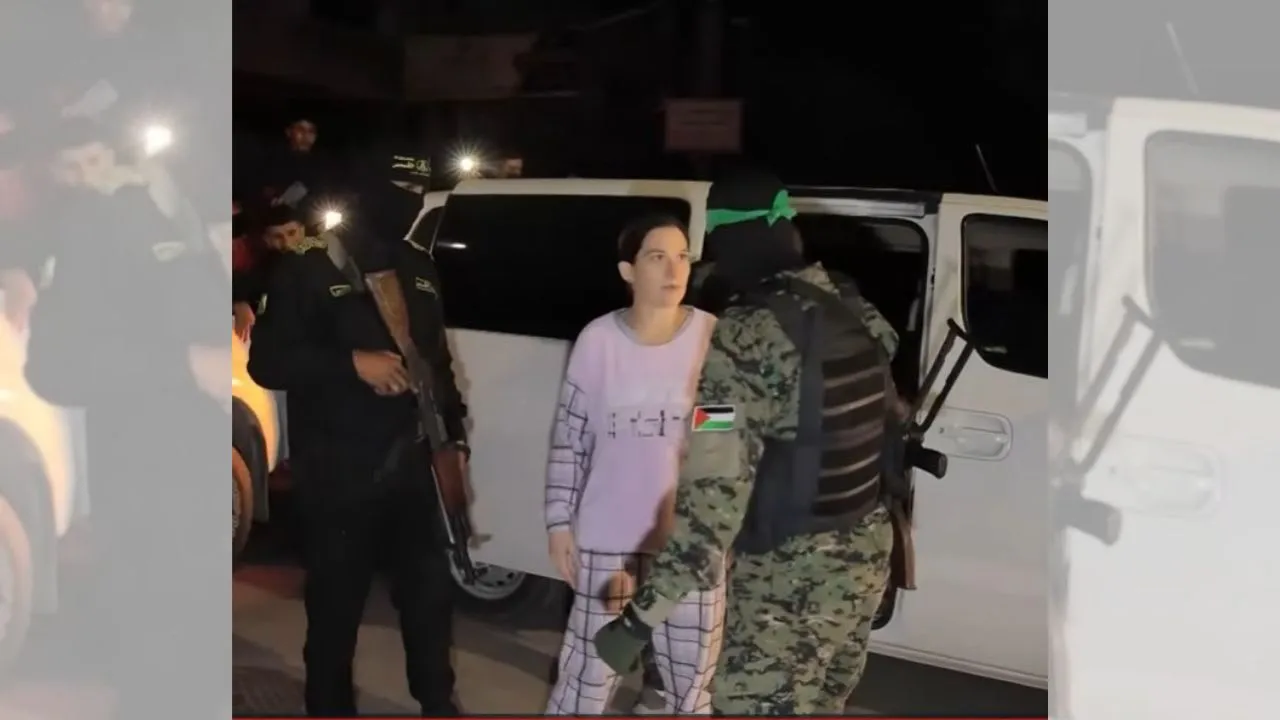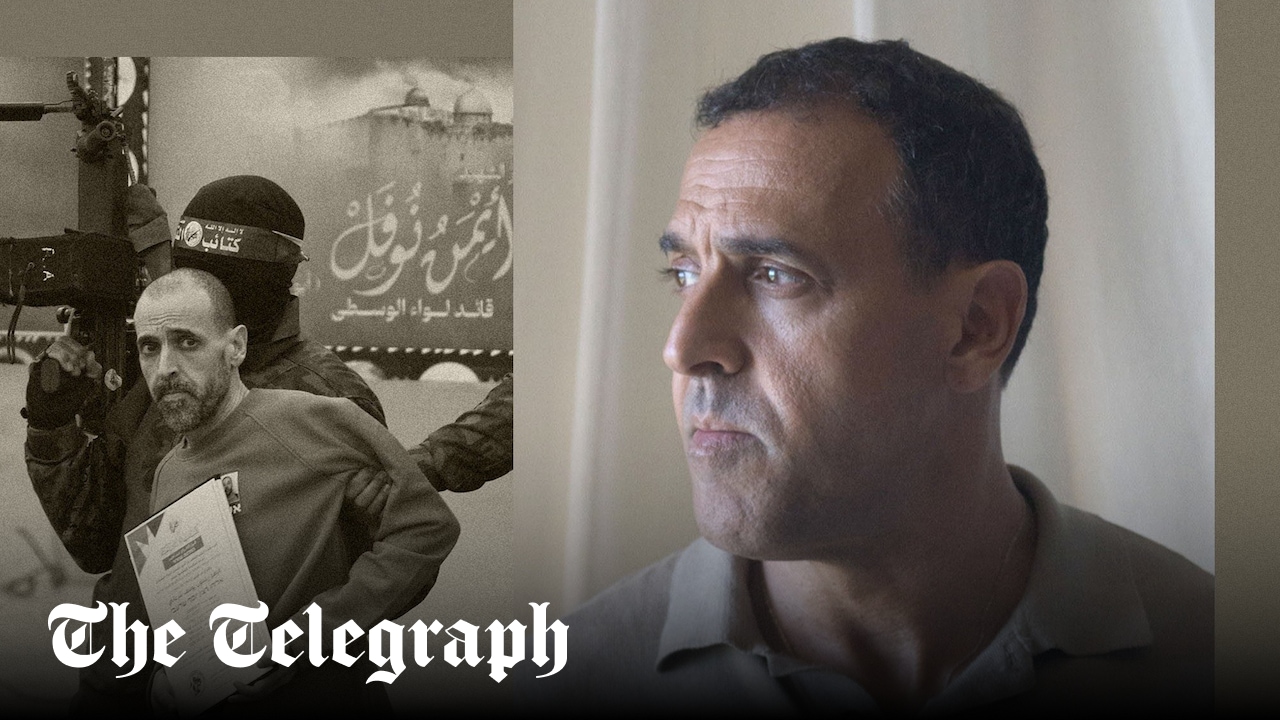
Dragged and wounded during her abduction, tortured in a tunnel cage and forced to part from husband Yagev before his murder, Rimon Buchshtav-Kirsht speaks for the first time about confronting her captors, bargaining with Sinwar and the hope they briefly shared in GazaEti Abramov|It became one of the most memorable images from the first months of the war. Rimon Buchshtab-Kirsht, one of nine women released during the fifth round of the first hostage deal, stepped out of the vehicle carrying her toward the Red Cross and confronted one of her captors in front of the cameras.For many Israelis watching during those dark days, the moment briefly restored a sense of pride and defiance.Rimon Buchshtab-Kirsht’s release from captivity in Gaza
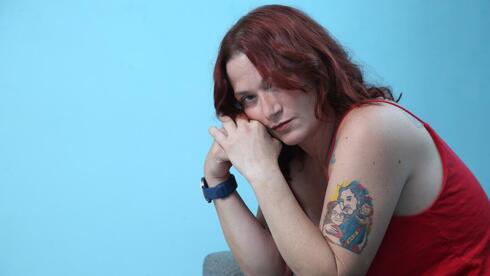
For more than 1,000 days, Buchshtab-Kirsht avoided speaking publicly about what had happened to her. Now, for the first time, she is ready to tell the story of her captivity, of her husband and great love, Yagev Buchshtab, and of the life they briefly imagined they might still share. She calls it “taking a deliberate flashback to Gaza.”The confrontation with the terrorist, whom she identifies as Mustafa, began during the drive to the handover point. “The entire way, he kept teasing me about Yagev,” she said. “‘Yagev will come in two days.’ ‘Yagev will come in four days.’ The moment he started talking about Yagev, he was pushing every one of my buttons, and I could not take it.” During the journey, she also began hearing from other released hostages that there might be no kibbutz Magen, Nirim or Nir Oz to return to. “I suddenly thought, damn, what about our dogs and cats? Where is everyone?” she said. The terrorists then instructed the women to smile and wave when they emerged. “When you come out into that crowd, with everyone barking, screaming and going wild, they start telling you not to be afraid,” she said.“By that point, you are so hungry and exhausted that nothing moves you or scares you anymore. I cursed him in Arabic so everyone would understand.” She said the confrontation did not feel extraordinary at the time. “I simply spoke to him the way people like that deserve to be spoken to,” she said.She shouted that his being masked "doesn't mean I can't see you", and would not prevent her from recognizing him, his voice or what he had done to her. Then she used an Arabic saying Kul Kalb Biji Yomo, meaning that every dog eventually has its day, or in other words, every bad person will be punished eventually.GalleryRimon Buchshtab-Kirsht(Photo: Reyan Preuss)She also remembers placing a hand behind fellow hostage Merav Tal, who was released alongside her. “I told her, ‘All the screaming and whistling is because we are incredibly hot and amazing, and now we are going to give them one hell of a walk. We are lifting our heads and walking like two strong women doing this together.’”Only after arriving at Tel Aviv Sourasky Medical Center(Ichilov) did Buchshtab-Kirsht realize how unusual her release had appeared. “My sister told me, ‘Listen, the way you came out was something else,’” she said. “Until then, I had not understood. I remembered walking out because it had just happened, but then she showed me footage of how the other hostages had been released.”Buchshtab-Kirsht, now 39, was born and raised in Kibbutz Magen near the Gaza border. Yagev was born and raised only minutes away in Kibbutz Nirim. They first met at the regional elementary school. She was in third grade and he was in first. They were friendly for a time, then lost touch before reconnecting when she was 16.“There was an event organized by Hashomer HaTzair(an Israeli youth movement), and I noticed this enormous head of curls sitting alone in a far corner,” she recalled. “I had to find out who it was.” For years afterward, Yagev remained her best friend. Growing up in the Gaza border communities meant that children from Nirim, Nir Oz, Nir Yitzhak, Kerem Shalom, Holit, Be’eri and Re’im all attended school together.On October 7, Buchshtab-Kirsht lost teachers and childhood friends, including English teacher Judi Weinstein, educator Ravid Katz, sports teacher Rotem Calderon and close high school friend Johnny Siman Tov.“When I think back to that time, I say, ‘What carefree children we were,’” she said. “My nieces and nephews already know that Aunt Rimon was kidnapped and Uncle Yagev was murdered. They know there is such a thing as Hamas, which can come at night and take you.” She remembers lying on the grass with Johnny, never imagining anything like October 7 could happen.Buchshtab-Kirsht; 'The moment Yagev hugged me I felt at home' (Photo: Reyan Preuss)After high school, Buchshtab-Kirsht enlisted in the IDF but was released after a short period. Yagev later joined the Armored Corps and served as a tank gunner during Operation Cast Lead. The scenes he witnessed in combat stayed with him, she said, and he later suffered from PTSD, depression and anxiety attacks.“He rarely left home,” she said. “Israel’s National Insurance Institute recognized his condition, but the Defense Ministry did not because he lacked the strength to endure its lengthy review process.”Their friendship became romantic in 2020. “Yagev came to visit carrying only a small bag with his phone, keys and enough medication for two days,” she said. “The moment he hugged me, everything fell into place. For the first time in my life, I felt at home, even though home had come to me.” Two weeks later, she tattooed his name on her body, proposed marriage and called a jeweler to discuss rings.They married on March 12, 2021, on the lawn in Kibbutz Nirim behind his parents’ house. “It was a date that would be easy for us to remember,” she said. “Luckily, it was during COVID and there was a limit on the number of guests.”Their relationship was intensely close. “We never slept or showered apart. The longest we were ever separated was when I drove to Sderot to do the shopping,” she said. “Yagev studied sound engineering, taught music, built instruments and set up his own recording studio, while I worked as a massage therapist.“We had five dogs and four cats, and we called them our children. We grew hot peppers in the garden and had this ridiculous, incredibly cumbersome tandem bicycle. While we were being abducted, we saw someone trying to push it through the sand toward Gaza. Honestly, I felt sorry for him.” On October 6, 2023, Kibbutz Nirim celebrated its annual community festival. “We skipped dinner with his grandmother and did what we loved most: stayed home, just the two of us, and made something delicious,” she said. “Yagev was an incredible cook. That night, he prepared goose breast with root-vegetable puree, and we had a quiet, romantic dinner with Braveheart playing in the background. At some point, he fell asleep on the couch and I went to bed.”“At 6:29 a.m., I woke to the rocket sirens just as all five dogs came rushing into the bedroom,” she said. “They were usually always barking and making noise, but on October 7 they were silent. They were terrified. I pushed them under the bed, pulled Yagev into the room and grabbed a knife from the kitchen.”The handle on the safe-room door was broken, while the dogs were hiding in the bedroom, so they stayed there with them. “Between rocket sirens, we lied to everyone and said we were in the safe room. I called people to tell them, ‘I love you. They are shooting at me.’”At one point, they opened the front door and found a terrorist outside, lifting Yagev's guitar, which he had found outdoors, in an attempt to defend himself. "I slashed the attacker’s hand with the knife, we pushed him outside, locked the door and leaned our bodies against it.“We could hear more and more noise outside, and we felt the door coming off its hinges. We understood that no matter what we did, it was going to collapse inward.”She told Yagev: “Baby, leave everything. Lock your arms around me and do not let go.” The last thing he did before the attackers broke through was look into her eyes and say, “I am sorry. I immediately started telling him, ‘Do not dare apologize. This is not your fault. Everything is all right. The important thing is that we stay together.’"Yagev later told me that he had been certain they were about to kill us and believed that if the terrorists had reached me, he had failed. I did not initially think they had come to murder or abduct us.“At 8:40 a.m., they broke into the house and tried to pull us apart,” she said. “Our shirts tore, but we refused to let go. When they could not lift us, they dragged us across the pavement and beat us severely. That is how I suffered burns, broke several teeth, injured my jaw and fractured my hand.“They put us on a small utility vehicle, with me sitting on the body of a dead terrorist, and drove us to the kibbutz gate. From there, they ordered us to walk, and we crossed the fields barefoot and in our pajamas.“Yagev later told me he had been waiting for the Hannibal Directive (an Israeli military protocol designed to prevent the capture of soldiers by the enemy) because he was thinking like a soldier. I saw it differently. I thought that if someone was dragging me away while I was resisting and screaming, and still had not shot me in the head, then they wanted me alive.”'They first took us on a victory lap through Gaza' (Photo: Reyan Preuss)A white Toyota eventually arrived and the two were forced inside. “They first took us on a victory lap through Gaza. I covered Yagev’s eyes to shield him from the bloodshed outside. Among the scenes, I saw a partially undressed woman being held on a motorcycle while the lower half of her body dragged along the pavement. “I looked at every corps along the way so I could remember whatever I could. Even if the person was clearly no longer alive, I thought the information might be useful to someone.”After the Toyota crashed, they were transferred to another vehicle and then taken into a tunnel, where they encountered other hostages. “The first person I met in Gaza was Edan Alexander.“Soon, elderly hostages and children covered in soot and coughing from smoke inhalation began pouring into the cramped tunnel space. The terrorists kept mixing us, separating us and moving people from one place to another. Then, suddenly, out of a group of 14 hostages, Yagev and I found ourselves alone in an unfamiliar house.”Buchshtab-Kirsht realized they were in Khan Younis, in the home of a Hamas member named Osama, a man around 60 who had previously worked in Israel and served time in an Israeli prison. He recruited his sons, Ahmed and Hamoudi, to help guard the hostages. Buchshtab-Kirsht could also hear a young girl named Laila speaking with her mother on the other side of a wall.“The sons were in middle school and high school,” she said. “One supported Barcelona and the other supported another team. They brought me two kittens, Tamtam and Koko, because they understood how much I loved animals.” Buchshtab-Kirsht was badly injured during the first days of captivity. “Half my mouth was broken from the beating, and I had a tooth that had to come out. I was moaning from pain, and they had almost nothing to give me besides acetaminophen.”Several days later, two terrorists appeared. One carried pliers and the other a weapon. “It was obvious they had come to pull out my tooth.“I was horrified by the thought of them pulling it out, so I demanded the pliers. The terrorist looked at me and asked in English, ‘You crazy?’ I told him in Arabic, ‘I am crazy. Give me the pliers.’ Then I told Yagev, ‘Go into the bathroom, close the door and put your fingers in your ears,’ and I pulled the tooth out myself.“I remember it like a flash of light, like being struck in the face,” she said. “I screamed, which was forbidden because we were above ground and could not make noise. But when you pull out your own tooth, a scream comes out whether you want it to or not.” She spat on the floor in an effort to project strength. “I straightened my back, spat again and only then sat down,” she said.Did it bring you any relief?