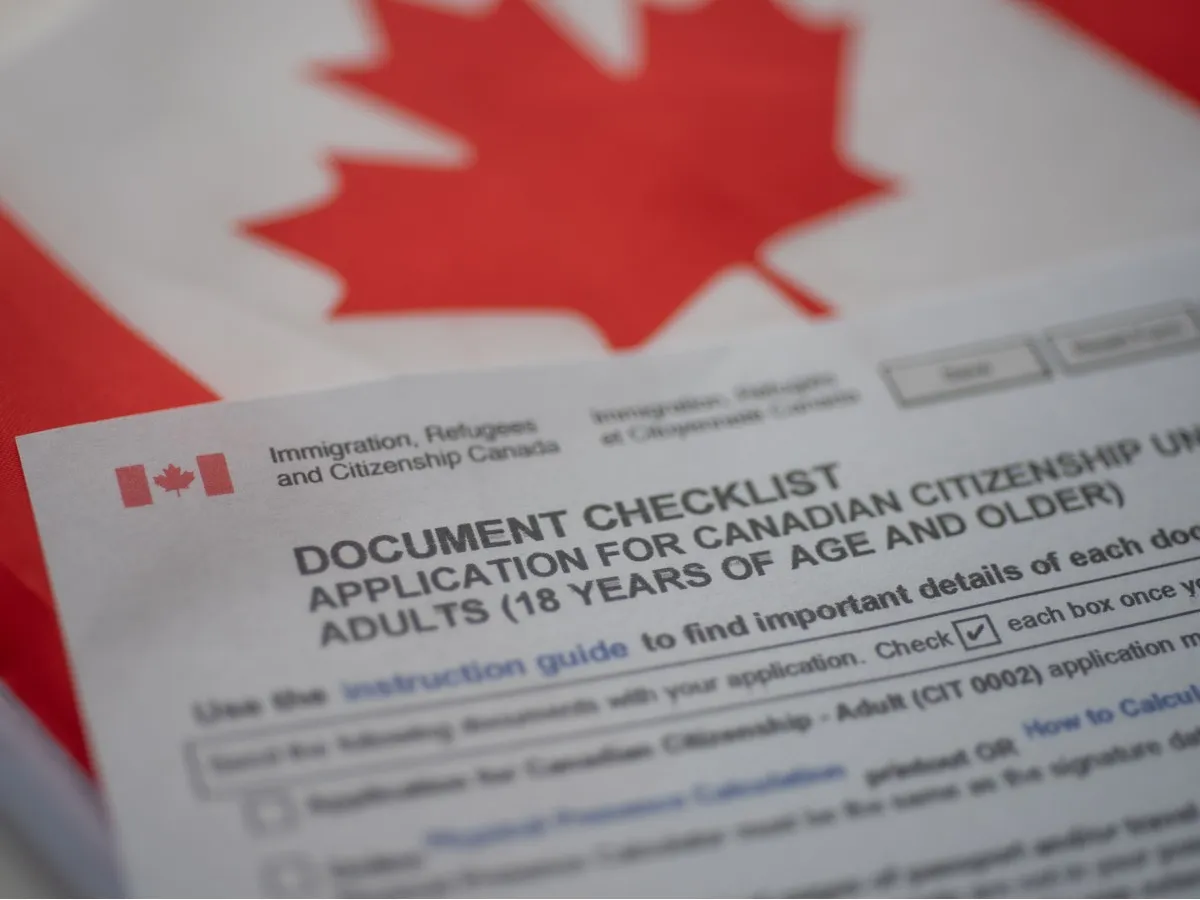
Skip to Content Subscribe Our Offers My Account Manage My Subscriptions FAQ Newsletters Canada Canadian True Crime Canadian Politics Health World Israel & Middle East Financial Post NP Comment Longreads Puzzmo Diversions Comics NP News Quiz New York Times Crossword Horoscopes Life Eating & Drinking Style Sponsored Play for Ontario Travel Travel Canada Travel USA Travel International Cruises Travel Essentials Culture Books Celebrity Movies Music Theatre Television Business Essentials Advice Lives Told Tails Told Shopping Buy Canadian Home Living Outdoor Living Kitchen & Dining Tech Style & Beauty Personal Care Entertainment & Hobbies Gift Guide Travel Guide Amazon Prime Day Deals Savings National Post Store More Sports Hockey Baseball Basketball Football Soccer Golf Tennis Driving Vehicle Research Reviews News Gear Guide Obituaries Place an Obituary Place an In Memoriam Classifieds Place an Ad Celebrations Working Business Ads Archives Healthing Epaper Manage Print Subscription Profile Settings My Subscriptions Saved Articles My Offers Newsletters Customer Service FAQ Newsletters Canada World Financial Post NP Comment Longreads Puzzmo Diversions Life Shopping Epaper Manage Print Subscription HomeNewsCanadaNew permanent residents down 20% in Canada. Nearly half the drop came from IndiaStudy permits for Indian students have fallen 66% since 2023. Ontario and B.C. absorbed 81% of the national drop in permanent residents while Quebec rose 12%Last updated 16 minutes ago You can save this article by registering for free here. Or sign-in if you have an account.A Canadian citizenship document close up on top of a canadian flag. Photo by Evgenia Parajanian /Getty Images/iStockphotoCanada admitted 20 per cent fewer permanent residents in the first three months of this year, with study permits and asylum claims also falling.Enjoy the latest local, national and international news.Exclusive articles by Conrad Black, Barbara Kay and others. Plus, special edition NP Platformed and First Reading newsletters and virtual events.Unlimited online access to National Post.National Post ePaper, an electronic replica of the print edition to view on any device, share and comment on.Daily puzzles including the New York Times Crossword.Support local journalism.Enjoy the latest local, national and international news.Exclusive articles by Conrad Black, Barbara Kay and others. Plus, special edition NP Platformed and First Reading newsletters and virtual events.Unlimited online access to National Post.National Post ePaper, an electronic replica of the print edition to view on any device, share and comment on.Daily puzzles including the New York Times Crossword.Support local journalism.Create an account or sign in to continue with your reading experience.Access articles from across Canada with one account.Share your thoughts and join the conversation in the comments.Enjoy additional articles per month.Get email updates from your favourite authors.Create an account or sign in to continue with your reading experience.Access articles from across Canada with one accountShare your thoughts and join the conversation in the commentsEnjoy additional articles per monthGet email updates from your favourite authorsSign In or Create an AccountorThe country took in 83,130 permanent residents between January and March, down from 104,320 over the same three months in 2025, according to Immigration, Refugees and Citizenship Canada data analyzed by the Association for Canadian Studies. It is the second consecutive year admissions have fallen. New study permits dropped 24 per cent and asylum claims fell 35 per cent over the same period.Jack Jedwab, president of the Association for Canadian Studies, said in an email the pattern is not a quarterly fluctuation. “Canada has moved from rapid immigration expansion to a deliberate, government-driven contraction,” he said.Get a dash of perspective along with the trending news of the day in a very readable format.By signing up you consent to receive the above newsletter from Postmedia Network Inc.A welcome email is on its way. If you don't see it, please check your junk folder.The next issue of NP Posted will soon be in your inbox.We encountered an issue signing you up. Please try againNearly half that reduction in permanent residents came from a single country. The number of Indian citizens granted permanent residence fell to 21,565 from 31,690, a drop of 10,125 people that accounts for 48 per cent of the entire national decline. New study permits for Indian students fell 42 per cent, and India made up 55 per cent of the national drop in study permits.“When the government sharply reduces a stream in which one country is disproportionately represented, that country inevitably absorbs a disproportionate share of the cut,” Jedwab said.The retreat from India has been building for two years. Study permits for Indian students fell to 93,840 in 2025 from 277,950 in 2023, a drop of 66 per cent, against 44 per cent for students from all countries. India accounts for 61 per cent of the national decline in student visas over that period.Jedwab said greater scrutiny of applicants, institutions and programs is landing hardest on India because that market expanded fastest and included many students recruited into short, career-oriented college programs. “Canada is becoming less accessible and much less predictable,” he said. “Prospective students who once regarded Canada as a comparatively reliable education-to-immigration destination may increasingly conclude that the costs and uncertainties are too high.”India was not alone. Permanent residents from Eritrea fell 42 per cent (from 2,410 to 1,400) and those from Afghanistan fell 40 per cent (from 1,740 to 1,050), both steeper than India’s decline, but the numbers were much smaller. The Philippines, the second-largest source country, fell 13 per cent, from 7,160 to 6,225. China, the third-largest source, fell 25 per cent, from 6,300 to 4,695. Only three of the largest source countries, Algeria, France and Morocco, sent more permanent residents than a year earlier, but they only sent 1,325, 2,300 and 1,305 people, respectively.The decline was not spread evenly. Ontario and British Columbia absorbed 81 per cent of the national drop in permanent residents, with Ontario down 26 per cent and B.C. down 31 per cent. Quebec went the other way, rising 12 per cent. Alberta received the second-largest number of permanent residents of any province at 11,135, passing B.C., though its own admissions fell 18 per cent.Jedwab said Quebec selects most of its own economic immigrants and controls its admissions planning, so its increase may reflect the timing of those admissions rather than a broader shift toward the province. “For Ontario and B.C., the effects will be felt most directly by employers, colleges and universities, settlement organizations and municipalities that had come to rely on continued high inflows,” he said.Economic immigration fell 34 per cent in Ontario and 40 per cent in B.C. but rose seven per cent in Quebec. Economic immigrants are selected for their skills, education and work experience rather than family ties or a need for protection. Family sponsored admissions fell 16 per cent in Ontario, while Quebec was the only province in the country where they rose.“Provinces whose immigration mix was most dependent on the streams being restricted will experience the greatest decline,” Jedwab said.Admissions of resettled refugees and protected persons rose two per cent in Ontario and 47 per cent in Quebec, while falling 29 per cent in Alberta and 35 per cent in Manitoba. Those admissions cover refugees selected abroad and people already granted protection, and Jedwab said they should not be confused with asylum claims, which are a separate flow.Asylum claims, which are requests for protection made by people already in Canada or at a border crossing, fell 35 per cent nationally, from 28,450 to 18,605. The steepest drop was in Quebec, down 45 per cent, followed by Ontario at 35 per cent.Jedwab said the decline reflects fewer temporary entrants, stricter visa screening, tighter control of the border with the United States and new limits on delayed inland claims, not a drop in the number of people needing protection. “Canada is receiving fewer claims because access to the Canadian asylum system has become substantially more restricted,” he said.Those limits came into force in March under the Strengthening Canada’s Immigration System and Borders Act. Claims made more than a year after a person first entered Canada are no longer referred to the Immigration and Refugee Board, and neither are claims from people who cross between official border points and wait more than 14 days to apply. Both rules apply to claims made on or after June 3, 2025.Jedwab said the contraction in immigration slows population and labour-force growth and reduces demand for housing, transportation and public services. “That’s clearly the objective,” he said.“Over time, slower immigration can ease certain infrastructure pressures, but it may also weaken economic growth,” he said.Our website is the place for the latest breaking news, exclusive scoops, longreads and provocative commentary. Please bookmark nationalpost.com and sign up for our newsletters here. Join the Conversation This website uses cookies to personalize your content (including ads), and allows us to analyze our traffic. Read more about cookies here. By continuing to use our site, you agree to our Terms of Use and Privacy Policy.
New permanent residents down 20% in Canada. Nearly half the drop came from India
Canada admitted 83,130 permanent residents in the first quarter, down 20 per cent. Indian citizens accounted for nearly half the decline.
1,466 words~7 min read