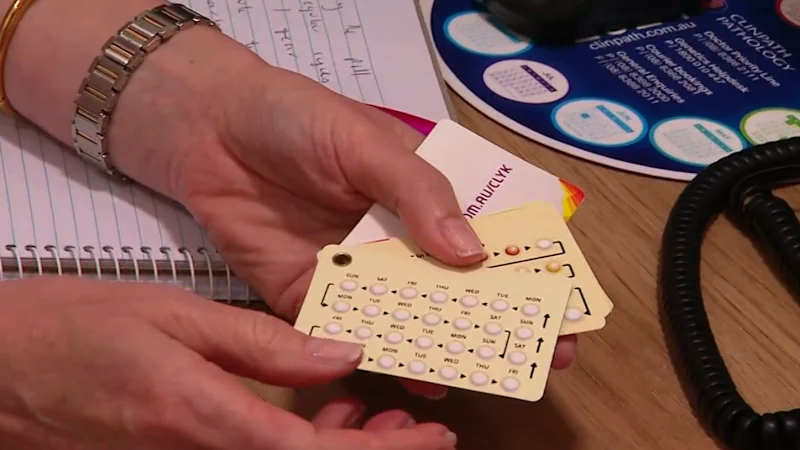
Powers to allow pharmacists to prescribe contraception to women without the need for repeat GP prescriptions are expected to come into effect before the end of 2026 once training and regulations are in place.Legislation enacted by the Dáil and Seanad, and signed into law this week by President Catherine Connolly, will allow women after a first GP consultation to have their prescription renewed monthly by their pharmacist for the following four-and-a-half-years.Minister for Health Jennifer Carroll MacNeill described the development as a “fantastic thing for expanding women’s health and access to healthcare generally”.She said the first prescription “has to come from a GP because we know that many women have complex conditions, maybe blood pressure, or are of a certain age whereby there has to be an initial clinical assessment done. “Thereafter they will go back to the pharmacist to get their blood pressure checked, have a consultation and have the prescription renewed for the next four-and-a-half-years.” The Department of Health on Friday said it was “envisaged” that pharmacists would begin prescribing before the end of the year.Work has begun on the required secondary legislation or regulations. Clinical protocols and pharmacist training must also be completed along with updating of administrative and IT resources and a public information campaign.The Pharmaceutical Society of Ireland (PSI), regulator for the industry, said it would enable pharmacists to establish “a safe and effective service” through training and regulatory supports. The PSI is to develop statutory education and training, which will “be mandatory for pharmacists”.The Health (Provision of Contraception Prescribing Service in Retail Pharmacy Businesses) Bill will make the service available under the free contraception scheme for those aged 17 to 35. It will also be available to private patients, with pharmacies setting their own fees locally and the option “may be cheaper” for those patients, the Minister said.Opposition politicians, the National Women’s Council of Ireland (NWCI) and the Irish Pharmacy Union have welcomed the passage of the legislation, but all called for the free contraception scheme to be extended beyond the age limit of 35.Sinn Féin Senator Pauline Tully said it should “cover all hormone therapy for all women and girls from adolescence through to and beyond menopause”.Labour Party health spokeswoman Marie Sherlock called for the age limit to be lowered to 16 “particularly for vulnerable girls” who may not have a supportive family environment”.Carroll MacNeill, who is a Fine Gael TD, said the age of consent was 17 and research on sexual activity between children aged 15 to 17 had showed “about 25 per cent of 15- to 17-year-olds have had sex but the majority of those were 17″.The Free Contraception Scheme, including access through maternity and women’s health services and GP training, cost €44.4 million last year.Up to last May it cost €18.2 million. Provisional department figures show 153,606 patients availed of the service in that time.The Minister said it would cost an additional €5 million annually to include women 36 to 40.“If I had all of the money in the world, of course I would simply do these different things, but I have to make choices,” she said.NWCI executive director Corrinne Hasson described the legislation as a “practical and positive step for women”. She, too, called for the Government to expand the free contraception scheme, beginning with women aged 36 to 40, “and eliminating eligibility criteria, such as the PPSN [Personal Public Service Number], to further reduce barriers to contraceptive care”.The IPU, which represents 2,300 pharmacists, also backed “equity of access” to free conception and its phased expansion.It said the new law would make services more convenient and “reduce unnecessary barriers”.“Training, guidelines, and clinical protocols will be developed” in advance of the legislation’s implementation.
Pharmacists’ powers to prescribe contraception expected to be in place by year end
Women will be able to get monthly repeat prescriptions at chemists after initial GP consultation
612 words~3 min read