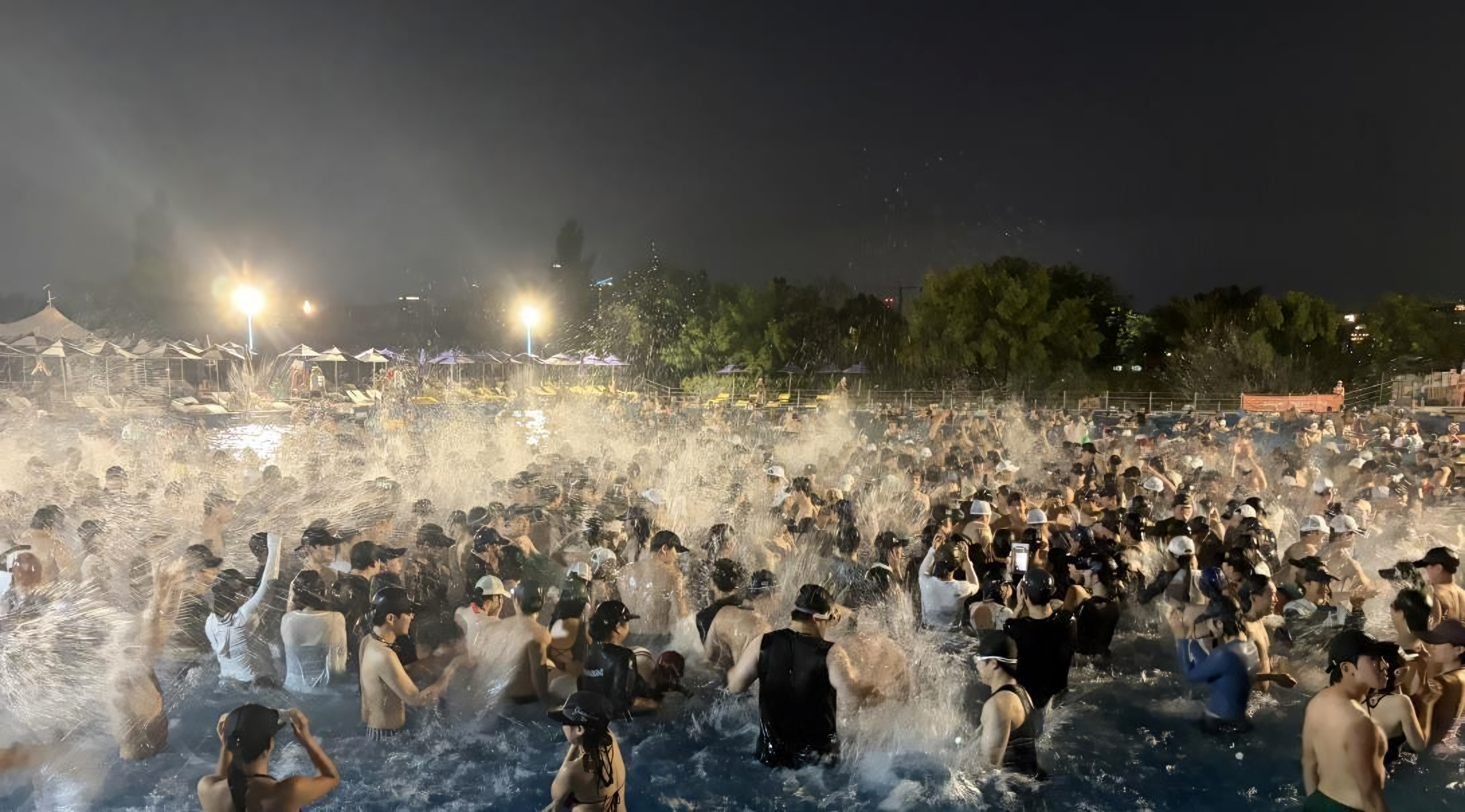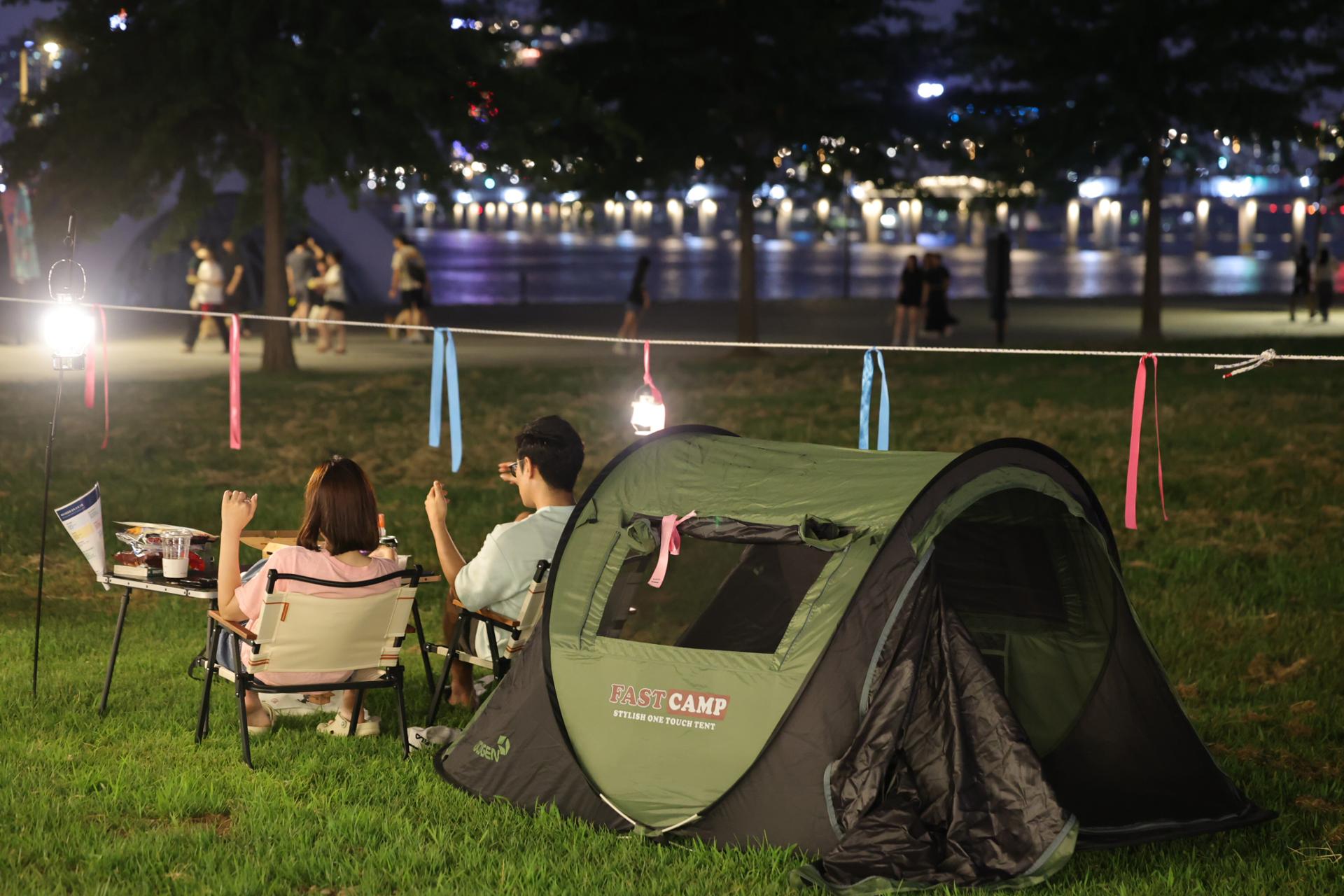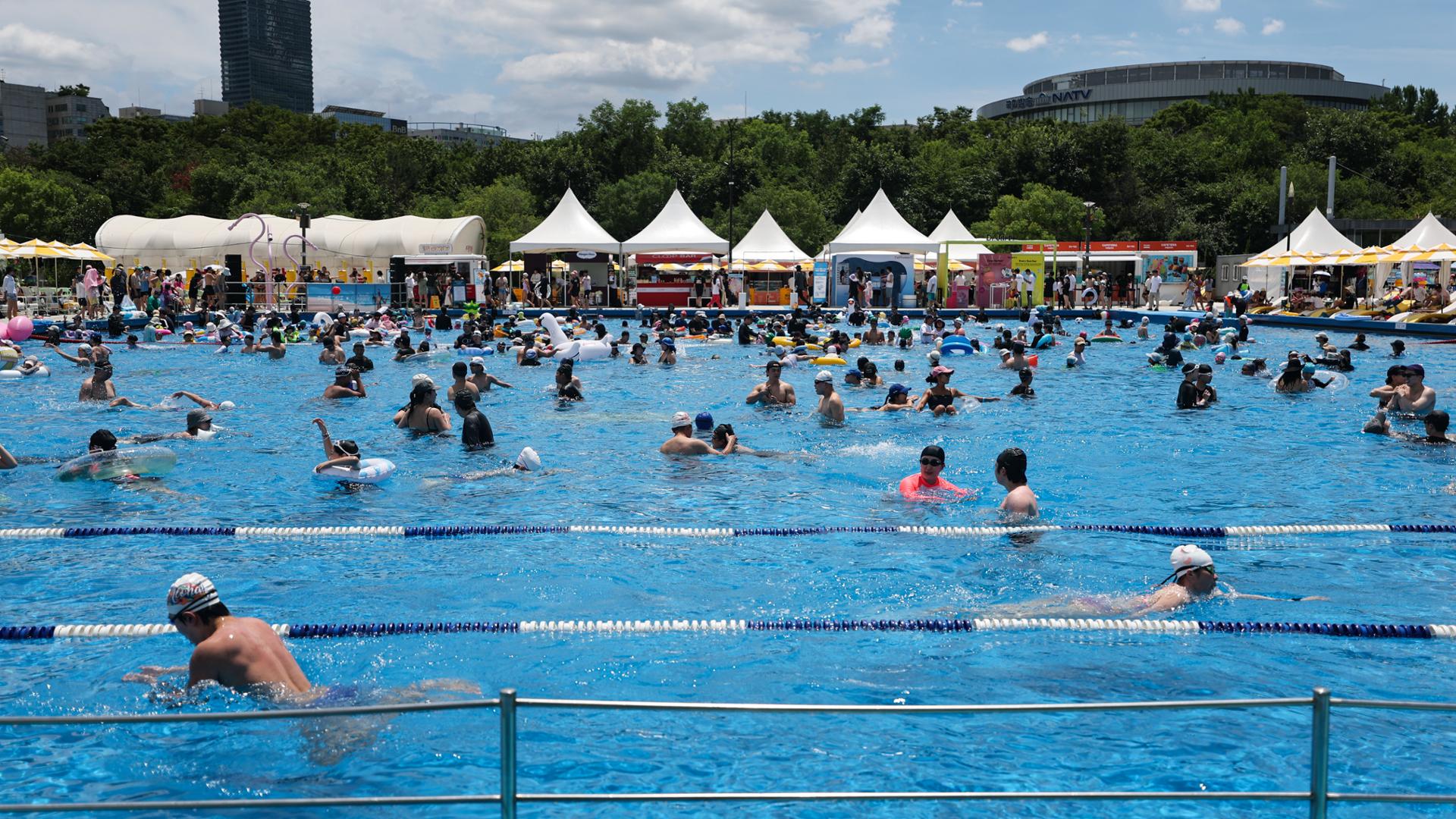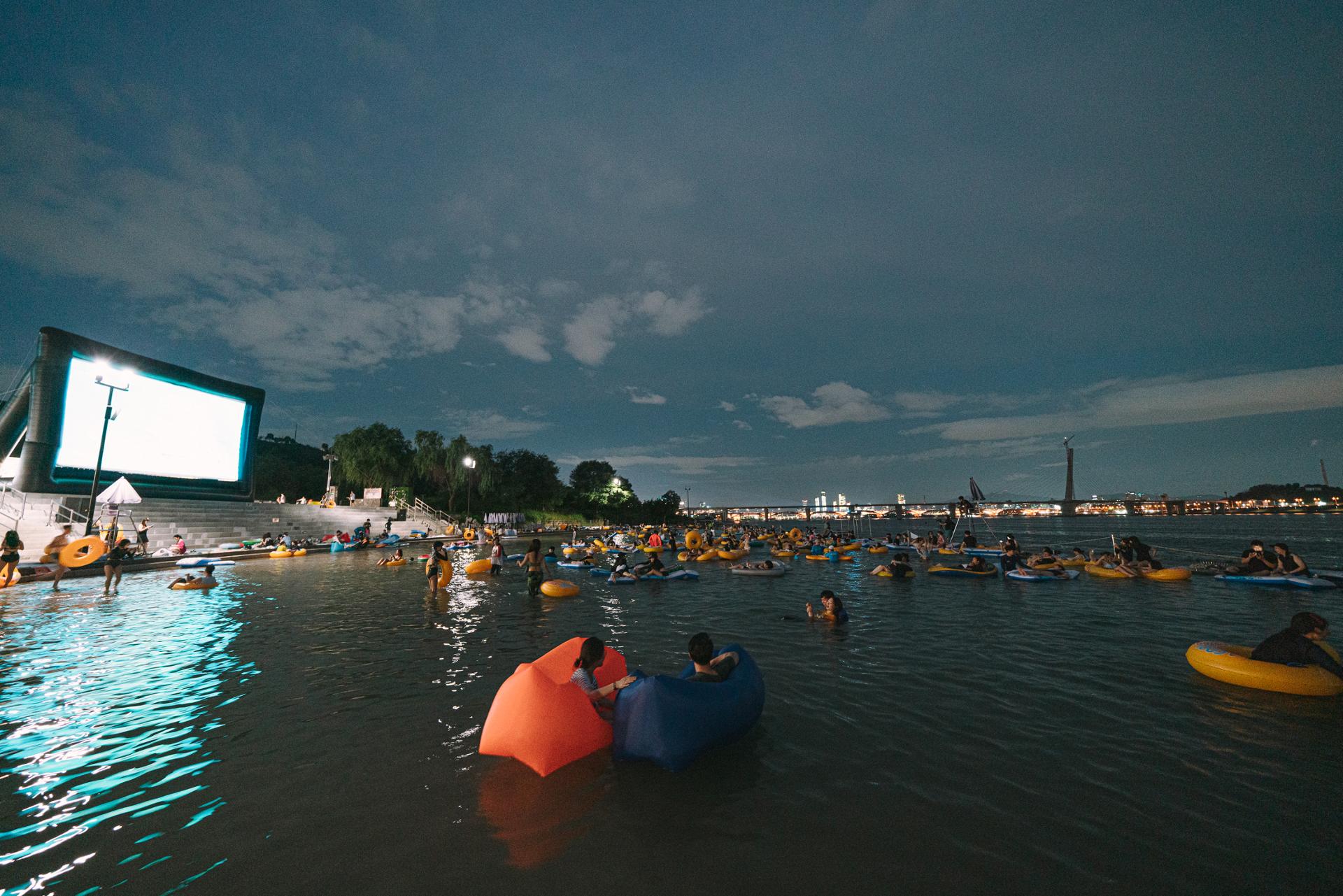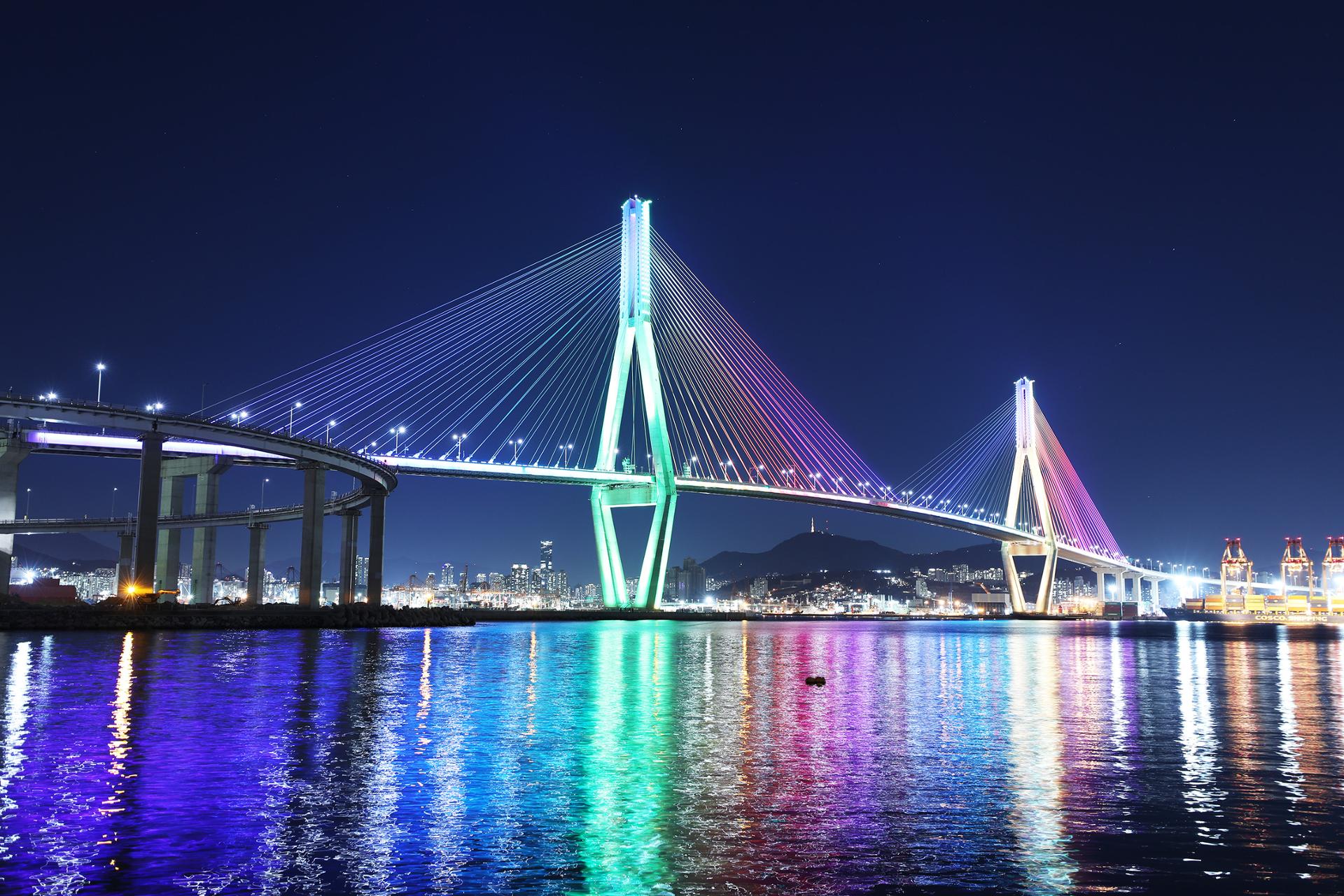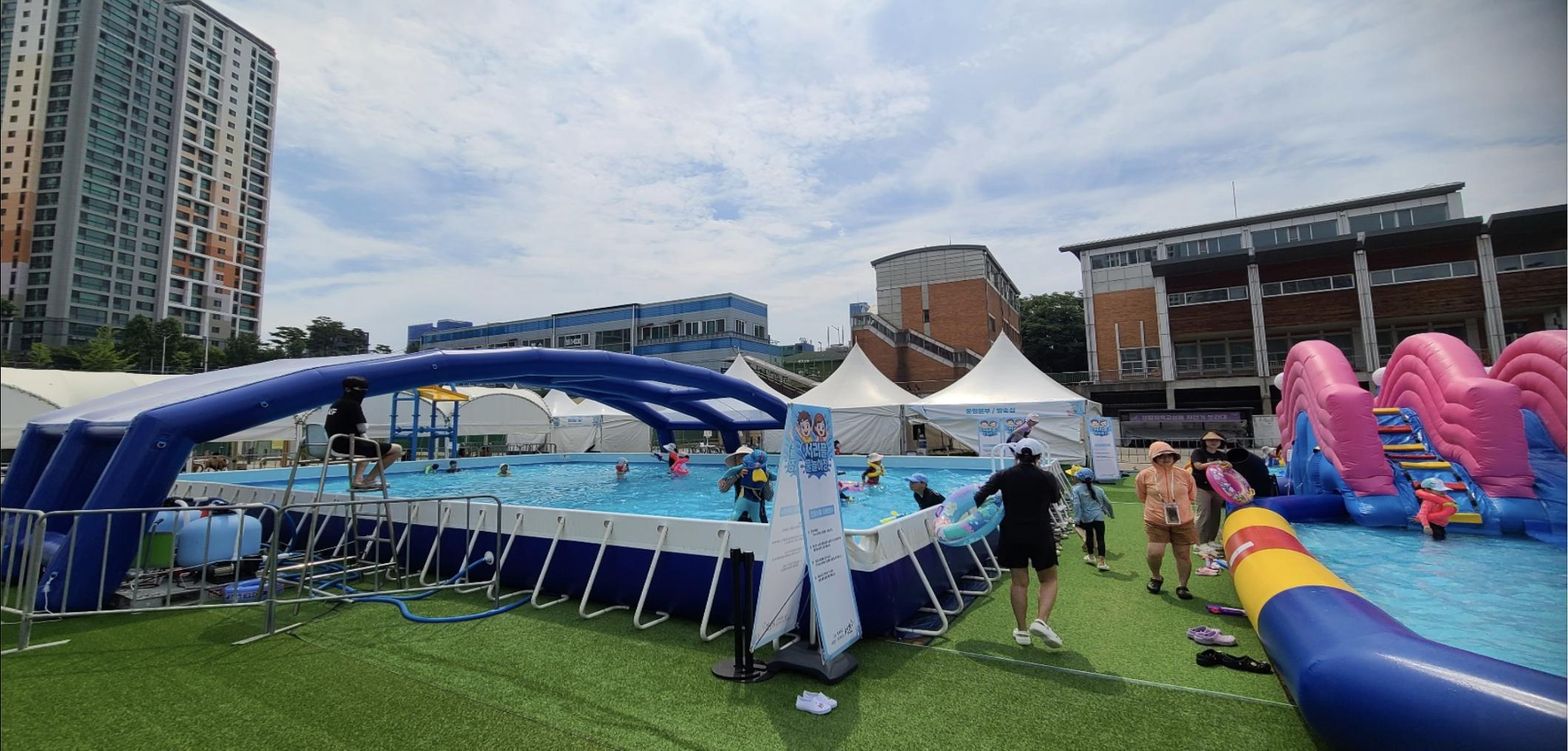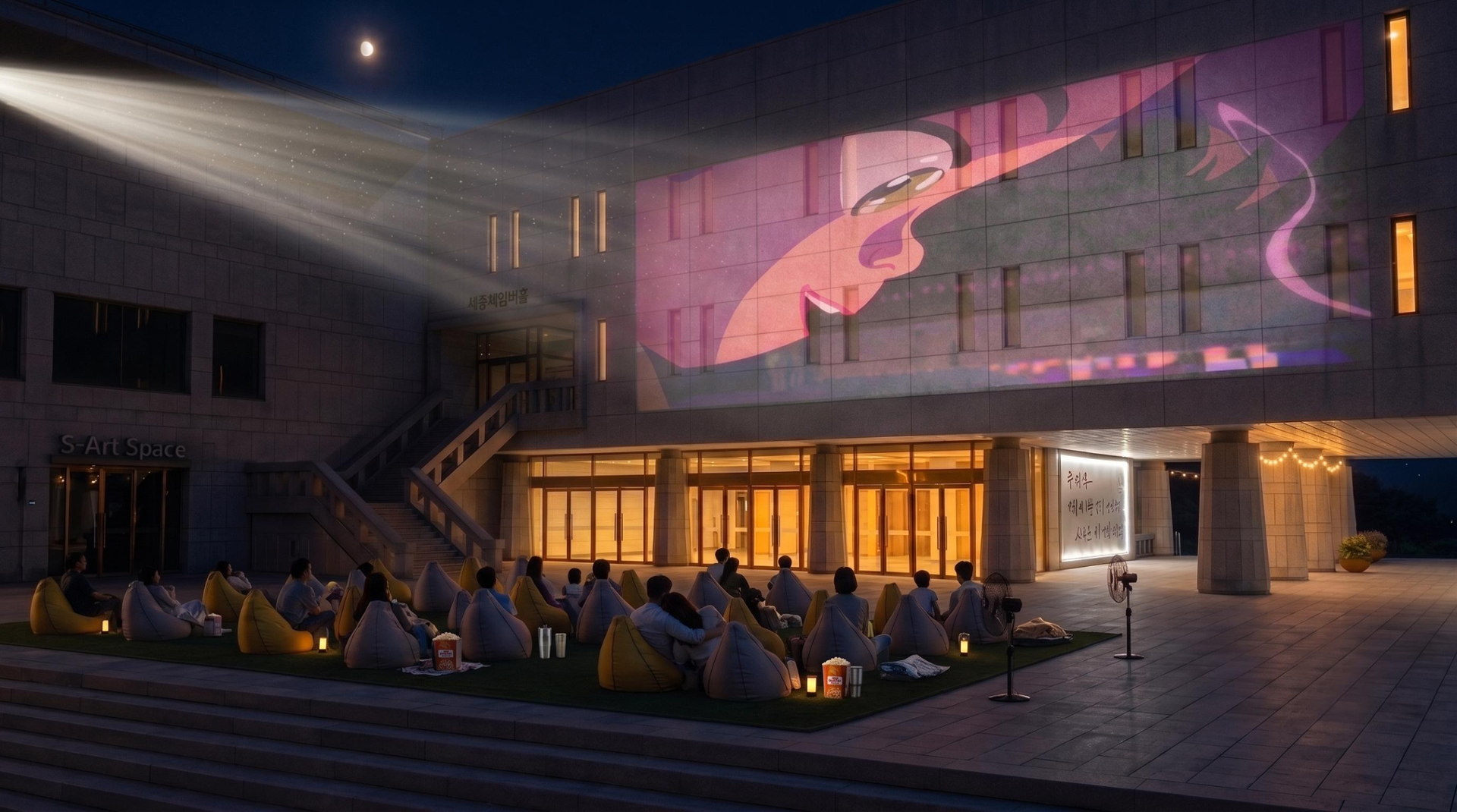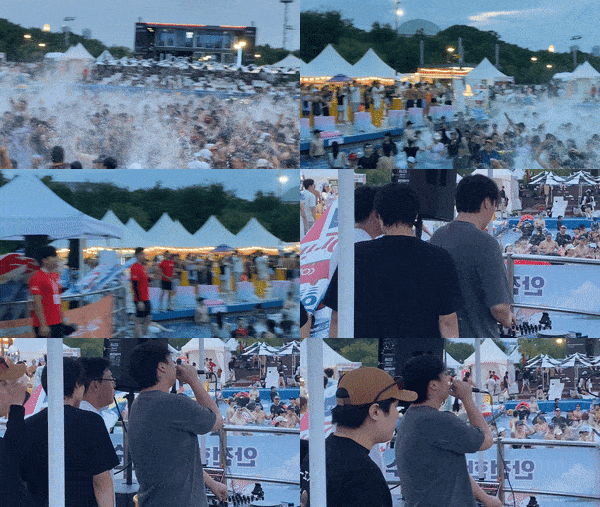
Seoul links free camping, DJ parties and delivery to boost the night economy along the Han River Visitors to a swimming pool at Yeouido Hangang Park in central Seoul enjoy a DJ-led poolside party at around 8 p.m. on Sunday. (Lim Jae-seong/The Korea Herald) Seoul is betting on overnight camping, late-night swimming and food delivery along the Han River to revive a night economy that has struggled to regain its prepandemic momentum.The Seoul Metropolitan Government on Thursday unveiled the first project under its new night economy strategy, aimed at encouraging visitors to stay longer at Han River parks after sunset and spend more in nearby commercial districts.“The Han River is one of Seoul’s strongest assets for the night economy, bringing transportation, leisure, culture, tourism and consumption together in one place,” a city official said.“By connecting the Hangang Bus, swimming pools, festivals, food delivery and camping, we aim to create a culture in which residents and tourists can enjoy the river from day to night.”As part of a pilot program, temporary campsites accommodating up to 200 tents will operate at Yeouido and Ttukseom Hangang parks in August. Use of the sites will be free, and visitors can bring their own tents or rent camping equipment on-site.The city also plans to increase nighttime patrols.Hangang Park swimming pools have extended their operating hours until 10 p.m. since earlier this month, while poolside DJ parties will run from 7 p.m. to 9 p.m. every Friday, Saturday and Sunday. Other evening programs will include guided walks, outdoor movie screenings and dance events.To encourage spending, Seoul will increase the number of designated food delivery zones from six to eight, provide multilingual ordering guides for international visitors and distribute information on nearby traditional markets and neighborhood shopping streets. Visitors watch an outdoor movie screening beneath a bridge over the Han River. (Seoul Metropolitan Government) Beyond the riverbanksThe harder question is whether longer stays by the river will translate into meaningful spending beyond the parks.Seoul’s push comes as neighborhood commercial districts struggle with changes in drinking, commuting and leisure habits that emerged from the COVID-19 pandemic.The number of pubs and bars in the city has fallen 14.5 percent over the past two years, according to the Seoul Metropolitan Government.Average late-night ridership after midnight at Gangnam Station fell to 599 last year from 1,109 in 2019, according to Seoul Metro. Hongik University and Konkuk University stations also recorded substantial declines over the same period.Mayor Oh Se-hoon said last week that Seoul should encourage its growing number of foreign visitors to spend more time and money in the city after dark. The night economy was the main topic at the first senior officials’ meeting of his new term.Oh described it as a growth strategy linking culture, tourism, commerce and transportation while supporting neighborhood businesses.The Han River is already a popular evening destination for residents and tourists, making it a natural starting point for the initiative, experts said.“The Han River compares favorably with waterfronts in other major capitals,” said Chung Yeon-seung, a business professor at Dankook University. “Its scale and surrounding development give it the potential to attract large numbers of people.”Chung cautioned, however, that Hangang parks might have weaker direct links to surrounding business districts than downtown attractions.Visitors could remain in the parks and order food rather than travel to nearby shops and restaurants, limiting the immediate benefits for neighborhood businesses.Still, Chung said the river could serve as a model for similar projects across Korea, given its strength as a tourism destination, particularly when combined with attractions such as the Hangang Bus, festivals and recreational facilities. Visitors enjoy a silent disco beneath a bridge over the Han River. (Seoul Metropolitan Government) A beginning, not the endThe Han River initiative is likely to serve as a starting point rather than a complete solution to Seoul’s night economy challenges.Chung said Seoul would need stronger connections between the parks and nearby commercial districts, along with improved late-night transportation, safety measures and longer operating hours at cultural facilities.The city must also account for differing habits among foreign tourists and Korean residents, he added.While international visitors often seek evening activities to make the most of limited time, many Korean consumers have become less inclined to spend long nights outside since the pandemic.“Consumer lifestyles have fundamentally changed since COVID-19 and appear to have entered a new normal,” Chung said.“Foreign tourists still need opportunities to enjoy cities after dark. Promoting the night economy can help Seoul preserve its image as a dynamic destination while creating more opportunities for local businesses.” Visitors to a swimming pool at Yeouido Hangang Park in central Seoul enjoy a DJ-led party. (Seoul Metropolitan Government)
Can Hangang Park revive Seoul's fading nightlife?
Seoul is betting on overnight camping, late-night swimming and food delivery along the Han River to revive a night economy that has struggled to regain its prep
773 words~4 min read