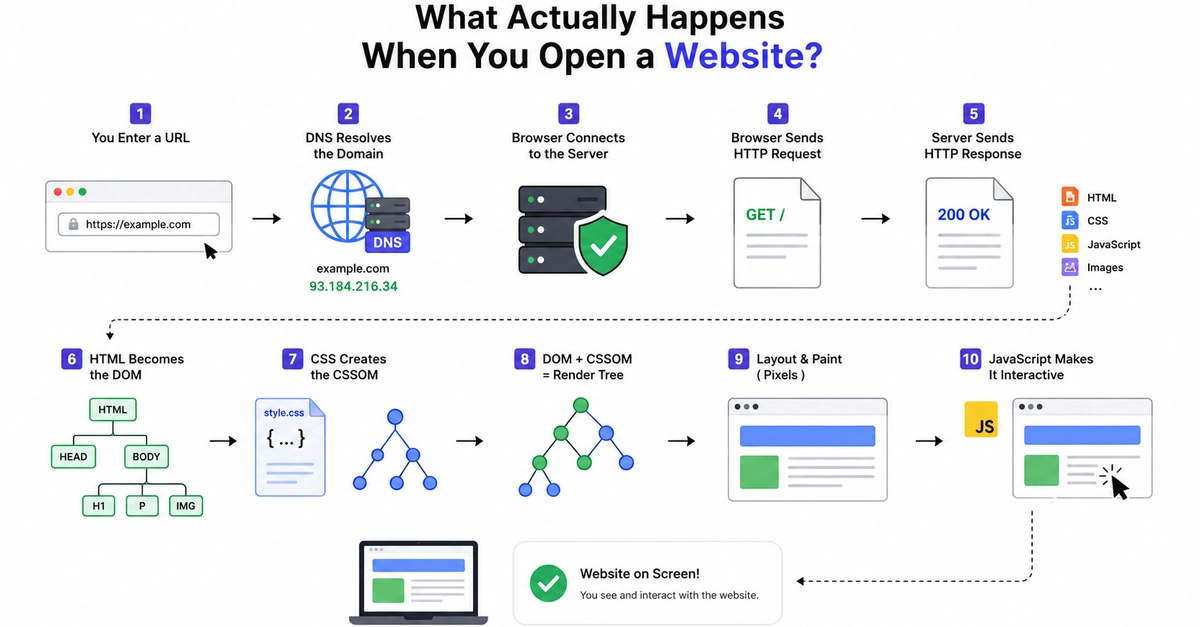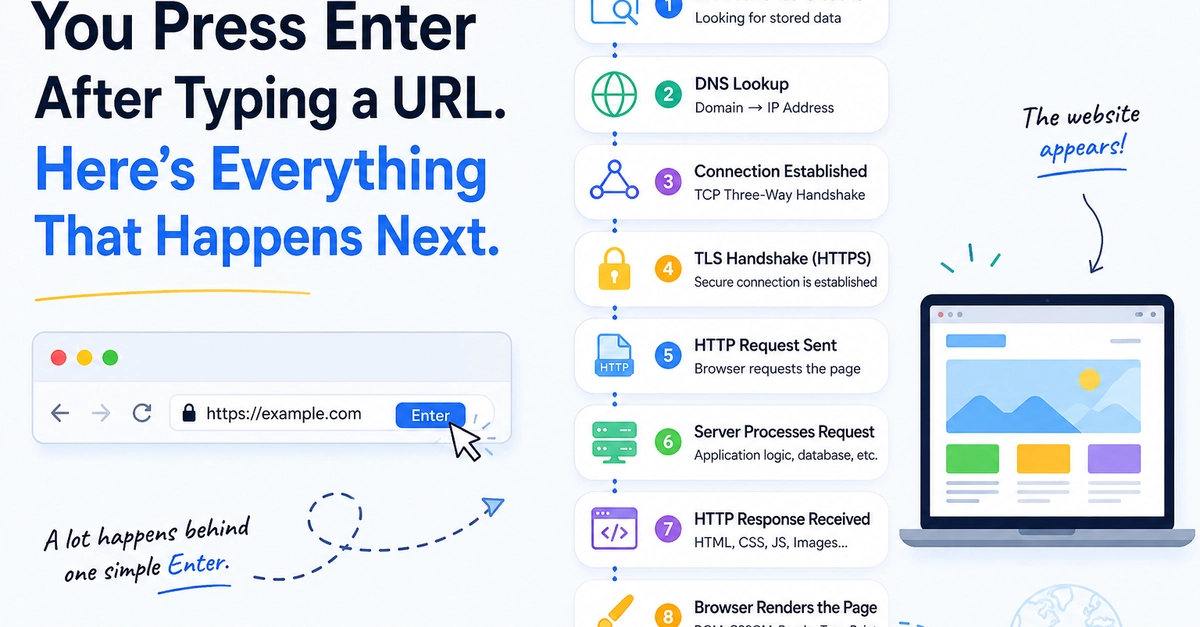
When you type a URL like https://youtube.com into Chrome, a fascinating sequence of events unfolds behind the scenes. Let’s break it down step by step.
Chrome tells the operating system: “I want to connect to YouTube on port 443.”
The OS assigns a temporary source port (e.g., 52341) and sets the destination port (443 for HTTPS).
Laptop → SYN → YouTube
YouTube → SYN + ACK → Laptop