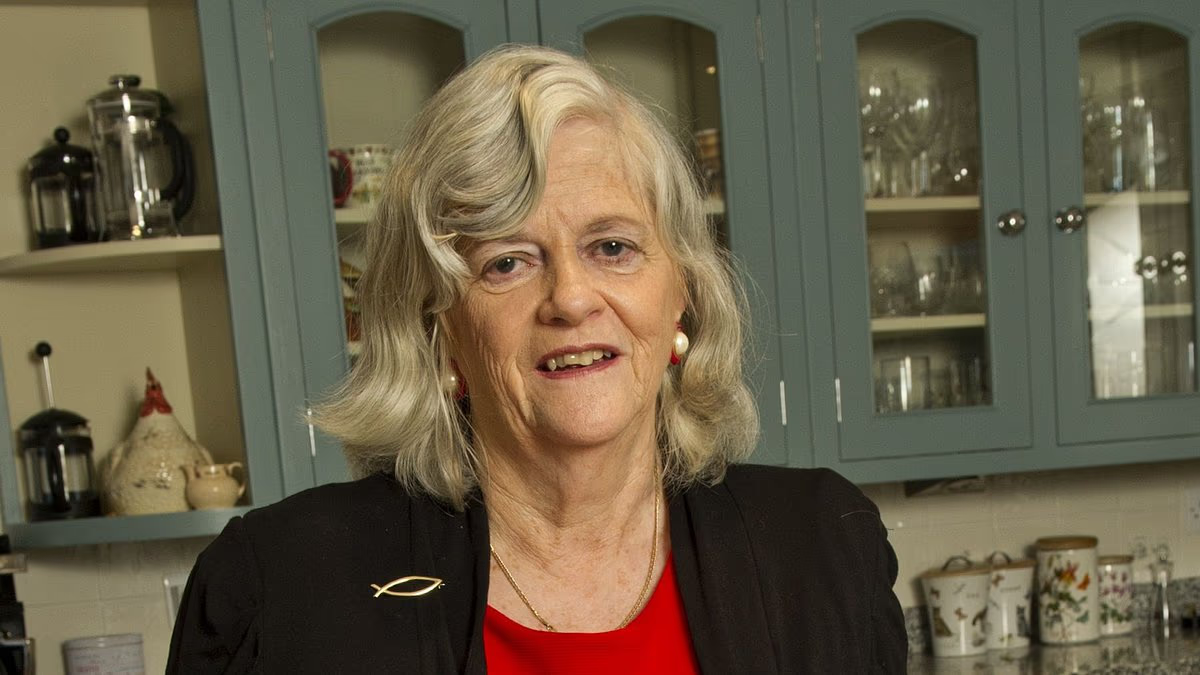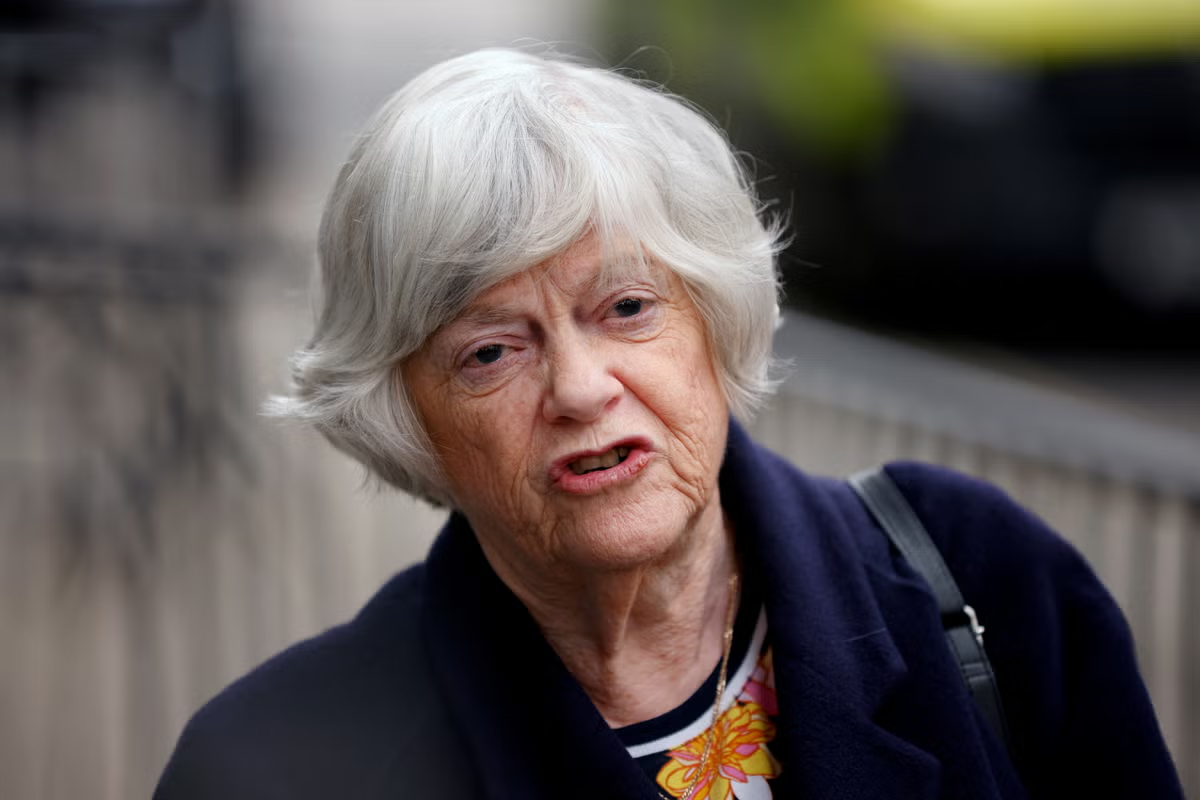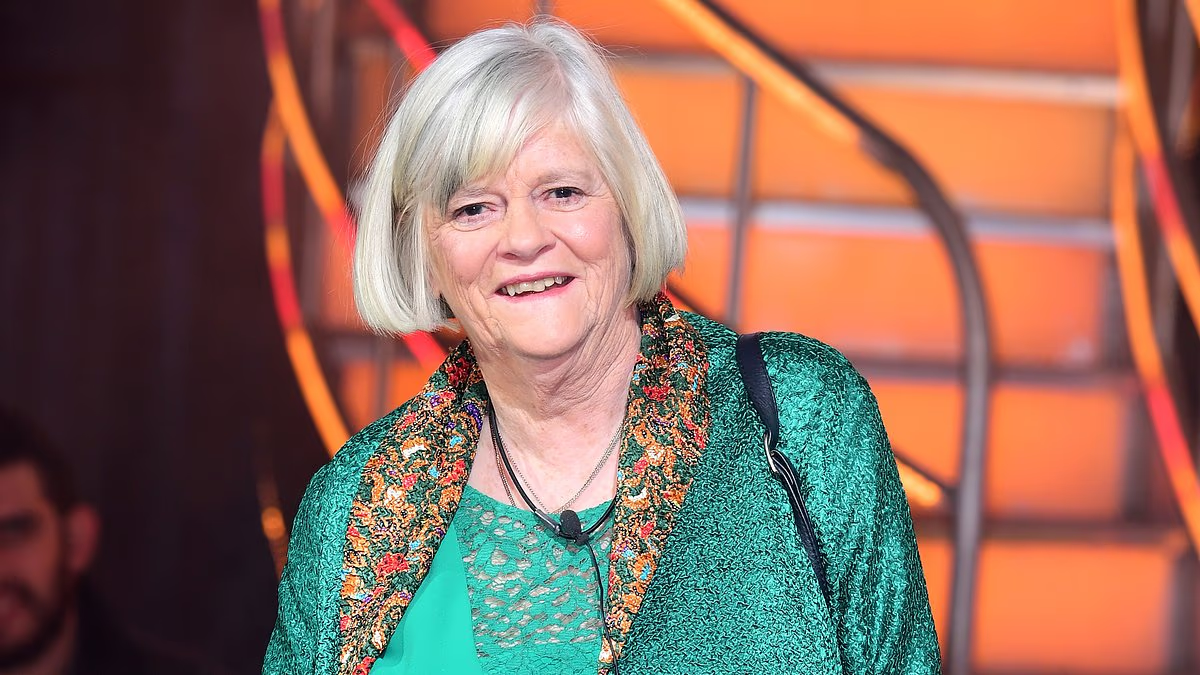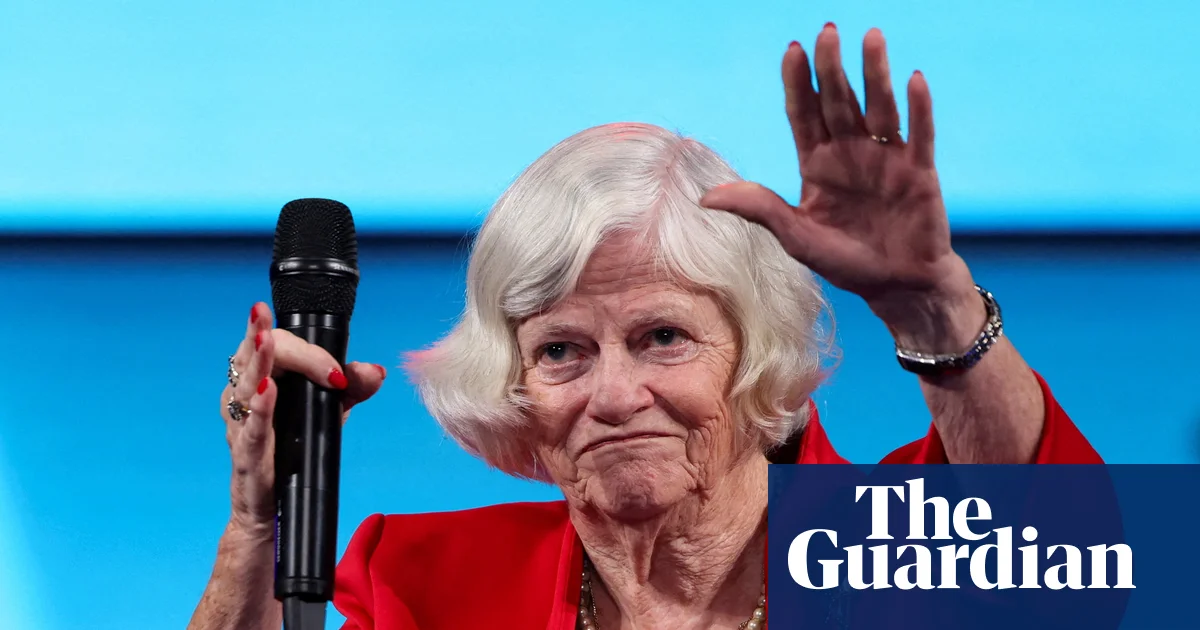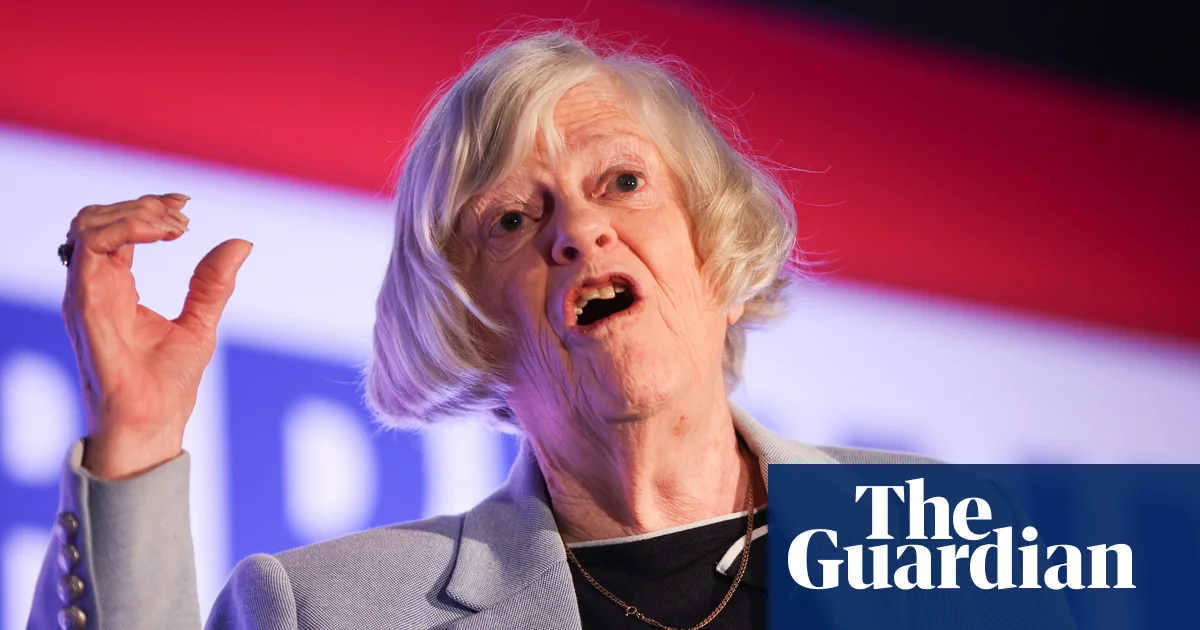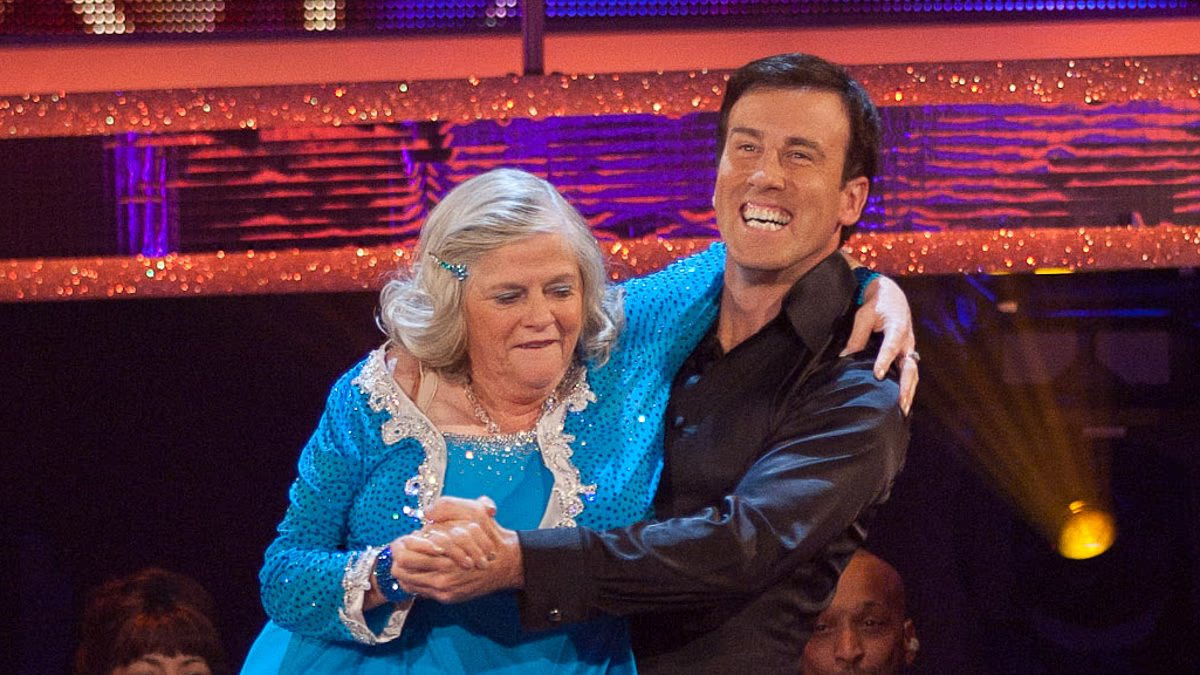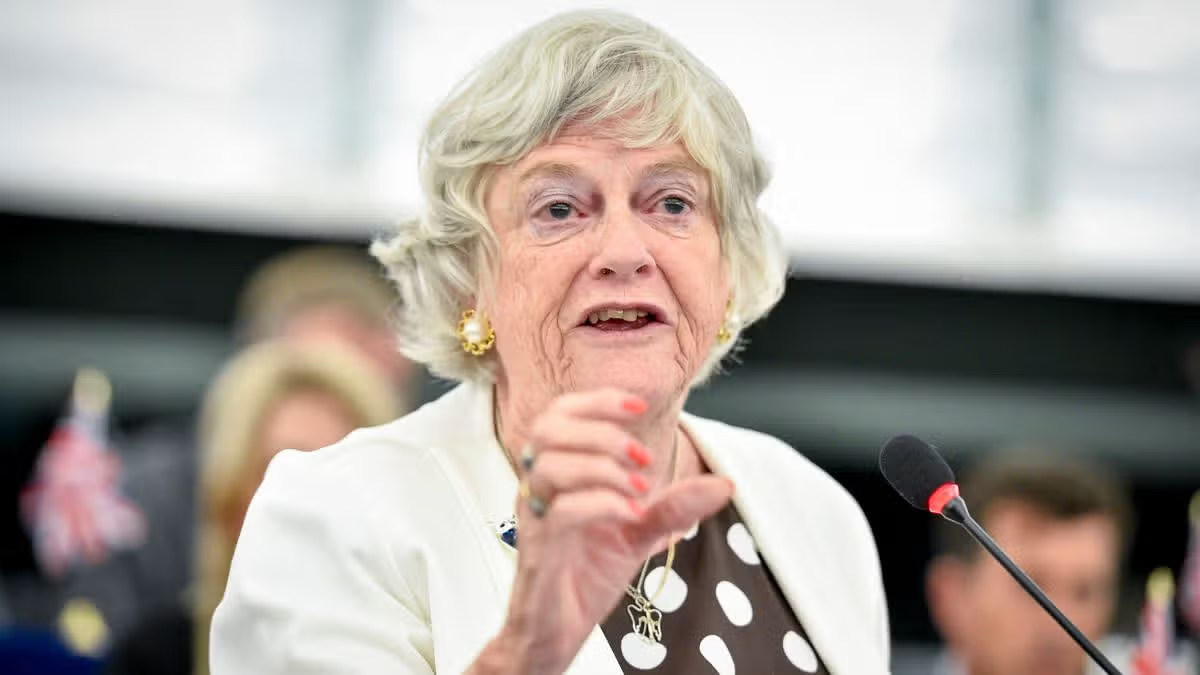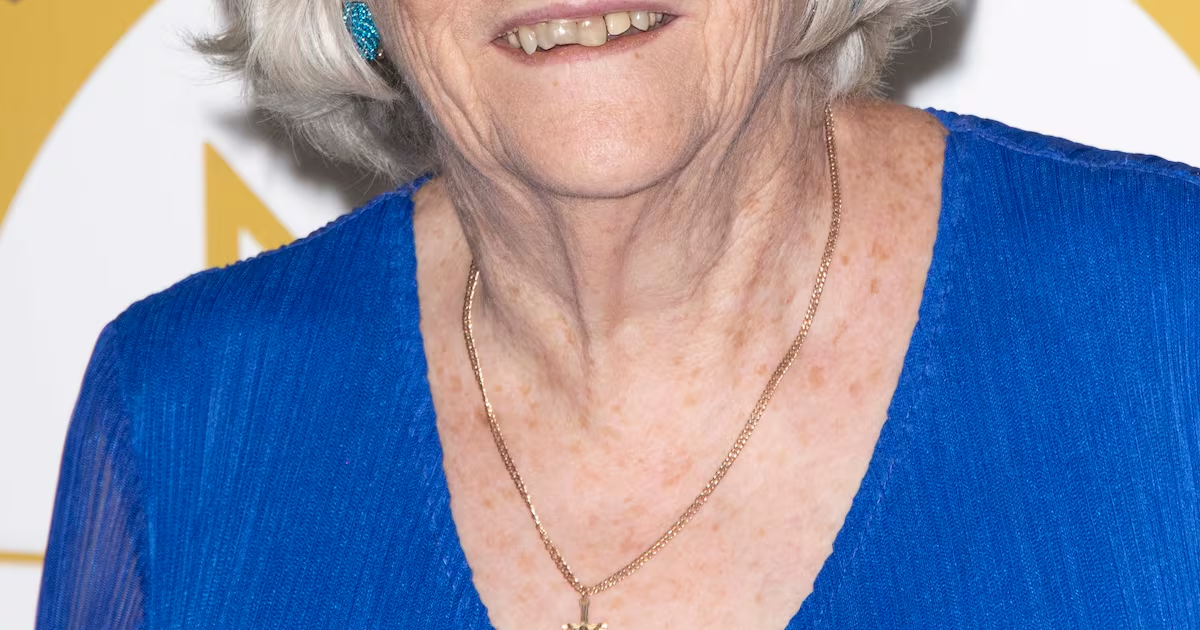
Born: October 4th, 1947Died: July 8th, 2026Considering that she only ever held junior ministerial office, the former Conservative MP Ann Widdecombe, who has died aged 78, had a peculiarly strong hold on the public imagination. This was largely for her non-political, post-parliamentary career as a television personality, with appearances as a contestant on Strictly Come Dancing in 2010, being hauled good-naturedly like a sack of potatoes around a dance floor, and in the 21st series of Celebrity Big Brother in 2018, on which she was a runner-up.This week, Joshua Kerry (28), appeared in court accused of murdering Widdecombe at her home in Haytor, Devon, earlier this month, by hitting her on the head with a hammer 21 times. Widdecombe played up to the role of British eccentric, part admonitory maiden aunt (which she was), part pantomime dame (which she also was, twice, at Dartford in 2011 and at High Wycombe the following year).[ Ann Widdecombe defended free speech. But it’s hard to defend some reactions to her deathOpens in new window ]Yet Widdecombe was a deeply serious politician, an MP for Maidstone in Kent for 23 years (Maidstone and the Weald from 1997) and a competent minister in the decidedly unglamorous departments of Social Security and Employment, and with responsibility for prisons at the Home Office. If her persona consciously or otherwise mimicked a long line of robustly right-wing, uncompromising Tory women, she was brighter, personally kinder, and more sensitive than her self-confident carapace indicated.In politics, her intensity and dogmatic shrillness counted against her – the Guardian’s Simon Hoggart suggested that planes coming into Heathrow over Westminster had to be diverted when she rose to speak – as much as Tory sexism. Her lack of promotion to senior posts annoyed but did not change her.Those who appeared with her in broadcasts were sometimes taken aback by the personal nervousness and shyness masked by her stridently expressed views. She was opposed to abortion and liberalisation of LGBT rights, both prompted by her religious views; was Eurosceptic – eventually campaigning for Nigel Farage’s Brexit Party, and being expelled from the Conservatives in 2019; was a climate-change sceptic, and supported the reintroduction of the death penalty. Her most notable breach of rightwing orthodoxy was her resolute opposition to fox hunting.Widdecombe was the daughter of James Widdecombe, a former naval officer and head of naval supplies at the Admiralty, and his wife, Rita (née Plummer). Her elder brother, Malcolm, 10 years her senior, became an Anglican vicar. Her father’s postings meant a peripatetic childhood, including three years in Singapore, and although an Anglican she was educated at a Catholic convent boarding school, La Sainte Union, near Bath. Turned down by Oxford, she studied Latin at Birmingham University, but her father then paid for her to undertake a further undergraduate degree in politics, philosophy and economics at Lady Margaret Hall, which was then an all-women’s college at Oxford.With her Conservative views crystallising, she became heavily involved with the Oxford Union debating society – practical trainee politics rather than the kind she was studying for. . It was at Oxford, too, that she had her only boyfriend, Colin Maltby. They were together for three years and he served as union president before going into banking. “There might have been odd men I looked at and thought you’re rather nice, but there were no other relationships,” she told an interviewer many years later.By now planning a political career, Widdecombe obtained a job marketing Knight’s Castile soap and Persil for Unilever, and served as a local councillor on Runnymede district council in Surrey. She then worked in financial administration at London University for 12 years while seeking a constituency. It was her appearance as a contestant on Strictly Come Dancing that really cemented her celebrity and, if it demonstrated her complete lack of dancing talent, her gameness and humour secured audience approvalShe had more than 100 interviews before being chosen to fight the safely Labour seat of Burnley at the 1979 general election. After defeat there, she was selected four years later for Plymouth Devonport, a seat held by the Social Democratic Party leader David Owen, and lost that too. She was finally chosen, after 10 years of applications, for the safely Tory Maidstone, and was elected at the 1987 general election a few months before her 40th birthday.At Westminster, preferment was slow, not least because of her vociferous support for a high-profile rearguard campaign led by the Catholic Lib Dem MP David Alton to reduce the time limit for abortion procedures. Widdecombe, for some time an agnostic following her Anglican upbringing, was now turning towards Catholicism and would become a high-profile convert in 1993.. In 1990, following the election of John Major as party leader and prime minister, Widdecombe was made a junior minister in the Social Security Department, dealing with benefits. Three years later she was moved to Employment and in 1995 became prisons minister at the Home Office under Michael Howard, then home secretary.Despite his hardline reputation, the two did not get on, falling out early over his vendetta against the head of the prison service Derek Lewis following a couple of breakouts. Widdecombe took Lewis’s side as Howard manoeuvred to sack him and she was unforgiving of the minister, particularly after his office briefed the Daily Mail that she was having an affair with Lewis. As prisons minister she came under attack when it was suggested that woman prisoners could be handcuffed during childbirth. This was not the case, however – the existing policy was that women would be handcuffed on the way to hospital, but not during labour. Her robust defence of the policy earned her the nickname Doris Karloff, a description that stuck. Her floated candidacy for the party leadership in 2001 and later for the Commons speakership in 2009 both floundered due to lack of support – her colleagues believing that her popularity and electability were less than she herself imagined.She retired after 23 years in the Commons at the 2010 general election. She then embarked on an altogether unlikely broadcasting career, proving at least that she was game to send herself up. There had been a series of documentaries while she was still an MP where, acting as a no-nonsense agony aunt, she confronted issues such as prostitution, truancy and girl gangs, and she had also been a host on the satirical show Have I Got News For You.But it was her appearance as a contestant on Strictly Come Dancing that really cemented her celebrity and, if it demonstrated her complete lack of dancing talent, her gameness and humour secured audience approval. Instead of being eliminated as expected in the first round, she lasted nine weeks, helped and sometimes physically carried by her professional partner Anton du Beke.. In 2018, she took part in Celebrity Big Brother, another knockout contest, coming second to Shane Jenek, aka the Australian drag queen Courtney Act, with whom she inevitably had some robust discussions about lifestyle along the way: she declared it a triumph of free speech.Widdecombe had already written several well-received novels while still an MP and retired to a large bungalow, inevitably called Widdecombe’s Rest, on the edge of Dartmoor, where she also wrote columns for the Daily Express, expressing trenchant views. She was even briefly an agony aunt for the Guardian, a role which she may have taken more seriously than the paper did. Her memoir Strictly Ann was published in 2013.Despite claiming “I am a Conservative. I am never going to be anything else ... I’d rather form my own party than ever join Ukip. We could call it the Widdy Mob,” in April 2019, dissatisfied over the handling of Brexit, she became a candidate for Farage’s Brexit Party in the European elections. She was briefly an MEP for the southwest, denouncing Britain’s alleged “enslavement” to the EU. Standing as the party’s candidate in Plymouth at the 2019 general election, however, she garnered only 5 per cent of the vote.
Obituary: Ann Widdecombe: Formidable politician who sometimes played up role of British eccentric
Conservative MP represented Maidstone for 23 years, later stood for Nigel Farage’s Brexit Party and was a climate-change sceptic
1,330 words~6 min read