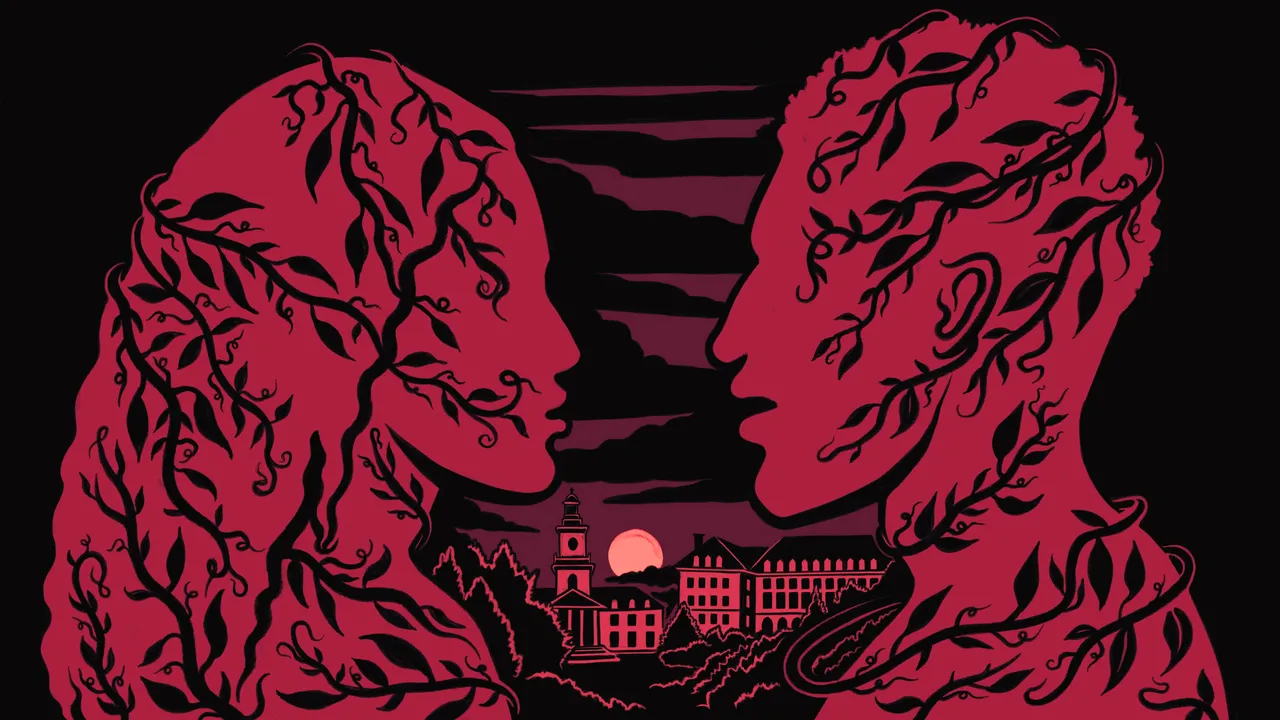
The Vivisectors Author: Missouri WilliamsISBN-13: 9780008725280Publisher: Fourth EstateGuideline Price: £16.99Missouri Williams’s The Vivisectors opens not with a bang, but a whimper: the narrator’s mother has attempted to end her life and failed, managing only to become paralysed and dependent. Her vegetative state reflects a broader sense of regression and decay that permeates the novel: a forest spreads outward from the city’s centre and slowly devours its infrastructure, held in-check only by a monkish sect of mysterious gardeners. Agathe, our grumpy narrator, works for a woman she loathes, a lecturer at a university, which also seems to be rotting from the inside. News of a heated exchange between a teacher and a student, in which one of them, or both, have taken offence, consumes the university; the scandal intrigues Agathe’s boss, far more than her own research, and she enlists Agathe to befriend the student and find out what happened.It is to the novel’s strength that we never find out. The Vivisectors is more concerned with the pettiness and absurdities of so-called cancel culture than the scrambled interactions that spark them, and the event sets in motion a series of reflections on the endless pursuit of knowledge, the oversimplification of complex reality, and the tendency of language toward abstraction and obfuscation. The novel is about thinking, and imagining, against all judgment. It’s just a shame these concerns are not brought to light sooner.It suffers from long, exhausting tirades that frequently run out of steam long before they run out of space. Good rants are common enough, but great ones are a surprise, and I find myself getting frustrated by Williams’s shortened sentences, clipped before they can really take off. Agathe, who’s teenage-existentialist one-liners about entropy flicker throughout the prose like old Tumblr posts, is the best and worst thing about the novel. She is ugly, misanthropic and determined to offend. She frequently compares her wheelchair-bound mother to a plant. In one bizarre scene, she gives up trying to wheel her through the grass and instead climbs inside and sits on her, using the toggle to whizz them both up and down the park. She calls this activity taking her mother for “a walk”. Moments of humour like this are few and far between in this strange, disturbing, sometimes very good novel.
The Vivisectors by Missouri Williams: Strange, disturbing and sometimes very good
The novel is more concerned with the pettiness and absurdities of cancel culture than the scrambled interactions that spark them
380 words~2 min read