The US will collect duties of between 10% and 12.5% on imports from most major trading partners, its biggest move yet to reconstruct President Donald Trump’s tariff wall that was pierced by the Supreme Court.
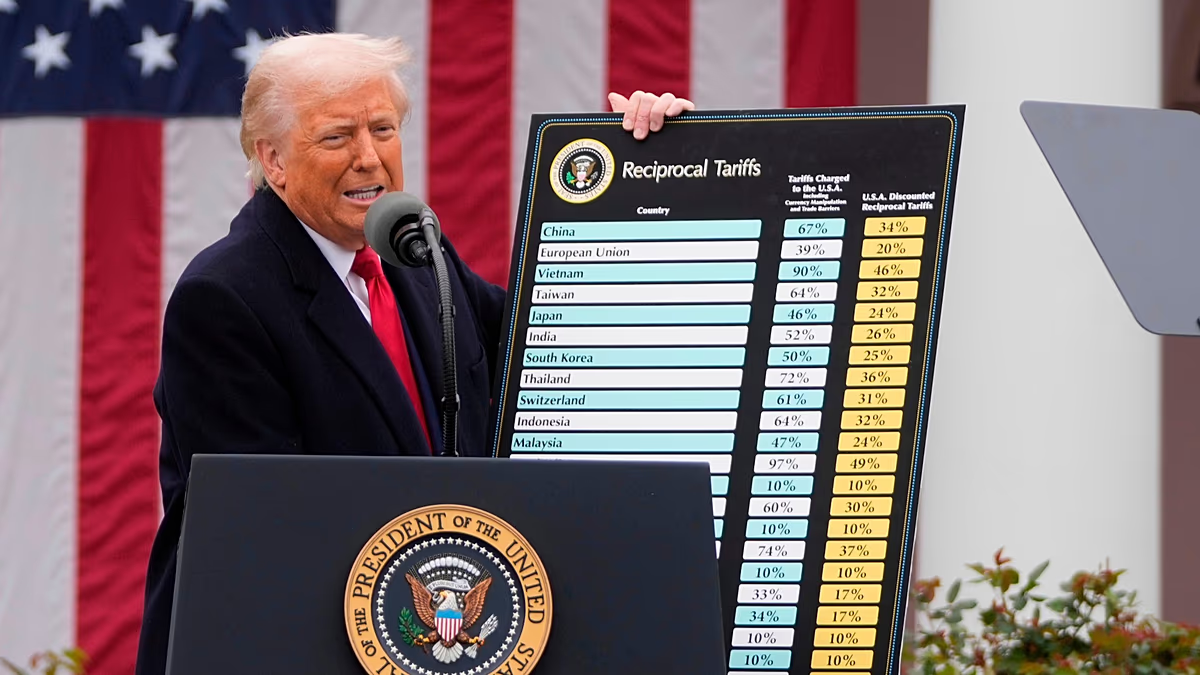
The new levies follow an investigation into the alleged failure of around 60 economies to prevent forced labor in their supply chains to the detriment of American workers. Goods from some 10 trading partners deemed to have adopted forced-labor restrictions will be subject to 10% tariffs, including Mexico, the UK, Canada and India.Duties on items from the European Union and Taiwan won’t exceed 10% and products from Japan, Switzerland and South Korea will be broadly capped at 12.5%, in a way that complies with the trade agreements they reached with the US, according to a Federal Register notice published Thursday. Products from dozens of others will face a 12.5% charge, with certain other duties stacking on top. The formula also allows for certain tariff exemptions, such as for products that can’t be produced in the US or where tariffs would cause economy-wide disruptions.
The new duties take effect Friday at 12:01 a.m. New York time, according to the notice. The levies won’t apply to certain goods already loaded onto vessels before that time.Asian nations described the Trump administration’s latest tariffs as baseless and unjustified, while stopping short of any retaliatory moves.The decision “is very disappointing but not unexpected. President Trump campaigned on tariffs and this is the consequence,” said New Zealand Trade and Investment Minister Todd McClay. Australia called the action “unjustified” and inconsistent with its free trade agreement, according to a statement from Trade Minister Don Farrell, who said the US should remove the new duty.Singapore pushed back against the new tax, with Foreign Minister Vivian Balakrishnan saying there was no economic justification for the action. Japan also signaled its displeasure and is seeking reassurances that the levies are in keeping with the deal it struck with the US last year.The forced-labor duties are Trump’s broadest move toward restoring his protectionist tariff regime since his earlier levies were struck down by the high court. After that setback he instituted a 10% global import tax, which expires Friday. The timing of the new charges ensures there will be no gap between the two.“The United States has had a forced labor import ban for nearly a century, and rigorously enforces it,” US Trade Representative Jamieson Greer said in a statement. “It’s well past time for our trading partners to do the same.”One senior administration official rejected the idea that Trump was imposing the new tariffs purely as a replacement to the earlier duties that were struck down, but also said the president would use all the tools at his disposal and won’t allow his trade policy to be undermined by a court decision.The official suggested the administration had planned to impose the forced-labor tariffs in any case and was rolling them out now to avoid upheaval for US businesses.The administration telegraphed the move last month, when it released the outcome of its forced-labor investigation. There will be some changes from the original proposal, according to a senior administration official who briefed reporters before the announcement was made. That includes India securing a 10% levy instead of the original, threatened 12.5% level.Imports such as fuel, foods and fertilizers will be exempt from the new tariffs, as well as products such as automobiles, metals and drugs that are covered by separate, industry-specific levies. Items covered by the North American trade agreement with Mexico and Canada will also be excluded.Exemption Requests