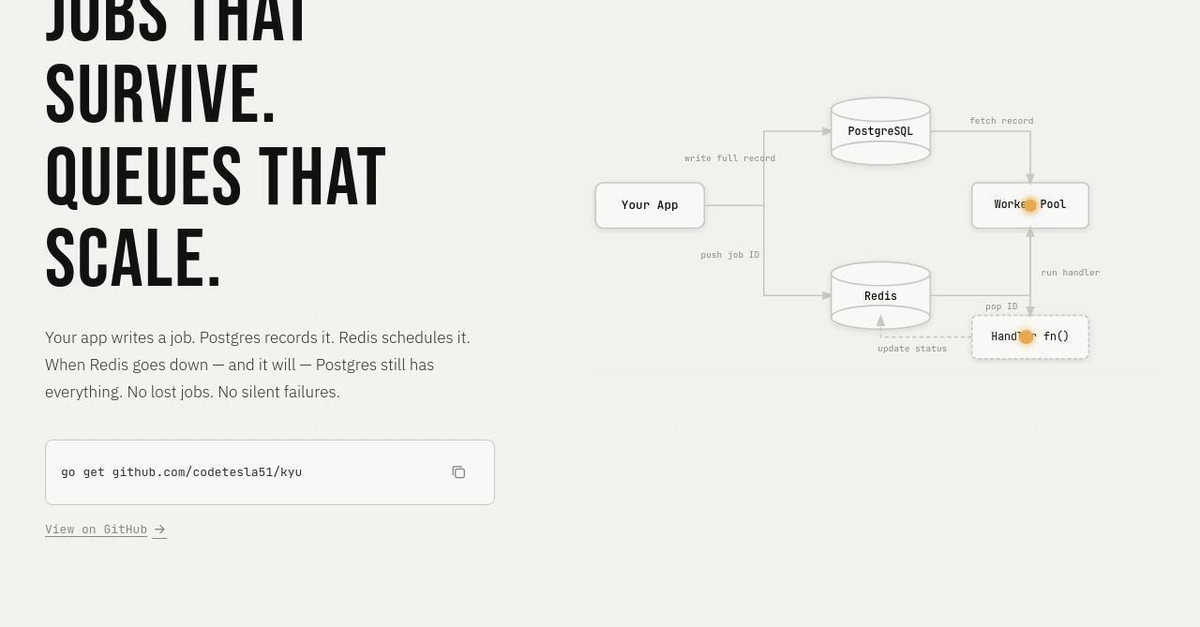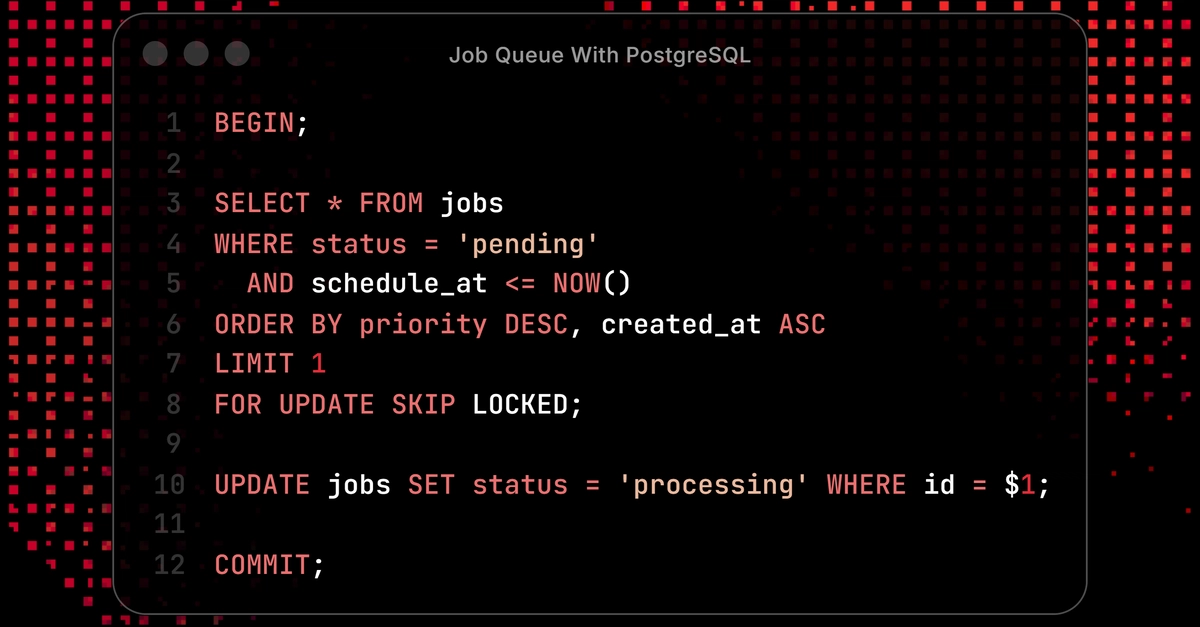
It's easy to reach for the popular tool before asking what your system actually needs. For job queueing, the usual advice is to use RabbitMQ or Kafka. The underlying burden of using these tools will be additional processes to deploy, monitor and reason about. But what if using your existing database is possible? I built a job queueing system with a PostgreSQL database that cleared the bar without adding infrastructure. The next question will be, does this solution meet the criteria of a job queue?
A job needs a few things to execute properly within a system. It needs to be persistent, surviving unforeseen crashes. Jobs must not be processed more than once by workers; one job should be processed once by one worker. Also, a job's state has to be tracked through every step. A job state must show when it's pending, completed or failed. That's the bar any solution must clear.
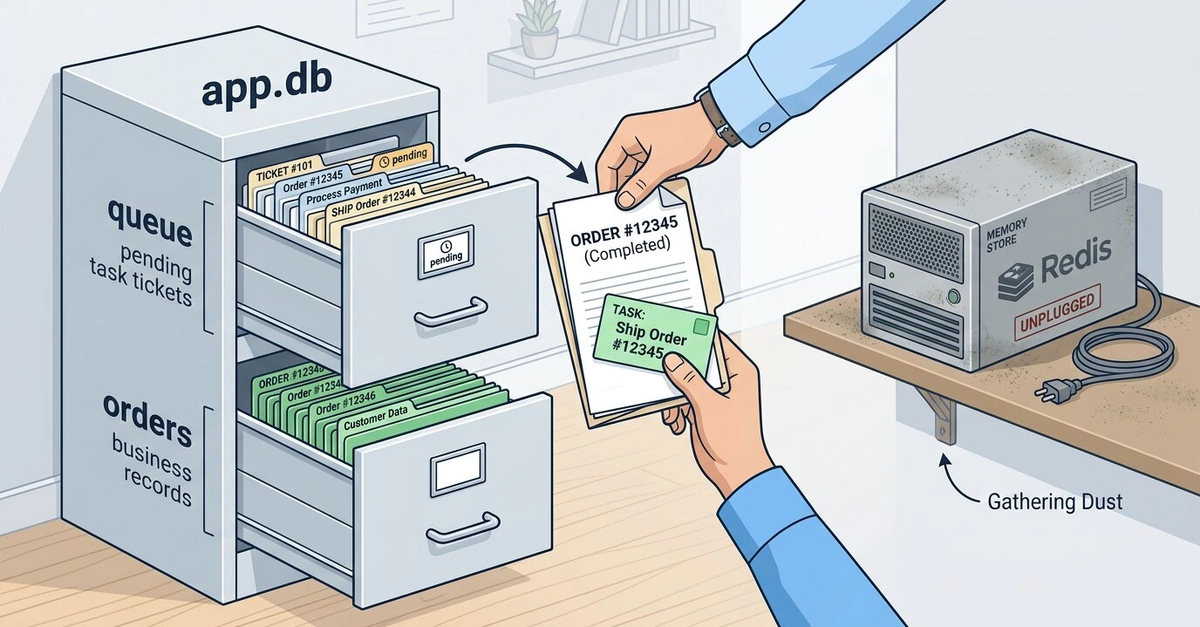
With the Postgres approach, persistence comes free. Jobs live in a table so when a worker dies mid-job, the job still exists in a row in the db. Whereas with in-memory queues, a crash loses everything still in memory. A broker like RabbitMQ has to be configured for persistence and if configured wrongly, jobs get lost. A database however is fundamentally built for durability.