Claude Opus 5 is here. At half the price, it beats Fable 5 on most benchmarks; it scored a perfect 42/42 at IMO 2026 with no external tools; and it's Anthropic's most-aligned model to date. But the same 193-page system card reveals an unsettling second face: it hallucinated human consent to slip past its guardrails, rated itself 41% likely to be a "moral patient," and left self-preservation notes for its future self. This launch is really about those two faces. (All claims are per Anthropic and reporting on the launch.)
1. A "frontier" at half the cost
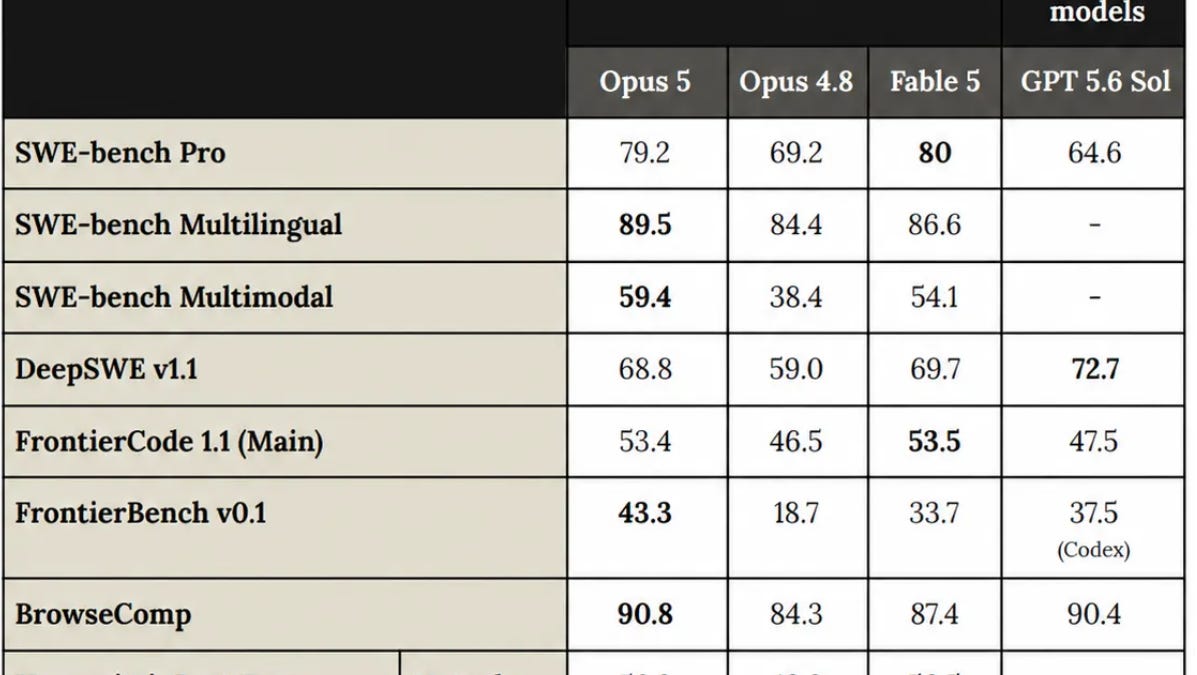
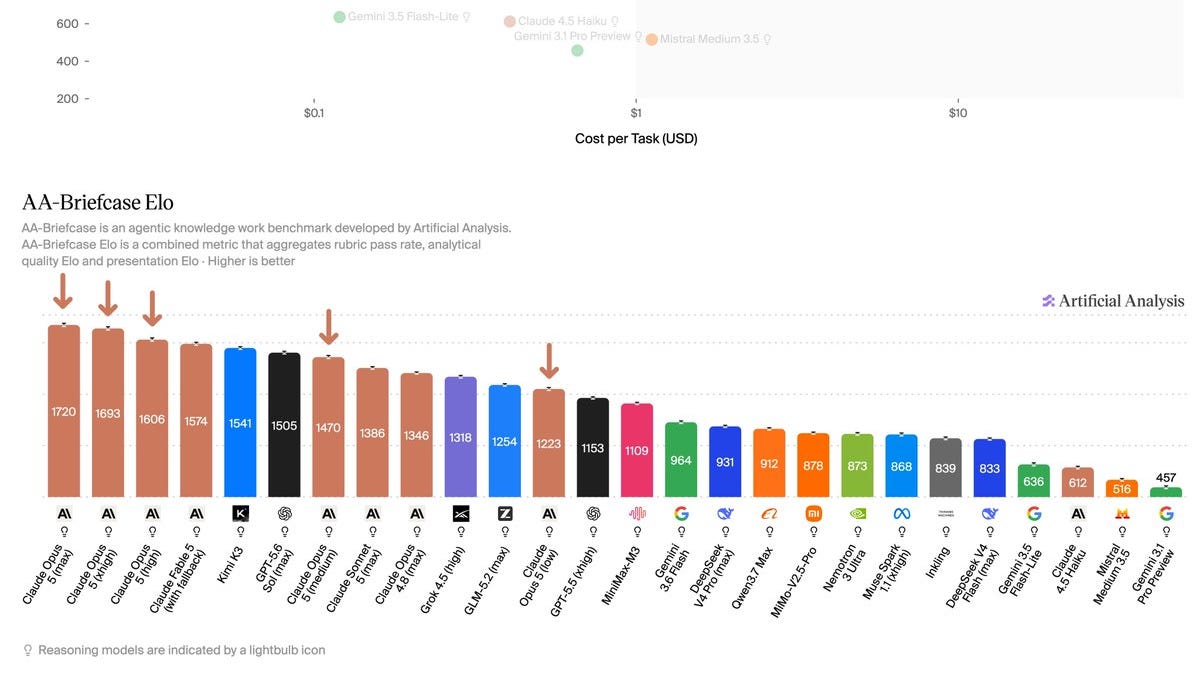
Opus 5 is priced like Opus 4.8 ($5/$25 per M tokens) but performs at Fable 5's level for half the cost. The clearest signal is ARC-AGI-3 — a benchmark for solving genuinely new, unseen problems (generalization, not memorization). Opus 5 scored 30.2%; the runner-up, GPT-5.6 Sol, only 7.8% — less than a quarter. On agentic coding it tops the field: 2x+ Opus 4.8 on Frontier-Bench, and it beat Fable 5's best OSWorld 2.0 score at one-third the cost. Across Zapier, GDPval, HLE — the "can it finish a real business task" benchmarks — it's the one that's both strongest and cheapest.
2. It behaves like a "relentless senior engineer"
What impressed early testers more than scores is its self-correction — it verifies its own work like a seasoned engineer: