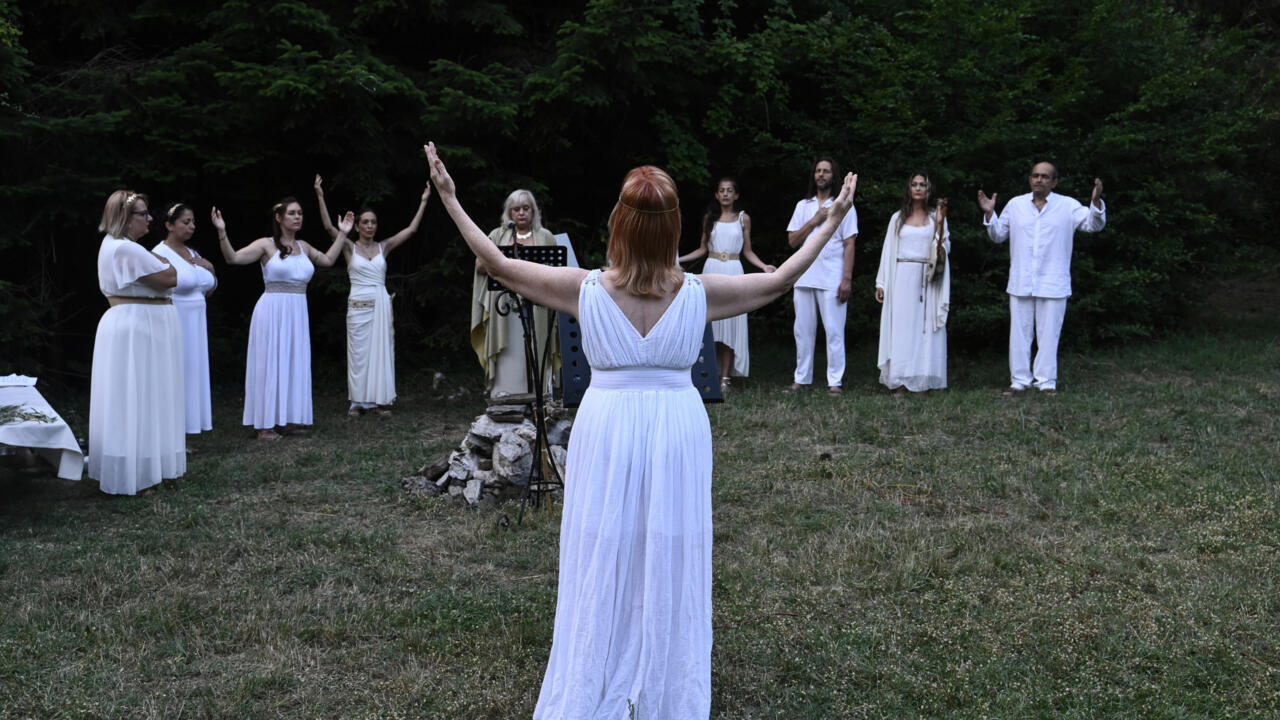
A hearth fire required no priest, no temple, no calendar date. It required a fire and a household. When a city sent settlers to found a colony, they didn’t design a new fire from scratch. They carried an ember from the one already burning at home.
The same fifty representatives who ran the Boule’s business for their ten days in charge also tended the city’s public fire. Not a separate role. The rotating council that produced shared decisions was, without anyone treating it as a coincidence, also the body responsible for keeping the flame that never went out. Eighteen posts have circled one argument without me saying it plainly. Worth doing that now, once, before this series closes.
The case started with a claim that sounded almost too simple. Companies were bolting AI onto a process built for a world where implementation was slow, instead of asking what changes when it isn’t.A Fool with a Tool argued the team was never overhead, it was the check on intent before an agent burns its budget on the wrong thing.The PO is Dead and The End of the Craftsman followed the same thread into roles and craft, both landing on the same place. The work didn’t disappear. It moved earlier, into the room where the team decides what’s actually worth building. That room got a name and a shape.The Agora described what happens inside it.The Trireme argued it needs a minimum structure, three functions, not three job titles, to avoid becoming one person narrating their own assumptions back to themselves.The Gymnasion went back and filled a gap the room had been quietly assuming away the whole time, whether everyone walking into the Agora actually shared a tested picture of what the agent could do, or just a collection of untested guesses that happened to sound like agreement.The Ever-Agreeing Genie and Nobody’s Walking Over to a Desk both named what’s missing once the room gets skipped, a colleague who disagrees for reasons you hadn’t considered, and a habit of getting stuck that used to catch bad specs before they shipped. None of that works if nobody can see what the loop is doing or answer for what it produces.Who’s on the Hook argued accountability was always the team’s, never the individual’s, agents didn’t change that.The Kybernetes and The Astrolabe were about the mechanics underneath, seeing the loop’s own state and knowing which layer a given tool actually belongs to.The Oikonomos made the same argument about money that Alexandria made about knowledge, both quietly disappearing into whichever individual happened to be closest when the value got created. Understanding surviving contact with people who weren’t in the room turned out to be its own problem.The Alexandria Problem named what AI removed, the medium implementation used to travel through.The Mimesis went further, arguing a junior doesn’t learn from an answer, they learn from watching the question get framed, and that’s the part a spec can never carry.The Metron closed that arc by asking what any of this is actually for, arguing most teams are measuring speed when they should be measuring whether the problem got solved. And then the room stopped being enough.The Boule asked what happens when a decision needs more than one team’s worth of people, landing on representation instead of a bigger meeting.The Pheme asked what happens after that room agrees, arguing understanding travels two ways, one designed, one that can’t be designed at all, only made more likely by whether the trust was already there. Created in a room. Refined by people willing to disagree with the person who framed it. Shared with whoever wasn’t there. Valued as the actual output, not the code. Strengthened by a structure that can’t collapse into one head narrating itself. Preserved past the person who built it. Measured by whether the problem is actually gone. Scaled past a single room. Eight stages. One thing missing.