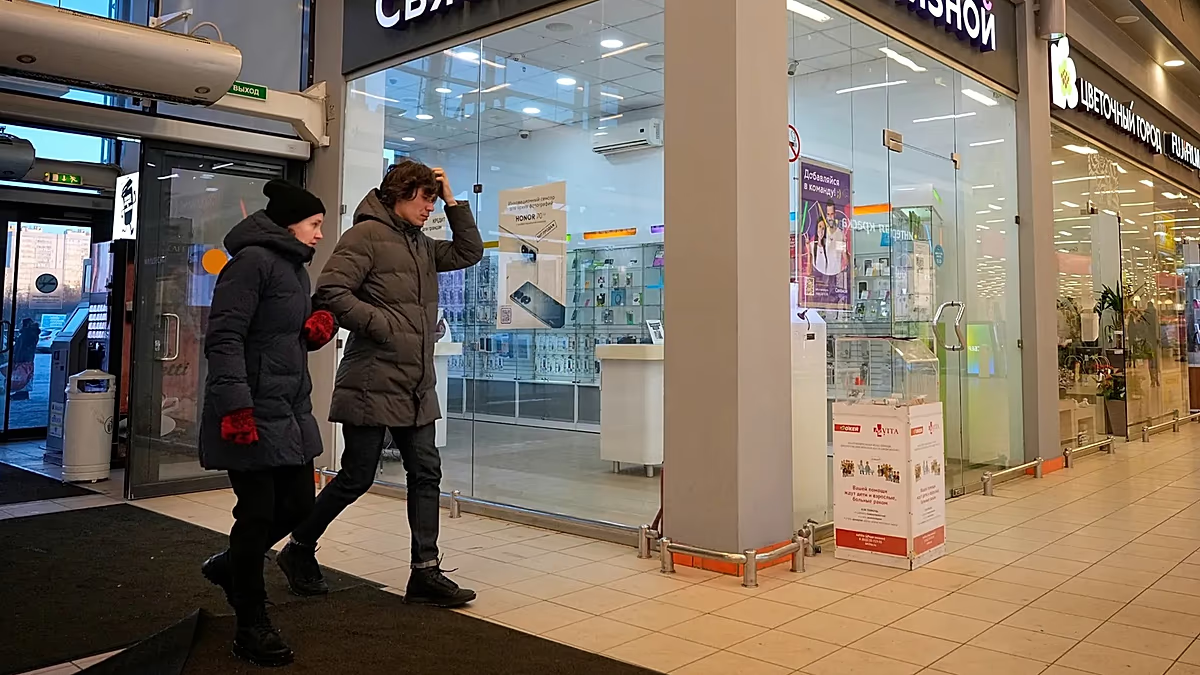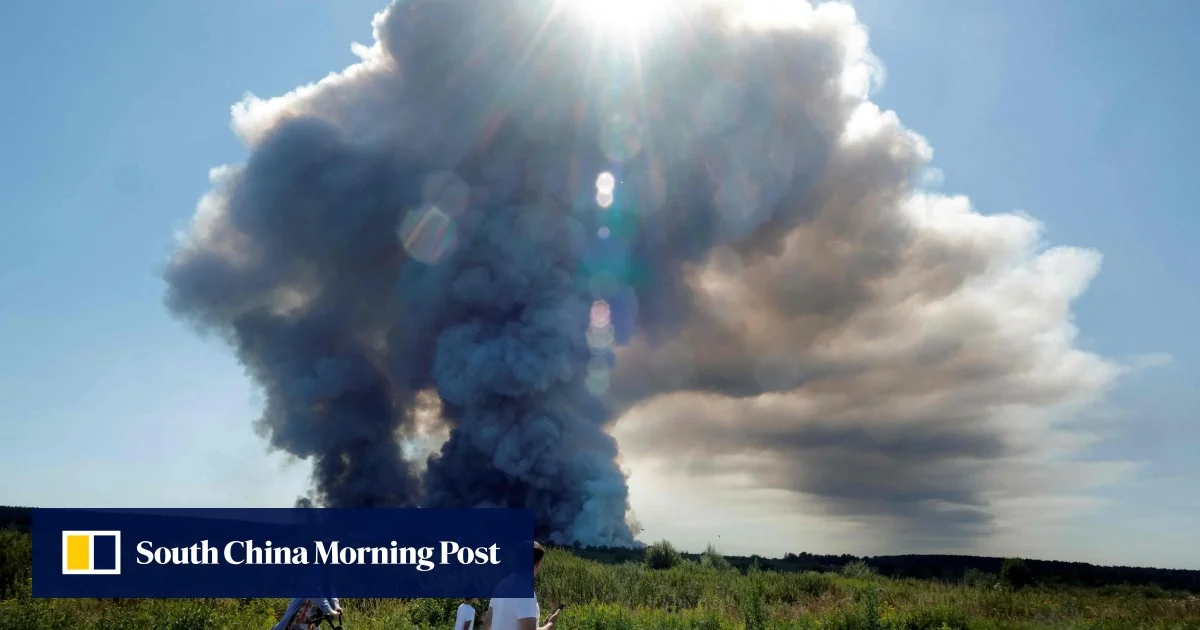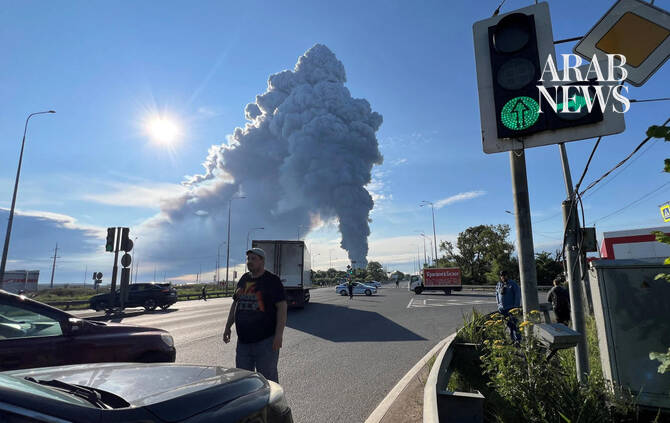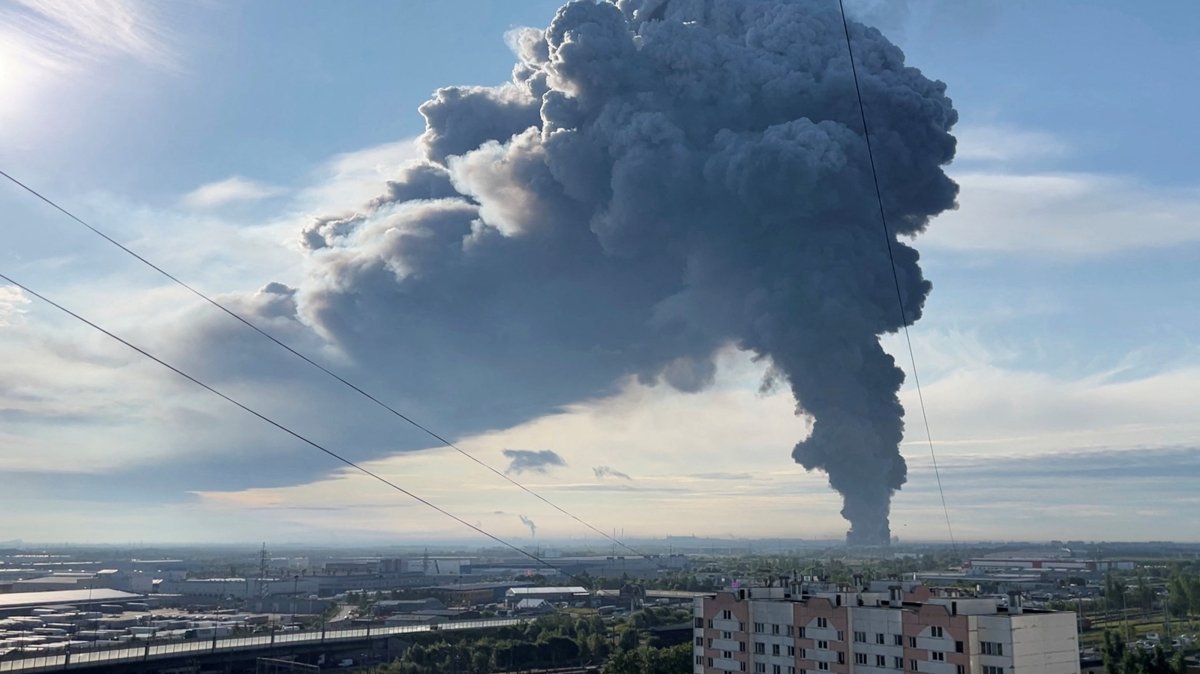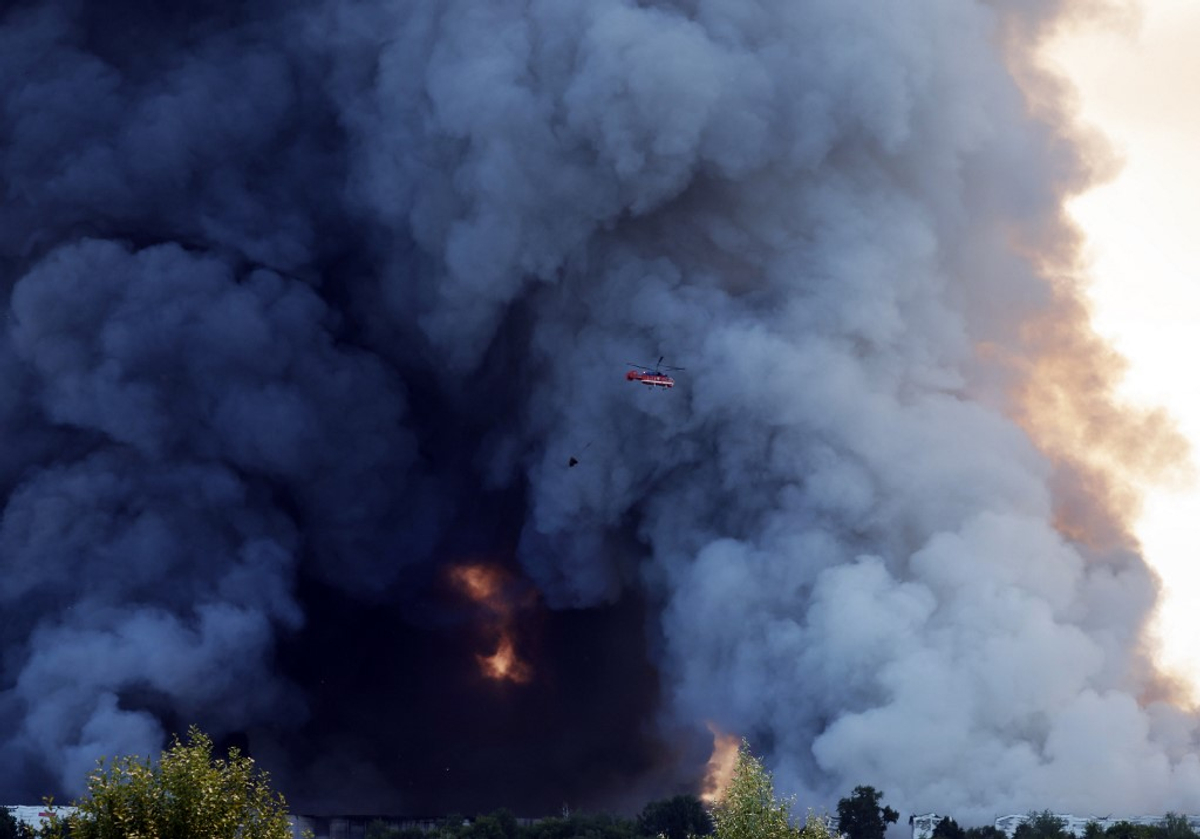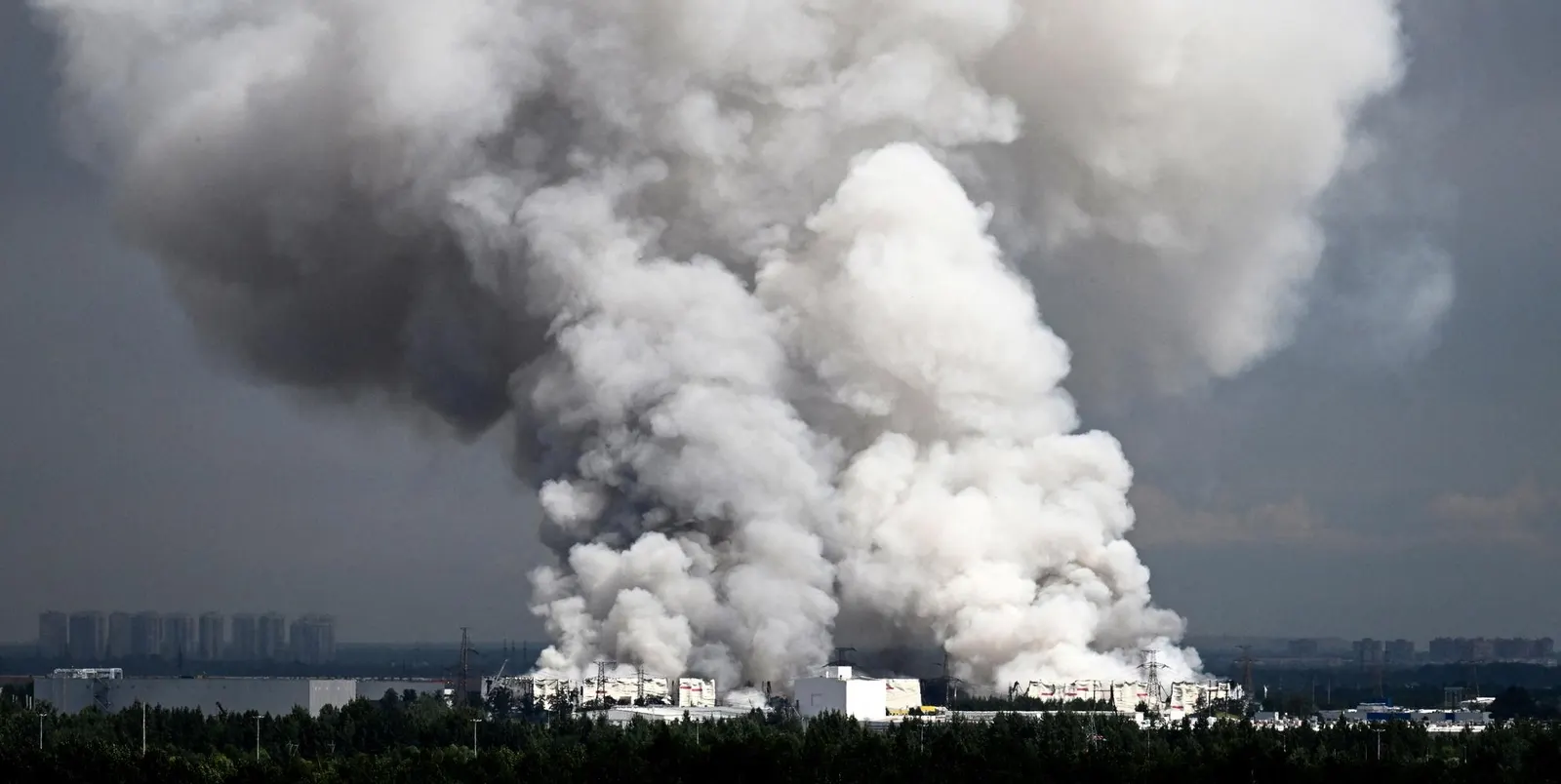
Wildberries CEO Tatyana Kim, June 2026. AFP via Getty ImagesTwo distribution centers in St. Petersburg belonging to billionaire Tatyana Kim’s e-commerce giant were hit on Friday, bringing the number of attacks on her to seven. Multiple kamikaze drones slammed into two massive warehouses in St. Petersburg, Russia on Friday as Ukraine extended its systematic attacks on the infrastructure of e-commerce giant Wildberries, controlled by Russia’s richest woman Tatyana Kim. Over the past week Ukrainian drones have destroyed seven of Wildberries’ biggest distribution centers, igniting enormous conflagrations that, according to reports, have so far killed at least eight civilians and injured dozens more. The attacks on Wildberries -- known as Russia’s version of Amazon -- began a week ago, targeting centers in central Russia and in Elektrostal, on the outskirts of Moscow. More attacks came July 22 in Krasnodar and Stavropol, near Crimea. With the two new St. Petersburg attacks more than half of Wildberries biggest centers have gone up in billowing clouds of black smoke. Tatyana Kim, 50, wrote on her Telegram account on Friday that there were no casualties in the latest conflagrations. Earlier in the week she had stated that she had “no words to describe all the feelings and emotions caused by the attacks on ordinary people, on our employees, on us, who are simply doing our jobs.” Adding that “we must continue to do what we do for the benefit of people,” she announced that Wildberries would pay 2 million rubles ($25,500) to the families of each employee killed and half that to those seriously injured. Wildberries employs 48,000; Forbes estimates that in 2024 the company generated some $9 billion in revenues (840 billion rubles), with unconfirmed 2025 sales reportedly growing to $15 billion. Before the attacks, Forbes had estimated Kim’s net worth at $8.1 billion, making her the richest woman in Russia.Ukraine President Volodymyr Zelensky this week cheered the attacks, saying that the warehouses deep inside Russia were legitimate military targets because Wildberries enables the sale and distribution of countless tactical military items, including drones, navigation systems, flak jackets and flags and patches commemorating Vladimir Putin’s four-year “special military operation” against Ukraine. The attacks are also seen as revenge for Russian hits on Ukrainian distribution terminals owned by Nova Poshta in Odessa and Mykolaiv. A report from the Kiev School of Economics earlier this year said Russia had destroyed 92 factories and warehouses in Ukraine. Twin smoke plumes rise from attacks on Wildberries warehouses in St. Petersburg.Anadolu via Getty ImagesOn Telegram, Ukraine’s drone commander Robert Brovdi wrote that the strikes were intended not just to degrade Russian logistics networks but also as a blow to Russian psychology. “This is about destroying, within seconds, the illusion of a comfortable peacetime existence for the obedient population of the aggressor state,” Brovdi wrote. Before the latest round of attacks, the Moscow Times estimated Wildberries infrastructure had suffered more than $1.3 billion worth of damage. Anticipating the possibility of wider attacks, Wildberries competitors Ozon and Yandex this week modified the terms of contracts with sellers on their platforms to exempt themselves from liability for torched inventories. This is only the latest challenge for Tatyana Kim, a former English teacher who launched the company in 2004 when she was 28 and on maternity leave. She started off buying bulk clothing from Germany’s e-commerce site Otto and reselling it in Russia, initially using her apartment as distribution center. By 2011 she reportedly began setting up pick-up points where shoppers could try on clothes they had ordered. And in 2014 she launched a marketplace model like Amazon, enabling merchants (now more than 88,000) to sell through her website. Before this wave of attacks, the most dramatic year for Wildberries was 2024 when Kim’s now ex-husband Vladislav Bakalchuk, accompanied by armed men, stormed into Wildberries’ Moscow headquarters in what she described as a failed attempt to takeover the business. Several people were shot including two Wildberries security guards who were killed in the fracas. That same year, Kim merged Wildberries with advertising company Russ Outdoor (sold by Rupert Murdoch’s News Corp in 2011) and, according to Forbes reporting, gave up roughly a third of her 99% stake in the company (Bakalchuk had 1%). The deal gained the approval of President Vladimir Putin thanks to its vision of building a Russian rival to Amazon, Alibaba and Softbank. With operations in eight countries, Wildberries in 2025 announced it would expand into Africa. Such plans may now be on hold as Ukraine’s attacks force Kim to rebuild her distribution network. It might be time to reconsider the safety and efficacy of giant warehouses, according to a report by insurance giant Zurich North America. Mega-warehouses built in recent years have become too dense and too tall to enable adequate firefighting, with footprints extending to the size of 30 football fields, roof heights of 45 feet and narrow aisles that make it easier for automated picking and sorting, but harder for firefighters to get to burning merchandise. What’s more, inventories have grown more dangerous with flammable plastics, aerosols and lithium ion batteries. Susan Phillips, professor of environmental analysis at Pitzer College, wrote last week that such trends have contributed to the severity of similar warehouse conflagrations in the United States, including the recent Doyle Heights warehouse fire near Los Angeles. According to a report in Kommersant, Kim said that although her warehouses were insured, the policies did not cover drone strikes and “terrorist” attacks. On her Telegram account Kim wrote on Wednesday that Wildberries was busy redistributing goods to other warehouses in an attempt to continue delivering 7 million customer orders per day. “We will all overcome this,” she wrote. Ukraine’s drone warriors may have other plans. ForbesRussia’s Richest Woman Handed Over A Third Of Her Fortune. Then Things Turned Deadly.By Jemima McEvoyForbesMeet The Wastewater Billionaire With His Eye On AI Data CentersBy Christopher HelmanForbesLegendary Texas Wildcatter’s Granddaughter Makes Energy’s Riskiest BetBy Christopher HelmanForbesAcclaimed Physicist And His Daughter Are Burying Tiny Nuclear Reactors A Mile UndergroundBy Christopher Helman
More Drone Strikes On Wildberries Warehouses Decimate Empire Of Russia’s Richest Woman
Two distribution centers in St. Petersburg belonging to billionaire Tatyana Kim's e-commerce giant were hit on Friday, bringing the number of attacks on her to seven.
1,000 words~5 min read