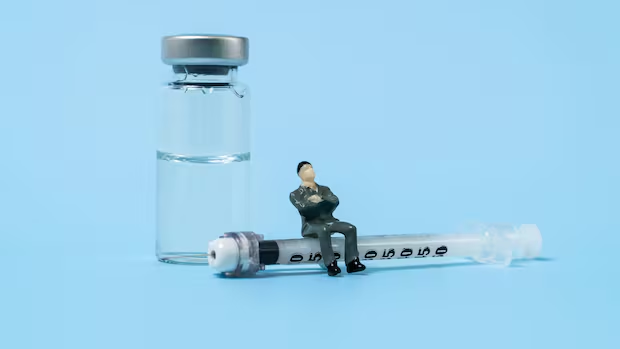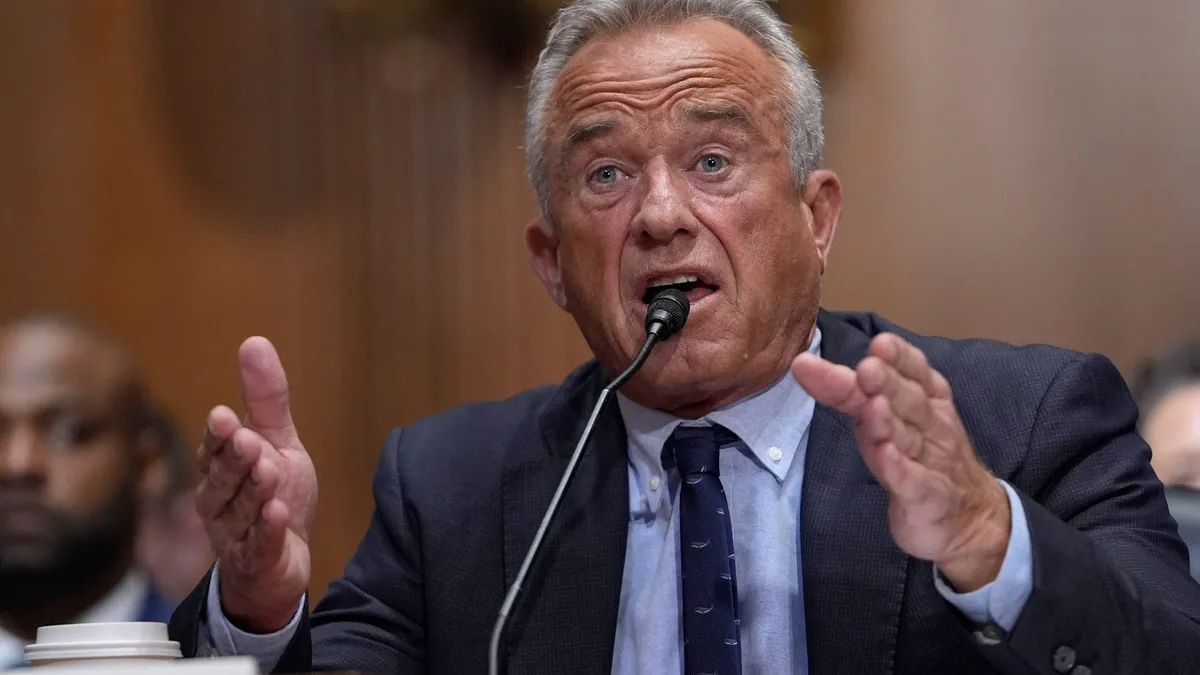
A majority of outside advisers for the Food and Drug Administration voted Thursday in support of allowing pharmacies to compound the first four of seven unapproved peptides, pleasing proponents in the wellness industry while raising concerns for some in the medical community.In a two-day meeting that continues July 24, the FDA’s Pharmacy Compounding Advisory Committee has been considering these peptides, which have gained popularity for their purported health benefits.Peptides are short strings of amino acids, which are the body's building blocks of protein. Injectable versions of peptides are already being sold widely online for everything from muscle recovery to longevity via the unregulated or gray market.In 2023, the FDA banned compounding pharmacies from producing specific peptides because they were identified as posing "potential significant safety risks" by the agency.Potential adverse effects identified by the FDA include heart toxicity, infections, pancreatitis, increased or decreased insulin sensitivity, serious immunoresponses, melanoma and death. In most cases, the FDA said there was not ample testing or evidence to prove the peptides were safe or effective for use in humans.But on Thursday, eight committee members voted in favor of adding the unapproved peptides BPC-157, KPV and TB-500. Six members voted no and one abstained.For MOTs-C, which some use for obesity and osteoporosis, the vote was seven in favor, five against and two abstentions.Advisers backing broader access argued that patients face safety risks when getting these products from the gray market while those who voted against said the decision should be based in science, not market-induced demand."There is a sound biological basis for these peptides, and we generally understand how they promote tissue repair, gut healing and mitochondrial function," Dr. Annu Navani, a board-certified regenerative medicine physician and author of "Health Recoded: Your Guide to Intelligent Healthcare," told USA TODAY. "However, just theory is never full clinical proof and none of the four treatments discussed yesterday have passed the standard clinical trials test required to prove safety and efficacy."Still, Navani added, "simply banning a treatment will not stop demand, it will just push patients towards unsafe, unregulated 'research' chemicals without medical guidance."Many of the panelists who voted yes have ties to the peptide industry, Reuters reports. Though a Department of Health and Human Services spokesperson told the outlet, "All committee members underwent the same ethics review and vetting process required of all FDA advisory committee members."Navani said she "couldn't help but notice that almost everyone pushing for approval stood to benefit from it in some or the other way.""The speakers consisted of doctors who either owned peptide companies or lobbyists who worked for compounding pharmacies," she said, but added there were a few exceptions.USA TODAY has reached out to HHS for comment.HHS Secretary Robert F. Kennedy Jr. is a self-proclaimed proponent of peptides and has close ties to several vocal supporters and vendors of the compounds, including Gary Brecka and Dr. Mark Hyman, both of whom sell several products that say they contain beneficial peptides; and Brigham Buhler, a compounding pharmacy owner whom Kennedy previously hosted on his podcast.On Friday, things went differently, with the panel voting to exclude peptide emideltide, also referred to as delta sleeping-inducing peptide or DSIP, from a list that would allow broader pharmacy compounding.The advisers are also set to vote on Semax and Epitalon.Although the Pharmacy Compounding Advisory Committee's votes typically align with the FDA's final, legal decision on the matter, the agency does not have to follow the committee's recommendations.Navani said the meetings have proved that "patient demand for peptide therapies has simply outrun the current clinical data and just ignoring this gap is not helping anyone."Contributing: Reuters
Is a peptide boom underway? FDA advisers vote for looser rules
A majority of outside advisers for the FDA voted Thursday in support of allowing pharmacies to compound the first four of seven unapproved peptides.
601 words~3 min read