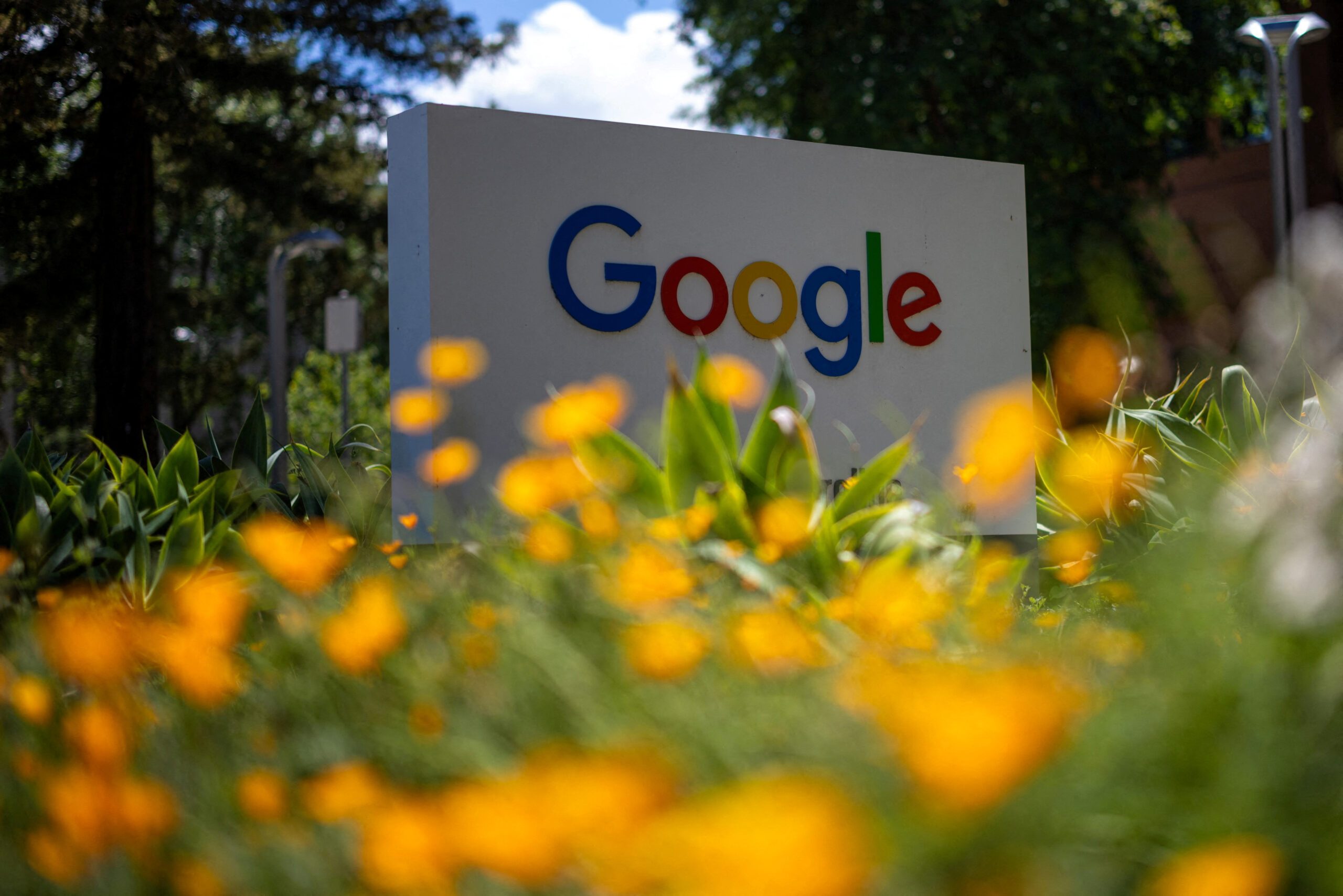
Seattle, USA - Jul 24, 2022: The South Lake Union Google Headquarter entrance at sunset.gettyGoogle announced more than $100 billion in quarterly profit on Wednesday. On Thursday, the European Commission handed the company a bill for roughly 1% of it.The €890 million ($1.02 billion) penalty—Google's first under the Digital Markets Act—comes in two parts. A €460 million fine covers self-preferencing in Search, where regulators found that Google's own shopping, hotel, transport and sports results received more prominent placement than competing services. A €430 million fine covers Google Play, where the Commission found that fees and contract terms restricted developers from directing users to cheaper purchase options outside the store.Antitrust lawyers will debate the legal theory. Marketers should be looking at something more practical: the shelf is about to be rearranged.The Search Shelf Is Being Rebuilt In PublicFor two decades, search marketing has been a game played on Google's shelving. The rich shopping carousels, the hotel price modules, the flight boxes—these are the premium end-caps of the internet, and Google's own vertical products have occupied them.The Commission is now ordering Google to treat third-party services in a 'fair and non-discriminatory' manner relative to its own, with a 60-day compliance window before daily penalties of up to 5% of Alphabet's global revenue kick in. Google has already begun testing revised search layouts in Europe, changes the Commission described as substantial progress.Translation for anyone running paid or organic search in the EU: The results page you optimized for in June may look different by October. Comparison-shopping sites, travel aggregators and vertical search players—the businesses that spent fifteen years arguing they were being buried—may get visible placement back. If you sell through those aggregators, or compete with them, your European visibility math changes.There is history here. The complaint that started Europe's self-preferencing saga was filed in 2009 by Foundem, a British price-comparison site. It took a decade and a €2.42 billion fine to resolve under traditional antitrust rules. The DMA exists so the next case takes months, not decades. Thursday's decision is proof of concept.App Marketers Just Got A Direct Line To CustomersThe Play Store portion of the fine is arguably the bigger commercial story. Regulators found that Google's steering restrictions—and the fees attached to them—went beyond what the DMA allows. The remedy requires Google to let developers freely tell users, inside their apps, that cheaper offers exist elsewhere.For subscription businesses, this is a distribution question dressed up as a legal one. The 15–30% platform fee has been the largest single line item in many app P&Ls. If EU users can be routed to web checkout without penalty, the calculus on pricing, retention offers and lifecycle email changes for every app marketer with European revenue.The playbook is already visible from the iOS side, where similar EU rules forced Apple’s hand. You could expect a wave of 'save 20% on our website' messaging inside Android apps—and expect the brands that build the cleanest web-checkout funnels to capture the margin.The Next Fight Is Over The AI ShelfBuried in the announcement is the detail that matters most for where marketing is headed: the Commission is still assessing how Google's AI Overviews and AI Mode square with the same obligations.AI Overviews are the new end-cap. They compress the results page, absorb clicks and—critically—decide which sources get cited and which products get surfaced. If self-preferencing rules apply to AI-generated answers the way they apply to shopping carousels, the entire emerging discipline of answer-engine optimization gets a regulatory dimension in Europe.Google disputes the premise of all of it. Kent Walker, the company's president of global affairs, called the ruling 'product degradation driven by a small group of self-serving complainants' and said compliance means stripping out real-time features like instant hotel pricing. The company is reviewing whether to appeal. Consumers may indeed lose some convenience in the short term; that trade-off is the honest tension in every DMA case.What To Do About ItThree moves, none of which require a lawyer.Audit your Google dependency in the EU. Map how much of your European traffic and revenue flows through Google's vertical modules—Shopping, Hotels, Flights. That inventory tells you whether a redesigned results page is a threat or an opening.Rebuild the aggregator relationships. If comparison sites and vertical search players regain placement, the channels many brands deprioritized around 2015 come back into the mix. Early partnerships will be cheap; late ones will not.If you run an app, model the steering scenario now. Price out a web-checkout funnel for EU users before your competitors do. The first brands to communicate the savings will set the reference price.The fine itself is a rounding error against $100 billion quarters. The redesigned shelf is not. Marketers who treat Thursday's decision as a legal story will read about the consequences in their Q4 European numbers.
Google Hit With $1 Billion Fine By EU—Why It Will Change Marketing
The €890 million ($1.02 billion) penalty—Google's first under the Digital Markets Act—could reshape SEO, app marketing and competition across Europe.
796 words~4 min read