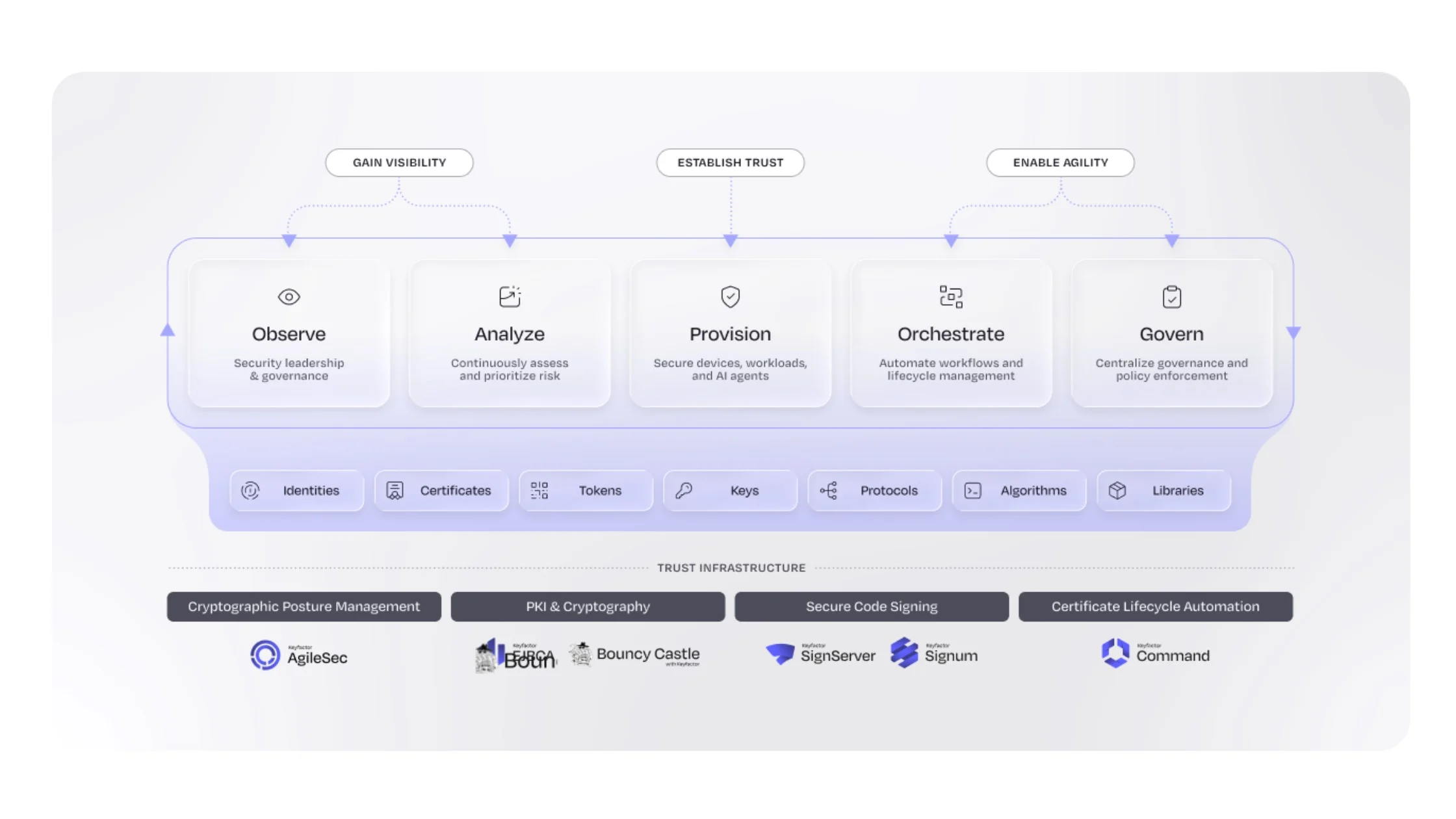
Jordan Rackie is the CEO of Keyfactor, an identity-first security solution for modern enterprises.gettyFor most of the digital era, businesses could afford to ignore cryptography. It quietly handled everything from secure payments and customer data protection to software signing and system authentication. As long as nothing broke, it stayed well off the leadership agenda.That era is over. NIST finalized the first post-quantum cryptography standards in August 2024. Adversaries are already harvesting encrypted data today with the intent to decrypt it once quantum capabilities mature, a practice known as "harvest now, decrypt later." The policy environment just made that urgency concrete. In June 2026, the White House signed an executive order establishing hard federal migration deadlines: key-establishment mechanisms must migrate to quantum-resistant standards by December 31, 2030, and digital-signature systems by December 31, 2031. The order also signals future procurement requirements for government contractors, meaning the federal compliance clock is increasingly a private-sector and critical infrastructure deadline as well.Forward-thinking enterprises and agencies are reorganizing budgets, mapping cryptographic dependencies and pressing their vendors for post-quantum roadmaps. Those that don’t recognize what's happening are accumulating risk they can't see and falling behind competitors and peer agencies who do.A System-Wide Shift On A Compressed TimelineThis transition is system-wide. It touches everything that communicates, authenticates or updates, cloud environments, connected devices, software supply chains, identity systems and machine-to-machine communications. And the timeline is compressed: years, not decades. This isn’t speculation. RSA and ECC, the algorithms underpinning most modern digital trust, will fall to a sufficiently capable quantum computer. Every device and system still relying on those algorithms when that capability arrives will be exposed. Data already captured will eventually be readable.This is what makes the quantum transition fundamentally different from the cyber risks businesses and agencies are used to managing. In a typical breach, attackers exploit one or two weak points. When sufficiently capable quantum arrives, every asset without a quantum-resilient identity becomes vulnerable at the same moment. It’s not a few cracks in the wall; the entire protective lining is gone.Realistically, exploitation won’t all happen on day one. The first wave of quantum-enabled attacks will most likely target well-resourced nation-state adversaries going after sensitive government data, intellectual property and critical systems. Not everything will be targeted immediately, but counting on not being a priority is like leaving your car unlocked at the mall and hoping no one tries the door. The operational impact is concrete: failed transactions, service outages, data exposure, regulatory consequences and loss of customer trust. What sat quietly underneath digital operations for years is now directly tied to mission continuity, revenue and reputation.From Invisible Dependency To Managed Strategic FunctionExecutives and agency security leaders don't need to become cryptographers. But they do need to treat cryptography like the critical infrastructure it has quietly become. In most organizations, it's deeply embedded across cloud platforms, connected devices, software supply chains and identity systems. This is usually the case without centralized visibility or ownership. And unfortunately, that gap is a leadership problem, not just a security one.The organizations getting ahead of this are doing three things consistently: • Mapping where critical cryptographic dependencies live• Identifying which systems would take the longest to update • Pulling infrastructure, IT, security, mission and business teams into a conversation early, not leaving cryptography stranded inside the security organization They're also approaching this as ongoing operational work, not a one-time migration. Cryptographic standards will keep evolving. Organizations that build the ability to adapt will be far better positioned every time the next transition comes.What Security Leaders Should Do NowFour steps matter most.PrioritizeIdentify which systems, applications and data assets would create the biggest operational, financial or regulatory problems if exposed. Because cryptographic modernization is too large to tackle everywhere at once, clarity on what matters most should drive every decision. InventoryBuild a detailed picture of your cryptographic environment: keys, certificates, algorithms, libraries, hardware security modules and third-party dependencies. Many organizations discover cryptography is far more deeply embedded than expected. The June 2026 executive order directs NIST and CISA to define minimum elements for a Cryptographic Bill of Materials (CBOM). Getting ahead of your own CBOM now positions you well when it becomes a procurement requirement.Get Your Vendors On The RecordTheir PQC roadmap is your PQC roadmap, unless you're prepared to switch vendors. Press for clear commitments now. Contractors and critical infrastructure operators that want to maintain government revenue will face increasing pressure to demonstrate post-quantum readiness.Build For AutomationThe scale of cryptographic change ahead will be difficult to manage manually. Organizations investing in automated certificate management and lifecycle management now will move faster every time a new standard or threat emerges. The Reckoning Already UnderwayThe shift from "cryptography is invisible" to "cryptography is a strategic function" is no longer ahead of us. It's happening now. The companies acting today are giving themselves time to assess dependencies, align vendors and build the operational flexibility this transition demands. Those that wait will discover, often during a vendor escalation or compliance review, that cryptography was never just background infrastructure.The question isn't whether this becomes a CEO-level issue. It already has. The only question is whether you're moving on it or watching competitors move first.Forbes Technology Council is an invitation-only community for world-class CIOs, CTOs and technology executives. Do I qualify?
The Cryptography Shift Is Now, Many CEOs And Agency Leaders Behind
Every device and system still relying on those algorithms when that capability arrives will be exposed.
TL;DRAI
NIST finalized post-quantum cryptography standards (August 2024); White House deadline 2030–31. Adversaries harvest encrypted data today for future quantum decryption. RSA/ECC will fail to quantum simultaneously. Enterprises must map cryptographic dependencies, align vendors and automate migration now or face operational outages and compliance risk.
875 words~4 min read