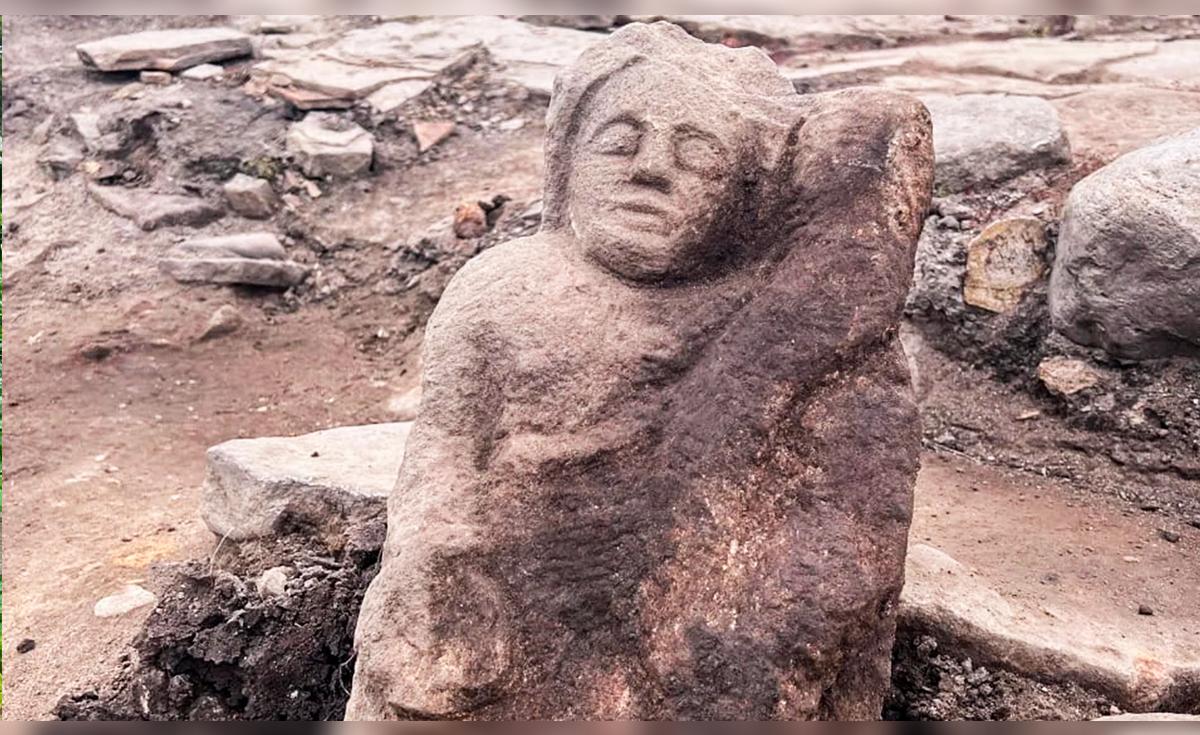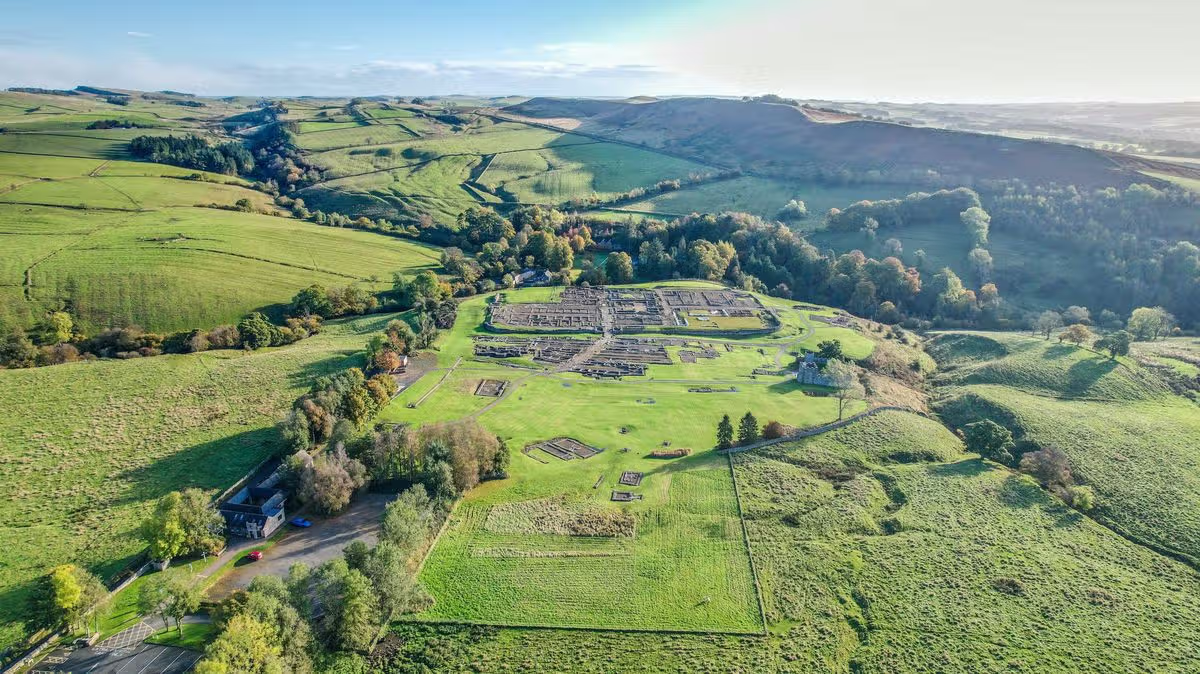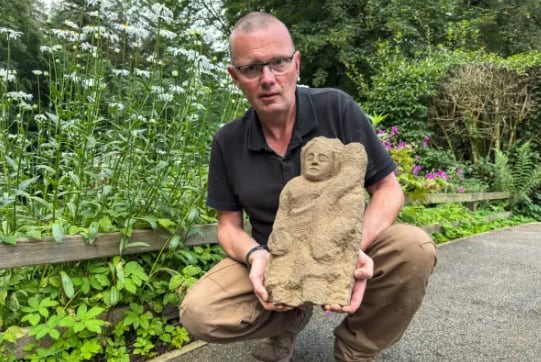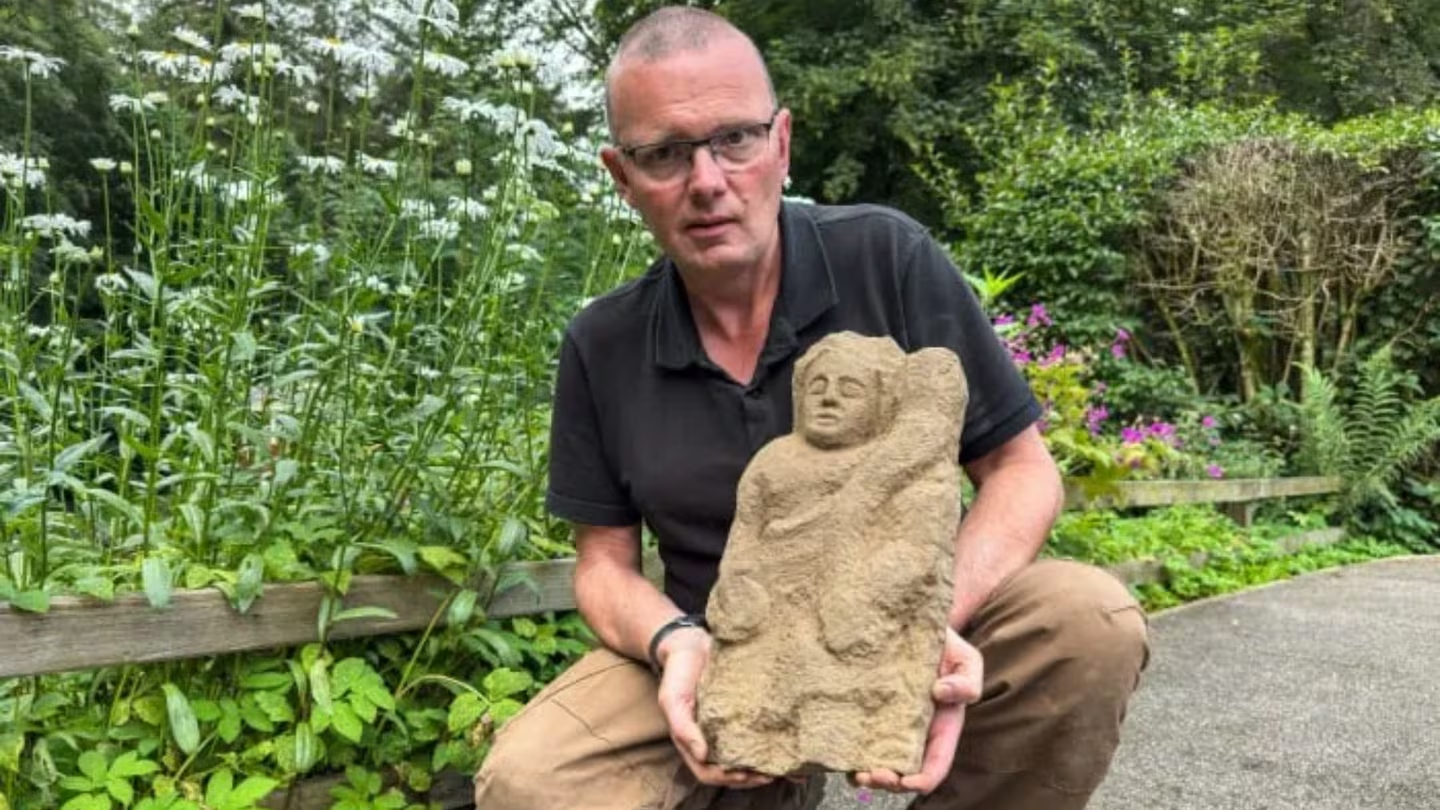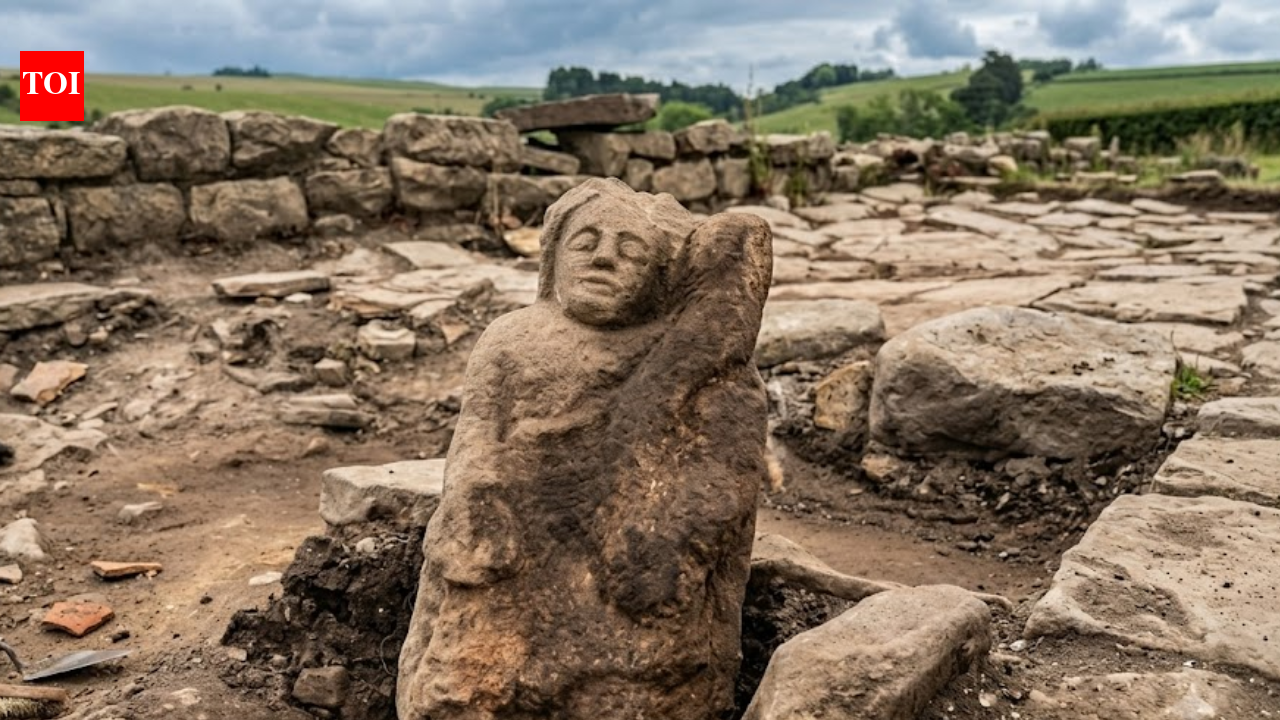
Archaeologists excavating the remains of a Roman fort in northern England have uncovered a remarkable sandstone carving believed to depict a protective deity that watched over the military outpost around 1,600 years ago.
Buried beneath the fort's defensive ramparts for centuries, the carved figure is offering fresh insights into the spiritual lives of Roman soldiers stationed on the empire's distant frontier.
Experts believe the sculpture represents a genius, a guardian spirit associated with a specific place, highlighting how religion, military life and local traditions blended along Hadrian's Wall during the final centuries of Roman Britain.
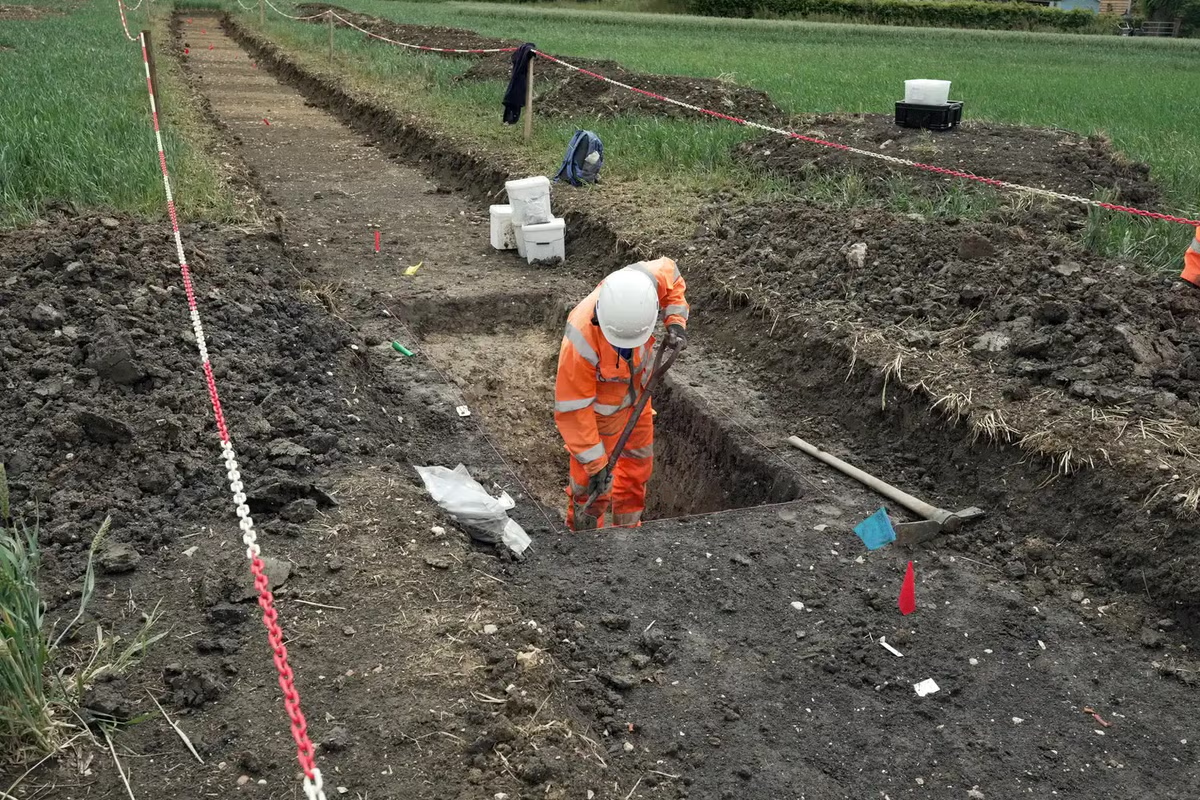
The rare discovery not only sheds light on Roman religious practices but also raises new questions about why the carving was deliberately buried beneath the fort's defences.Archaeologists uncover a rare Roman guardian spirit beneath the ramparts of an ancient fortThe discovery was made during excavations at Vindolanda, one of Britain's best-preserved Roman forts located just south of Hadrian's Wall in Northumberland.According to the Vindolanda Charitable Trust, archaeologists unearthed a finely carved sandstone relief while investigating the fort's defensive earthworks.