Bulgaria's National Assembly gave final approval to the 2026 state budget on Friday, ending a monthlong legislative process that opened with a record 5.7% deficit and closed with the ruling Progressive Bulgaria party abolishing the automatic wage and minimum-wage formulas that have driven public spending for years.
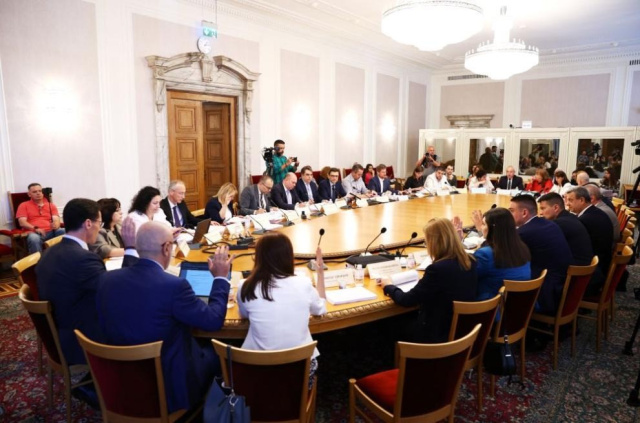
The budget framework passed second reading with 125 votes in favor and 84 against, with Progressive Bulgaria supplying every "in favor" vote and GERB, DPS, Democratic Bulgaria, We Continue the Change and Revival voting against. There were no abstentions. Deputies had first adopted the framework on first reading on July 15 with support from the DPS as well; by the final vote, the DPS had joined the opposition, leaving Progressive Bulgaria, which holds 131 of the National Assembly's 240 seats, to pass the budget alone. The Thursday debate preceding the vote ran roughly 13 hours and was marked, in the words of Democratic Bulgaria's Bozhidar Bozhanov, by an approach where "there could have been reforms, you chose excuses."
The numbers
The budget confirms a deficit of 5.7% of GDP, with figures reported at slightly different points in the process as 7.2, 7.191 and 7.32 billion euros depending on rounding and the specific reading. Total expenditure is put at 56.8 billion euros against revenue of nearly 50 billion euros. The calculations rest on projected economic growth of 2.6% and average annual inflation of 4.3%. New state debt of up to 10.1 billion euros was authorized for the year, including up to 3.261 billion euros under the EU's SAFE defense instrument, pushing the debt ceiling to 37.7 billion euros by the end of 2026. The minimum fiscal reserve floor is set at 2.6 billion euros.