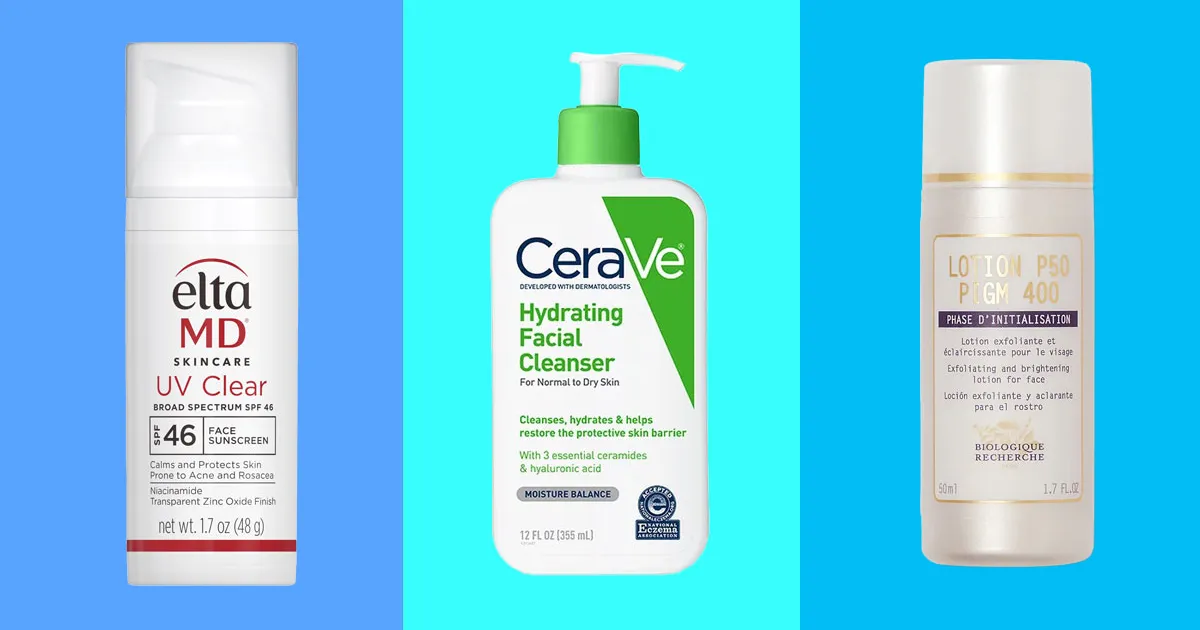
Forget those pricey multiple-step nighttime skin routines. We got the real story from dermatologists about what they actually do every night and which pricey products they give a hard pass on. Dr. Joshua Zeichner: A best-kept secret that costs $15“When it comes to skin care, I’m a minimalist,” said the New York dermatologist, who’s also associate professor of dermatology and director of cosmetic and clinical research in dermatology at Mount Sinai Hospital. Zeichner’s evening routine is super simple: “First, I apply La Roche-Posay Toleriane Dermallergo moisturizer to my full face. It’s rich, but not too heavy, and since it’s a preservative-free formula in an airless pump, I find it to be extremely tolerable without causing any irritation.“On top of the moisturizer goes a topical retinoid to stimulate collagen production, which ultimately improves skin tone, texture and fewer wrinkles,” he said. “I apply Differin 0.1% gel to my full face, neck and undereye area. It contains a topical retinoid called adapalene. It’s the best-kept secret in the drug store, and you can find it in the acne aisle. While approved for acne, adapalene is a cousin to retinol that also has been shown to have anti-aging effects in the skin. It’s more potent than retinol, but extremely well tolerated. Plus, it only costs $15 a tube, and it lasts me about three months.”Zeichner’s shopping list:Words of wisdom“You don’t need a complicated regimen to give effective results,” he said. “Evening is a time for hydration and repair for your skin, so you want to stick to ingredients that enhance those activities.”AmazonMany of the dermatologists' picks are available at drugstores.Dr. Heather Woolery-Lloyd: ‘I can’t sleep if my lips feel dry.’“I’m very consistent and intentional with my nighttime skin care routine,” Woolery-Lloyd said. “I wash my face with either the CeraVe Balancing Air Foam Cleanser or the Neutrogena Hydro Boost Hydrating Gel Cleanser.” Then she reaches for a reserved-for-face-only towel to pat her skin dry. “Then I apply the Clinique Even Better Clinical Radical Dark Spot Correcting Serum,” she said. “First, I focus on applying this around my under-eye area, and then I spread it evenly across my entire face. Next, I apply the Eucerin Radiant Tone Night Cream to my entire face. My final step is only to the undereye area, where I apply a volufiline serum. Right now, I’m using The Ordinary 92% Volufiline Serum.”There’s one final touch before she turns out the lights: “The absolute last thing I put on before bed is the Neutrogena Hydro Boost Lip Sleeping Mask. It goes last because it is a thick, hydrating lip product, so I apply it after I am finished with my facial skincare. Honestly, I can’t sleep if my lips feel dry, so sealing them with a lip mask helps keep them comfortable and hydrated until the morning.”Woolery-Lloyd’s shopping list:Words of wisdom“When building a nighttime skin care routine, focus on the specific concerns that bother you most,” Woolery-Lloyd advised. “Rather than trying every viral trend, pick products with ingredients clinically proven to be effective for your specific concern.”Dr. Corey L. Hartman: ‘No matter the products, consistency is key.’Hartman practices dermatology in Birmingham, Alabama, where he also is an assistant clinical professor of dermatology at the University of Alabama School of Medicine. His evening routine is consistent because, he said, “No matter the products, consistency is key.” He starts with a cleanse, followed by a retinoid and two serums: “I wash my face with Colorescience Barrier Pro 1-Step cleanser, apply Altreno rx retinoid, then the SkinBetter EyeMax eye serum and Revision Hydrating serum,” he said, adding: “I apply the retinoid and moisturizer on my face, neck and backs of hands.”Hartman’s shopping list: Words of wisdom“My skin is oily and acne-prone, so I have to really watch the type of moisturizers I’m using, so I avoid breakouts,” Hartman said. “I’ll splurge on high-quality moisturizer to prevent breakouts while hydrating my skin.”Dr. Nada Elbuluk: ‘Having healthy skin is achievable for everyone.’The University of Southern California professor of clinical dermatology has learned to balance caring for her skin while being aware of its sensitivities. “I have eczema and sensitive skin, so I can’t always use a retinol nightly, for example,” Elbuluk said. “Without exception, I use a gentle cleanser and moisturizer nightly. If my skin is feeling dry, I will actually put moisturizer right after cleansing, before other products. If I’m using a retinol-based product, I only use it on my face to avoid any irritation. If it’s an antioxidant or peptide-based product, I use it on face and neck.”Her routine does change with the seasons. “My skin is drier in the winter, so I tend to moisturize more in the colder months and may switch from lotions to creams or ointments, which are thicker and more moisturizing. I avoid exfoliating ingredients and products more in the winter.”Words of wisdom“Having healthy skin is achievable for everyone, but what you need to make that happen can vary significantly depending on your skin type and condition, as well as your goals,” she said. “The skin care market can be overwhelming, given the sheer number of products and brands that exist. If you need more guidance or support, a board-certified dermatologist can help in coming up with recommendations that work best for your skin while also being affordable and practical.”
Dermatologists Reveal Their Exact Nighttime Skin Care Routines — Here’s What They Swear By
How many steps does a nighttime skin care routine actually need? Dermatologists share honest answers.
882 words~4 min read