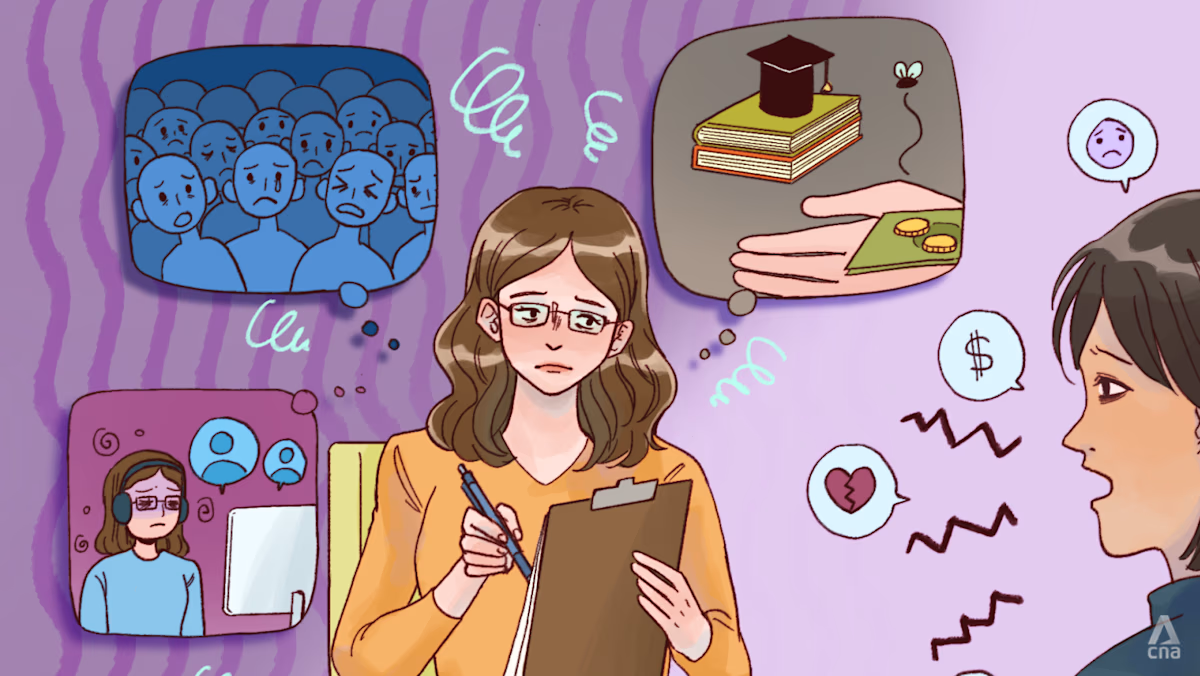
Something is quietly breaking across India. You can feel it in school hallways where teenagers are struggling in ways their teachers don’t know how to name. In homes where someone hasn’t been “quite right” for years, but no one has said it out loud. In offices where burnout is treated like a badge of honour, and in hospital wards where the mind’s suffering is an afterthought to the body’s.(Sign up for THEdge, The Hindu’s weekly education newsletter.)The National Mental Health Survey (NIMHANS, 2016) found that over 150 million Indians need active mental health care. The Global Burden of Disease Study puts the figure even higher — 197 million people living with mental disorders. And yet, the Rehabilitation Council of India estimates that fewer than 3,000 clinical psychologists are actively practising in the entire country. Do the math: that’s one trained professional for every 48,000 people who need help. This is not a gap. It is a crisis.Join THEdge LinkedIn groupFor years, entering clinical psychology meant a long, winding road — a general psychology degree, then a postgraduate programme, then further training, often stretching well into your late twenties before you could practise independently. That has changed.Starting 2026, the Rehabilitation Council of India has approved a four-year B.Sc. in Clinical Psychology (B.Clin.Psy) — a direct, structured undergraduate programme designed specifically for students finishing Class XII.
Why Clinical Psychology is the calling of our time
India launches a vital B.Sc. in Clinical Psychology to address its mental health crisis and meet growing demand for professionals.
861 words~4 min read