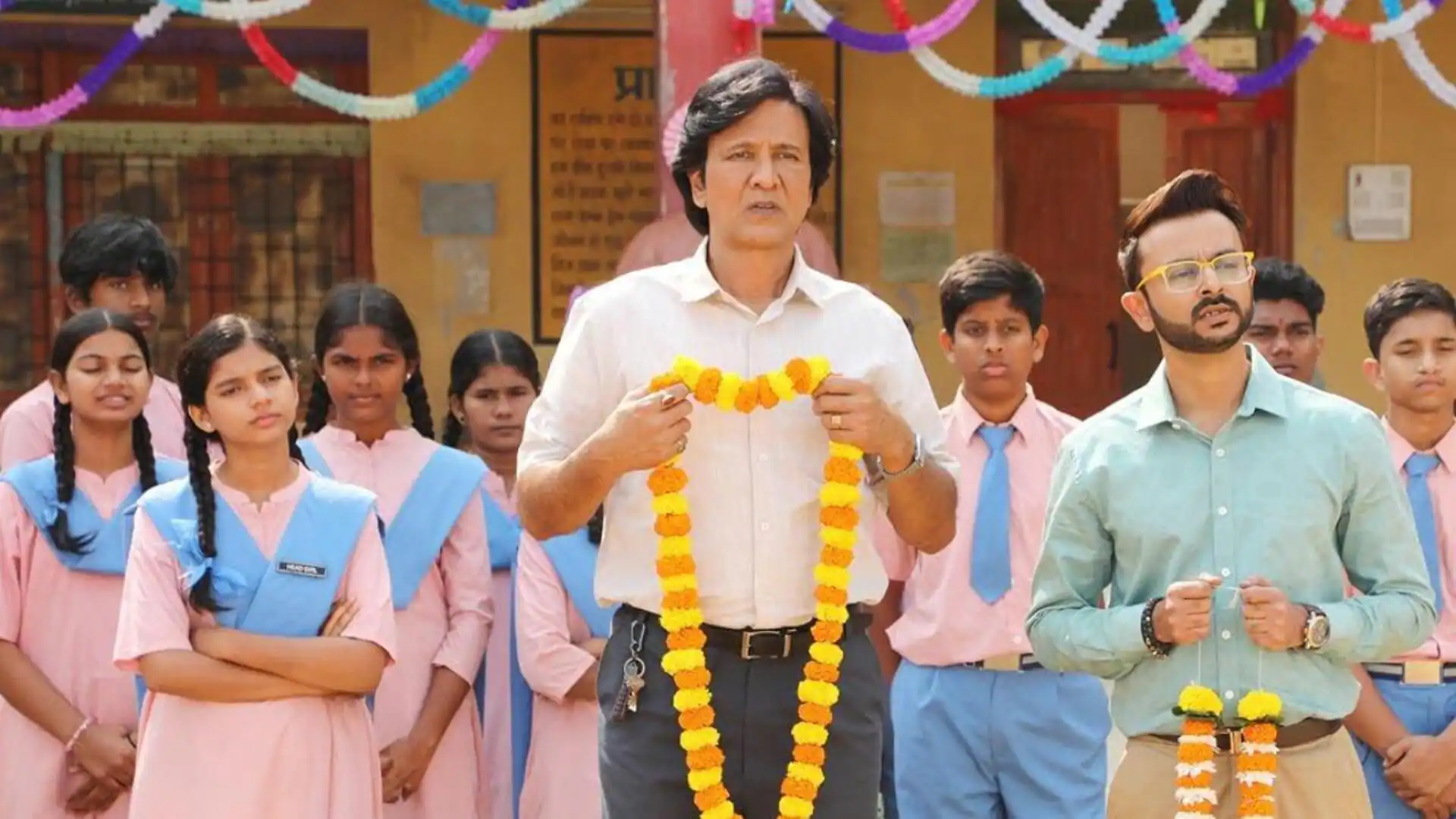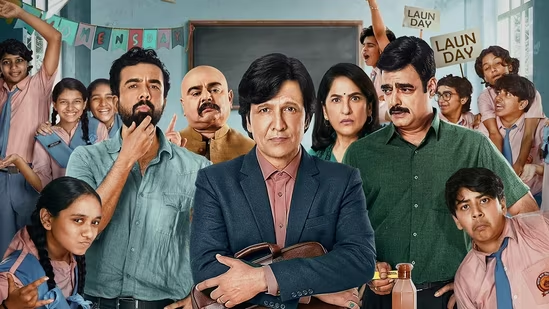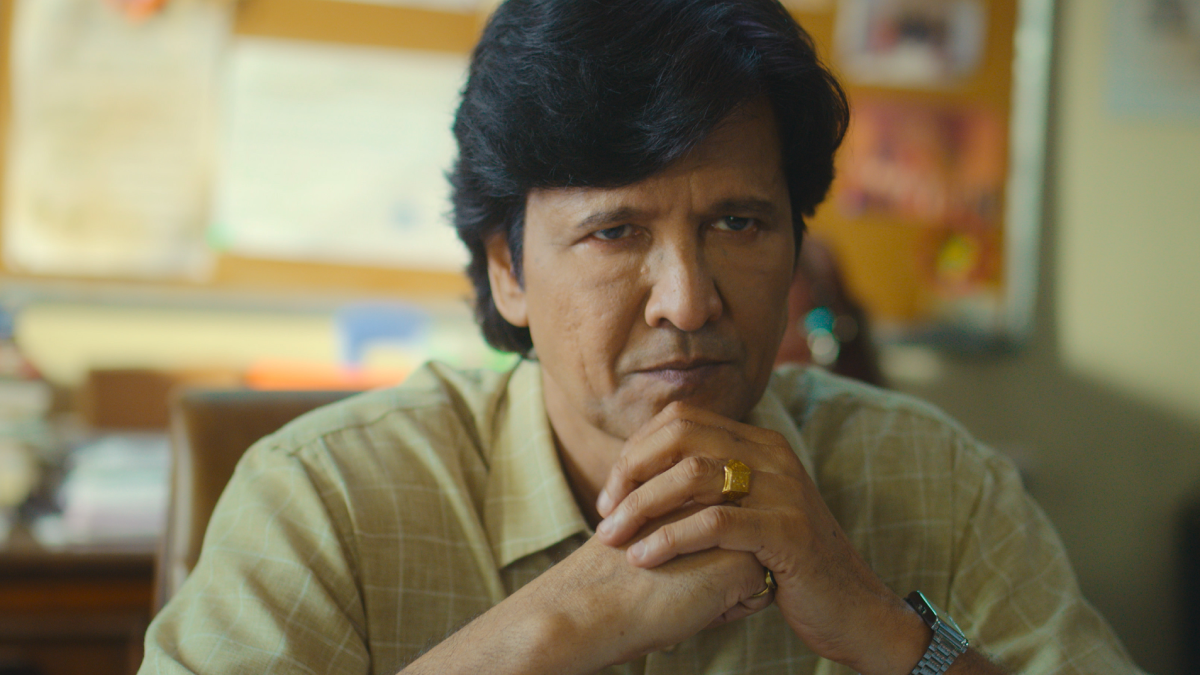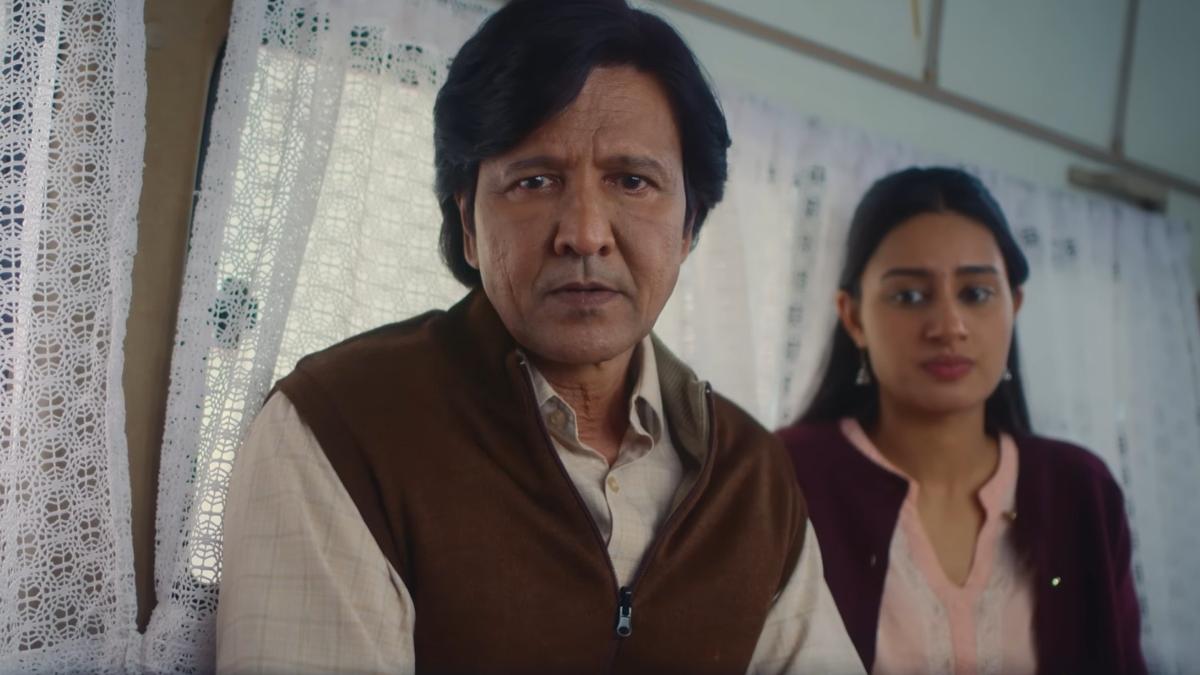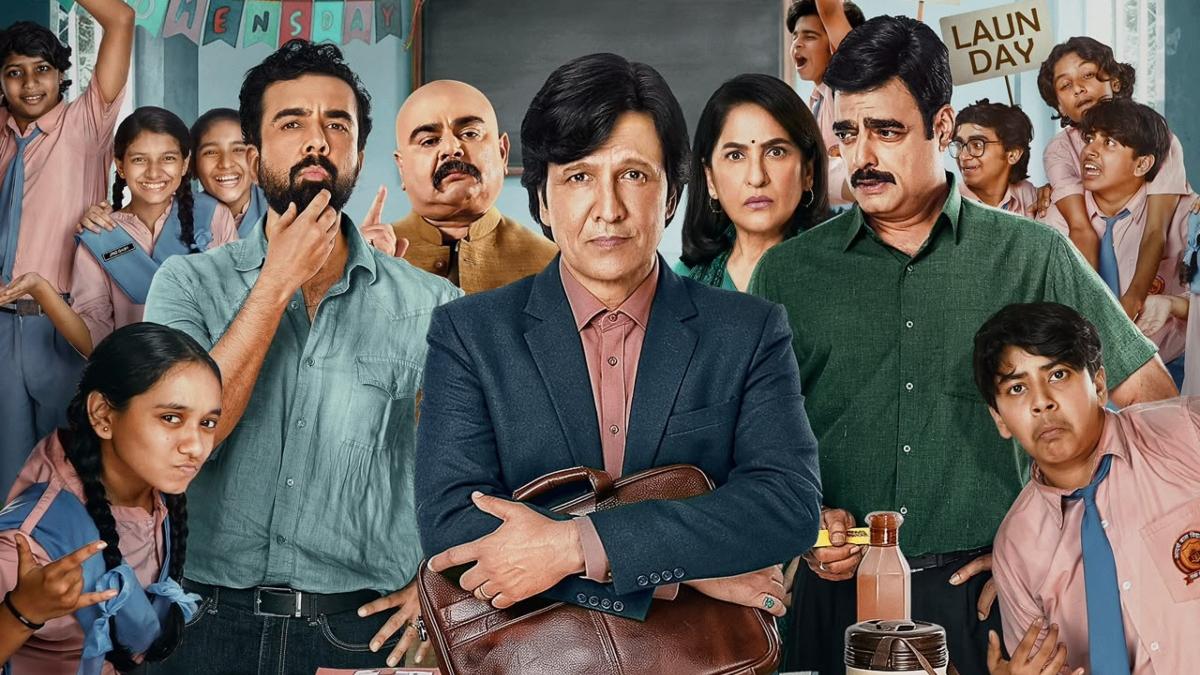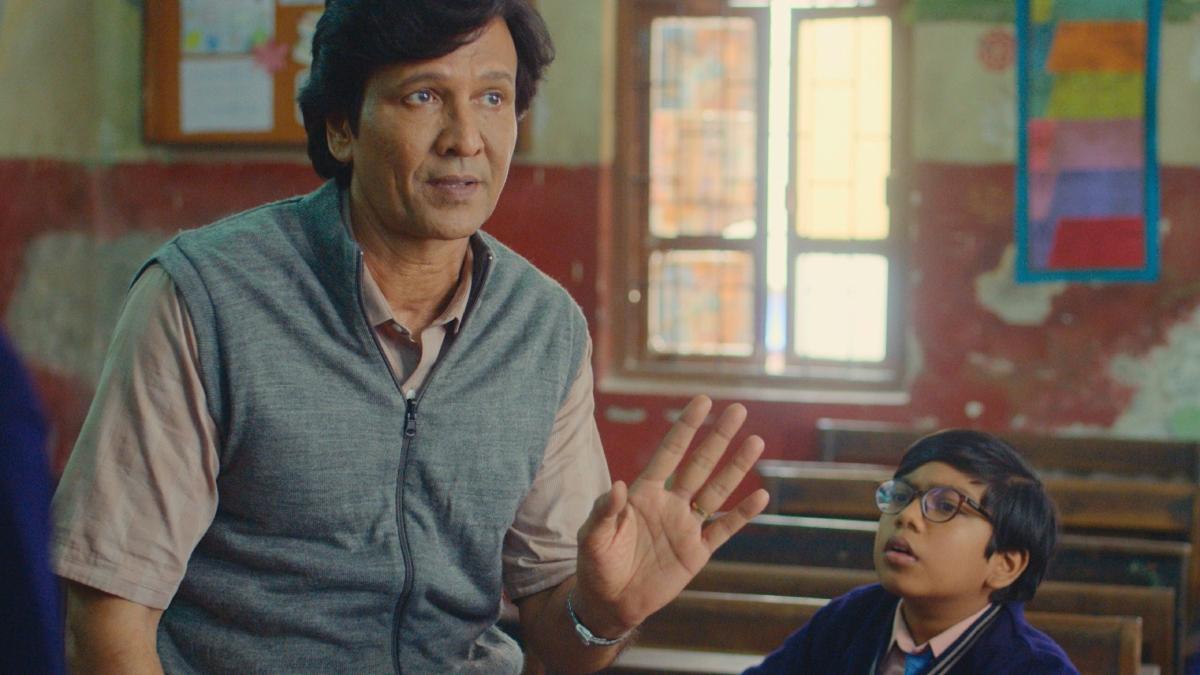
Kay Kay Menon in ‘Adarsh Baal Vidyalaya’
| Photo Credit: Prime Video
There is nothing ideal about Adarsh Baal Vidyalaya. It often feels like a perfectly designed template on paper that slips into monotony when translated on screen. The comedy-drama tries to fit into the post-Panchayateraof streaming landscape, where a feel-good atmosphere is presented along with a touch of social satire. It is produced by Posham Pa Pictures, known for Maamla Legal Hai, in which dysfunctionality pervaded inside a courtroom with a low-on-morals, high-on-charm protagonist at the centre. Now, keep the dysfunctionality intact, replace the courtroom with a government school and transfer qualities of the eccentric lawyer there to the opportunistic headmaster here. Congratulations, you have another energetic twin with a serious identity crisis.With Biswapati Sarkar and Sameer Saxena as creators, Adarsh Baal Vidyalaya takes a new setting, imagines a host of quirky characters and fills it up with a superficial logline. Headmaster Gyaneshwar Tripathi (Kay Kay Menon) is driven by a dream to transform his school in order to win a government-sponsored training programme in Cambridge. Even though his actions are backed by a selfish desire, Tripathi is developed as a sensitive man, sometimes too gullible and foolish to be able to rightly administer a failing school. Even his group of staff feature a sketchy mix of a conservative science teacher, an idealist physics teacher, a strict and most-feared Hindi teacher (Abhimanyu Singh) and an empathetic counseller (Naveen Kasturia).Adarsh Baal Vidyalaya (Hindi)Director: Himank GaurCast: Kay Kay Menon, Archana Puran Singh, Urmila Devi, Naveen Kasturia, Mukul Dengla, Abhimanyu SinghEpisodes: 7Runtime: 30-42 minutesSynopsis: A laid-back headmaster of a shoddy government school is driven by a desire to bring change to its surroundings in order to win a government-sponsored training programme in Cambridge.The writing seldom scratches beneath the surface. While the show thinks of itself as a biting satire on the frail state of government school infrastructure, its scenes slip into numbing hyperbole, desperate to rake in easy laughs while forgetting the larger picture. So, an episode about the removal of kheer frommidday meal might bring memory of a similar reality, but the show is never as self-aware to be actually critical of it. Another episode features a politician urging Gyaneshwar to teach fabricated history to students, which again has parallels to reality, but the intention is only to ridicule, as the overtly absurdist parts don’t quite come together to make a cohesive statement. There is an acute disinterest in engaging further, thereby creating the illusion of addressing real issues as the caricatures end up building an alternate meaningless realm.