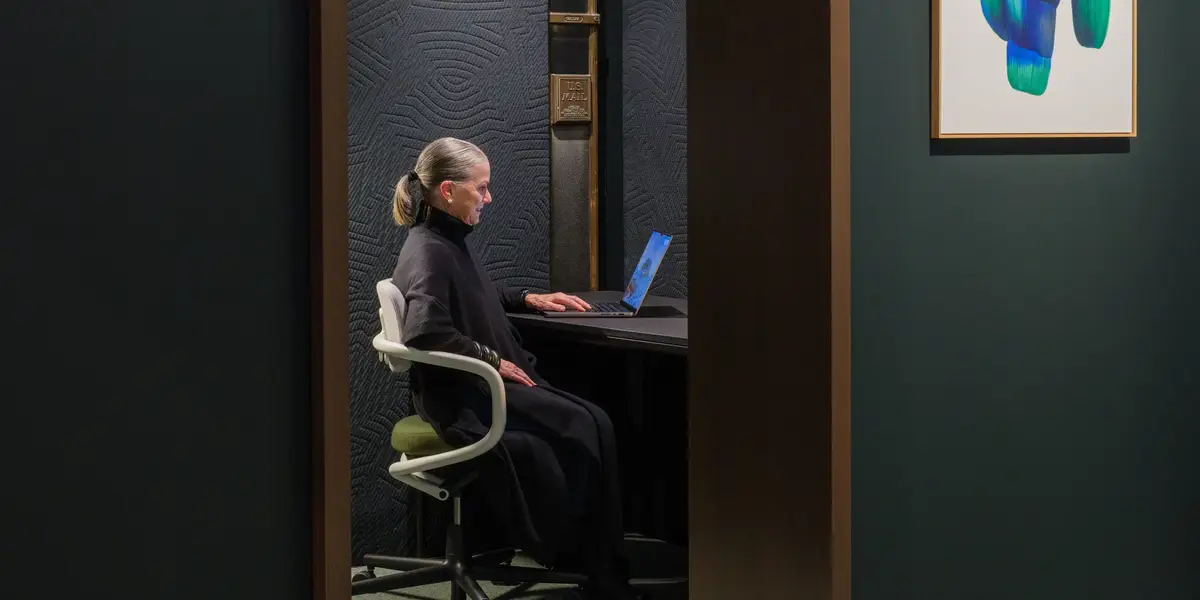
Gensler's San Francisco office is designed for different work styles.
Gensler
Scouring the office for an empty conference room. Spending lunch on an outdoor bench for a few minutes of quiet. Stacking meetings into one part of the day so you can spend the rest uninterrupted.If you identify as an introvert, these habits may sound familiar.Introverts make up roughly 40 to 50% of the workforce, though estimates vary, organizational psychologist Anique van der Putten told Business Insider. They typically prefer lower levels of external stimulation and need time alone to recharge after prolonged social interaction or other highly stimulating experiences, she said.During the pandemic, many white-collar introverts were able to enjoy a setup that played to their strengths: remote work. Now, as employers double down on return-to-office mandates and tighten hybrid policies, offices are filling up again and introverts are relearning how to navigate workplaces that reward interaction, visibility, and spontaneous collaboration.Finding quietPandemic-era remote work introduced workers to the possibility of a new arrangement, with less background noise, fewer unplanned conversations, and reduced pressure to remain socially available throughout the day, Nargiza Noimann-Zander, a clinical psychologist and neuroscience researcher, told Business Insider."Returning to the office can therefore feel more intense than it did before, because people have now experienced an alternative," wrote Noimann-Zander via email.Although return-to-office mandates have been in place for some time, office attendance has continued to climb and is now near its post-pandemic high, with weekly office occupancy averaging about 52.5%, according to data from physical security and property technology company Kastle.